Tags
Aldersgate, American Christianity, Asbury, Asbury Church, Asbury Connection, Bible, Christianity, Church culture, denominations, faith, Global Methodist Church, God, hope, Jesus, Methodism, ordination, Pentecost, United Methodist Church, Wesley
On May 24, 2026, Asbury Church started a new ecclesial network we are calling The Asbury Connection. The name is in honor of Francis Asbury, the father of American Methodism.
On that day, I participated with Rev. Andrew Forrest, the senior pastor of Asbury Church, in a service of ordination where we ordained four of our pastors deacons and three of them elders. We also recognized the ordination of one of our pastors, who was previously ordained in the Wesleyan Church.
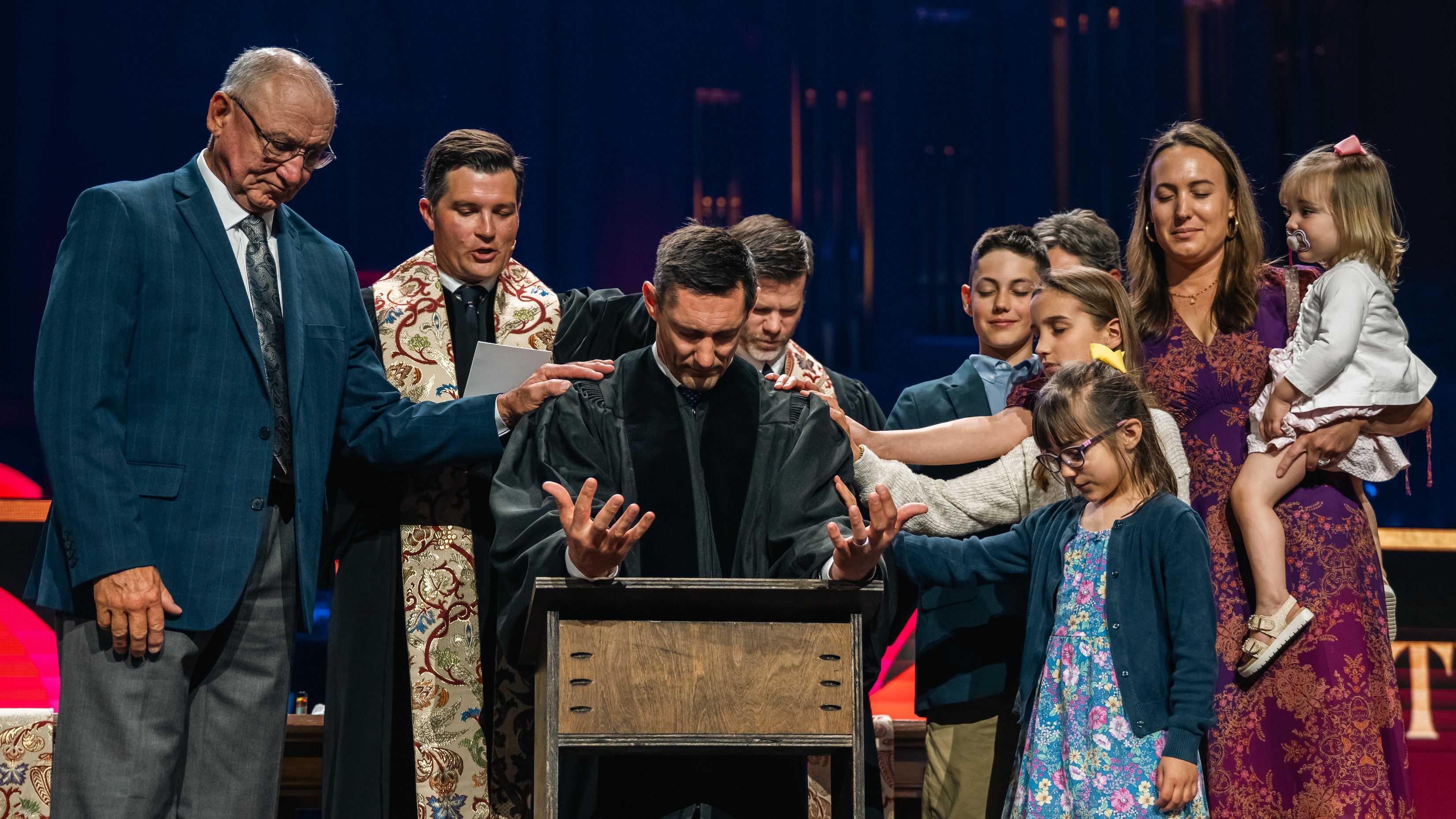
Considering that I was ordained in the United Methodist Church and was teaching in a United Methodist seminary not that long ago, this was a big step for me that I did not take lightly.
In this post, I want to share why:
- I decided to do this.
- I am excited about what is happening at Asbury Church.
- I am hopeful about the future.
- You should consider joining us.
Before I share these things, let me offer the clarity that this post is an articulation of my own views. I am not speaking on behalf of Asbury Church or the Asbury Connection.
Why I decided to transfer my ordination to the Asbury Connection
I moved to Tulsa soon after Asbury Church voted to withdraw from the United Methodist Church. I missed some of the first conversations we had with various denominations that we considered partnering with after disaffiliation. But I was present and participated in most of the conversations over the course of a 3.5-year discernment process.
During that season, we asked: Which denomination or group or structure is asking the right questions? What group would best set Asbury up to reach the nations for Christ? Where would we be most fruitful and faithful? Which structure is best suited to help churches fulfill the Great Commission in 21st-century America?
I agreed with the discernment of the leadership of Asbury Church that the right connection or denomination did not exist for Asbury. And so, we came to the conclusion that it was our God-given responsibility to start the new connection that we ourselves have been searching for.
I have always had a hard time ignoring the elephant in the room. The most obvious place for Asbury to have joined, by far, was the Global Methodist Church. For now, I will just say that we invested significant time and energy trying to find a path that would work for us to join the GMC. Ultimately, what would have worked for us did not work for the GMC. Deciding not to join the GMC was not a flippant decision that was made lightly.
I am at peace about that. I have many friends in the Global Methodist Church. I am for them and for their ministries. And I will continue to do what I can to serve the GMC as I’m invited to do so.
I stood with Andrew in ordaining our pastors because I believe it was the next right step for us to take. If you are interested in why I am convinced bishops are not necessary for ordination in the Wesleyan tradition, check out this post.
Why I am excited about what is happening at Asbury Church
Asbury is growing and there is a lot of energy and excitement around the church on Sundays in particular. It is fun to be leading at a healthy and growing church.
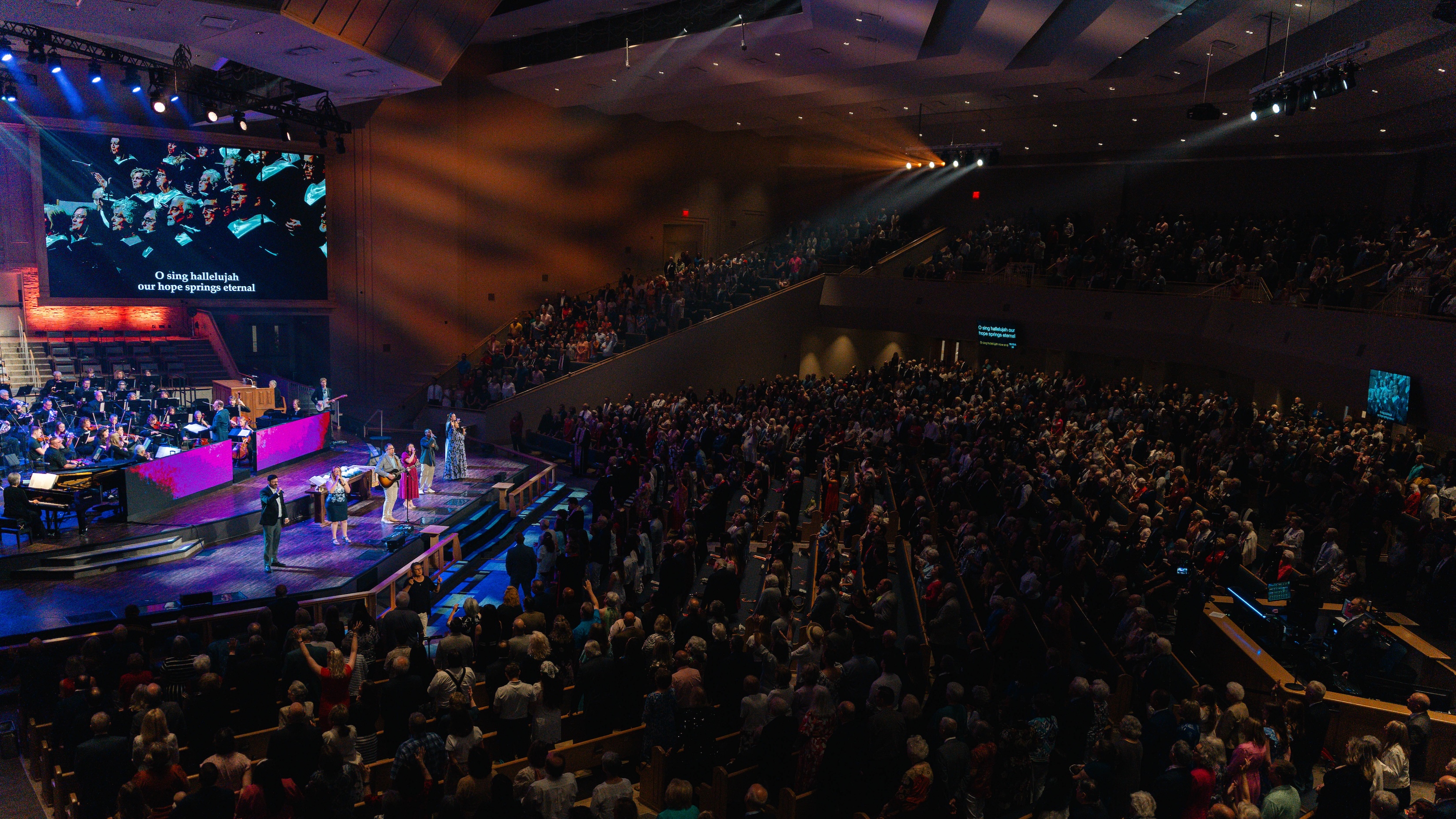
This weekend, we had 2,993 people in person in worship. That is an 11.2% increase from 1 year ago.
At Asbury Church, we work hard and it is good for staff morale when there is tangible evidence that we are winning.
A brief explanation about how we count attendance: We have overhead cameras that take photos of the room and we count noses. The noses we count are literally the noses in the room in worship, not adult education classes, student ministry, or children’s ministry. We do not count online views of livestreams or recordings of worship services in our attendance numbers. In fact, at Asbury we say, “Online church isn’t.” This is an important clarification because many churches do include online numbers in the way they report attendance, which can give a very different mental picture of what is happening on a Sunday morning than what you would experience if you showed up in person. When we say we had 2,993 people in worship last Sunday, we literally mean we counted 2,993 people in the room during our four worship services.
This is a big deal for me and a great example of why I am excited about the Asbury Connection. I do not want to be a part of an institution that encourages disembodied and gnostic spirituality by encouraging people to think of watching a screen as participation in the Body of Christ. And I do not want to be part of an institution that encourages dishonest or manipulative speech that distorts reality. The tendency in denominations I’ve been a part of to encourage counting online views of livestreams of worship, or to count every person who comes into the church at any point for any reason as part of the worship attendance numbers, feels too close to manipulating or distorting reality for my comfort. (We do track attendance in our Adult Discipleship Communities and our children’s and student ministry. We simply do not count it in our worship attendance, because that is not what it is.)
All that to say, I am excited to be at a church that is honest and straightforward in how it counts worship attendance.
As soon as you talk about numbers in terms of growth, especially at larger churches, there will be someone who offers a critique like: “Oh, so, you only care about numbers?”
No. We care about numbers because each number is a person.
Decline happens. It sometimes happens when everyone involved is doing the best they can, but the demographic trends are all working against them. My issue was being a part of an institution that had seen decline every single year of its existence and had come to frame its slow death as a virtue.
In some interactions outside of Asbury Church, there is an assumption that we think we are better than everyone that is smaller than us. We don’t. We say all the time that large churches are not better than medium and small churches. And we mean that. I pastored a small church right out of seminary. I learned a ton. The people were amazing. And because of their context, they are never going to be a large church. That church was faithful and it was not less faithful because of its average attendance numbers.
Large churches are not better than small churches. But they are different. We think about the difference in many ways in terms of stewardship. There are things that large churches can do that small church cannot do. For example, we can host large events well because of the size of our facility and because our staff has experience hosting large events literally every single week. We can also hire staff who specialize in a particular area of gifting in a way that is more difficult in smaller churches, especially churches that only have one fulltime staff member, the pastor.
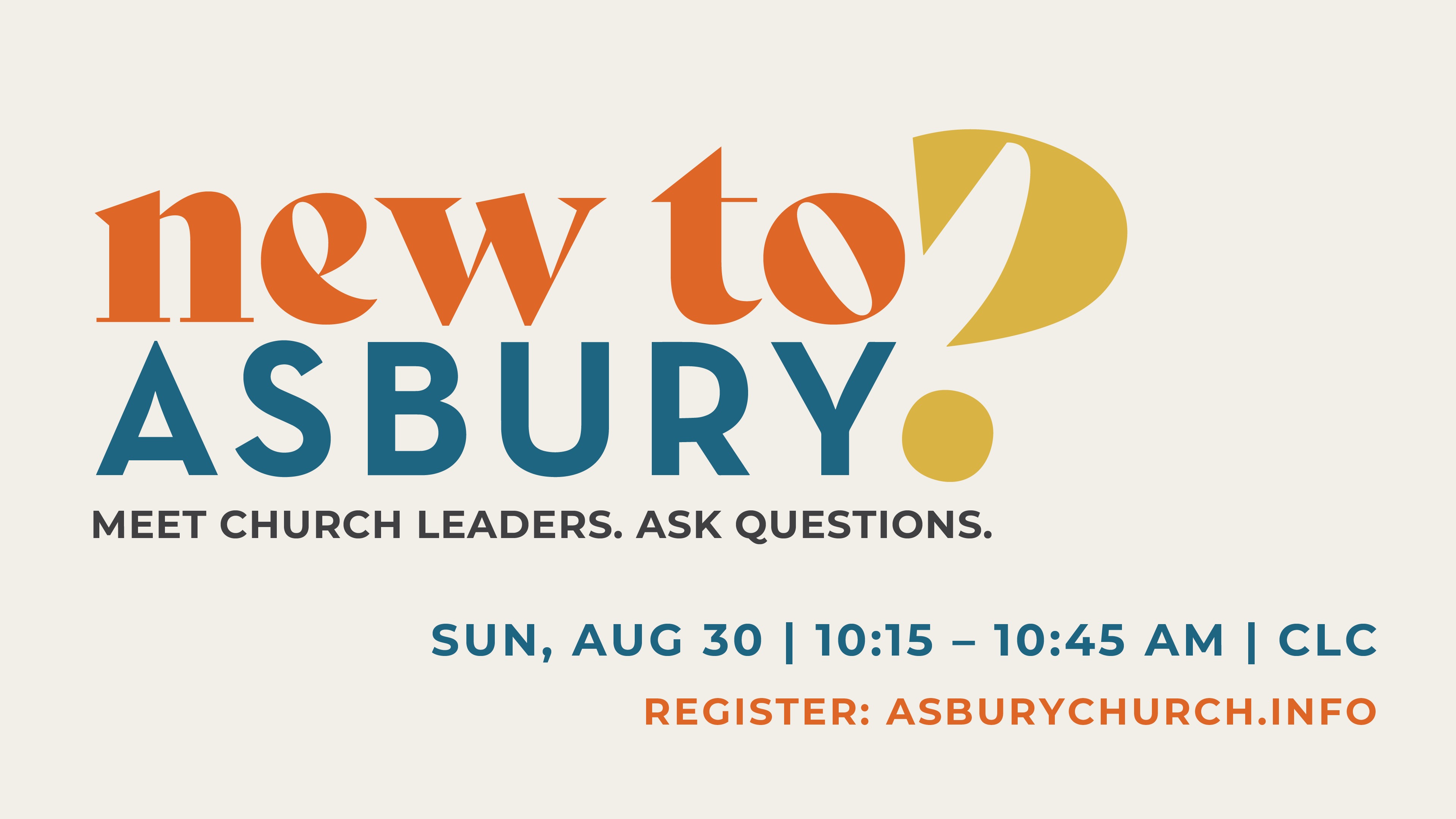
Ok, so I am excited to be a part of a church that is experiencing healthy and significant growth. I am also excited about the opportunity I have been given to develop a discipleship pathway for our church. Since I have been here, we have started a New to Asbury Brunch. This gives us a chance to meet folks who are checking out Asbury and wanting to know more. It gives me the chance to set the culture of our church on the front end that helps people decide whether they want to stick around and get to know us better.
Related to that, I am really thankful to be at a place where there is spiritual covering to speak clearly about what we believe, because it is what the church believes. When I was teaching in United Methodist theological education, I was always surprised by how much of a physical toll it took on me to articulate orthodox sexual ethics in the classroom or in events outside of the seminary. I remember feeling tired and just overall worn out for weeks after a conference at the seminary I was at after the 2016 General Conference of the UMC before the Special General Conference in 2019. I felt the same after I participated in a debate with a colleague from the same seminary about the Bible and same sex marriage.
At Asbury, we believe that clarity is kindness. We work to use plain speech and to say what we mean. We do not believe in manipulation and working to lead people without them knowing exactly where they are being led.
And so, I tell everyone who attends the New to Asbury Brunch that we are not woke and we are conservative regarding sexual ethics in every respect.
People are sometimes surprised that we are so clear about where we stand, and they appreciate it. I think this is because there are far too many church contexts that are like an experience of the children’s story The Emperor’s New Clothes. It is refreshing and a relief to be part of a culture where clarity and straightforward speech is valued.
For me, it is a breath of fresh air to serve at a church where I am encouraged to be direct and candid in what we believe, and that I am in sync with all of it. Not only do I not feel tired after speaking at a New to Asbury Brunch, it is energizing.
I think this is the difference that spiritual covering and properly aligned authority structures makes.
Why I am hopeful about the future
As I have written elsewhere, I believe the next season of ministry in the United States is going to be hard. It is going to take our best effort. And yet, I am genuinely and deeply hopeful about the future. In fact, I am most hopeful about the future that I have ever been in ministry. Here’s why:
I believe that the coming years are going to see significant changes in the American church. In particular, I think there are going to be surprising and exciting realignments as mainline denominationalism continues to decline both in terms of its size and its influence in the broader culture.
I think the future will bring increasing cooperation and networking among non-denominational churches that are open to the person and work of the Holy Spirit.
I could be wrong, but I am hopeful.
And I hope the Asbury Connection will be a part of this realignment.
I think we are seeing openness to New Testament Christianity, including the fullness of the gifts of the Holy Spirit, becoming mainstream in American evangelicalism. I also think churches that have kind of stumbled back into openness to Spirit have learned from the excesses and mistakes of some Pentecostal and charismatic churches.
I am hopeful about the future here because I have seen Asbury Church become more open and hungry for the fullness of the gospel. We have had prayer and healing services, with more response and hunger than I expected. And, thankfully, virtually no resistance or pushback. I see our pastors stepping into greater authority and wanting more for our people. It fires me up to hear people scheduling prayer sessions to spend time in prayer with someone who needs breakthrough from a particular bondage or addiction.
I am hopeful because I do not feel like we are striving or trying to force something. In the times I’ve been asked to lead, I have just tried to give space for the Lord to do what he wants to do in our midst. And it has been a blessing to witness.
I am also hopeful because Asbury has the strongest tangible commitment to raising up the next generation of leaders for the church that I have ever seen.
This summer we hired 6 high school students to work as interns in our student ministry. It was SO FUN to see high school students praying for their own ministry and teaching the Bible to their peers. It was a blessing to see them planning, preparing, and executing their own vision over the summer. One weekly summer event, a boys Bible Study, doubled in size compared to last summer. And it was entirely through the work of our student interns.
Our student interns also helped start a student leadership team for this year, which will continue the work they started over the summer. I cannot wait to see what the Lord does through them this school year!
We also hired three college students to work as mission interns over the summer. They brought energy and joy to our work as a staff. Rodney Adams, our Executive Pastor, led a group of 6 of our staff to attend Acton University this summer. 2 of our college interns went on that week-long trip and it was great to get to know them better.
The biggest investment we are making in raising up the next generation of leaders for the church is our Fellowship Program. It is now in its second year, which is hard for me to believe. We saw a significant increase in interest this year compared to last year. I am proud of our Fellows and excited to see how the Lord will use them in the church after they complete their Fellowship. For me, simply having Fellows in the room reminds me of the stakes of what we are doing. Formation is always happening. And those coming up after us will not appear out of thin air. We must intentionally invest in the next generation. We are literally putting our money where our mouth is by hiring people for 2-year Fellowships that are full-time staff positions.
Finally, we made a commitment to start a School of Ministry when we launched the Asbury Connection. Last week, I started a pilot project to begin to build out the Asbury School of Ministry. It will serve as the last stage in our discipleship pathway, because, while there is always more Christians can learn, Christian discipleship should not be thought of as a never-ending university seminar. I have known that for a long time, but I’ve had a hard time figuring out what the end of a discipleship pathway should actually look like. When it is fully released, this will be a rigorous and intense period, most likely 2 years, where people will leave knowing they’ve been equipped to serve in the church. They will then focus on being on mission for Jesus in their lives, feeding themselves and others as spiritual parents.
The Asbury School of Ministry will also be a key piece of the way we form our candidates for ordination as deacon. Many of these candidates have or will attend seminary, which we fully support. (After all, we have an Asbury Theological Seminary Extension Site on our campus.) Formal theological education will be required for ordination as an elder.
Why you should consider joining us
There are several groups of people I think should consider joining us.
If you are following leaders at Asbury Church because you like what we are doing and find it helpful to your work, you should join what we are doing. I have been surprised and encouraged by the folks who reached out immediately when they found out about the Asbury Connection who I had no idea were even watching us.
You should consider joining us if you have felt like you haven’t found your people yet and you think you might like to follow us, or you want to row with us. I’d love to connect you with folks on our team so you can learn more about the Asbury Connection and where we are headed.
You should consider joining us if the existing denominational options weren’t the right fit for you, but you also would like to have more connection and not less with a body of believers outside of your local church.
Our model is a hub and spoke model. We will have large regional churches with small churches connected to and resourced by them. The Asbury Connection will not be a denomination with a large and unwieldy bureaucracy. The Asbury Connection will have a faith statement and common ordination standards.
To give one example of the distinction: The Asbury Connection will not take on itself the responsibility to provide health insurance for every employee of every church in the Connection. We believe this goes too far in terms of removing authority and responsibility from the local church. (As it happens, denominational insurance also has a major financial penalty on small churches and their employees at the order of tens of thousands of dollars per employee per year.)
The Asbury Connection will also not have a trust clause. (I cannot imagine any church that left the UMC ever deciding to join anything with a trust clause.)
On the other side, the Asbury Connection will value and enforce doctrinal conformity and adherence to ordination standards across the connection.
There is so much going on in the aftermath of the collapse of the UMC. It will take a while before the dust settles and we can really see what has happened.
Here is the short version for me for why I am excited for the future of the Asbury Connection: The available denominational options have felt too much like the United Methodist Church that I chose to leave. But the alternatives that have arisen don’t feel like they have strong enough ties that bind.
The timing of Pentecost this year, when we launched the Asbury Connection, was particularly sweet, because it was on May 24th, which is also the anniversary of John Wesley’s famous Aldersgate Street experience where he testified:
I felt I did trust in Christ alone for salvation; and an assurance was given me that He had taken away my sins, even mine, and saved me from the law of sin and death.
For me, this felt like a symbolic connection to our theological heritage. Our goal is not to depart from the tradition we’ve been a part of. Rather, it is to enter more fully into it. We want to see the Lord breathe new life into the best of the Wesleyan theological tradition through our new Connection.
As I close, I’m thinking about John Wesley’s last words. They give me hope and joy as I move into the future:
The best of all is, God is with us.
Indeed, he is.