• About Me

Kevin M. Watson

Kevin M. Watson

Tag Archives: Methodism

When Methodist Distinctives Aren’t

06 Friday Sep 2013

Posted by Kevin M. Watson in Christian Living

≈ 21 Comments

Tags

Christianity, connectionalism, distinctiveness, grace, Methodism

Methodists, particularly United Methodists, have a very bad habit of making sweeping statements about what makes the Methodist tradition distinct or unique. The main reason this is a bad habit is because when Methodists do this they are often claiming ownership of things that are basic to Christianity or that are at least at the heart of the values or beliefs of other parts of the Body of Christ. When Methodists do this, it makes us look oblivious at best, and obnoxious and arrogant at worst.

Since joining the faculty at SPU two years ago, I have had more interactions with Christians who are not United Methodists than I had previously. More than once, I have heard someone ask why Methodists claim something as a distinctive of their tradition when it is a basic Christian affirmation. Just yesterday, a colleague pointed out that Methodists do not have the market cornered on holiness.

I am trying to do a better job of being more humble and accurate in what I claim as a distinctive of my own branch of the Christian family tree. I have also become more sensitive to just how often Methodists make rather grandiose claims about the marvels of our own tradition.

Here are the three most common ways I have heard people describe Methodism’s distinctiveness that are not unique to Methodism.

1. Methodists believe in grace.

Asserting that grace is a distinct belief of Methodism would understandably be offensive to other Christians, because they believe in grace too! Ask your brother or sister in Christ from a non-Methodist tradition whether they believe in grace and let me know when you find someone who says no.

John Calvin talks extensively about grace in his Institutes of the Christian Religion. Here is one example, that is particularly important for Methodists to read because it refers to the role of grace in both justification and sanctification:

Christ was given to us by God’s generosity, to be grasped and possessed by us in faith. By partaking of him, we principally receive a double grace: namely, that being reconciled to God through Christ’s blamelessness, we may have in heaven instead of a Judge a gracious Father; and secondly, that sanctified by Christ’s spirit we may cultivate blamelessness and purity of life. (Institutes, III.XI.1)

Grace is very important to Methodism because it is very important to Christianity. When Methodists claim that we are distinct because we talk so much about grace, we look foolish to other parts of the Body of Christ and damage our own commitment to having a “Catholic Spirit.”

2. Methodists allow you to use your brain.

This affirmation, when I hear it, seems to do two things at once. It is a way that Methodists congratulate themselves on being so educated, open-minded, and tolerant. At the same time, it indirectly insults people whose views are less sophisticated than we perceive ours to be.

While there are some parts of Christianity that don’t affirm the role of theological education to the degree that most Methodists do, every classic Christian theologian I can think of would insist on using your mind to love God.

Faith seeking understanding did not originate with Methodism!

The way that I sometimes hear Methodists talk about our being unafraid to use our minds smacks of a kind of elitism and arrogance that is disappointing, particularly when coming from members of my own ecclesial family. And it is all the more problematic (and ironic) because it is sometimes used as a way to dismiss someone else’s beliefs without actually using one’s brain to make a reasoned argument as to why something is wrong and something else is right.

3. Methodists are connectional.

The ideas behind this are more complicated, but this is basically an assertion that Methodists are distinct because we are a church that is connected to each other in a variety of different ways (conferences, itinerant preachers, general boards and agencies, etc.).

Intentionally or not, this affirmation implies that other denominations are not interested in working together or connecting with each other. Though the polities are not the same, I imagine that the Roman Catholic Church, or the Eastern Orthodox Church, or the Anglican Church (and others) would see themselves as a connectional church in a way quite similar to Methodists.

Could it be that a distinctive of Methodism is taking credit for things that belong to the legacy of the global church? I hope not. Maybe every tradition succumbs to this temptation. As a Methodist, I have found myself wrestling with the pretension of my own tradition over the last two years.

Have you noticed the tendency of Methodists to claim basic Christian beliefs, values, or practices as uniquely Methodist? What other claims of distinctiveness that aren’t actually distinctive of Methodism would you add?

Holy Conferencing: What Did Wesley Mean? (Part 2)

18 Thursday Jul 2013

Posted by Kevin M. Watson in Christian Living, Class Meetings, Methodist History, Ministry, Wesley

≈ 15 Comments

Tags

Christian Conference, Christian Fellowship, Class Meetings, Holy Conferencing, Methodism, Wesley

“Holy conferencing” seems to be one of the buzz words for contemporary United Methodism. This post is the second post on this topic. (It could be seen as the second of three posts, as an earlier post pointed out that Wesley himself did not use the phrase “holy conferencing.”) The first post discussed the contemporary use of “holy conferencing.” This post discusses what Wesley meant by the phrase “Christian Conference,” which is the phrase from Wesley that is usually connected to contemporary uses of holy conferencing.

What did Wesley mean by the phrase “holy conferencing”?

Well, he did not actually use the phrase. Nevertheless, most contemporary appeals to “holy conferencing” ground the phrase in the authority of John Wesley by suggesting that the phrase is synonymous with Wesley’s use of the phrase “Christian Conference.” So, this post is actually a discussion of Wesley’s use of the phrase “Christian Conference.”

In order to understand Wesley’s use of Christian Conference, it is helpful to think about how he uses the phrase as a general concept and how it functions as a practice. When Wesley talks about Christian Conference as a concept, he is generally talking about how Christians ought to converse with one another. However, when he talks about Christian Conference as a practice, it is located within his understanding of “social holiness” or communal formation. My argument here, then, is that Christian Conference should be understood to be a concept that is located within a particular understanding of communal formation. If you divorce the concept from the way it is located in a particular set of practices, you no longer have the full Wesleyan understanding of Christian Conference.

In order to understand Wesley’s use of Christian Conference, then, we will need to discuss the way he used the phrase as a general concept and the way he located it within a particular set of practices.

How did Wesley understand Christian Conference as a general concept? To start, I only found one use of the phrase in Wesley’s corpus. The passage where Wesley discusses Christian Conference is the “Large Minutes,” where it is listed as one of five instituted means of grace (meaning that it has a privileged position because it was instituted by Christ in scripture). The first four instituted means of grace are: Prayer, Searching the Scriptures, the Lord’s Supper, and Fasting. Here is what Wesley says about Christian Conference:

5. Christian Conference.
Are we convinced how important and how difficult it is to order our conversation right? Is it always in grace? Seasoned with salt? Meet to minister grace to the hearers?
Do we not converse too long at a time? Is not an hour at a time commonly enough?
Would it not be well to plan our conversation beforehand? To pray before and after it? (Wesley, Works, 10: 856-857)

This passage is interesting because it consists entirely of questions. It does not clearly define what Christian Conference is. We can only discern what it is by inferring what the questions imply. For the most part, this is relatively easily done with these particular questions. For example, Wesley believes that Christian Conferencing should usually be limited to an hour and it should be started and concluded with prayer. And yet, Wesley also seems to assume that there is clarity about the meaning of this phrase, so he doesn’t define it. Instead of talking about what Christian Conference is, he focuses on a few ways the practice could be improved.

The best passage that I am aware of where Wesley expands on this concept is in his sermon “The First-fruits of the Spirit.” (Thanks to Dr. Andrew C. Thompson for pointing me to this.)

5. They who ‘walk after the Spirit’ are also led by him into all holiness of conversation. Their speech is ‘always in grace, seasoned with salt’, with the love and fear of God. ‘No corrupt communication comes out of their mouth, but (only) that which is good; that which is ‘to the use of edifying’, which is ‘meet to minister grace to the hearers’. And herein likewise do they exercise themselves day and night to do only the things which please God; in all their outward behaviour to follow him who ‘left us an example that we might tread in his steps’; in all their intercourse with their neighbor to walk in justice, mercy, and truth; and ‘whatsoever they do’, in every circumstance of life, to ‘do all to the glory of God.’

6. These are they who indeed ‘walk after the Spirit’. Being filled with faith and with the Holy Ghost, they possess in their hearts, and show forth in their lives, in the whole course of their words and actions, the genuine fruits of the Spirit of God, namely, ‘love, joy, peace, long-suffering, gentleness, goodness, fidelity, meekness, temperance’, and whatsoever else is lovely or praiseworthy. They ‘adorn in all things the gospel of God our Saviour’; and give full proof to all mankind that they are indeed actuated by the same Spirit ‘which raised up Jesus from the dead’. (Wesley, Works, 1:236-237)

Note that Wesley uses many of the same phrases here that he uses in the questions in the “Large Minutes.” It is also significant that Wesley ties “holiness of conversation” so closely to the rest of a holy life. He wrote, “herein likewise do they exercise themselves day and night to do only the things which please God; in all their outward behaviour to follow him [Jesus].”

It is also significant that the discussion of holy conversation occurs within a sermon about “walking after the Spirit.” Holy conversation, then, is a part of a greater whole, where people are “filled with faith and with the Holy Ghost” and “possess… the genuine fruits of the Spirit of God.” Moreover, “holy conversation” is the result of being led by the Holy Spirit. It isn’t something that we bring with us to difficult conversations, it is something God does for us and in us.

So, how was this concept situated within the particular practices of early Methodism?

This is where, in my view, there is a clear divergence from the way that “holy conferencing” is most often used or understood in contemporary United Methodism, where it largely remains an abstract concept that generally applies to talking to other people, particularly about difficult topics.

For Wesley, Christian Conference was grounded in his emphasis on the importance of Christian communal formation, or social holiness. Several of the questions where Wesley discusses Christian Conference as an instituted means of grace suggest that Wesley was thinking of something like the class and band meetings. Wesley believed that the class meeting served to “minister grace to the hearers” through talking about the state of each person’s soul. He also pointed to the need to limit the duration of the meetings. And the “Rules of the Band Societies” include instructions to begin and end the meetings with prayer.

Consider, for example, the following passage where Wesley discussed the benefits of the class meeting:

It can scarce be conceived what advantages have been reaped from this little prudential regulation. Many now happily experienced that Christian fellowship of which they had not so much as an idea before. They began to “bear one another’s burdens,” and “naturally” to “care for each other.” As they had daily a more intimate acquaintance with, so they had a more endeared affection for each other. And “speaking the truth in love, they grew up into him in all things which is the head, even Christ; from whom the whole body, fitly joined together, and compacted by that which every joint supplied, according to the effectual working in the measure of every part, increased unto the edifying itself in love.” (Wesley, “A Plain Account of the People Called Methodists” Works 9: 262)

Scholars have argued that for Wesley Christian Conference and Christian fellowship are nearly synonymous. (Thanks, again, to Andrew Thompson for pointing me to this.) So, when Wesley talked about Christian Conference as an instituted means of grace, he most likely had in mind a way of conversing that occurred within a particular context, where something like “bearing one another’s burdens” or “speaking the truth in love” was happening for the sake of growing in holiness. The place where this kind of conversation was expected to happen in early Methodism would have been obvious: the class meeting and the band meeting.

My sense, then, is that the early Methodist classes and bands would have been in the back of Wesley’s mind when he talked about Christian Conference, and not merely generic polite conversation. This becomes even more plausible when it is noted that immediately following Wesley’s list of the instituted means of grace, Wesley lists the “prudential” means of grace (because they are prudent, even though not explicitly instituted by Christ). Under the prudential means of grace “As Methodists” Wesley asks: Do you never miss any meeting of the society? Neither your class or band?” (Wesley, Works 10: 857)

As I began working on this, I emailed Dr. Randy L. Maddox and asked him for his thoughts on Christian Conference. In his response he said, “When Wesley refers to Christian Conference as an instituted means of grace, I think the class meeting is the best example of what he has in mind. This is particularly the case if we assume his primary focus in ‘means of grace’ is sanctification” (quoted with permission).

But why is the class meeting listed explicitly as a prudential means of grace for Methodists, and not also as an instituted means of grace for all Christians?

Wesley clearly acknowledged that the class meeting was not prescribed by Jesus. However, he did believe that something like the class meeting was. So, Wesley did believe that the general idea of small groups focused on our lives as followers of Christ was a general principle for all Christians. The class meeting was simply the particular way that Methodists were living out this principle.

So, what did Wesley mean by Christian Conference?

Christian Conference was honest, direct, piercing conversation with other Christians that was intended to help the participants grow in holiness. These conversations were most obviously situated within the weekly class meetings and band meetings. This relates to the first post on the contemporary use of holy conferencing, then, because Christian Conferencing was not generally understood to be having a one-time polite conversation about a controversial subject. Rather, it was focused on the details of individual people’s lives, where they were experiencing God and growing in faith and holiness, and where they were not experiencing God or failing to grow in faith and holiness.

The goal of Christian Conference, then, is to “walk after the Spirit,” and to be “filled with faith and with the Holy Ghost.” The means to this end, then, was through weekly meetings for prayer and “watching over one another in love.”

Now that is a practice worth reclaiming!

Kevin M. Watson is Assistant Professor of Historical Theology & Wesleyan Studies at Seattle Pacific University. You can keep up with this blog on twitter @kevinwatson or on facebook at Vital Piety.

Holy Conferencing: What Is It? (Part 1)

10 Wednesday Jul 2013

Posted by Kevin M. Watson in Christian Living, Methodist History, Ministry, Wesley

≈ 17 Comments

Tags

Christian Conference, Holy Conferencing, Methodism, Wesley

What is “holy conferencing”?

This phrase seems to be one of the buzz words for contemporary United Methodism. This post is the first of two posts on this topic. (It could be seen as the second of three posts, as yesterday’s post pointed out that Wesley himself did not use the phrase “holy conferencing.”) This post discusses the contemporary use of “holy conferencing.” The second post will discuss what Wesley meant by the phrase “Christian conference,” which is the phrase from Wesley that is usually connected to contemporary uses of holy conferencing.

At the 2012 General Conference of The United Methodist Church in Tampa, FL “holy conferencing” was the explicit rationale for three scheduled times when delegates would break into thirteen groups for “holy conversation.”

Following General Conference, in the September/October 2012 issue of Interpreter the feature article was “Holy Conferencing: Bringing Grace to Tough Conversations.” I have to admit I was predisposed to be critical of the article by the subtitle, which to me suggested that we are the ones who bring grace to tough conversations because of our mastery of the skill of holy conferencing. I’m not exactly sure what the subtitle intended to convey, but it would be too easy of a target for outsiders who already suspect that Methodists are peddling works righteousness.

Nevertheless, I take this article as a good example of what many United Methodists mean today when they invoke the value of “holy conferencing.”

The article does not itself provide a clear definition of holy conferencing, but instead defines it by quoting a variety of church leaders. The main place where the article does interact with the concept is in this passage:

“Holy or Christian conferencing is a practice John Wesley included, along with prayer, Scripture reading, fasting and the Lord’s Supper, as a way of experiencing God’s grace. The roots are biblical. Leaders assert that every Christian should practice it, within and beyond the walls of the church.”

This is a helpful quote because it makes both moves that are typical in discussions of holy conferencing. 1) Its roots are in John Wesley. 2) It is important because Wesley included it as an “instituted” means of grace. So, similar to many of the other buzzwords in contemporary United Methodism, the grounding for the practice is – at least loosely – the authority of John Wesley.

But the above quote doesn’t tell us much about what holy conferencing is. From the above we know it is something that Wesley included with other basic Christian practices as a way of experiencing God’s grace (which, again, is in tension with the subtitle of the article). And that we should practice it in and out of church because the roots are biblical. This sounds important! So, again, what is it?

Here are a few quotes from the article where various United Methodist leaders use holy conferencing as a concept:

“Holy conferencing became really important as we gathered at the table to listen to all the reasons of why we should or shouldn’t move forward… When there would be a conflict or some tension or a variety of opinions, we would commit to listen to each other and approach each other with grace as much as possible. We always remembered that we have a place to stand together even if we don’t end up in the same place at the end of the conversation.” – Rev. Trudy Robinson, First UMC Littleton, CO

“Holy conferencing developed out of recognizing who people were, with a theological commitment that each person is a child of God and deserves to be treated as one.” – Rev. Stephen Cady, Kingston UMC, NJ

“In our culture today, there’s so much divisiveness that it’s really important to call ourselves to that means of grace… People, particularly in the United States, understand how uncivil conversation and discussion have become. People desire something different. In general society, there’s a fair amount of conversation about civil discourse. As Christians, (we have) a number of (Scripture) passages and admonitions in terms of how we treat one another.” – Bishop Sally Dyck, Chicago Area of The UMC

“It’s not just an exchange of opinions… but a real attempt to move toward a common understanding of God’s will and intention towards Christians. It’s a holy thing to be undertaken with seriousness and integrity. It’s an opportunity to build on the trust that is already there and to allow people to seek together for the truth.” – Rev. Tom Lambrecht, vice-president, Good News

With the exception of the quote from Lambrecht, it seems like holy conferencing means being nice to each other when we disagree.

One gets a similar sense from the “Principles of Holy Conferencing” that are published as a sidebar in the same article. (Note: This is a condensed version of a longer paper Bishop Dyck wrote. The full paper can be accessed here.) Here are the eight principles:

1. Every person is a child of God
2. Listen before speaking
3. Strive to understand from another’s point of view
4. Strive to reflect accurately the views of others
5. Disagree without being disagreeable
6. Speak about issues; do not defame people
7. Pray, in silence or aloud, before decisions
8. Let prayer interrupt your busy-ness

This is a helpful list. And these principles are important to keep in mind when having difficult conversations. I have seen too many examples in person and (more often) online where these principles have not been practiced by contemporary Methodists. So, I think this is a well thought out and helpful guide to having difficult conversations. However, at the end of the day, it still looks like the focus is on being nice.

My sense from thinking about the use of “holy conferencing” in contemporary discourse over the past six months or so is that it is being appealed to so heavily because, during a time when there are areas of profound disagreement among Methodists, it is a way to find something we can agree on. We should be able to agree to be nice when we disagree with each other, to “disagree without being disagreeable.”

There are at least two problems with this approach. First, the areas of disagreement often go so deep that someone finds the clear statement of a particular position to itself be disagreeable. In other words, the use of “holy conferencing” presumes an ability to not take the beliefs and convictions of another as a personal attack. I am not sure we are currently in a place where people are always able to make a distinction between honest disagreement and intentionally being disagreeable, or intentionally hurtful.

The second problem with this approach is that it deemphasizes the importance of the beliefs themselves. At best, it does not provide a way to resolve any disagreement. The only solution offered is polite conversation. At worst, it implies that there are no right answers.

The use of holy conferencing seems naïve because the solution it appears to offer is that if enough people could just sit down long enough, be nice enough, and hear each other, agreement would come from clear and kind articulation of each perspective. I think this underestimates the depth of genuine disagreement that often exists. There also may be a subtle form of arrogance that believes that I can convince you that I am right if we can just talk about this long enough because you have never actually thought about this in a careful rational way (or, that my beliefs are in themselves rational and logical in some way that yours are not).

I do not think that is what people who are advocating for holy conferencing intend to be the outcome of this practice. I think they are rightly broken-hearted by the extent of disunity, even anger and bitterness, in contemporary Methodism. And so, leaders are rightly trying to come up with anything that will move Methodism in a better direction. From that perspective, I think polite conversation is a step in the right direction.

My concern is that what was likely initially intended as a step is coming to be seen as a solution. The process of coming to theological convictions seems to be valued above the convictions themselves.

William J. Abraham has argued that the quadrilateral was conceived as a way to create a big tent vision for Methodism when it could not agree on basic Christian doctrine. (See especially his Waking from Doctrinal Amnesia). So, instead of focusing on doctrine, Outler created a way of thinking about doctrine. The idea was that we may not agree on the outcomes, but we can agree on the method we use to come to our different conclusions.

Is “holy conferencing” another Act in this same play? Some of the quotes from the Interpreter article, in fact, emphasized that “standing together” was more important than “ending up in the same place at the end of the conversation.” Think about the imagery in that quote. The image itself shows how insufficient a vision this is. The goal is to stand together, even though we are not in the same place?!

Recall that the common rationale given for the importance of holy conferencing is that it was endorsed by John Wesley in the “Large Minutes” as one of five instituted means of grace (meaning that they were explicitly given to us by Christ). The other four instituted means of grace are: prayer, searching the Scriptures, the Lord’s Supper, and fasting. These are rich, robust practices that have been a part of the Christian life from the early church. Could Wesley have really meant by “Christian conference” that Christ instituted the practice of “standing together, even though we are not in the same place” as just as reliable of a way of encountering God’s presence as prayer, searching the Scriptures, the Lord’s Supper, and fasting? Surely not!

The next post will answer the question: What did Wesley mean by the phrase “Christian conference”? It will also consider the role of “Christian conference” for contemporary Christianity, suggesting that it is much more than being nice when we disagree.

In the meantime, what do you think about the way that “holy conferencing” is used in contemporary Methodism?

Kevin M. Watson is Assistant Professor of Historical Theology & Wesleyan Studies at Seattle Pacific University. You can keep up with this blog on twitter @kevinwatson or on facebook at Vital Piety.

Christian Perfection: The Reason for Methodism

27 Monday May 2013

Posted by Kevin M. Watson in Methodist History, Wesley

≈ 12 Comments

Tags

Christian Perfection, entire sanctification, John Wesley, Methodism

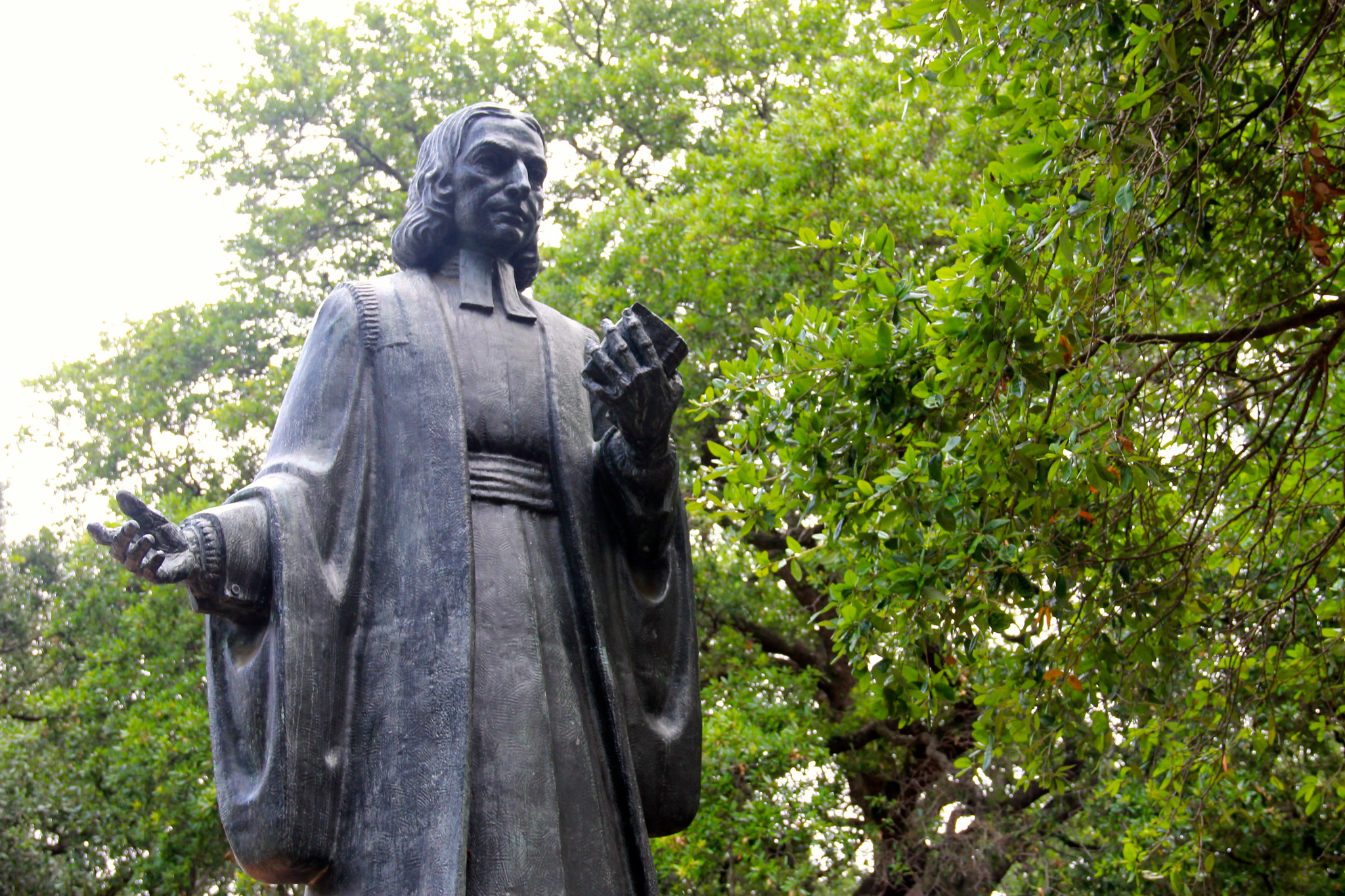
John Wesley Statue, Savannah, GA credit: Daniel X. O’Neil

On September 15, 1790, John Wesley wrote a letter to Robert Carr Brackenbury. Wesley wrote that his “body seems nearly to have done its work and to be almost worn out.” This acknowledgment of his own mortality seems to have led Wesley to reflect on his life and his involvement in Methodism. Wesley’s description of his sense of God’s purpose for “raising up” the “people called Methodists” is now fairly well known:


I am glad brother D — has more light with regard to full sanctification. This doctrine is the grand depositum which God has lodged with the people called Methodists; and for the sake of propagating this chiefly He appeared to have raised us up.


In other words, Wesley believed that there was a particular reason for Methodism. Methodists existed because God had given them a particular corporate calling – to spread the teaching about the possibility of full sanctification.


Wesley argued for and preached entire sanctification, full sanctification, or Christian perfection throughout his ministry.

In the essay “The Principles of a Methodist Farther Explained”, which was published in 1746, Wesley argued that “holiness… is religion itself” (Works, 9:227).

Forty years later in “Thoughts upon Methodism”, he described Methodism as follows, “Methodism… is only plain scriptural religion, guarded by a few prudential regulations. The essence of it is holiness of heart and life” (Works, 9:529).


Wesley defined Christian perfection in “A Plain Account of Christian Perfection” (1777) as:

In one view, it is purity of intention, dedicating all the life to God. It is the giving God all our heart; it is one desire and design ruling all our tempers. It is the devoting, not a part, but all our soul, body, and substance to God. In another view, it is all the mind which was in Christ, enabling us to walk as Christ walked. It is the circumcision of the heart from all filthiness, all inward as well as outward pollution. It is a renewal of the heart in the whole image of God, the full likeness of Him that created it. In yet another, it is the loving God with all our heart, and our neighbour as ourselves. (Works, Jackson, 11:444)


When Wesley talked about growth in holiness, and the ultimate goal of being made perfect in love, or being entirely sanctified, he was adamant that sanctification is by faith, just as justification is by faith.


In one of his best known sermons, “The Scripture Way of Salvation” (1765), Wesley described the faith by which Christians are entirely sanctified as a faith that:

1. God has promised this in Scripture.

2. What God promises, God is able to do.

3. God is able and willing to do it now.

4. God actually does this.


Wesley concluded the sermon by exhorting his audience to seek this faith now:

And by this token you may surely know whether you seek it by faith or by works. If by works, you want something to be done first, before you are sanctified. You think, I must first be or do thus or thus. Then you are seeking it by works unto this day. If you seek it by faith, you may expect it as you are; and expect it now. It is of importance to observe, that there is an inseparable connexion between these three points, –expect it by faith; expect it as you are; and expect it now! To deny one of them, is to deny them all; to allow one, is to allow them all. Do you believe we are sanctified by faith? Be true then to your principle; and look for this blessing just as you are, neither better nor worse; as a poor sinner that has still nothing to pay, nothing to plead, but “Christ died.” And if you look for it as you are, then expect it now. Stay for nothing: why should you? Christ is ready; and He is all you want. He is waiting for you: He is at the door! (Works, 2:169.)


Though Christian perfection is not often taught or preached by contemporary Methodists, it is still part of official United Methodist teaching.

“The Confession of Faith of the Evangelical United Brethren Church”, which is part of United Methodism’s doctrinal standards, contains this beautiful statement on Christian perfection:

Article XI—Sanctification and Christian Perfection

We believe sanctification is the work of God’s grace through the Word and the Spirit, by which those who have been born again are cleansed from sin in their thoughts, words and acts, and are enabled to live in accordance with God’s will, and to strive for holiness without which no one will see the Lord.

Entire sanctification is a state of perfect love, righteousness and true holiness which every regenerate believer may obtain by being delivered from the power of sin, by loving God with all the heart, soul, mind and strength, and by loving one’s neighbor as one’s self. Through faith in Jesus Christ this gracious gift may be received in this life both gradually and instantaneously, and should be sought earnestly by every child of God.

We believe this experience does not deliver us from the infirmities, ignorance, and mistakes common to man, nor from the possibilities of further sin. The Christian must continue on guard against spiritual pride and seek to gain victory over every temptation to sin. He must respond wholly to the will of God so that sin will lose its power over him; and the world, the flesh, and the devil are put under his feet. Thus he rules over these enemies with watchfulness through the power of the Holy Spirit. (Book of Discipline, 75.)


In addition to official United Methodist doctrine, every pastor who is ordained in the UMC must answer these three questions:

1. Are you going on to perfection?

2. Do you expect to be made perfect in love in this life?

3. Are you earnestly striving after it?

The anticipated answer to each of these questions is: “Yes, by the grace of God.”


Proclaiming and defending Christian perfection was one of Wesley’s deep passions, largely because he believed that God had given this teaching to Methodism in order to spread the good news that we can actually live fully for God in this life.


I am a Methodist because I believe, by the grace of God and the power of the resurrection of Jesus Christ, that we can experience freedom from sin now. I believe we have been entrusted with the most audacious, bold, and positive vision for the possibilities of transformation that are available on this side of Easter. I do not believe that the Christian life must be one of futility or frustration, where one does the best they can but is not able to completely give their lives in obedience to Christ.

By faith in Jesus, all who are created in the image of God can experience not only the joy of having our sin cancelled, but the deeper joy of experiencing God break the power of cancelled sin, as Charles Wesley so eloquently put it.

Teaching and preaching the possibility of being made perfect in love for God and neighbor, and seeking to actually become entirely sanctified are the reasons Methodism was “raised up.”

May we remember who we are and why the Holy Spirit brought us to life.

Kevin M. Watson teaches, writes, and preaches to empower community, discipleship, and stewardship of our heritage. Connect with Kevin here. Get future posts emailed to you here. Affiliate links used in this post.

The Gospel in a Wesleyan Accent #andcanitbe

13 Wednesday Mar 2013

Posted by Kevin M. Watson in Christian Living, Ministry, Wesley

≈ 14 Comments

Tags

#andcanitbe, gospel, Methodism, Wesley, Wesleyan tradition

How do you preach the gospel in a Wesleyan accent? This has been on my mind quite a bit over the last month. My last two blog posts were about this to some degree. In the first post, I discussed my sense of the current state of United Methodism, arguing that what we are in favor of is not good enough. One of the key arguments of that post was that United Methodism’s common discourse is thin and impoverished doctrinally. Another way of putting it is that there seems to me to be deep disagreement about what we are for. It is more clear that we are confident that we can change the world than that we believe that we are desperately dependent on the Triune God to do anything that matters.

A few days later I wrote another post noting that the Wesleyan message is almost entirely invisible in print and social media in comparison to other expressions of Christianity. The conversation from the initial question I raised has taken on a life of its own, particularly with the use of the hashtag #andcanitbe on twitter. (To be clear, I did not come up with the idea for the hashtag and I do not have any control over what is happening with this conversation, which I’m sure is obvious to anyone who uses twitter – nobody controls what happens there! Please do feel free to follow me [@kevinwatson] and contribute to the conversation.)

Those two posts were more related for me than I initially realized. I am starting to wonder if one of the most significant factors in the decline of the United Methodist Church is an inability to agree on and articulate a clear and compelling theology. Some see this as an asset of contemporary Methodism – there is plenty of room to agree to disagree. But I wonder what the fruit is of this “big tent” vision of Methodism. Relating this to my second post, I suspect that the Wesleyan message is invisible because those who claim to be Wesleyan do not themselves agree on what the Wesleyan message is?

As the #andcanitbe conversation has gained some momentum, I have been asking myself what my hopes are for this conversation. Here are my current hopes:

First, I want to see God show up in amazing ways. I want to see broken and hurting peoples’ lives changed by the amazing grace of God. This is really central to everything else for me. I want to be a part of something where I can say, “God did that” and where everyone knows that is absolutely the case. Not that we did something cool for God, but that the almighty One dwelt among us in tangible ways.

Second, for #andcanitbe more specifically, I hope that the conversation will result in an articulation of the gospel in a particularly Wesleyan accent with clarity and conviction to a broader audience. I really appreciated the phrase Matt Judkins (@matt_judkins) used early on. He spoke of the need to identify “core unifying commitments” of the Wesleyan tradition. I would love to see a result of this conversation be a network of spirit-filled women and men who have clarity about the key unifying beliefs and practices for contemporary Christianity. I would begin by naming the following as core beliefs: sin and the need for repentance and forgiveness; justification by faith; the new birth and assurance; and sanctification by faith, even unto entire sanctification. Another way this has been put is:

All need to be saved.
All may be saved.
All may know themselves to be saved.
All may be saved to the uttermost.

And it will not surprise those of you who are familiar with my work that I think a crucial core practice of any expression of the gospel in a Wesleyan accent would be Christian conferencing (by which Wesley meant small group accountability structures, like the class meeting and band meeting and not “polite conversation,” which is how some UM leaders are increasingly redefining it). There are, of course, other practices that are crucial as well.

Arguing that core unifying commitments are crucial may be a difficult sell in a tradition that not too long ago was best known for slogans like “you can be anything and be United Methodist” or which defined its distinctiveness not by any particular theological commitments, but by a method of reflecting theologically (the Outlerian Quadrilateral). Thankfully, fewer people today seem to want to be known as the church that has no beliefs. Yet, the UMC has recently presented itself to the world with slogans like “open hearts, open minds, open doors” and by suggesting the need to “rethink church.”

For my part, I am increasingly convinced that an inability to clearly and passionately articulate a common message is a liability, not something to be celebrated. I would even go so far as to say that a clear message that people are burdened to share with as many people as possible is of more urgency than openness.

Third, I would like the conversation to be clearly focused on the Father, Son, and Holy Spirit and not on ourselves. Being in the Pacific Northwest and at Seattle Pacific University where I am around non-UMs at least as often as I am around UMs has made me more aware of the ways that United Methodists (myself included) often talk and act as if we are the center of the ecclesial universe. I have particularly found myself questioning whether the things that people sometimes assert as unique about Methodism would not also be claimed by most of the Church. All that to say, I am less interested in being a part of something that focuses on defining how Wesleyans are different from others, than I am in working to more effectively proclaim the gospel with a Wesleyan accent.

Finally, while I think unity matters, I am not arguing for homogeneity. My sense is that if the Holy Spirit brings renewal to United Methodism, or the broader Wesleyan tradition, the Spirit will bring together a variety of voices from miraculously different backgrounds, who feel a common leading to articulate a message that is theologically in harmony and not a cacophony. In other words, I expect that if God does show up in miraculous ways, one fruit will be that people who have not been working together will start working together. People would become deep partners in ministry with people they have never met before and would not have met if God had not sovereignly brought them together. A sign of revival would be the Holy Spirit bringing people together from different cultures, races, ethnicities, and genders. I am thinking of Pentecost. I am thinking of early American Methodism. I am thinking of Azusa Street. And I am thinking of Revelation 7:9-17:

After this I looked, and there was a great crowd that no one could number. They were from every nation, tribe, people, and language. They were standing before the throne and before the Lamb. They wore white robes and held palm branches in their hands. They cried out with a loud voice: ‘Victory belongs to our God who sits on the throne, and to the Lamb.’ All the angels stood in a circle around the throne, and around the elders and the four living creatures. They fell facedown before the throne and worshipped God, saying, ‘Amen! Blessing and glory and wisdom and thanksgiving and honor and power and might be to our God forever and always. Amen.’ Then one of the elders said to me, ‘Who are these people wearing white robes, and where did they come from?’ I said to him, ‘Sir, you know.’ Then he said to me, ‘These people have come out of great hardship. They have washed their robes and made them white in the Lamb’s blood. This is the reason they are before God’s throne. They worship him day and night in his temple, and the one seated on the throne will shelter them. They won’t hunger or thirst anymore. No sun or scorching heat will beat down on them, because the Lamb who is in the midst of the throne will shepherd them. He will lead them to the springs of life-giving water, and God will wipe away every tear from their eyes.’

Now that, I want to be a part of! Come Lord Jesus.

The Methodist Class Meeting for the 21st Century: The Role of the Class Leader

26 Thursday Aug 2010

Posted by Kevin M. Watson in Accountability, Christian Living, Methodist History, Ministry, Wesley

≈ 18 Comments

Tags

Accountability, class leader, class meeting, Methodism, small groups

This is the sixth post in a series on the contemporary relevance and practical application of the Methodist class meeting. Here is a brief outline of what has been discussed so far:

    1. A brief history of the origin and development of the class meeting in early Methodism.
    2. Discussion of the potential contributions the class meeting can make for 21st century Methodism and compared and contrasted the class meeting to Sunday school classes, small groups and accountability groups.
    3. Discussion of the target audience for the 21st century class meeting.
    4. Top Ten ways to guarantee that your class meeting will fail.
    5. Addressed the concern that classes would be judgmental and exclusive.

In early Methodism, the class leader was a crucial position. The class leader was seen as the spiritual leader of the people in his or her class meeting. They kept track of attendance and visited people who missed the weekly meeting. They also provided support and encouragement as needed. Because the focus of this series is on the contemporary relevance and application of the class meeting, I am going to skip an elaborate fleshing out of the details of the history of the early Methodist class leader, and move directly to a discussion of what this role might look like in contemporary practice. (The “General Rules” and other available sources can be consulted for more information on the function of the class leader in early Methodism. Of course, if you have specific questions, feel free to raise them and I will do my best to address them.)

I believe that the class leader and the ability of churches to identify gifted class leaders will be the single most important factor in the success or failure of a class meeting.

As I currently understand it, the imagery of the class leader as shepherd is helpful for fleshing out the function of the class leader for the contemporary church. The class leader is the shepherd of his or her flock, and as such there are two key things that a class leader should do: 1) go after lost sheep; 2) keep the rest of the sheep moving in the right direction. By lost sheep, I mean someone who stops coming to the class meeting. When this happens, the class leader should be the first person to go after them, expressing that they have been missed, asking if they are doing ok, and asking the person if they are willing to come back to the class meeting.

Second, by keeping the rest of the sheep moving in the right direction, I mean that the class leader is the person who is responsible for making sure everyone has a chance to answer the question, “How is your life in God?” They are also responsible for making sure that something else does not take over the class meeting. For example, that it does not become a curriculum driven group, rather than a place where people watch over one another in love and discuss the current state of their souls. And most boldly, as the shepherd of the flock, the class leader, by the grace of God, seeks to move the class away from sin and closer and closer to mature discipleship.

Finally, at a very practical level, the class leader is the one who runs the meeting. The most important part of this dynamic is that the class leader should begin and end the meeting with a prayer (or ask someone else, in advance, if they would be willing to pray) and then the class leader should begin the meeting by being the first one to answer the question, “How is your life in God?” This is important because it gives an example of how the question can be answered for any new visitors and it eases the anxiety and uncertainty in the group about who is going to go first. After the leader is done, she should ask the next person the question.

At this stage, several things come to mind that the class leader should not do:

The class leader is not a teacher. It is not the class leaders job to come with all of the answers. And it is absolutely not their job to come with a lesson to teach or a topic to study. Class leaders should see themselves as facilitators, not teachers.

The class leader should not allow the weekly meetings to last more than an hour and a half, and a successful class meeting can occur in one hour. Of course there should be freedom for the Spirit to move, and there will be weeks when it is obvious to everyone that the group is not done yet. However, this should be the exception and not the rule. People will stop coming to the class if it becomes a weekly marathon meeting.

The class leader should not allow the class to grow beyond twelve members. As the group grows, the class leader should seek to discern who God may be calling to lead a new class. The class leader should talk to that person outside of the class and express their feeling that they believe this person would be an excellent class leader, and then ask them to prayerfully consider leading a new class. Once a new leader has been identified, the group should divide.

The class leader should not feel the need to respond to every person at every meeting. Often there will be no need for any response to someone’s revelation of how things are going in their life with God. Other times someone besides the class leader will have exactly the right thing to say.

There is much more that could be said, but I am going to stop here (I need to get back to reading). What are your thoughts? What have I missed? What do you think would be crucial for a class leader to do? What would be essential for a class leader to avoid?

Is the Class Meeting Judgmental and Exclusive?

11 Wednesday Aug 2010

Posted by Kevin M. Watson in Accountability, Christian Living, Methodist History, Ministry, Wesley

≈ 9 Comments

Tags

Accountability, Christian formation, Christian living, class meeting, exclusive, judgmental, Methodism, small groups

This is the fifth post in a series on the contemporary relevance and practical application of the Methodist class meeting. In the first post, I gave a brief history of the origin and development of the class meeting in early Methodism. In the second post I discussed the potential contributions I believe the class meeting can make for 21st century Methodism and compared and contrasted the class meeting to Sunday school classes, small groups and accountability groups. In the third post I discussed the target audience for the 21st century class meeting. In the fourth post I revealed (with tongue somewhat in cheek) ten ways to guarantee that your class meeting will fail. In this post I will discuss one of the main concerns that people have with any form of accountable discipleship – the fear that they will be judged.

One of the main fears or concerns that keeps people from joining a group like a class meeting is that they are afraid they will be judged. Part of the fear is that if I knew who you really were, I would never be able to accept you or continue to love you. And if I don’t meet your expectations, will you exclude me? Will I be told I am not good enough?

Judged. Excluded. Nobody likes to feel either judged or excluded. Most people will actively avoid placing themselves in situations where they know in advance they will feel judged or excluded. And The United Methodist Church has spent millions of dollars on an add campaign that, among other things, tries show that the UMC is neither judgmental nor exclusive.

So, how does this relate to the class meeting?

If we are honest, the class meeting is unavoidably a place where judgments are made. And it is a place of exclusion. But it makes all the difference in the world what judgments are made and what is excluded.

In contemporary Methodism, one of the quickest ways to dismiss something is to label it as judgmental or exclusive. Could it be that there is a place for both in the Church and in the Christian life?

Again, what we are excluding makes all the difference in the world. The first Methodists were obsessed with trying to figure out how best to exclude sin from peoples’ lives. They were clear that there are things that are not of God, that keep us from growing in our relationship with God. If we are to pursue growth in holiness, these things must be excluded. They are not neutral. It is not a matter of indifference if they are allowed to reign over our lives.

I doubt that many people would argue that Christians should not try to remove sin from their lives. The next part may be more contentious. One way of understanding early Methodism is that it excluded people who were not serious about following Christ. The Methodist movement was not designed to make people comfortable in listless apathetic discipleship. Rather, it was designed to help people experience the fullness of the abundant life that God offers every single person in Christ.

Hear me carefully: I believe that contemporary Methodism should welcome every single person, should reach out to every single person with the good news of what God has done for them in Jesus Christ. The gospel is not only for some, it is for everyone. In that sense the message of contemporary Methodism should be radically inclusive. But I do not believe that contemporary Methodism should pass out cheap grace. I do not believe we should tell people that it is ok if they profess faith in Christ, but do not allow it to impact the way that they live their lives.

I don’t have the implications of this fully worked out. I think that Methodism needs to wrestle a bit with whether excluding people who are not interested in following Christ may be necessary in order to help those who are to grow in their faith. Ultimately, the way I would see this working right now, it would not literally involve excluding people from the UMC, but it would involve intentionally not catering to people who are interested in the church only because it makes them feel comfortable, because it is their country club. The efforts and energies of the church should be fully focused on proclaiming the good news and inviting people into the new way of life that is available in the light of this news. This way of life excludes sin in order to more fully love God and serve others. In American culture today, I believe that something like the class meeting has enormous potential to help people live more fully into this new way of living.

What about judgment?

I want to say two things about judgment, as it relates to the class meeting for the 21st century. First, the fear of being judged, seems to me, to be related to a deeper issue – trust. Imagine having lunch with a perfect stranger, someone you have never met. How would you feel if they began to express concerns about the way that you were living your life? Probably not good.

Now imagine having lunch with the person you trust and respect more than anyone else in the world. How would your reaction be different if they expressed similar concerns? I hope your reaction would be very different. There are a handful of people in my life, who, if they sat me down and expressed concerns about the decisions I was making, I would listen very carefully. There are people whom I trust and respect so much that my instinct would be that they could see things about my life more clearly than I can. I would listen and likely take their advice because I know that they love me. I know that they care about me more than about whatever part of my life we are discussing.

My point is this: I am not sure it is healthy to avoid ever being in situations where you are judged. In my own life, I know that it would make me incredibly vulnerable to self-deception or to rationalization. When it comes to being judged, the identity of the person making the judgments makes all the difference in the world.

Having said that, I don’t think the contemporary class meeting is best conceived as a place where other people make judgments about your life. In the classes I have been a member of, it has been rare for someone to judge me or call me to account for something.

This leads to the second point about judgment, the primary person judging you in a class meeting is yourself. The class meeting is a place where you take a weekly inventory of your own life. You make judgments about how things are going in your life with God. Some weeks you will judge that things are going very well, that you have been particularly aware of God’s grace and have cooperated with this grace. Other weeks, for whatever reason, you will judge that things are not going very well. On other occasions, you may be doing everything right, and yet, God seems strangely distant. The point is that in a class meeting, it is not the group’s job to tell you about your relationship with God, or evaluate it. Rather, you are telling the group about your experience from the past week.

Sometimes judgment and exclusion are the bogey men of the Church. Our fear of them can cause us to forget that they are descriptive terms, that can describe harmful events in some contexts and healthy, even necessary, events in other situations. The class meeting has the potential to be a place that is judgmental and exclusive in a negative sense. However, if this happens it is a malfunction of the class meeting, and not its best use. On the other hand, the class meeting has the potential to create a place where we can gather together to make judgments about our own lives with God, with the goal of removing (or excluding) the things that are hindering our growth in grace and nurturing the things that are an asset to our discipleship.

What do you think?

Top Ten Ways to Guarantee that Your Class Meeting will Fail

09 Monday Aug 2010

Posted by Kevin M. Watson in Accountability, Christian Living, Methodist History, Ministry

≈ 15 Comments

Tags

Accountability, Christian formation, class meeting, Methodism, small groups

This is the fourth post in a series on the contemporary relevance and practical application of the Methodist class meeting. In the first post, I gave a brief history of the origin and development of the class meeting in early Methodism. In the second post I discussed the potential contributions I believe the class meeting can make for 21st century Methodism and compared and contrasted the class meeting to Sunday school classes, small groups and accountability groups. In the third post I discussed the target audience for the 21st century class meeting. In this post I will give you the top ten ways to guarantee that your class meeting will fail.

Yep, you read that right. Is there a lot of pressure in your church, district, or annual conference to start a class meeting in your church? But you don’t really like the idea? Well, here is how you can start one, but torpedo it. If you do these ten things, I guarantee that your class meeting will be an utter failure.

(In case you missed it, that was an attempt at humor.)

On a more serious note, the intent of this post is to identify some of the major things in small group dynamics that can undermine the vitality or long term success of a group. If you are serious about starting something like a class meeting today, you will need to think about how you are going to address some of the challenges that come with starting such a group. Some of the things I will mention can be pretty touchy, and may even make people angry if you call them out on it in the moment. One strategy that can help the group be aware of some of these dangers is to name them before they become a problem. There is a decent chance on any given day nearly everyone in the group will struggle with at least one of these things. Finally, humor can be a way to address serious things in a way that people can hear more easily. So, talking about how to guarantee the failure of a class meeting can be a disarming way to name some things that might make people feel a bit defensive.

Ok, without further ado, here are the “Top Ten Ways to Guarantee that Your Class Meeting will Fail”:

#10: Never start one.

This one is pretty straight forward. The easiest way to guarantee that your class meeting will fail is to talk about it and consider it, but never actually start one.

#9: Meet at an inconvenient or irregular time.

Another way to ensure that your class meeting will fail is to meet at a time that many people who would like to join the group simply cannot attend. This is probably the one that is most obvious, and least likely to be the downfall of a sincere effort to start a class. The more likely obstacle would be failing to meeting regularly and consistently. The group is most likely to succeed if the group meets at the same time and place every week. It may not necessarily be fatal to the group, but if the meeting place changes, someone will inevitably show up at the wrong location one week. Similarly, if the group is meeting at your house and the group does not meet at the same time each week, you will inevitably have someone forget when the group is meeting and show up at your house expecting to meet.

#8. Turn the class meeting into a curriculum driven group.

About 3 – 6 months after the group starts meeting, people will begin to get restless and wonder what is next. A well-intentioned person may suggest that the group read and discuss a book they just read that really inspired and challenged them in their walk with God. If and when this happens, there needs to be a gentle stubbornness by the group, and particularly the leader, that the group is not going to become a study group. Bible studies and other study groups are not bad, but they are not class meetings. For a class to succeed today, the group needs to have a deep commitment that the purpose of the group is to take a weekly inventory of how things are going in each person’s life with God.

#7: Forget the differences between classes and bands.

Classes are groups with men and women, married and single people all together. The group should have somewhere around 7 to 12 people in it. The point of the group is to weekly gather to support and encourage each other in the common goal of growing in faith and being transformed by the grace of God. The basic question of the group is: “How is your life in God?”

Bands are groups that are either all men or all women, and are sometimes also divided based on whether the members are married or single. Bands should have about 5 people in them. The point of bands is to bring actual sins that have been committed into the light, to encourage one another in the common goal of pursuing entire sanctification, or being made perfect in love for God and neighbor. The basic question of the band meeting is: “What sins have you committed since our last meeting?”

If someone thinks they are joining a class, but it functions like a band meeting, they will likely feel that they are in over their heads. Further, there is a greater degree of spiritual maturity required of the band than there is in the class meeting, so if people jump straight into the bands before they are ready, a host of issues can arise.

#6. Select the leader based on anything other than spiritual maturity and spiritual leadership.

The role of the leader in the class meeting is important. They are the one who will gently move the conversation on as needed, ensure that every person has a chance to talk, and otherwise facilitate the meeting. A class meeting that has a spiritual leader of maturity leading the group will have a key person in place to guide the group through its development and through challenges the group may face. This person is also a key person for helping to set the tone for the group by being the first one to answer the question “How is your life with God?” every week and by keeping the group focused on its purpose.

#5. Allow one person to dominate the conversation.

My guess is that this is one that basically every group will struggle with. For one thing, classes will be most comfortable for people who like to talk and process things by talking about them. This is one area that is particularly important to address up front. At the beginning of a new class meeting, the leader should stress that it is important that every person be given the opportunity to talk. The leader may even want to acknowledge that some people talk more easily than others, they may need to challenge themselves to be more concise and aware of how long they have been talking. On the other hand, those who are less comfortable talking may need to challenge themselves to talk a bit more. If this is addressed up front, then it will not seem as personal if the leader gently suggests that the conversation needs to move to the next person during a meeting.

When this needs to happen, and it will need to happen, the leader should not say, “You have been talking for too long, let’s move on.” Almost always, when someone talks too long, even though everyone else may be suffering over how long they have been talking, the person who is actually talking has no idea how long it has been. The best approach is to gently interrupt by thanking them for sharing, briefly identifying one thing they have said that was particularly appreciated, and then simply asking the next person the question, “How is it with your soul?” or “How is your life in God?” The person who is interrupted may feel embarrassed, but if the leader moves the attention to someone else, the person who is embarrassed won’t have to have the double embarrassment of having the attention be on them.

By the way, this one hits pretty close to home for me, because I am one of the people who processes things by talking. As a result, I have to really work to be aware of how long I have been talking. I also have to work on being concise. (I mean, look how much I just wrote about this… just be glad we weren’t talking about this one in person!)

#4. Have all the answers.

This is a catch-all for several ways to ruin a class meeting. In small group dynamics there is often an expert who emerges in the group. You probably know what I am talking about, someone who has all the answers. They are the only person who fails to realize when a rhetorical question has been asked. To them, every question has an answer. And they always know what the answer is. These people also have the best of intentions. They are passionate about their faith and are eager to share what they have learned with others. They really believe they are helping. However, one of the best ways to stifle a conversation is by being a know-it-all. Other people in the group will be less likely to be vulnerable and share doubts, anxieties, or concerns that they are having if there is one person who always has everything figured out and leaves no room for other people to be in flux, or working through things.

Another way this can manifest in a group is if the leader sees herself as a teacher, not a facilitator. This can be deadly, because if the leader is the one causing the problem, it will be very difficult for the group to overcome. So, if you are involved in starting something like a class meeting, know that it is not your job to have a solution to every problem that people in your class raise. You are not there to teach people how to be better Christians, you are there to walk with them as they seek God’s transforming grace. And, you are there because you need them to walk with you as you seek God’s transforming grace in your own life.

One more thing: If you have been in a lot of small groups and have never noticed that this is sometimes a problem of small group dynamics… you are probably the one with all the answers. (Sorry, someone had to tell you.)

#3. Hide during the meeting.

I don’t mean literally hiding, like behind the sofa… though that would certainly be a problem, and really weird. By hiding I mean either not talking or not being honest about what is really going on in your life with God. This doesn’t mean that the class meeting is the place for your to bring all the skeletons that have been in your closet. In fact, the class meeting is not the place for that.

Members who have had a bad week, may be tempted to gloss over their struggles by saying that things have been fine, or ok. If you are in a class meeting for an extended period of time, you will almost certainly have weeks where it is NOT well with your soul. It it ok to be honest about that. In fact, it is vital for the future wellness of your soul to be honest when things are not going well. When it is not going well in your life with God, this is the time when the class meeting may be the biggest means of grace in your life. If you are honest, you will realize you are not alone. You will receive sympathy and prayers from the group. And in verbalizing your spiritual malaise, you may learn about what is going on in your life with God.

Related to this, there is also sometimes a tendency in class meetings to feel like you have to one-up yourself every week. Resist this temptation. Simply be honest and real.

#2. View the group as a place to gather gossip.

One of the best ways to destroy a class meeting is by breaking the confidence of the group. It needs to be clearly said that what is shared in the class meeting is confidential. It is not a topic of conversation with friends or family members outside of the group. If there is some reason that talking with someone else might be helpful to the person who shared, what was said in the group can only be shared with someone outside of the group if the person who shared it gives their permission.

If you struggle to keep secrets, or to keep things to yourself, the class meeting may not be for you. Confidentiality is not optional.

#1. Be unwilling to be challenged to grow in your faith and be transformed by the grace of God.

The class meeting is an invaluable asset for people who desire to grow in their faith and seek to be transformed by the grace of God. When people gather together to support and encourage one another, God will also be there. The class meeting, however, is not for those who do not want to be changed. It is not for those who are content to profess faith in God the Father, Son, and Holy Spirit on Sunday morning and then live the rest of the week as if there is no God. The class meeting is for those who want to a tool that will help them check in to see how their faith is impacting their life.

All of the concerns about what might go wrong cannot be addressed in advance. We are messy people. We are good at sinning. Something could go wrong. But, if we believe that the Holy Spirit is active and present with us, we don’t have to have everything mapped out in advance. We should be prudent in doing what we can to make a group like a class meeting as likely to succeed and be a blessing to its members as possible. However, we should also leave room for the Spirit to guide and direct each meeting.

Nearly in the top ten: Meet for more than 1.5 hours

Initially, the desire to allow the meeting to continue comes because something exciting is happening in the group. Someone has some sort of breakthrough and the group wants to allow them to process it. This is well and good, and even ok if it happens occasionally. However, it should be rare. If a weekly meeting consistently lasts longer than an hour and a half, people will begin to feel exhausted just by the thought of going to the group. The leader of the group should remember that a commitment to attend a group once a week for 1-1.5 hours is already a big time commitment. Leaders should work to formally end the meeting on time by closing with a prayer. Conversation can certainly continue among those who wish to stay, or talk at their cars. But formally ending the meeting gives those who need to leave the opportunity to do so.

Be sure you don’t miss future posts. Did you know you can subscribe to deeply committed by email? All you have to do is click this link and enter your email address. You will then receive an email that asks you to verify the subscription. It is both free and easy.

The Methodist Class Meeting for the 21st Century: Who Is This For?

04 Wednesday Aug 2010

Posted by Kevin M. Watson in Accountability, Christian Living, Methodist History, Ministry, Wesley

≈ 11 Comments

Tags

Accountability, Christian living, class meeting, Methodism, small groups

This is the third post in a series on the contemporary relevance and practical application of the Methodist class meeting. In the first post, I gave a brief history of the origin and development of the class meeting in early Methodism. In the second post I discussed the potential contributions I believe the class meeting can make for 21st century Methodism and compared and contrasted the class meeting to Sunday school classes, small groups and accountability groups. In this post I will discuss the target audience for the 21st century class meeting.

Simply put, class meetings are designed for anyone who wants to grow closer to God. As I mentioned in the last post, they can help ensure that people do not fall through the cracks in a church. Classes also help people be self-aware of what is happening in their lives as Christians. What difference is their faith making in their life? And they provide a place for people to talk with other people who want to grow closer to God about what is happening in their life with God.

In the last post, John Meunier raised an important issue. John wrote: “Didn’t the class leader have a role that included giving advice and/or reproof as needed? It seems like that would be felt as more intense to most people today. Not as intense as the bands, but more intense than many folks want.”

As far as I can tell, John is right. I think there would be resistance to joining something like a class meeting among many people for two reasons: 1) Generally speaking, Methodists have not been in the habit of talking about their lives with God for a long time. 2) Contemporary Methodism’s desire to avoid being judgmental or condemning has led to an almost total abandonment of any real standards or expectations for its members. This was illustrated recently by, of all people, Jon Stewart who said that Methodism was like the University of Phoenix of religions, you pay $50 check “I agree” and you are saved. Stewart has perhaps given Methodism too much credit for having membership standards – because there is no cost currently associated with being a Methodist.

So, at one level people might be uncomfortable because they are being asked to talk about something they aren’t used to talking about with other people. At another level they might be uncomfortable because they are being asked to make a meaningful commitment to join together with a small group of people with the purpose of growing in their lives with God.

My response is that comfort is not the best indicator of whether or not something is good for you, or whether you need to do something.

For my first two years as a Ph.D. student, I did not take good care of my body. I did not exercise and I ate whatever sounded good. This approach was, generally speaking, very comfortable. Recently, I committed to exercise 20 minutes or more at least 3 times a week. The first time I ran (using that word very loosely!) was not comfortable, in fact it was painful. I thought I might throw up at the end of those first 20 minutes and the next day my legs were sore. I am slowly getting in better shape, but running (using that word just a bit less loosely now) is never comfortable for me.

This may not be the best example, but we could easily come up with many other examples of how comfort is not necessarily a good or accurate indicator of right or wrong, or of what is best for us.

More directly to John’s concern, in my experience people who are gifted at leading groups like class meetings are quick to listen and both cautious and sensitive about offering advice or correction. At this point, I am going to set this aside, because I plan on writing more extensively about the role of the class leader in future posts – which is what I think is primarily at issue here.

So far I have argued that the class meeting is for everyone who wants to grow closer to God, but I have also admitted that it will likely intimidate many people who sincerely desire to grow closer to God. What is the best way to address this tension?

This is a key place where pastors and lay leaders have an opportunity to challenge people to move outside of their comfort zone. An effective way to address this tension would be for the person who has the vision for starting groups like this to acknowledge that the thought of joining something like this might be a little bit scary, but that is actually a very normal reaction. One thing I have done to ease this tension is to make the first meeting more of an information session, where people will have the chance to learn more about the group, what its goals are, and why someone would benefit from being a part of it. I always stress that people who are interested, but not sure if this is for them should come, that coming to the first meeting is part of discerning whether this is for them. It is NOT a commitment to join the group. In other words, you can give people the freedom to come and learn more, without feeling like showing up means they are going to be forced to permanently join.

More importantly, anyone who is trying to start these type of groups needs to be able to make the case for why facing the fears or discomfort that will result from getting involved will more than offset the initial discomfort. If someone has been part of a group like this before, it would be very appropriate for them to share the hesitation they may have initially had to joining and then to share the ways that the group was a blessing and actually did help them grow closer to God.

Ultimately, I believe there are a significant number of Methodists who want to grow closer to God so much so that they are willing to move outside of their comfort zone and take a risk if they are convinced that the risk is likely to help them actually grow in their faith. The key, then, will be to make a persuasive case that this type of group is a key tool to that end. It might not hurt to remind them that for our spiritual ancestors, it was believed to be an indispensable tool.

What do you think? Have you been in a group like this? Did it help you grow closer to God?

If you are just joining this conversation, welcome! Please continue to feel free to ask any questions that this post may have raised for you. You can email me directly at deeplycommitted at gmail dot com or leave a comment on this post.

The Methodist Class Meeting for the 21st Century: Why Classes?

02 Monday Aug 2010

Posted by Kevin M. Watson in Accountability, Christian Living, Methodist History, Ministry, Wesley

≈ 22 Comments

Tags

Accountability, class meeting, Methodism, small groups, Sunday School

This is the second post in a series on the contemporary relevance and practical application of the Methodist class meeting. In the previous post, I tried to make sure we were all on the same page by giving a brief history of the origin and development of the class meeting in early Methodism. In this post I will discuss the potential contributions I believe the class meeting can make for 21st century Methodism (or any Christians who are seeking to grow together in their faith). This post also will answer some of the questions I have received from you about the difference between the class meeting, small groups, and accountability groups.

The key contribution that the class meeting can make to contemporary Christianity is that it provides an entry point for every Christian to be in connection with one another in a way that is focused on the dynamic process of the Christian life. In general, the Christian life is a fluid process, people tend to either grow and mature in their faith or they tend to decrease in their commitment to their faith.

The class meeting is a helpful tool for increasing the likelihood that people will move forward in their faith for at least two key reasons. 1) The class meeting joins people together in small groups so that people are not lost in church. While this may seem most common or most likely in large churches, people can be “lost” in the smallest churches. In churches of almost any size, I suspect there are people who are connected with the church in some way, but who are not really known by other people in the church. This is largely unintentional, but when a church does not plan for ways to try to connect every person who is involved in the life of the church, someone is inevitably going to be left on the sidelines. The class meeting provides a structure that can connect everyone to a small group of people within the community of faith.

2) The format of the class meeting draws attention every week to the reality that the Christian life is not static. Every week each person in the class meeting is asked the simple question: “How is it with your soul?” Or, “How is your life in God?” In the classes that I have been a part of, simply getting into the rhythm of anticipating answering that question each week helps people to be more aware of how God is at work in their lives and how they are cooperating with God, or failing to cooperate with God. The content of the class meeting, then, is the lives of the people who are present. The goal of the class meeting is growth in holiness of the members of the class.

At this point, the difference between the class meeting and most Sunday school classes can be seen. To put it rather starkly, in the typical Sunday school class the content of the class is the Bible or a book of some sort. The goal is to learn new information. In my experience, people feel that a Sunday school class has been successful if at the end of the class they have learned something new, or have come to think about something in a new way.

In theory, and perhaps all too often in reality, someone could attend a Sunday school class for years, learning all kinds of information about the Bible or about Christian beliefs without growing in their faith one bit. Someone could be in a Sunday school class for years and their life with God could be worse at the end of the period of time than it was at the beginning – and it would be possible that nobody else would even know!

In the class meeting, there is no guarantee that the same person would be doing better spiritually. But they would have the opportunity to give voice to their struggles every week and the rest of the people in the group would have some idea of what was going on with them. They would be able to walk with them and pray for them.

The basic difference between the class meeting and Sunday school is that the class meeting focuses on transformation, on us becoming more and more like Christ. The Sunday school class focuses on information, on us learning information about Christ. To be fair, the intent of Sunday school is that this information will help us to live better lives as Christians. However, this is a second step, and one that often does not receive focus. I wonder if many Methodists have become so addicted to informational approaches to discipleship that they no longer think about how what they are learning is impacting the way they are living their lives.

It is difficult to provide a neat distinction between the class meeting and small groups or accountability groups, in part because the class meeting is a type of small group or accountability group. First, a class meeting is a small group, because it is a group that is small. However, a class meeting is a specific type of small group. The point here is that you can talk about a class meeting as a type of small group, but you cannot talk about all small groups as a type of class meeting. The key distinction is that in a class meeting the focus of the group must be on every person having the chance to talk about their life with God every week. If a small group gathers to read and study a book (no matter how amazing the book might be), it is not a class meeting.

Accountability groups are perhaps more similar to class meetings, in that it is generally assumed that an accountability group involves giving an account to the other people in the group. In other words, accountability groups are usually not dependent on curriculum or group study. Rather, accountability groups are oriented toward a voluntary decision to be accountable to a specific group of people for living a certain kind of life, the specifics of which are usually agreed upon by the group.

At one level, the class meeting is an accountability group. In our brief look at the class meeting in early Methodism, we saw that the class meeting was a place where people were held accountable for keeping the General Rules. And yet, at another level, the class meeting is actually a bit less intense than what most people have in mind when they think of being in an accountability group. In the early Methodist structure, the band meeting (a group of about 5 people that involved confessing specific sins) was more similar to the generally understood meaning of an accountability group.

The fact that the class meeting is a less intense form of accountability is a crucial point for understanding its potential contribution to contemporary Christianity. In most conceptions of discipleship or Christian formation, it seems to me that a combination of tools are used. There are usually classes offered that will teach people the basics of the Bible, Christian beliefs, or the particularities of the denomination of which the specific church is a part. However, what is often missing is a basic structure that will bring Christians of all levels of maturity together with the basic goal of living out their convictions.

To put it differently, most people who go to church are not willing to join an accountability group where they meet in order to tell each other the sins they have committed of which they are the most ashamed. The early Methodist approach to Christian formation recognized this and created something that was less intense so that every person could have a place where they did come together to talk at a more general and less invasive level about their life as a Christian. Methodism did not force every one of its members to confess their sins to their peers (or to anyone). However, they did require that every Methodist weekly give an account of how things were going in their walk with God.

In our context, I believe a structure similar to the class meeting would help people connect to one another. It also would help people to get into the habit of being aware of what difference the faith that they profess with their mouths is making in how they actually live their lives.

What do you think? Again, please feel free to continue asking questions about the contemporary relevance of the class meeting, or about this post in particular. You are welcomed to leave your questions as a comment, or email me directly at deeplycommitted at gmail dot com.

← Older posts
Newer posts →

Blog at WordPress.com.

  • Subscribe Subscribed
    • Kevin M. Watson
    • Join 368 other subscribers
    • Already have a WordPress.com account? Log in now.
    • Kevin M. Watson
    • Subscribe Subscribed
    • Sign up
    • Log in
    • Report this content
    • View site in Reader
    • Manage subscriptions
    • Collapse this bar