• About Me

Kevin M. Watson

Kevin M. Watson

Author Archives: Kevin M. Watson

Recommended Resources for Wesleyan Theology

31 Friday May 2013

Posted by Kevin M. Watson in Book Review, Methodist History, Wesley

≈ 5 Comments

Tags

Wesleyan Resources, Wesleyan theology

I was recently asked to write a piece for Seedbed on key texts for understanding Wesleyan theology. Here are the books I recommended:

1. John Wesley’s Sermons: An Anthology, edited by Albert C. Outler and Richard P. Heitzenrater (Abingdon, 1991) or The Sermons of John Wesley: A Collection for the Christian Journey, edited by Kenneth J. Collins and Jason E. Vickers (Abingdon, 2013) when it is released by Abingdon.

2. Key United Methodist Beliefs, William J. Abraham and David F. Watson (Abingdon, 2013).

3. Responsible Grace: John Wesley’s Practical Theology, Randy L. Maddox (Kingswood, 1994).

4. The Theology of John Wesley: Holy Love and the Shape of Grace, Kenneth J. Collins (Abingdon, 2007).

5. Mainline or Methodist: Rediscovering our Evangelistic Mission, Scott Kisker (Discipleship Resources, 2008).

6. Wesley and Sanctification, Harald Lindström (Francis Asbury Press, 1996).

7. Aiming at Maturity: The Goal of the Christian Life, Stephen W. Rankin (Cascade Books, 2011).

In the original post, I provided a brief introduction to each book. You can read the entire post here.

What resources do you see as essential to understanding Wesleyan theology?

Christian Perfection: The Reason for Methodism

27 Monday May 2013

Posted by Kevin M. Watson in Methodist History, Wesley

≈ 12 Comments

Tags

Christian Perfection, entire sanctification, John Wesley, Methodism

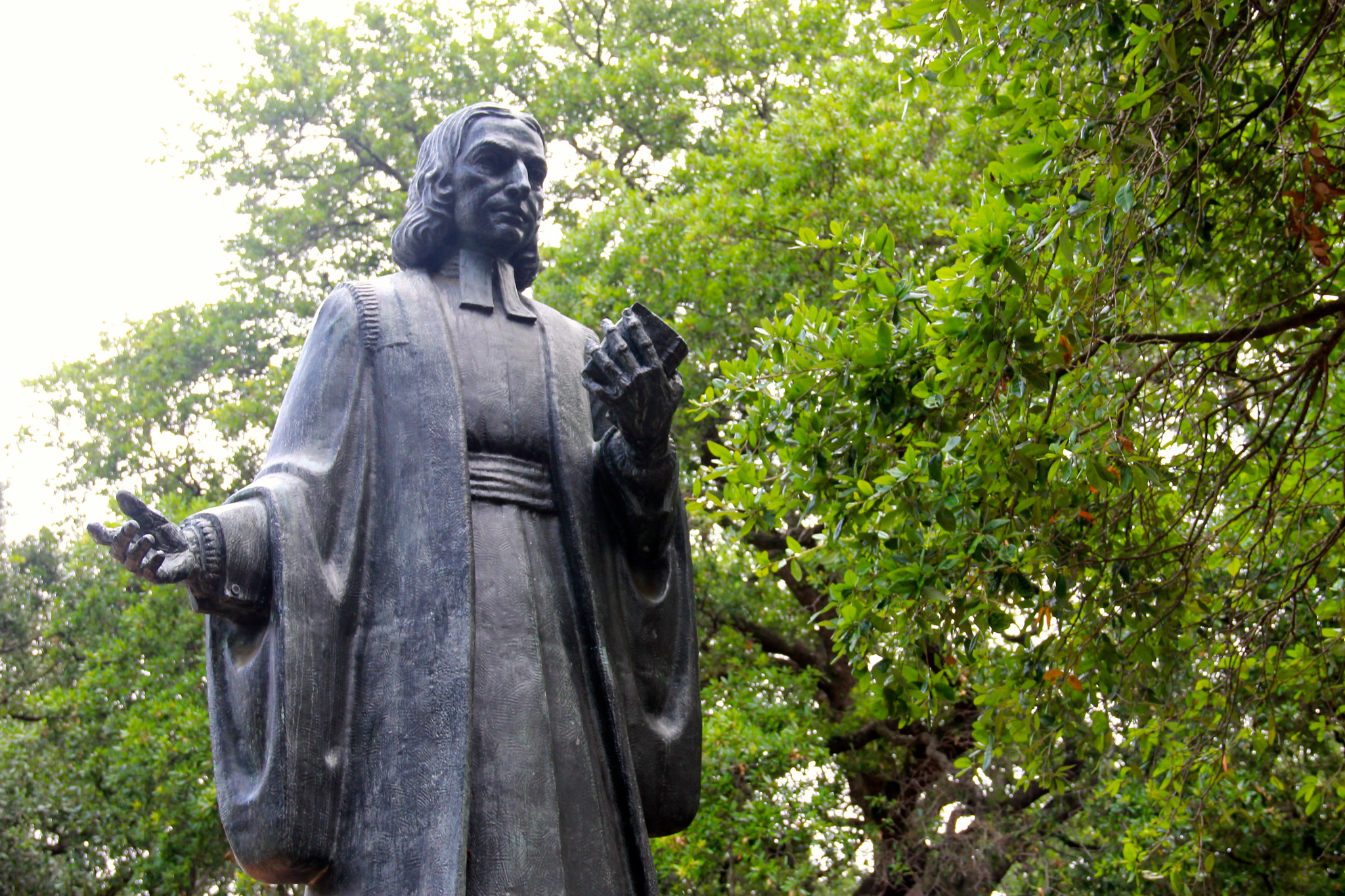
John Wesley Statue, Savannah, GA credit: Daniel X. O’Neil

On September 15, 1790, John Wesley wrote a letter to Robert Carr Brackenbury. Wesley wrote that his “body seems nearly to have done its work and to be almost worn out.” This acknowledgment of his own mortality seems to have led Wesley to reflect on his life and his involvement in Methodism. Wesley’s description of his sense of God’s purpose for “raising up” the “people called Methodists” is now fairly well known:


I am glad brother D — has more light with regard to full sanctification. This doctrine is the grand depositum which God has lodged with the people called Methodists; and for the sake of propagating this chiefly He appeared to have raised us up.


In other words, Wesley believed that there was a particular reason for Methodism. Methodists existed because God had given them a particular corporate calling – to spread the teaching about the possibility of full sanctification.


Wesley argued for and preached entire sanctification, full sanctification, or Christian perfection throughout his ministry.

In the essay “The Principles of a Methodist Farther Explained”, which was published in 1746, Wesley argued that “holiness… is religion itself” (Works, 9:227).

Forty years later in “Thoughts upon Methodism”, he described Methodism as follows, “Methodism… is only plain scriptural religion, guarded by a few prudential regulations. The essence of it is holiness of heart and life” (Works, 9:529).


Wesley defined Christian perfection in “A Plain Account of Christian Perfection” (1777) as:

In one view, it is purity of intention, dedicating all the life to God. It is the giving God all our heart; it is one desire and design ruling all our tempers. It is the devoting, not a part, but all our soul, body, and substance to God. In another view, it is all the mind which was in Christ, enabling us to walk as Christ walked. It is the circumcision of the heart from all filthiness, all inward as well as outward pollution. It is a renewal of the heart in the whole image of God, the full likeness of Him that created it. In yet another, it is the loving God with all our heart, and our neighbour as ourselves. (Works, Jackson, 11:444)


When Wesley talked about growth in holiness, and the ultimate goal of being made perfect in love, or being entirely sanctified, he was adamant that sanctification is by faith, just as justification is by faith.


In one of his best known sermons, “The Scripture Way of Salvation” (1765), Wesley described the faith by which Christians are entirely sanctified as a faith that:

1. God has promised this in Scripture.

2. What God promises, God is able to do.

3. God is able and willing to do it now.

4. God actually does this.


Wesley concluded the sermon by exhorting his audience to seek this faith now:

And by this token you may surely know whether you seek it by faith or by works. If by works, you want something to be done first, before you are sanctified. You think, I must first be or do thus or thus. Then you are seeking it by works unto this day. If you seek it by faith, you may expect it as you are; and expect it now. It is of importance to observe, that there is an inseparable connexion between these three points, –expect it by faith; expect it as you are; and expect it now! To deny one of them, is to deny them all; to allow one, is to allow them all. Do you believe we are sanctified by faith? Be true then to your principle; and look for this blessing just as you are, neither better nor worse; as a poor sinner that has still nothing to pay, nothing to plead, but “Christ died.” And if you look for it as you are, then expect it now. Stay for nothing: why should you? Christ is ready; and He is all you want. He is waiting for you: He is at the door! (Works, 2:169.)


Though Christian perfection is not often taught or preached by contemporary Methodists, it is still part of official United Methodist teaching.

“The Confession of Faith of the Evangelical United Brethren Church”, which is part of United Methodism’s doctrinal standards, contains this beautiful statement on Christian perfection:

Article XI—Sanctification and Christian Perfection

We believe sanctification is the work of God’s grace through the Word and the Spirit, by which those who have been born again are cleansed from sin in their thoughts, words and acts, and are enabled to live in accordance with God’s will, and to strive for holiness without which no one will see the Lord.

Entire sanctification is a state of perfect love, righteousness and true holiness which every regenerate believer may obtain by being delivered from the power of sin, by loving God with all the heart, soul, mind and strength, and by loving one’s neighbor as one’s self. Through faith in Jesus Christ this gracious gift may be received in this life both gradually and instantaneously, and should be sought earnestly by every child of God.

We believe this experience does not deliver us from the infirmities, ignorance, and mistakes common to man, nor from the possibilities of further sin. The Christian must continue on guard against spiritual pride and seek to gain victory over every temptation to sin. He must respond wholly to the will of God so that sin will lose its power over him; and the world, the flesh, and the devil are put under his feet. Thus he rules over these enemies with watchfulness through the power of the Holy Spirit. (Book of Discipline, 75.)


In addition to official United Methodist doctrine, every pastor who is ordained in the UMC must answer these three questions:

1. Are you going on to perfection?

2. Do you expect to be made perfect in love in this life?

3. Are you earnestly striving after it?

The anticipated answer to each of these questions is: “Yes, by the grace of God.”


Proclaiming and defending Christian perfection was one of Wesley’s deep passions, largely because he believed that God had given this teaching to Methodism in order to spread the good news that we can actually live fully for God in this life.


I am a Methodist because I believe, by the grace of God and the power of the resurrection of Jesus Christ, that we can experience freedom from sin now. I believe we have been entrusted with the most audacious, bold, and positive vision for the possibilities of transformation that are available on this side of Easter. I do not believe that the Christian life must be one of futility or frustration, where one does the best they can but is not able to completely give their lives in obedience to Christ.

By faith in Jesus, all who are created in the image of God can experience not only the joy of having our sin cancelled, but the deeper joy of experiencing God break the power of cancelled sin, as Charles Wesley so eloquently put it.

Teaching and preaching the possibility of being made perfect in love for God and neighbor, and seeking to actually become entirely sanctified are the reasons Methodism was “raised up.”

May we remember who we are and why the Holy Spirit brought us to life.

Kevin M. Watson teaches, writes, and preaches to empower community, discipleship, and stewardship of our heritage. Connect with Kevin here. Get future posts emailed to you here. Affiliate links used in this post.

Pray for Oklahoma

21 Tuesday May 2013

Posted by Kevin M. Watson in Life, Ministry

≈ 1 Comment

[image from okumc.org]

A major tornado hit Moore Oklahoma, a suburb of Oklahoma City yesterday. As of this writing, 24 people have died, including 9 children. I cannot image the pain that the family and friends of those who have died are experiencing. And yet, looking at pictures of the area – particularly the two elementary schools that were destroyed – I can’t help but think that the loss of life could have been much worse.

Yesterday’s events have hit me particularly hard because these are my people. Most of my family and many friends live in Oklahoma. My parents, my wife’s parents, and my brother all live in Oklahoma. And many of them live quite close to the damage. I am also a clergy member of the Oklahoma Annual Conference. My home church is in the community next to Moore. I talked to several people yesterday about what was happening. It was a blessing to feel connected to colleagues in ministry in Oklahoma. But it was also really hard. I am serving in extension ministry as a professor at Seattle Pacific Seminary. It is hard to be so far away and feel helpless. My heart is breaking for Oklahoma.

You may be like me, feeling compassion and connection to this community through the news coverage, but also detached by your physical distance from Moore Oklahoma. I would like to ask you to consider joining me in doing two concrete things that will make a difference. First, pray. Pray a lot. Pray for the specific things that come to mind as you think about what this community is going through. Pray for families who have lost loved ones. Pray for families who are searching and hoping. Pray for the injured. Pray for rescue workers, for those who have lost their homes. Please pray. Second, give money. People who work for disaster relief agencies seem to be united that money is the best thing to give in the immediate aftermath of a natural disaster like this. I will be giving to The United Methodist Committee on Relief (UMCOR), because of their track record with disaster relief and because all of the overhead for UMCOR is covered through other giving. This means that 100% of what you give will be directed to helping the people who most need help right now. UMCOR has already set up a specific page for giving for the Oklahoma tornadoes. Click here to donate to tornado recover efforts through UMCOR.

Please pray and give generously.

Wesley Didn’t Say It: “Personal and Social Holiness”

20 Monday May 2013

Posted by Kevin M. Watson in Methodist History, Wesley

≈ 27 Comments

Tags

personal holiness, quotes, social holiness, Wesley

“Personal and social holiness.”

Wesley did not say this.

Andrew Thompson, who is Assistant Professor of Historical Theology and Wesleyan Studies at Memphis Theological Seminary, reminded me of this phrase that is often attributed to Wesley in a comment on my previous blog in this series. (Andrew also blogs here.)

Here is part of Thompson’s comment:

The one that gets me is the attribution of the phrase “personal and social holiness” to Wesley. There is no evidence I have ever seen that Wesley used this phrase. And in an article I did a couple of years ago, I looked as hard for it in Wesley as anyone ever has. Yet the phrase gets repeated ad nauseam, as if it is a given that Wesley used it. I would argue that it is neither historical to Wesley nor is it “Wesleyan,” in the sense that it bifurcates holiness in a way that Wesley was at pains to avoid (hence the use of the phrase, “no holiness but social holiness,” which is accurately Wesleyan).

At the end of his comment, Thompson cites the quote where Wesley does use the phrase “social holiness.” However, when social holiness is used by contemporary Methodists, it is almost always used in a way that is synonymous with social justice. And yet, in the only passage I know of where Wesley used the phrase “social holiness” he was talking not about justice, but about the importance of other people for growing in holiness. The passage “social holiness” occurs in is the preface to Wesley’s 1739 edition of Hymns and Sacred Poems. Here is the passage in its broader context:

Directly opposite to this is the gospel of Christ. Solitary religion is not to be found there. ‘Holy solitaries’ is a phrase no more consistent with the gospel than holy adulterers. The gospel of Christ knows of no religion but social; no holiness but social holiness.

In this context, then, Wesley is explicitly rejecting “holy solitaries”, or the attempt to become holy in isolation from other Christians. And he is insisting on the importance of community for becoming Christ-like.

I have previously written about this quote and its broader context on this blog here. Andrew Thompson has written about “social holiness” on his blog here and here. He has also published an excellent academic essay on Methodist Review. The essay can be accessed through his personal website here.

You can add “personal and social holiness” to the other quotes that are stubbornly connected to John Wesley, despite the fact that there is no source that connects them to Wesley’s pen. Others I have previously written about are:

“Do all the good you can, by all the means you can, in all the ways you can, in all the places you can, at all the times you can, to all the people you can, as long as ever you can.” [Original post here.]

“I set myself on fire and people come to watch me burn.” [Original post here.]

“In essentials, unity; in non-essentials, liberty; and, in all things, charity.” [Original post here.]

Kevin M. Watson teaches, writes, and preaches to empower community, discipleship, and stewardship of our heritage. Connect with Kevin. Get future posts emailed to you.

Experience in the so-called “Wesleyan Quadrilateral”

13 Monday May 2013

Posted by Kevin M. Watson in Christian Living, Methodist History, Wesley

≈ 40 Comments

Tags

Albert Outler, Experience, Quadrilateral, Wesley

For many Methodists, the most cherished piece of their heritage is the so-called “Wesleyan quadrilateral.” Yet, as has often been noted, the quadrilateral was largely Albert C. Outler’s invention in the mid-twentieth century. Towards the end of his life Outler wrote:

“The term ‘quadrilateral’ does not occur in the Wesley corpus – and more than once, I have regretted having coined it for contemporary use, since it has been so widely misconstrued” (36)

Nearly thirty years later, I wonder how Outler would feel today about his creation. It certainly continues to be widely misconstrued. The quadrilateral is not doctrine, it is a proposed method for theological reflection. But it is almost never used the way that it was intended. A tool that does not actually do what it is supposed to do is of limited usefulness. A bicycle pump that lets more air out of a tire than it puts in should be set aside. A screen cleaner that scratches the screen should be thrown away, not repeatedly reused.

So why is there such persistent loyalty to a tool for theological reflection that almost never works the way that it is supposed to?

For the sake of space, I will limit my comments here to the part of the quadrilateral that is most “widely misconstrued” – experience.

In his essay, “The Wesleyan Quadrilateral – in John Wesley” Outler described the rationale for Wesley’s theological method:

When challenged for his authority, on any question, his first appeal was to the Holy Bible… Even so, he was well aware that Scripture alone had rarely settled any controverted point of doctrine… Thus, though never as a substitute or corrective, he would also appeal to ‘the primitive church’ and to the Christian tradition at large as competent, complementary witnesses to ‘the meaning’ of this Scripture or that…

But Scripture and tradition would not suffice without the good offices (positive and negative) of critical reason. Thus, he insisted on logical coherence and as an authorized referee in any contest between contrary positions or arguments. And yet, this was never enough. It was, as he knew for himself, the vital Christian experience of the assurance of one’s sins forgiven that clinched the matter. (24)

Did you notice how specific Outler’s understanding of the role of experience is for John Wesley? It is not just any experience that a person has. It is not experience with a person and whether you find them to be a good or decent person. In fact, Outler almost always modifies the word experience with “Christian.” And it is not just any “Christian experience,” it is the particular Christian experience “of the assurance of one’s sins forgiven.”

In case the limited role of experience is missed, he adds that “Christian experience adds nothing to the substance of Christian truth; its distinctive role is to energize the heart so as to enable the believer to speak and do the truth in love” (25)

Outler goes on to argue that it was Wesley’s “special genius” to add experience to the Anglican “triad” of Scripture, tradition, and reason. Wesley did this, on Outler’s account, in order to “incorporate the notion of conversion into the Anglican tradition” (27).

Outler’s understanding of the role of experience in Wesley’s theology, then, is quite particular. It is not any experience that a person has, it is the distinctively Christian experience of assurance of the forgiveness of one’s sins. It is the experience of the witness of the Spirit. Wesley was quite fond of citing Romans 8:16 to illustrate this: “it is that very Spirit bearing witness with our spirit that we are children of God.”

When the quadrilateral is deployed as a means of theological reflection; however, experience is almost always defined far more broadly than this. In popular use of the quadrilateral, experience is usually understood as a kind of common sense. Experience is an authority for theological reflection (so the argument goes) because, if we are willing to pay attention, we can see the obvious things that are going on around us. Experience is also usually used to describe one’s encounters with the world around them, which often results in confirming the prevalent perspective of the current popular culture. Rarely, in popular discussions of the quadrilateral, is experience defined in the specific and more technical way that Wesley and Outler did.

We have come a long way from Outler’s qualification that “Christian experience adds nothing to the substance of Christian truth; its distinctive role is to energize the heart so as to enable the believer to speak and do the truth in love” (25)

And yet, it seems to me that one of the reasons that many contemporary Methodists are so loyal to the quadrilateral is precisely because the appeal to experience provides an authority for adding new things to Christian truth.

If Methodists are going to continuing citing the quadrilateral as their distinctive theological method, then we have a choice to make. We can return to an understanding of experience as it was defined by Outler in his creation of the quadrilateral. Or, we can knowingly reject the way that he defined experience as a legitimate source for Christian theology and use it in a way that he explicitly rejected. If we choose the latter, we ought to at least be honest that we are now using a method of theological reflection that neither John Wesley nor Albert Outler would have endorsed.

Kevin M. Watson teaches, writes, and preaches to empower community, discipleship, and stewardship of our heritage. Connect with Kevin. Get future posts emailed to you.

Remembering Dallas Willard (1935-2013)

08 Wednesday May 2013

Posted by Kevin M. Watson in Christian Living

≈ 1 Comment

Tags

Dallas Willard

Dallas Willard died today, May 8, 2013. But his witness to the possibilities of transformation by faith in Jesus Christ continues through his writings and the countless lives he impacted for the glory of God.

Willard has been one of a handful of writers who have mentored and discipled me through their writing. I read The Divine Conspiracy at exactly the right time in my life. He reminded me that Jesus matters for the details of my life, for the way that I live. He reminded me that the best life is life in Christ. As he wrote in The Divine Conspiracy:

“God’s desire for us is that we should live in him. He sends among us the Way to himself. That shows what, in his heart of hearts, God is really like – indeed, what reality is really like. In its deepest nature and meaning our universe is a community of boundless and totally competent love.” (11)

Willard helped me avoid “bar code faith,” a faith that would impact where I went when I died, but not what I did in the meantime. And he pointed me to God’s desire in Christ not only to forgive me of my sins, but to transform and renew me in the image of the Son through the Holy Spirit.

Dallas Willard also played an important role in helping me begin to see discipleship as normative for the Christian life, not an option only for an elite few. I still remember the first time I read this passage from The Great Omission:

“For at least several decades the churches of the Western world have not made discipleship a condition of being a Christian. One is not required to be, or to intend to be, a disciple in order to become a Christian, and one may remain a Christian without any signs of progress toward or in discipleship. Contemporary American churches in particular do not require following Christ in his example, spirit, and teachings as a condition of membership – either of entering into or continuing in fellowship of a denomination or local church. I would be glad to learn of any exception to this claim, but it would only serve to highlight its general validity and make the general rule more glaring. So far as the visible Christian institutions of our day are concerned, discipleship clearly is optional.” (4)

Richard Foster, author of Celebration of Discipline, notes Willard’s impact on his faith journey and writing. James Bryan Smith does the same in his trilogy, The Good and Beautiful God: Falling in Love With the God Jesus Knows; The Good and Beautiful Life: Putting on the Character of Christ; and The Good and Beautiful Community: Following the Spirit, Extending Grace, Demonstrating Love.

I wish I had been able to meet Dallas Willard. I thank God for his life and his literary legacy, which points not to himself but to the possibilities of life with God the Father, Son, and Holy Spirit. Willard refused to settle for less than the fullness of what God has actually offered to us. I am grateful for his legacy. May his family and friends experience the comforting and sustaining presence of the Triune God in this time.

“It is a world that is inconceivably beautiful and good because of God and because God is always in it.” – Dallas Willard (1935-2013)

Ordination: Communal Rite or Individual Right?

06 Monday May 2013

Posted by Kevin M. Watson in Accountability, Ministry

≈ 9 Comments

Tags

community, D. Stephen Long, individualism, ordination

“Ordination is a communal rite, not an individual right.”

After reading this quote from D. Stephen Long’s Keeping Faith, I began mentally reviewing many of the conversations I have had with candidates for ordination. In my admittedly far from perfect mental scan of tweets, blog posts, and personal conversations, most (but not all) of the comments I could remember fit in the ordination as “individual right” camp. Viewing ordination as an individual right, and not a communal rite, can lead to a sense of entitlement and defensiveness, particularly if the person pursuing ordination feels like the church owes it to them.

But ordination is a communal rite and is not understood as an individual right.

And just in case the understanding of ordination as an individual right is more appealing to you than the approach of ordination as a communal rite, it may be helpful to point out that no denomination understands ordination as an individual right. Even in churches that have a congregational polity, it is the local church community that votes on whether to ordain the person. The individual is not the sole judge who claims their right, which the community is required to give.

So, what is going on? Why do so many people seem to feel entitled to be ordained, rather than viewing it as a process of communal discernment?

While I have two initial thoughts, my broader purpose with this post is to stimulate a larger conversation. I hope you will comment here. You can also connect with me and respond to this post on twitter @kevinwatson. Either way, I hope you will share your thoughts.

At this stage I will offer two thoughts. The first one is much more extended than the second. 1) People view ordination as an individual right more than a communal rite because the church has formed them to think about ordination in this way. 2) Ordination as an individual right may be a litmus test for a broader unwillingness of individuals to submit to the authority and wisdom of a broader community.

First, as I have been thinking about this quote and processing it with others, I have found myself seeing this as a basic issue of formation. Thinking back to my initial engagement with the ordination process, I don’t remember having hardly any expectations of the process beyond an initial desire to serve God and feeling that the local church was the best place to begin to work this out. I was almost completely ignorant of what the process entailed. In fact, in my first conversation with my pastor, I don’t think I knew there was a process. I was formed into a particular understanding of what ordination is and how it works.

One of the main things I initially learned was that I should expect that not only would I discern whether I felt that God was calling me to ordained ministry, but that my denomination would likewise discern whether God was calling me to ordained ministry in their midst. Where ordination is a communal rite, discernment is a two-way street.

I am concerned that many are being taught to expect that the ordination process will be, and for various reasons must be, one where the gifts one already feels one has are simply affirmed and celebrated by others. I wonder if an unintended consequence of the emphasis on being inclusive and accepting has led some people to view ordination as an entitlement. The thought process could go like this: If I feel like I want to be ordained, you must accept my sense of calling and include me in the order of ordained clergy, otherwise you are being exclusive. When this is seen in its most extreme form, even to examine someone’s calling is seen as invasive, unnecessary, and a problematic use of power by the church.

There are at least two problems with an understanding of ordination that demands that it be given as an individual right. First, people who should be ordained have room to grow and improve in the gifts and grace that have been given to them, no matter how gifted they are. Candidates for ordained ministry should be prepared to accept constructive criticism. They should expect to learn more about themselves and to grow in their sense of calling as a result of the process. Everyone, even experienced pastors, has room to grow. And discerning that one is not called to ordained ministry should actually be viewed as a successful outcome, not as a failure. Second, some people should not be ordained. And they may not always agree with the decision of the church. If ordination is the culmination of a discernment process by both the individual considering ordained ministry and the church that will ordain them, both parties must continue to affirm that they are headed in the right direction.

Before moving on to the second thought, I feel compelled to acknowledge that Boards of Ordained Ministry are not infallible. They make mistakes. And sometimes the criticism they give is not constructive, or honest. Making distinctions about when Boards of Ordained Ministry get it right and when they get it wrong gets messy quickly. And yet, as long as our polity understands ordination as a communal rite and not an individual right, we ought to try to correct mistakes and improve the process, rather than resist the authority that is rightly invested in the community.

My second main thought is that ordination as an individual right may be a litmus test for a broader unwillingness of individuals to submit to the authority and wisdom of a broader community. A few pages after the quote from D. Stephen Long that prompted this post, he wrote something that is an even more aggressive challenge to the contemporary idolatry of the individual:

We Methodists find the rites and ceremonies of our church to be so important that openly breaking them should issue in a rebuke, even if that rebuke must be given to a pastor, superintendent, or bishop. The rites and ceremonies belong to the whole church. When a pastor, superintendent, or bishop changes those rites and ceremonies because of her or his individual conscience, she or he violates the trust that the church places in her or him to guard and preserve the faith. (59)

My guess is that Long’s call for individuals to submit to the whole church, (including even their conscience!) would be contested by many. A key question, though, would be whether the disagreement is precisely an assertion of individual rights over that of the community.

What do you think? How do you think ordination is perceived by most people discerning a calling to ordained ministry? Is Long right that ordination should be understood as a communal rite and not as an individual right?

Wesley Didn’t Say It: Do all the good you can, by all the means you can…

29 Monday Apr 2013

Posted by Kevin M. Watson in Methodist History, Wesley

≈ 134 Comments

Tags

John Wesley, quotes

John Wesley, credit: Daniel X. O’Neil

“Do all the good you can, by all the means you can, in all the ways you can, in all the places you can, at all the times you can, to all the people you can, as long as ever you can.”

Wesley did not say this.

You may have seen this quote in a nice frame on the wall of a Methodist Church, or even published in a book, citing John Wesley as its author. (For example, it was cited in Bartlett’s Familiar Quotations.) Despite the persistence of the quote being attributed to John Wesley, you will not find in anywhere in his writing.

You can add this quote to other quotes that are stubbornly connected to John Wesley despite the fact that there is no source that connects them to Wesley’s pen. I have written about several other quotes misattributed to John Wesley:

“I set myself on fire and people come to watch me burn.”

“In essentials, unity; in non-essentials, liberty; and, in all things, charity.”

“Personal and social holiness“

“Holy conferencing“

“Be present at our table, Lord…“

There are many things I have come to appreciate about twitter, but one of the things that I find the most frustrating is the persistence of misquotes of historical figures. And due to my own area of specialization, misquoting John Wesley gets to me the most. Wesley and others were frequently misquoted before social media, but with the advent of twitter misquoting Wesley seems to be more regular. Wesley said enough interesting, surprising, and even controversial things that we should not need to attribute things to him that he did not actually say. Historical accuracy matters.

Do you want to know if Wesley did actually say something that is attributed to him? Check out Did Wesley Really Say That? (Here’s How to Find Out).

In any event, regarding this particular quote, there is no evidence that Wesley said this. We should stop saying that he did.

Kevin M. Watson teaches, writes, and preaches to empower community, discipleship, and stewardship of our heritage. Connect with Kevin. Get future posts emailed to you. This post was updated on April 25, 2020.

Welcome, Eden Hope!

25 Thursday Apr 2013

Posted by Kevin M. Watson in Life

≈ 2 Comments

On Tuesday we welcomed Eden Hope into our family. Eden was born weight 8 lbs and measuring 19 3/4 inches long. Both mom and baby are doing great. My wife is an amazing women! And Eden is truly a gift from God!

Our kids both seem to be excited to have a baby sister.


Coming Soon: Reclaiming the Class Meeting

18 Thursday Apr 2013

Posted by Kevin M. Watson in Accountability, Christian Living, Class Meetings, Methodist History, Ministry, Wesley

≈ 5 Comments

Tags

catechesis, Christian formation, Class Meetings, life in god, methodist class, relationship with god

photo (8)If I had to pick one thing that I believe would be most likely to be used by the Holy Spirit to bring renewal to the church, it would be a return to the early Methodist class meeting.

And that is why I have finally gotten around to writing a book that is designed to introduce people to what a class meeting is and to help create and sustain these groups. I have just submitted my manuscript and am excited to see this book in print.

Class meetings were groups of seven to twelve people who gathered together to discuss the state of their relationship with God. The question used in the eighteenth-century was, “How does your soul prosper?” Today it might be translated, “How is your life in God?” Regardless of how the question is phrased, the most important thing is that the group is focused on each person’s relationship with God.

In my experience, when people want to grow in their faith, they typically assume that they need to know more. The problem of a lack of formation is often perceived to be a lack of information. I agree that all of us could stand to learn more about our faith and there is a key role for catechesis.

However, following Jesus is ultimately a way of life, not a body of knowledge about him. Too often, Christians do not practice what they do know.

The key contribution that the early Methodist class meeting would make for contemporary Christianity is that it would help people learn to look for encounters with God in every part of their life. They have the potential to help Christians learn to interpret every part of their lives through the lens of the gospel.

Above all else, contemporary Christianity needs Christians who are Christian not in name only, but women and men who are passionate and confident in their faith in Christ and who can speak to the ways that they have seen and experienced God’s work in their lives and in the lives of others.

I believe that the Holy Spirit wants to use this form of communal Christian formation once again to help people have an active faith in Christ, not merely a passive intellectual faith. And I believe that if this practice were to be reclaimed, it would be used by the Spirit to bring renewal.

If you are interested in reclaiming the class meeting in your faith community, stay tuned! I will update the progress and availability of the book here and on twitter (@kevinwatson).

If you’d like to read more about the class meeting, check out the series of posts I wrote here.

← Older posts
Newer posts →

Blog at WordPress.com.

  • Subscribe Subscribed
    • Kevin M. Watson
    • Join 368 other subscribers
    • Already have a WordPress.com account? Log in now.
    • Kevin M. Watson
    • Subscribe Subscribed
    • Sign up
    • Log in
    • Report this content
    • View site in Reader
    • Manage subscriptions
    • Collapse this bar
 

Loading Comments...