• About Me

Kevin M. Watson

Kevin M. Watson

Tag Archives: faith

Raising Up Next-Gen Church Leaders

21 Friday Feb 2025

Posted by Kevin M. Watson in Christian Living, Ministry, Teaching

≈ 1 Comment

Tags

apprentice, Bible, Christianity, church, discipleship, faith, Leadership, local church, mentoring, Ministry, Next-Gen, pastoring, Seminary

I’m trying to think more clearly about how to raise up the next generation of leaders for the church. It seems clear to me that things are shifting and changing, sometimes dramatically. Institutions are changing and sometimes failing. Key leaders are leaving the scene, sometimes because they have retired or died, and other times because a moral failing has been exposed.

I don’t have it figured out yet. But I want to start talking about it more.


My writing often comes from a burden to figure out what I think about something and then try to communicate it as clearly as I can. I think some of my best writing comes when there are two things working in me:

First, I notice that I am working over a problem in my mind and am working hard to get clear about what I think is at stake (something that seems important and complicated or confusing).

Second, I notice a sense of pressure to not talk about it. This is usually unspoken and intuitive on my part. This means I could be wrong, or I could be seeing things. The pressure to not talk about it can either be because it seems like everyone views something as settled, while I have questions or concerns. Or, silence could come from the sense that speaking out could be problematic in terms of upsetting people in power.

Here are two examples of writing that has come from this:

1. I urged churches to start reopening five months into the Covid-19 pandemic. 

2. I expressed my concerns with the proposal of United Methodist bishops to make affirmation or prohibition of same sex marriage dependent on the surrounding dominant culture. 

Neither of those posts are perfect. In rereading them today, I would say things differently in both. But they both helped me think more clearly about matters that were very important to me (and to the church I was part of) when I wrote them. I am proud of them because I believe the Lord used them to help people think more clearly and make hard decisions during very challenging circumstances.

If you aren’t familiar with my writing, these will give you a sense of it. I hope they show my commitment to telling the truth. Of course, I also make mistakes. One of things I think I have often done well is move a conversation forward and bring clarity where it has gotten bogged down or stuck.


So, I’ve been thinking about raising up the next generation of leaders for Jesus’s church.  I’ve been thinking about this longer than I usually think about the kinds of things I write about here. And to my own frustration, I don’t feel like I’ve made as much progress as I usually would have by this point.

I want to articulate why I think this it is hard. It is important to work to understand the moment in which we find ourselves. And I want to begin by naming two models that have been used to raise up the next generation of leaders for the church. I want to suggest that people in my networks have almost completely missed the importance of the second model. But first, why is this so hard to think through?


The church in the United States is experiencing major challenges due to massive shifts in the culture, academy, and the church herself.

Aaron Renn does a great job talking about the changes in the dominant culture and how it impacts the church. Check out his book Life in the Negative World [Affiliate link]. I also follow his work at aaronrenn.com.

The academy is also undergoing massive change, which includes theological education (the seminaries where pastors are trained). This would be another post, so I won’t unpack this further right now.

And finally, the church herself is undergoing dramatic change. I think most of the changes in the church come from the influence of the first two. Many large non-denominational and congregational churches have also been impacted by the fall from grace of senior leaders of these churches. This has happened enough over the past few years, many feel uneasy in these kinds of churches, even if their own local church has not been directly impacted.

Here is an image I have used to describe what I think is happening:

Tectonic plates are shifting in the culture. When tectonic plates shift, there are earthquakes. There is rumbling. There is shaking. Often major edifices are damaged or even collapse when tectonic plates shift.

I think we are seeing this kind of major disruption and change in the church today.


There have been (at least) two major models for raising up leaders for the church.

I’m sure much more nuance could be added here, so feel free to fill this out in your own thinking or experience. The point here is to get some things in place in order to move forward.

My own experience was largely with the first model. I will call it the ecclesial bureaucracy model. I’ll use my experience to explain it:

I received a calling to ordained ministry through a short-term mission trip to Mexico when I was a junior in college. One short week changed my life in so many ways. By the end of the week, I had a deep sense that there was nothing more fulfilling I could do than give my life in service to the church, by the grace of God. I remember time and time again being stunned by how joyful it was to serve the Lord through the church.

I knew nothing. I had no clue what I was getting myself into. And I made a lot of mistakes along the way.

But there were also a lot of things that were clear and decisions I didn’t really have to make. I was a United Methodist and didn’t question whether I should pursue ordination in the UMC or not.

The blessing of this was that the path forward was clear. The obvious next step was to attend seminary after I graduated from college. I began having conversations with the senior pastor of the church I was attending, who was generous with his time and wisdom. I formally applied to become a “certified candidate” during my first year of seminary.

I did not have a long-term relationship with the same local church throughout my time in the ordination process. I moved quite a bit from my freshman year of high school through seminary.

So to summarize: Once I felt a calling to ministry, I basically got on a moving walkway where the next step was fairly clear. And if I was approved for ordination by denominational authorities, I would also be appointed to pastor in a local church. If approved for ordination, I would, literally, be guaranteed an appointment (a pastoral position in a local church).

I think there are strengths and weaknesses of this model. And they could be done better or worse than it was done in the UMC when I went through the process. When I was teaching United Methodist polity, I used to tell students that the number one value of the UMC ordination process appeared to me to be persistence. If you kept going, you would almost certainly be ordained. 

(This was most evident to me when someone in the conference I was ordained in clearly revealed that they did not believe in the bodily resurrection of Jesus. They were not discontinued or removed from the process at that point. They were deferred and had to rewrite and repeat the interview process the next year. They were then approved and ordained. Is it more likely this person’s views on the bodily resurrection of Jesus changed, or that they found a more acceptable way to present (or cover up) their heretical views?)

The second model I’ll call the apprenticeship model. It was not my experience, so I can’t give as much detail. I think this approach is most common in non-denominational and congregational church polities. For this reason, I also suspect it is less uniform and more organic and relational.

This one is pretty self-explanatory. A person is raised up for leadership in the church by someone who is recognized as an excellent leader in the church. Preparation for ministry comes by being invited to get closer to the senior leader with behind-the-scenes access. Over time, they are given opportunities to lead with the senior leader’s oversight and feedback. And eventually, they are released to lead on their own, though likely with continued oversight or spiritual covering.

Sometimes a person in this system will replace the senior leader when they step down. Depending on the system, they might move to a different context taking on significant leadership responsibilities.

This model is highly relational. The person who is being raised up for leadership in the church spends significant time with the person who is discipling, mentoring, or apprenticing them. It is inefficient in the sense that it requires proximity and a lot of time together. It is also driven by the needs of the person being raised up and so is very contextual and responsive to where they are and how they need to grow. It is also inefficient because one person cannot have this kind of relationship with an unlimited number of people.

Another way to think of this model is to think of Robert Coleman’s Master Plan of Evangelism and other relational discipleship making tools. These are usually focused on discipleship as the goal for all who come to faith in Jesus Christ. It is not surprising that those who are raised up to lead in these kinds of contexts continue to be raised up to lead in this way.

I suspect that very often a sense of calling to lead in the church comes within the context of these discipling relationships.

During the season when I first began to feel a tug to rethink some of my assumptions about how to best raise up leaders for the church, I started getting to know a non-denominational church near where I lived. The folks in this church were very gracious to me and the senior pastor met with me. I wanted to ask him two questions in particular:

How did you get to be in your position? I remember the answer, though it was more fleshed out than just this, because I had heard it from others in the same church family: I lived in Buddy’s basement. 

In other words, the founding pastor invited him to come closer, literally into his home, for a season. And he poured into him and raised him up.

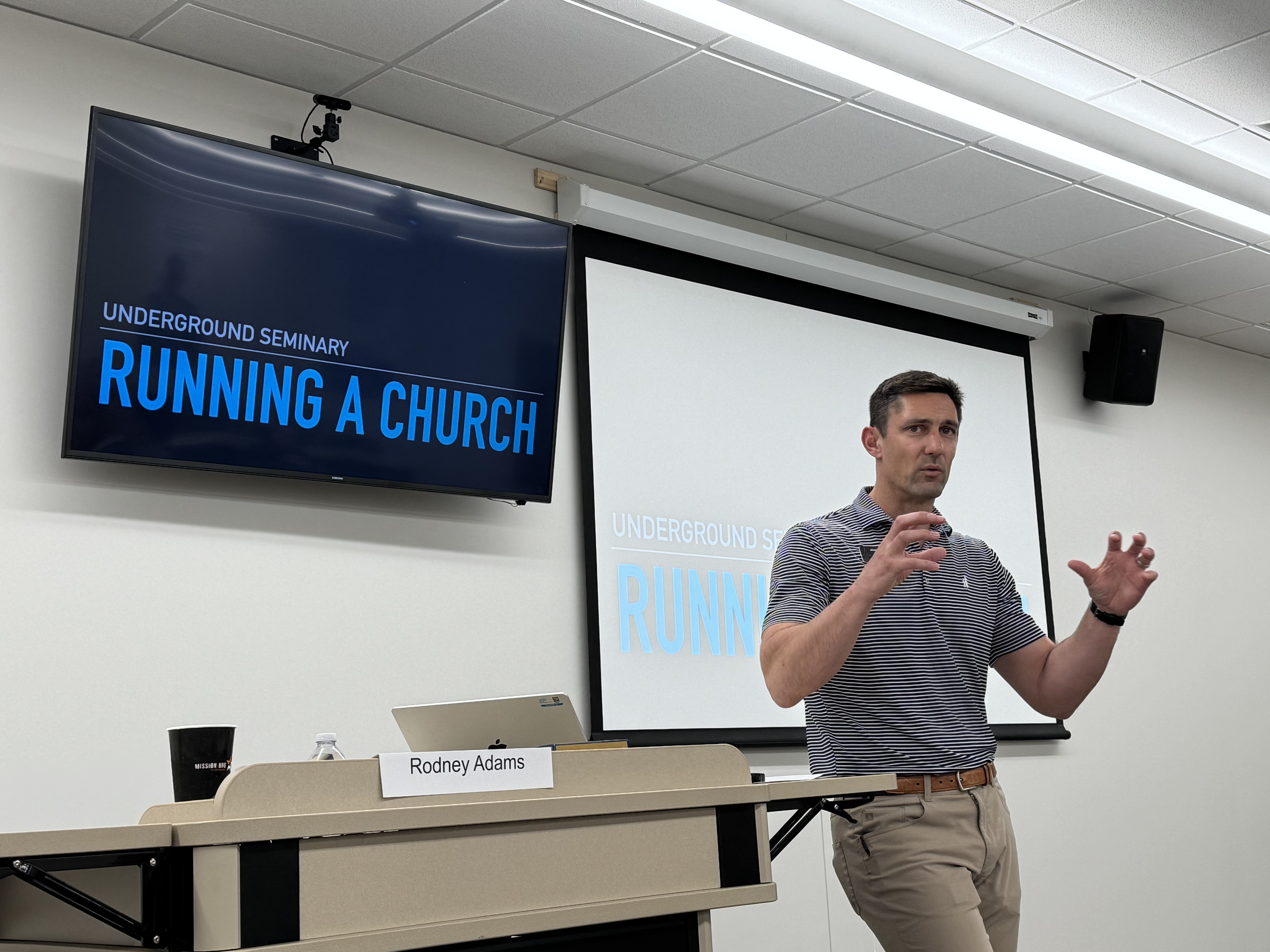
The second question was: Is there anything that I do that can help you and those you are raising up? We developed a degree at Asbury Theological Seminary that came directly out of my conversations with this pastor and the pastor of another large non-denominational church at another place I taught. (Send me an email [scroll down] if you want to know more about it.)


I think both models would be improved by the other.

Non-denominational and congregational churches that don’t require any formal education outside of themselves make themselves vulnerable.

Large denominations that have heavily bureaucratic ordination processes have greater risk in my view.

My working hypothesis is that the most effective pastors in the United States at present came up through more of the apprenticeship model than the ecclesial bureaucracy model. My experience is that almost all of them end up pursuing a seminary education, but it usually comes after they have been leading in meaningful ways in the local church.


So, Now What?

For most established leaders reading this, the action step is most likely to look for people to bring in closer to walk with you and build them up. One of the problems with bureaucratic approaches to ordination is that they are so depersonalized. People don’t grow in self-awareness because the kind of one-on-one conversations that happen in an apprenticeship don’t happen nearly as often.

Here is what I am seeing: I believe the church, particularly healthy large congregations with stable leadership and deep roots, is only going to be more important going forward for the work of raising up leaders for the church. All churches are important in this work. The local church is the ordinary context for hearing a calling to ministry. I think larger churches just have the capacity and the resources to invest in the next generation for their own sake.

I think large churches will develop coaching trees like Nick Saban did at Alabama. People will serve for a season in these churches and experience accelerated growth in a host of ways in these contexts. Some, who can joyfully stay long-term in an associate type of role, will stay for decades. But most will serve for a season, be built up, equipped, and sent out to lead with excellence.

And I have a feeling this will be less dependent on denominational affiliation than it has ever been in the history of Christianity in the United States.

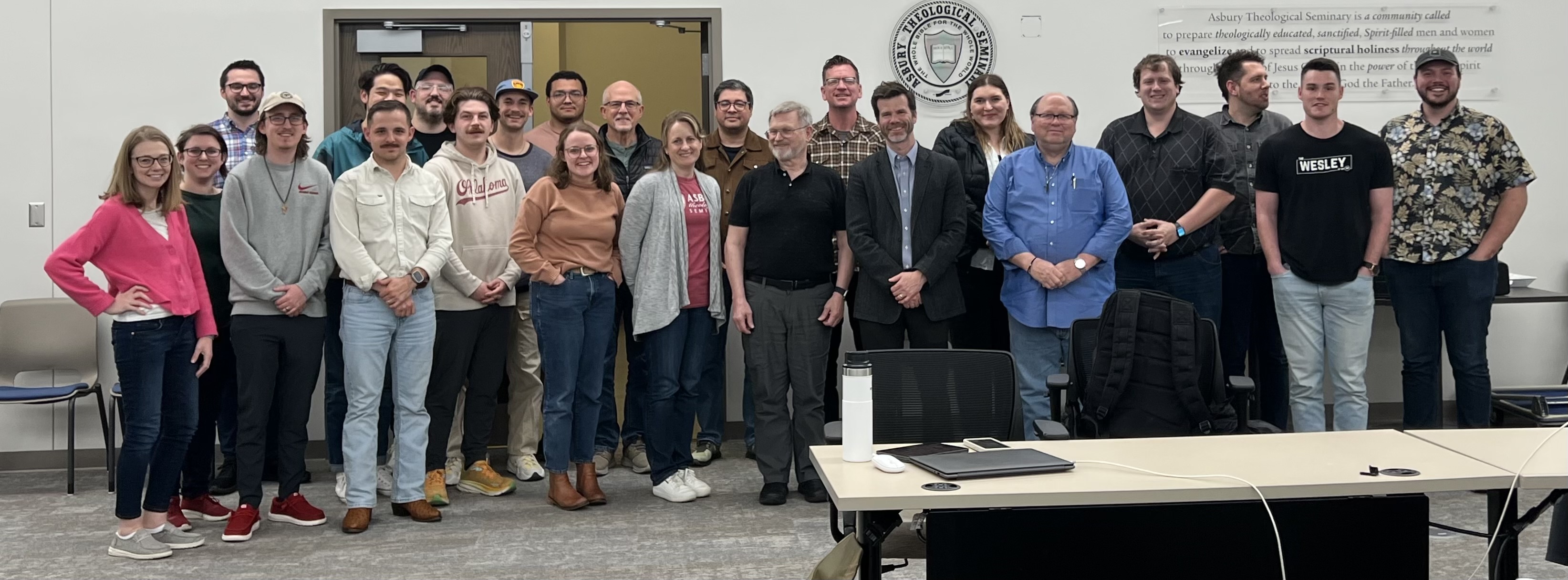
This vision excites me because Asbury Church (where I am) is the kind of church that can do an excellent job of apprenticing people to be excellent leaders.

Asbury is a conservative evangelical church from the Wesleyan theological heritage that averages about 2,500 in person in weekly worship at one campus. At Asbury, intentional and strategic attention is given to the culture of the church. Asbury not only has a great culture, but the senior leaders can tell you why they are doing what they are doing and how to work to set, shift, or move culture. This is so important! And there is a clear emphasis on discipleship. As with our work to build and maintain a great culture, the church can articulate a coherent vision for how we make disciples.

And one of the most unique things about Asbury Church, within the context of this post, is that Asbury has a passion for education. Asbury hosts the Asbury Theological Seminary Tulsa Extension Site on its campus. So, a person preparing to become a pastor could come to Asbury Church and be in seminary here at the same time.

Asbury Church’s commitment to education is also evident in its decision to launch Asbury Classical School this year.

One of the saddest things to me about my time in theological education has been seeing the negative impact a seminary tends to have on local churches in the immediate geographical area of the seminary. At a previous institution, someone commented on the “dead zone” that surrounded the seminary. 

What a gift that I get to teach at a seminary whose mission and values I agree with at a church I am proud to be part of and that I am confident will bless my students.

If you, or someone you know, is wrestling with a calling to ministry, I would love to connect with you. Maybe you should move to Tulsa and see for yourself. I am learning more and more that proximity and time within a relational atmosphere are crucial to raising up the next generation of leaders for the church.

I can’t wait to see what happens next!

Kevin M. Watson is Director of Academic Growth and Formation at Asbury Theological Seminary’s Tulsa, OK Extension Site. He is also Scholar in Residence at Asbury Church. His most recent book, Doctrine, Spirit, and Discipline describes the purpose of the Wesleyan tradition and the struggle to maintain its identity in the United States.

John Wesley’s Sermon “The Law Established through Faith, II”: A Brief Summary

23 Tuesday Mar 2021

Posted by Kevin M. Watson in Christian Living, Sermons, Wesley

≈ 4 Comments

Tags

faith, holiness, John Wesley, John Wesley Sermons, Law

John Wesley, Justification by Faith

This is the 31st sermon in this series. It is very encouraging to see how many people are reading these posts and clicking through to read the sermon itself. Just joining the growing number of people reading these sermons? Feel free to start at the beginning by reading the first sermon by John Wesley in this series, “Salvation by Faith,” or jump right in with us!


Background:

Did you know that many of John Wesley’s sermons are part of the formal doctrinal teaching of multiple Wesleyan/Methodist denominations? Wesley’s sermons have particular authority because these were the main way he taught Methodist doctrine and belief.

“The Law Established through Faith, II” is the 31st sermon of the Wesleyan Standard Sermons. This sermon builds on the previous sermon, “The Law Established through Faith, I” and outlines a more positive vision for how the law is established in the lives of followers of Jesus Christ.

In hopes of sparking interest in Wesley’s sermons and Methodism’s doctrinal heritage, here is my very short summary of “The Law Established through Faith, II.” I hope it will inspire you to read the sermon in its entirety yourself. Links to the sermon and other resources are included at the end of this post.


Key quote: 

Can you say, ‘Thou art merciful to my unrighteousness; my sins thou rememberest no more’? Then for the time to come see that you fly from sin, as from the face of a serpent. For how exceeding sinful does it appear to you now! How heinous above all expression! On the other hand, in how amiable a light do you now see the holy and perfect will of God! Now, therefore, labour that it may be fulfilled, both in you, by you, and upon you. Now watch and pray that you may sin no more, that you may see and shun the least transgression of his law. You see the motes which you could not see before when the sun shines into a dark place. In like manner you see the sins which you could not see before, now the sun of righteousness shines in your heart. Now, then, do all diligence to walk in every respect according to the light you have received. Now be zealous to receive more light daily, more of the knowledge and love of God, more of the Spirit of Christ, more of his life, and of the power of his resurrection. Now use all the knowledge and love and life and power you have already attained. So shall you continually go on from faith to faith. So shall you daily increase in holy love, till faith is swallowed up in sight, and the law of love established to all eternity. [III.6]


One sentence summary:  

The moral law of God is established in our lives through sound doctrine, faith in Christ, love of God and neighbor, and holiness of heart and life.


Scripture passage for the sermon:

“Do we then make void the law through faith? God forbid! Yea, we establish the law.”

– Romans 3: 31


Concise outline of “The Law Established through Faith, II”

1. A summary of the previous sermon. This sermon asks, positively, “How do we establish the law through faith?”
2. Establishing the moral law is not the condition of our justification. And yet, “we still, in the Aposle’s sense, ‘establish the law.'”

I. We Establish the Law by Our Doctrine
1. We establish the law by offering “the whole counsel of God” with “great plainness of speech.”
2. The law is established by our doctrine when “we declare every part of it, every commandment contained therein, not only in its full, literal sense, but likewise in its spiritual meaning; not only with regard to the outward actions which it either forbids or enjoins, but also with respect to the inward principle, to the thoughts, desires, and intents of the heart.”
3. The law must be established through doctrine because “as important as these things are, they are little considered or understood.
4. “The law of God, as to its inward spiritual meaning, is not hid from the Jews or heathens only, but even from what is called the Christian world.”
5. Even though it is offensive to many who hear it, “All that is written in the Book of God we are to declare, not as pleasing men, but the Lord. We are to declare not only all the promises but all the threatenings, too, which we find therein. At the same time that we proclaim all the blessings and privileges which God had prepared for his children, we are likewise to ‘teach all the things whatsoever he hath commanded.'”
6. “It is our part thus to ‘preach Christ’ by preaching all things whatsoever he hath revealed… We are not ourselves clear before God unless we proclaim him in all his offices.”

II. We Establish the Law by Preaching Faith in Christ in a Way that Leads to Holiness of Heart and Life
1. Even faith in Christ is not the end result God aims at. “God hath given this honor to love alone. Love is the end of all the commandments of God.”
2. Faith “is the great temporary means which God has ordained to promote that eternal end [love].”
3. Faith cannot be preached so as to “swallow up all things” and become more important than love.
4. “Nor is it certain… that faith, even in the general sense of the word, had any place in paradise.”
5. Faith was necessary before the fall. “It was only when love was lost by sin that faith was added, not for its own sake, nor with any design that it should exist any longer than until it had answered the end for which it was ordained – namely, to restore man to the love from which he was fallen.”
6. “Faith then was originally designed of God to re-establish the law of love.”

III. The Most Important Way of Establishing the Law Is by Establishing It in Our Own Hearts and Lives
1. It would serve no purpose to preach the law through our doctrine and preach Christ in all of his offices if it “were not established in our hearts.”
2. “How may we establish the law in our own hearts so that it may have its full influence on our lives?… This can only be done by faith… Faith in general is the most direct and effectual means of promoting all righteousness and true holiness; of establishing the holy and spiritual law in the hearts of them that believe.”
3. “There is no motive which so powerfully inclines us to love God as the sense of the love of God in Christ.”
4. “Nor does faith fulfill either the negative or positive law as to the external part only; but it works inwardly by love to the purifying of the heart, the cleansing it from all vile affections.”
5. “Let us thus endeavor to establish the law in ourselves; not sinning ‘because we are under grace’, but rather using all the power we receive thereby ‘to fulfill all righteousness.'”
6. Can you say, ‘Thou art merciful to my unrighteousness; my sins thou remeberest no more’? Then for the time to come see that you fly from sin, as from the face of a serpent…. Now use all the knowledge and love and life and power you have already attained. So shall you continually go on from faith to faith. So shall you daily increase in holy love, till faith is swallowed up in sight, and the law of love established to all eternity.”


Resources:

Read “The Law Established through Faith, II” in its entirety.

Check out my brief summaries of the first thirty Standard Sermons:

“Salvation by Faith”

“The Almost Christian”

“Awake, Thou That Sleepest”

“Scriptural Christianity“

“Justification by Faith“

“The Righteousness of Faith“

“The Way to the Kingdom“

“The First-Fruits of the Spirit“

“The Spirit of Bondage and of Adoption“

“The Witness of the Spirit, I“

“The Witness of Our Own Spirit“

“The Means of Grace“

“The Circumcision of the Heart“

“The Marks of the New Birth“

“The Great Privilege of those that are Born of God“

“Upon our Lord’s Sermon on the Mount, Discourse the First“

“Upon our Lord’s Sermon on the Mount, Discourse the Second“

“Upon our Lord’s Sermon on the Mount, Discourse the Third“

“Upon our Lord’s Sermon on the Mount, Discourse the Fourth“

“Upon our Lord’s Sermon on the Mount, Discourse the Fifth“

“Upon our Lord’s Sermon on the Mount, Discourse the Sixth“

“Upon our Lord’s Sermon on the Mount, Discourse the Seventh“

“Upon our Lord’s Sermon on the Mount, Discourse the Eighth“

“Upon our Lord’s Sermon on the Mount, Discourse the Ninth“

“Upon our Lord’s Sermon on the Mount, Discourse the Tenth“

“Upon our Lord’s Sermon on the Mount, Discourse the Eleventh“

“Upon our Lord’s Sermon on the Mount, Discourse the Twelfth“

“Upon our Lord’s Sermon on the Mount, Discourse the Thirteenth“

“The Original, Nature, Properties, and Use of the Law“

“The Law Established through Faith, I“

I highly recommend the critical edition of Wesley’s sermons, which has excellent references that show his reliance on Scripture throughout his preaching. There are four volumes if you want every known Wesley sermon. The sermon outlined in this post is in volume II. These books aren’t cheap, but this is the most important publication by Abingdon since its release. And they are designed to last. Highly recommended!

There is also a three volume edition of Wesley’s sermons in modern English, which is easier to read if you find the 18th century English frustrating. Here is the first volume.


Kevin M. Watson is a professor at Candler School of Theology, Emory University. He teaches, writes, and preaches to empower community, discipleship, and stewardship of our heritage. Click here to get future posts emailed to you. Affiliate links used in this post.

Futile Faith?

19 Friday Mar 2010

Posted by Kevin M. Watson in Christian Living, Life, Ministry

≈ 7 Comments

Tags

1 Cor 15, faith, Resurrection

An interesting article in the Washington Post about “Disbelief in the Pulpit” has prompted quite a bit of discussion about how far pastors can dissent from the basic teachings of their particular church or denomination and still in good conscience continue as a leader in the denomination. Several times in these conversations pastors have admitted that they do not believe in the bodily resurrection of Jesus Christ. And they seem to me to have expressed this in a way that suggests that this is not problematic.

I confess that I am baffled by the idea that one can be a Christian, much less the leader of the church, and not believe in the bodily resurrection of Jesus Christ. It seems to me that if Christ was not raised from the dead, then Christians have no hope. Each time I have read someone casually dismiss the importance of the resurrection I have thought of 1 Corinthians 15: 12-19, where Paul does not mince words about what is at stake for Christians regarding the bodily resurrection of Jesus:

But if it preached that Christ has been raised from the dead, how can some of you say that there is no resurrection of the dead? If there is no resurrection of the dead, then not even Christ has been raised. And if Christ has not been raised, our preaching is useless and so is your faith. More than that, we are then found to be false witnesses about God, for we have testified about God that he raised Christ from the dead. But he did not raise him if in fact the dead are not raised. For if the dead are not raised, then Christ has not been raised either. And if Christ has not been raised, your faith is futile; you are still in your sins. Then those also who have fallen asleep in Christ are lost. If only for this life we have hope in Christ, we are to be pitied more than all others.

The implications of what Paul thinks is at stake are clear – If Christ has not been raised from the dead, Christians are the most pitiable people in the world. We are to be pitied because if there is no resurrection, death has won and it is the final word. If it is the final word, the world should pity Christians because we are wasting the finite amount of time we have to live on something that isn’t true.

But more than that, we are to be pitied because we have no hope if Christ has not been raised from the dead. If there is no bodily resurrection, then when we stare death in the face, we have no grounds for hope because it is the last word. It will ultimately win. Everyday should be Ash Wednesday.

But, thanks be to God, Christ has been raised from the dead. And because of this, Christians can look death itself in the face and have hope. Pastors can read 1 Corinthians 15 in the presence of a dead body and tell the congregation that there is hope, that God is more powerful than even death itself. Paul says it much better than I do.

When the perishable has been clothed with the imperishable, and the mortal with immortality, then the saying that is written will come true: ‘Death has been swallowed up in victory.’

Where, O death, is your victory?
Where, O death, is your sting?

The sting of death is sin, and the power of sin is the law. But thanks be to God! He gives us the victory through our Lord Jesus Christ. (I Cor. 15:54-57)

Reading this passage at funerals has been one of the most powerful things I have done as a pastor. Left to ourselves, death will overwhelm us. But with Christ, we can look even death itself in the face and dare to have hope. We can tell death itself that it will not win, its sting has been taken away.

As we draw nearer to Easter morning, this Lent, we will confront the last days of Jesus’ life. We will read of his passion, we will hear of the crucifixion. But Christians always have hope, because Easter is coming! This is not a metaphor. We celebrate Easter for eight weeks because after the Son of God was nailed to a cross, on Easter morning the tomb was empty. At the heart of the gospel is the good news that the one whom we crucified is risen, and that very one continues to seek and to save the lost.

The resurrection of Jesus Christ is at the heart of the Christian faith. Without it, what is left is a mere shell. Indeed, without the resurrection I am not sure there is anything left that can be recognized as Christianity. Proclaiming the Risen Christ is the heart of the gospel message itself.

When the disciples said to Thomas, “We have seen the Lord!” He responded, “Unless I see the nail marks in his hands and put my finger where the nails were, and put my hand into his side, I will not believe.” You probably know the story, but here is what happens next:

A week later his disciples were in the house again, and Thomas was with them. Though the doors were locked, Jesus came and stood among them and said, ‘Peace be with you!’ Then he said to Thomas, ‘Put your finger here; see my hands. Reach out your hand and put it into my side. Stop doubting and believe.’
Thomas said to him, ‘My Lord and my God!’
Then Jesus told him, ‘Because you have seen me, you have believed; blessed are those who have not seen and yet have believed.” (John 20:26-29)

What an awesome gospel we have been given! Even during the midst of Lent, we celebrate on Sundays, because the resurrection of our Lord is such good news that we cannot contain it. It is the reason we come together to worship God every week. Our faith is not futile, because the one who was crucified lives! Jesus is risen, praise God!

Amen.

Newer posts →

Blog at WordPress.com.

  • Subscribe Subscribed
    • Kevin M. Watson
    • Join 369 other subscribers
    • Already have a WordPress.com account? Log in now.
    • Kevin M. Watson
    • Subscribe Subscribed
    • Sign up
    • Log in
    • Report this content
    • View site in Reader
    • Manage subscriptions
    • Collapse this bar
 

Loading Comments...