• About Me

Kevin M. Watson

Kevin M. Watson

Tag Archives: Christianity

Raising Up Next-Gen Church Leaders

21 Friday Feb 2025

Posted by Kevin M. Watson in Christian Living, Ministry, Teaching

≈ 1 Comment

Tags

apprentice, Bible, Christianity, church, discipleship, faith, Leadership, local church, mentoring, Ministry, Next-Gen, pastoring, Seminary

I’m trying to think more clearly about how to raise up the next generation of leaders for the church. It seems clear to me that things are shifting and changing, sometimes dramatically. Institutions are changing and sometimes failing. Key leaders are leaving the scene, sometimes because they have retired or died, and other times because a moral failing has been exposed.

I don’t have it figured out yet. But I want to start talking about it more.


My writing often comes from a burden to figure out what I think about something and then try to communicate it as clearly as I can. I think some of my best writing comes when there are two things working in me:

First, I notice that I am working over a problem in my mind and am working hard to get clear about what I think is at stake (something that seems important and complicated or confusing).

Second, I notice a sense of pressure to not talk about it. This is usually unspoken and intuitive on my part. This means I could be wrong, or I could be seeing things. The pressure to not talk about it can either be because it seems like everyone views something as settled, while I have questions or concerns. Or, silence could come from the sense that speaking out could be problematic in terms of upsetting people in power.

Here are two examples of writing that has come from this:

1. I urged churches to start reopening five months into the Covid-19 pandemic. 

2. I expressed my concerns with the proposal of United Methodist bishops to make affirmation or prohibition of same sex marriage dependent on the surrounding dominant culture. 

Neither of those posts are perfect. In rereading them today, I would say things differently in both. But they both helped me think more clearly about matters that were very important to me (and to the church I was part of) when I wrote them. I am proud of them because I believe the Lord used them to help people think more clearly and make hard decisions during very challenging circumstances.

If you aren’t familiar with my writing, these will give you a sense of it. I hope they show my commitment to telling the truth. Of course, I also make mistakes. One of things I think I have often done well is move a conversation forward and bring clarity where it has gotten bogged down or stuck.


So, I’ve been thinking about raising up the next generation of leaders for Jesus’s church.  I’ve been thinking about this longer than I usually think about the kinds of things I write about here. And to my own frustration, I don’t feel like I’ve made as much progress as I usually would have by this point.

I want to articulate why I think this it is hard. It is important to work to understand the moment in which we find ourselves. And I want to begin by naming two models that have been used to raise up the next generation of leaders for the church. I want to suggest that people in my networks have almost completely missed the importance of the second model. But first, why is this so hard to think through?


The church in the United States is experiencing major challenges due to massive shifts in the culture, academy, and the church herself.

Aaron Renn does a great job talking about the changes in the dominant culture and how it impacts the church. Check out his book Life in the Negative World [Affiliate link]. I also follow his work at aaronrenn.com.

The academy is also undergoing massive change, which includes theological education (the seminaries where pastors are trained). This would be another post, so I won’t unpack this further right now.

And finally, the church herself is undergoing dramatic change. I think most of the changes in the church come from the influence of the first two. Many large non-denominational and congregational churches have also been impacted by the fall from grace of senior leaders of these churches. This has happened enough over the past few years, many feel uneasy in these kinds of churches, even if their own local church has not been directly impacted.

Here is an image I have used to describe what I think is happening:

Tectonic plates are shifting in the culture. When tectonic plates shift, there are earthquakes. There is rumbling. There is shaking. Often major edifices are damaged or even collapse when tectonic plates shift.

I think we are seeing this kind of major disruption and change in the church today.


There have been (at least) two major models for raising up leaders for the church.

I’m sure much more nuance could be added here, so feel free to fill this out in your own thinking or experience. The point here is to get some things in place in order to move forward.

My own experience was largely with the first model. I will call it the ecclesial bureaucracy model. I’ll use my experience to explain it:

I received a calling to ordained ministry through a short-term mission trip to Mexico when I was a junior in college. One short week changed my life in so many ways. By the end of the week, I had a deep sense that there was nothing more fulfilling I could do than give my life in service to the church, by the grace of God. I remember time and time again being stunned by how joyful it was to serve the Lord through the church.

I knew nothing. I had no clue what I was getting myself into. And I made a lot of mistakes along the way.

But there were also a lot of things that were clear and decisions I didn’t really have to make. I was a United Methodist and didn’t question whether I should pursue ordination in the UMC or not.

The blessing of this was that the path forward was clear. The obvious next step was to attend seminary after I graduated from college. I began having conversations with the senior pastor of the church I was attending, who was generous with his time and wisdom. I formally applied to become a “certified candidate” during my first year of seminary.

I did not have a long-term relationship with the same local church throughout my time in the ordination process. I moved quite a bit from my freshman year of high school through seminary.

So to summarize: Once I felt a calling to ministry, I basically got on a moving walkway where the next step was fairly clear. And if I was approved for ordination by denominational authorities, I would also be appointed to pastor in a local church. If approved for ordination, I would, literally, be guaranteed an appointment (a pastoral position in a local church).

I think there are strengths and weaknesses of this model. And they could be done better or worse than it was done in the UMC when I went through the process. When I was teaching United Methodist polity, I used to tell students that the number one value of the UMC ordination process appeared to me to be persistence. If you kept going, you would almost certainly be ordained. 

(This was most evident to me when someone in the conference I was ordained in clearly revealed that they did not believe in the bodily resurrection of Jesus. They were not discontinued or removed from the process at that point. They were deferred and had to rewrite and repeat the interview process the next year. They were then approved and ordained. Is it more likely this person’s views on the bodily resurrection of Jesus changed, or that they found a more acceptable way to present (or cover up) their heretical views?)

The second model I’ll call the apprenticeship model. It was not my experience, so I can’t give as much detail. I think this approach is most common in non-denominational and congregational church polities. For this reason, I also suspect it is less uniform and more organic and relational.

This one is pretty self-explanatory. A person is raised up for leadership in the church by someone who is recognized as an excellent leader in the church. Preparation for ministry comes by being invited to get closer to the senior leader with behind-the-scenes access. Over time, they are given opportunities to lead with the senior leader’s oversight and feedback. And eventually, they are released to lead on their own, though likely with continued oversight or spiritual covering.

Sometimes a person in this system will replace the senior leader when they step down. Depending on the system, they might move to a different context taking on significant leadership responsibilities.

This model is highly relational. The person who is being raised up for leadership in the church spends significant time with the person who is discipling, mentoring, or apprenticing them. It is inefficient in the sense that it requires proximity and a lot of time together. It is also driven by the needs of the person being raised up and so is very contextual and responsive to where they are and how they need to grow. It is also inefficient because one person cannot have this kind of relationship with an unlimited number of people.

Another way to think of this model is to think of Robert Coleman’s Master Plan of Evangelism and other relational discipleship making tools. These are usually focused on discipleship as the goal for all who come to faith in Jesus Christ. It is not surprising that those who are raised up to lead in these kinds of contexts continue to be raised up to lead in this way.

I suspect that very often a sense of calling to lead in the church comes within the context of these discipling relationships.

During the season when I first began to feel a tug to rethink some of my assumptions about how to best raise up leaders for the church, I started getting to know a non-denominational church near where I lived. The folks in this church were very gracious to me and the senior pastor met with me. I wanted to ask him two questions in particular:

How did you get to be in your position? I remember the answer, though it was more fleshed out than just this, because I had heard it from others in the same church family: I lived in Buddy’s basement. 

In other words, the founding pastor invited him to come closer, literally into his home, for a season. And he poured into him and raised him up.

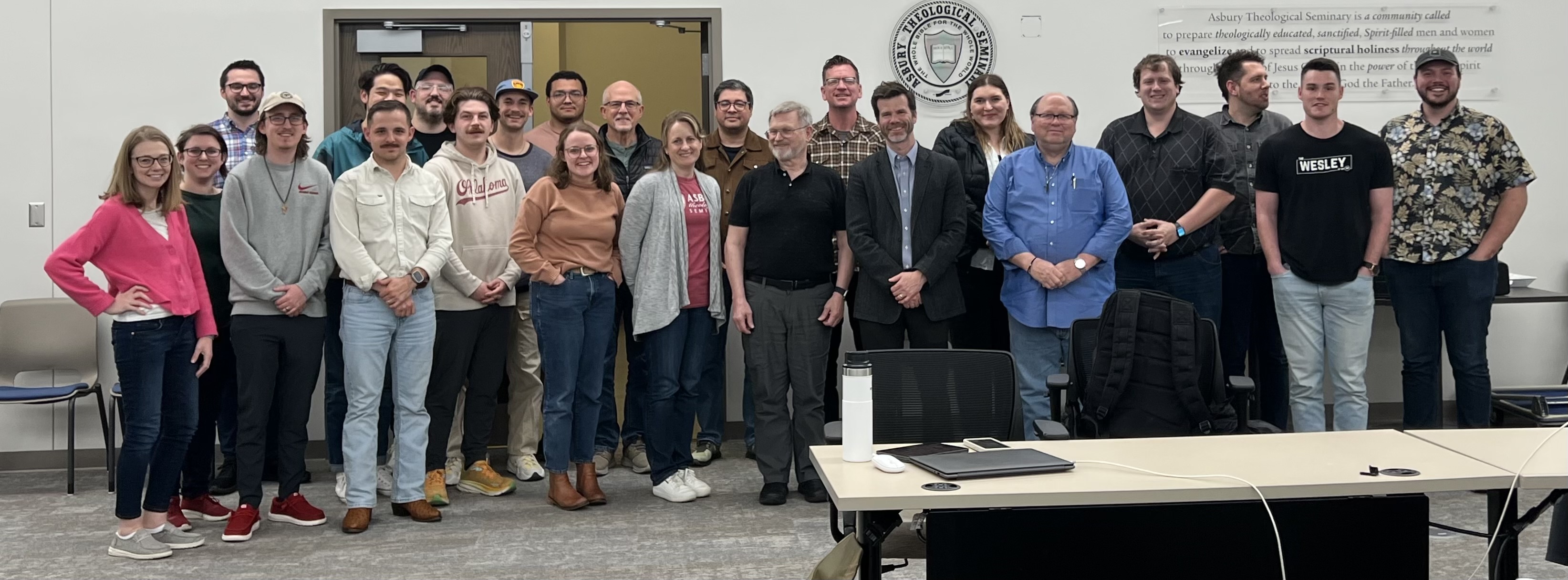
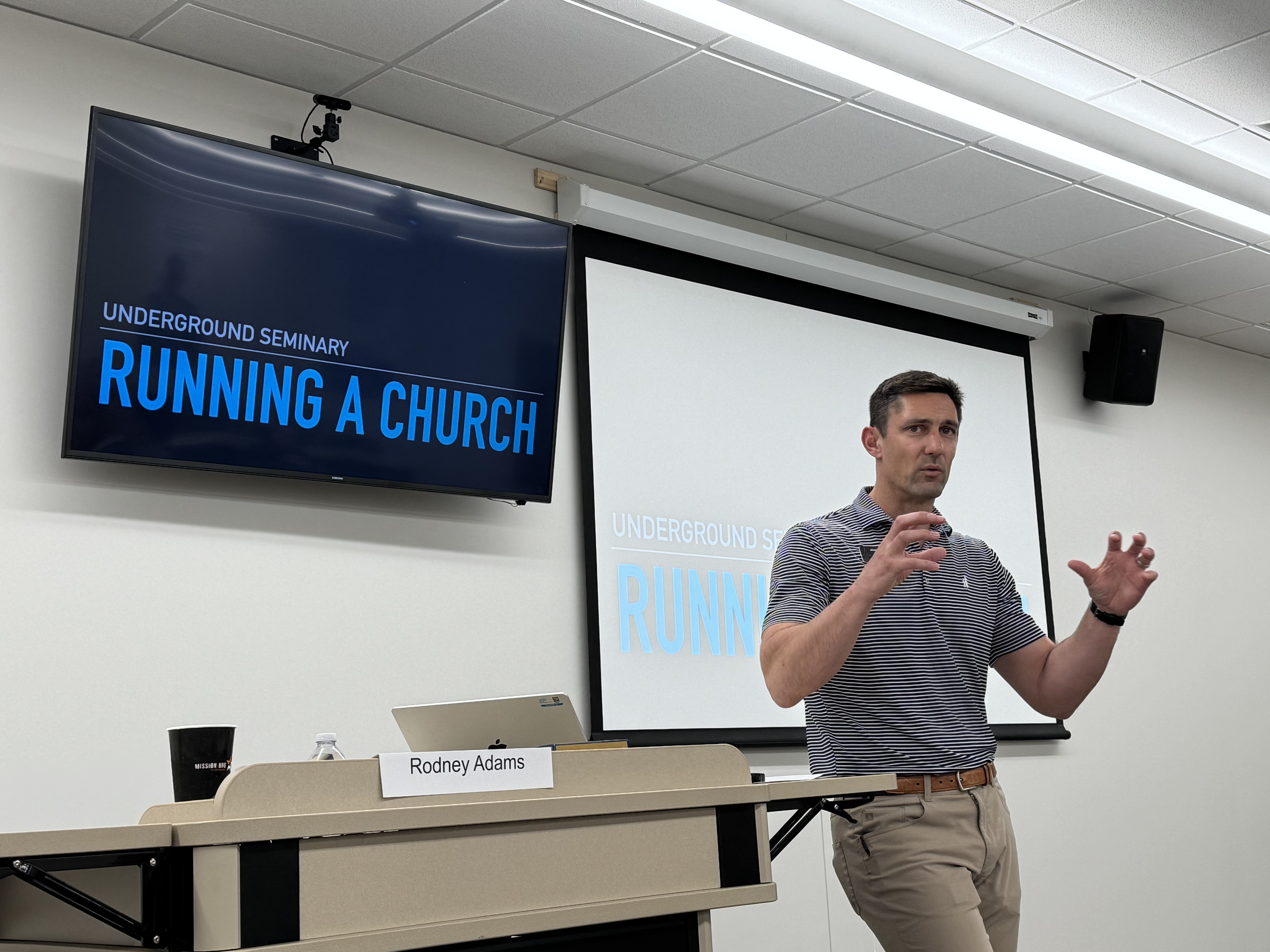
The second question was: Is there anything that I do that can help you and those you are raising up? We developed a degree at Asbury Theological Seminary that came directly out of my conversations with this pastor and the pastor of another large non-denominational church at another place I taught. (Send me an email [scroll down] if you want to know more about it.)


I think both models would be improved by the other.

Non-denominational and congregational churches that don’t require any formal education outside of themselves make themselves vulnerable.

Large denominations that have heavily bureaucratic ordination processes have greater risk in my view.

My working hypothesis is that the most effective pastors in the United States at present came up through more of the apprenticeship model than the ecclesial bureaucracy model. My experience is that almost all of them end up pursuing a seminary education, but it usually comes after they have been leading in meaningful ways in the local church.


So, Now What?

For most established leaders reading this, the action step is most likely to look for people to bring in closer to walk with you and build them up. One of the problems with bureaucratic approaches to ordination is that they are so depersonalized. People don’t grow in self-awareness because the kind of one-on-one conversations that happen in an apprenticeship don’t happen nearly as often.

Here is what I am seeing: I believe the church, particularly healthy large congregations with stable leadership and deep roots, is only going to be more important going forward for the work of raising up leaders for the church. All churches are important in this work. The local church is the ordinary context for hearing a calling to ministry. I think larger churches just have the capacity and the resources to invest in the next generation for their own sake.

I think large churches will develop coaching trees like Nick Saban did at Alabama. People will serve for a season in these churches and experience accelerated growth in a host of ways in these contexts. Some, who can joyfully stay long-term in an associate type of role, will stay for decades. But most will serve for a season, be built up, equipped, and sent out to lead with excellence.

And I have a feeling this will be less dependent on denominational affiliation than it has ever been in the history of Christianity in the United States.

This vision excites me because Asbury Church (where I am) is the kind of church that can do an excellent job of apprenticing people to be excellent leaders.

Asbury is a conservative evangelical church from the Wesleyan theological heritage that averages about 2,500 in person in weekly worship at one campus. At Asbury, intentional and strategic attention is given to the culture of the church. Asbury not only has a great culture, but the senior leaders can tell you why they are doing what they are doing and how to work to set, shift, or move culture. This is so important! And there is a clear emphasis on discipleship. As with our work to build and maintain a great culture, the church can articulate a coherent vision for how we make disciples.

And one of the most unique things about Asbury Church, within the context of this post, is that Asbury has a passion for education. Asbury hosts the Asbury Theological Seminary Tulsa Extension Site on its campus. So, a person preparing to become a pastor could come to Asbury Church and be in seminary here at the same time.

Asbury Church’s commitment to education is also evident in its decision to launch Asbury Classical School this year.

One of the saddest things to me about my time in theological education has been seeing the negative impact a seminary tends to have on local churches in the immediate geographical area of the seminary. At a previous institution, someone commented on the “dead zone” that surrounded the seminary. 

What a gift that I get to teach at a seminary whose mission and values I agree with at a church I am proud to be part of and that I am confident will bless my students.

If you, or someone you know, is wrestling with a calling to ministry, I would love to connect with you. Maybe you should move to Tulsa and see for yourself. I am learning more and more that proximity and time within a relational atmosphere are crucial to raising up the next generation of leaders for the church.

I can’t wait to see what happens next!

Kevin M. Watson is Director of Academic Growth and Formation at Asbury Theological Seminary’s Tulsa, OK Extension Site. He is also Scholar in Residence at Asbury Church. His most recent book, Doctrine, Spirit, and Discipline describes the purpose of the Wesleyan tradition and the struggle to maintain its identity in the United States.

What I Have Learned from the Salvation Army

08 Thursday Feb 2024

Posted by Kevin M. Watson in Holiness, Life

≈ 2 Comments

Tags

anointing, Christianity, Holy Spirit, Salvation Army, Sanctification

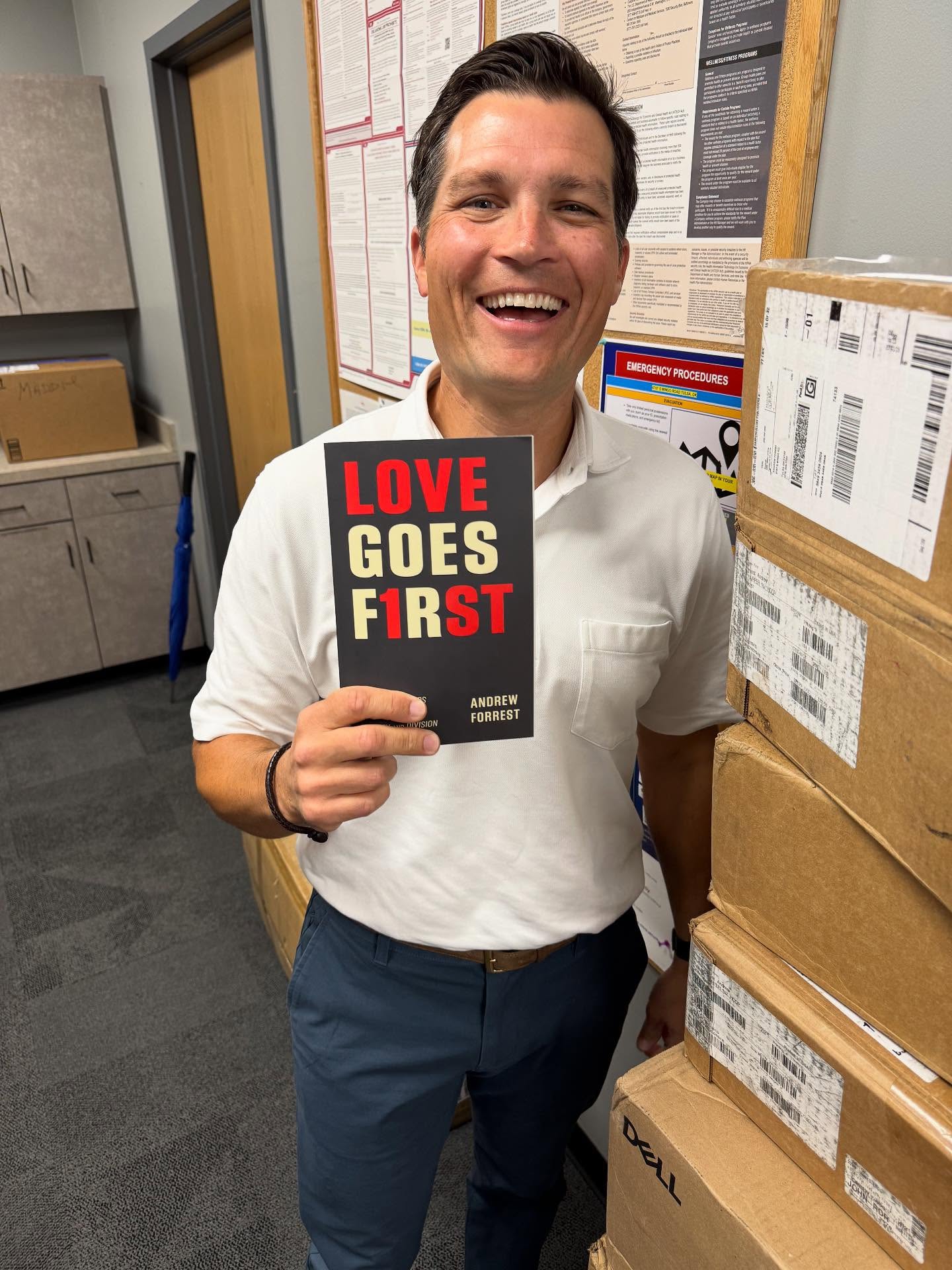
Last week, I had the privilege of speaking to the Salvation Army Officers of the Arkansas-Oklahoma Division on the theme of “Holiness unto the Lord.”

If you are not familiar with the Salvation Army’s structure, officers in the Army are the equivalent of clergy in most churches. So, this was like a retreat for all of the active clergy in the Salvation Army serving in Arkansas and Oklahoma. I love the schedule at Officer’s Councils (at least at the Divisions in the Southern Territory where I’ve been a guest). There are typically two sessions of worship and teaching in the morning and then the rest of the day is unscheduled. 

It is a blessing for pastors to have time away where they have time and space in the schedule to truly rest, relax, and reconnect with each other. This is a rare gift and I’ve not experienced that kind of intentionality given to actual rest, rather than busyness and business at this kind of gathering.

The Salvation Army also does hospitality exceptionally well. My goodness! Unpacking this would be an entire post of its own. I’ll just give one example: one time the Army not only flew my entire family to be with me because it was my daughter’s 10th birthday, they also ordered a special cake and balloons that were waiting for her when we arrived. They have loved us so well!

I want to share a bit about my connection to the Salvation Army and what I have learned, so far. This is a bit vulnerable for me to share. I am not intending to boast in Kevin here. I am intending to give glory to God. I also hope it may help some of you recognize when the Lord provides similar places of blessing in your lives.

The Lord has blessed me with a special connection to the Salvation Army. It started at a moment when I did not expect it all. And it has truly been a sheer gift from the Lord.

The first invitation I received to speak at an Army event was as the Commencement speaker for Evangeline Booth College, in Atlanta, GA at the beginning of the summer in 2021. I went to that event very naïve. I knew a little bit about the Salvation Army. I knew, for example, that they were founded by Generals William and Catherine Booth in England. I also knew that they had strong connections to the Wesleyan-Holiness tradition and that their impressive social work came out of this heritage.

I also knew that Ezekiel Elliott sometimes jumped into a giant red Salvation Army kettle after he scored a touchdown on Thanksgiving back when he played for the Cowboys.

I didn’t know much more than that, however, when I spoke to the Cadets (students) who were graduating from Evangeline Booth College.

This first Salvation Army event came at a strange time in my life. I had just resigned a tenured faculty position at Candler School of Theology at Emory University. After stepping away from this position, I didn’t think I was going to be doing much of this kind of speaking anymore. Something about that moment brought focus, freedom, and courage to speak very candidly about the need for the Army to remember that its identity is first and foremost an army of salvation through Christ. They are also a people committed to holiness and full salvation. I pressed them to remember that they were raised up to be an intentionally strange people and that they should not lay aside the things that set them apart from the world to hope to receive the world’s approval.

For me personally, it felt like one of the most bold and true talks I had ever given. I think a piece of this was that I kind of assumed this was a one-off opportunity just before we moved away from Atlanta. 

It can be easier to be bolder with strangers than with friends.

In ways I could not have known, however, the Lord blessed me by giving me favor with the leaders of the Southern Territory who were there that day. I did not have the opportunity to visit with them at length at Commencement. But, that event led to further opportunities to minister within the Salvation Army and get to know its leadership.  

Since speaking at Evangeline Booth College, I have spoken at Bible Conference in the summer of 2022, Officer’s Councils in three different divisions (Kentucky-Tennessee, the Carolinas, and Arkansas-Oklahoma) and at a Holiness week at the College for Officer Training in the Eastern Territory in Suffern, NY.

Every single one of these experiences has been a tremendous blessing to me.

Last week brought some things together for me that I want to share:

First, I want to publicly thank the leadership of the Salvation Army for loving me and my family so well during a challenging time for us. Lt. Colonels Tom and Julie Louden, currently serving as Divisional Commanders for Kentucky and Tennessee, first invited me to speak at Evangeline Booth College’s Commencement. They also prayed for us many times throughout this season and even sent a care package to my kids at Christmas in 2022.

Just as encouraging to me, I have been surprised in the best way by the wisdom and moral courage I have found among many of the leaders of the Salvation Army, especially in the Southern Territory, where I have had the most engagement. I have often been looking for wisdom, moral courage, and leaders who provide godly spiritual covering for the people under their car. I have seen that in the leadership of the Southern Territory in ways that have strengthened and encouraged me.

Finally, I want to share what I think could most easily be misunderstood as boastful. But I am going to risk it in hopes of giving glory to Jesus Christ and his work in my life. I also want to share it here in case it helps you recognize the places of abundance in your life.

The Salvation Army has been for me what a dear friend of mine calls a “land of my anointing.” I did not see this coming or expect it at all. But again and again I have come back from Salvation Army events and said to my wife, “I feel like the Lord prepared this particular people for exactly what he has put in me.” I am learning to simply trust and receive this as a gift from the Lord. 

When I minister in Salvation Army contexts, I consistently receive feedback that things I’ve sensed or said have landed, often beyond what I could have expected. I think every time I’ve spoken at an Army event I have received testimony that I have spoken prophetically in ways I didn’t anticipate. This has been humbling to me because it has not come from my own wisdom or hard work. It has simply been the Holy Spirit’s work moving to bless his people.

These experiences have helped me learn to pay attention and intentionally listen for the Spirit’s guidance and direction anytime I preach or teach. It has been so much more fun working with the Spirit than trying to do it on my own!

I have seen the Lord move in powerful ways renewing the strength of officers to recommit to the fight for souls, press into deeper relational connectedness particularly through reclaiming Wesleyan class and band meetings, and even blessing officers with the gift of entire sanctification. I’ve also seen God’s heart for officer families.

I have been able to invite people to receive the gift of entire sanctification in multiple contexts. And the Lord has moved in miraculous and transforming ways. At the last Salvation Army event, I heard a powerful testimony to entire sanctification just before I preached on 1 Thessalonians 4:1-6 and 5:23-24. I then invited people to receive the gift of entire sanctification in faith that Jesus has already done everything that is needed to break the power of canceled sin in their lives. 

I used a specific image that was given to me by the Spirit in the moment and multiple people testified that the Holy Spirit fell on them in a powerful way through that image. This was especially humbling for me because when the image was brought to mind, I did not like it. It seemed corny to me. But I offered it because I felt the weight of the Spirit on it. 

What a great reminder that the Lord knows so much better than I do!

Two people have testified to me that they received entire sanctification through the Spirit’s work at that session.

God is so good!

I am learning to gratefully accept that the Lord in his wisdom has made the Salvation Army a place of particular anointing in this season of my life. It has been fun and a joy.

I don’t know how long this season will last. I am aware that I am not in control of any of it. I just know it has been a blessing to me in a rough stretch. I am thankful for what I have seen the Spirit do over these last few years. I have learned so much and am grateful for all of it.

Is there a place for you that consistently seems to be synced up with the Holy Spirit? Where there always seems to be fruit beyond your expectations in a way that is clearly separated from your performance or achievement? Look for your land of anointing. Is there a place, a people, or a topic, where the Lord consistently brings his blessing to your work?

When you see it, receive it in humble and joyful submission to the Lord.

I know for me it has been a gift to see such a concrete sign of how God has intended to use the things he has put in me for his purposes even before I could have anticipated any of it.

To God be the glory!

When Methodist Distinctives Aren’t

06 Friday Sep 2013

Posted by Kevin M. Watson in Christian Living

≈ 21 Comments

Tags

Christianity, connectionalism, distinctiveness, grace, Methodism

Methodists, particularly United Methodists, have a very bad habit of making sweeping statements about what makes the Methodist tradition distinct or unique. The main reason this is a bad habit is because when Methodists do this they are often claiming ownership of things that are basic to Christianity or that are at least at the heart of the values or beliefs of other parts of the Body of Christ. When Methodists do this, it makes us look oblivious at best, and obnoxious and arrogant at worst.

Since joining the faculty at SPU two years ago, I have had more interactions with Christians who are not United Methodists than I had previously. More than once, I have heard someone ask why Methodists claim something as a distinctive of their tradition when it is a basic Christian affirmation. Just yesterday, a colleague pointed out that Methodists do not have the market cornered on holiness.

I am trying to do a better job of being more humble and accurate in what I claim as a distinctive of my own branch of the Christian family tree. I have also become more sensitive to just how often Methodists make rather grandiose claims about the marvels of our own tradition.

Here are the three most common ways I have heard people describe Methodism’s distinctiveness that are not unique to Methodism.

1. Methodists believe in grace.

Asserting that grace is a distinct belief of Methodism would understandably be offensive to other Christians, because they believe in grace too! Ask your brother or sister in Christ from a non-Methodist tradition whether they believe in grace and let me know when you find someone who says no.

John Calvin talks extensively about grace in his Institutes of the Christian Religion. Here is one example, that is particularly important for Methodists to read because it refers to the role of grace in both justification and sanctification:

Christ was given to us by God’s generosity, to be grasped and possessed by us in faith. By partaking of him, we principally receive a double grace: namely, that being reconciled to God through Christ’s blamelessness, we may have in heaven instead of a Judge a gracious Father; and secondly, that sanctified by Christ’s spirit we may cultivate blamelessness and purity of life. (Institutes, III.XI.1)

Grace is very important to Methodism because it is very important to Christianity. When Methodists claim that we are distinct because we talk so much about grace, we look foolish to other parts of the Body of Christ and damage our own commitment to having a “Catholic Spirit.”

2. Methodists allow you to use your brain.

This affirmation, when I hear it, seems to do two things at once. It is a way that Methodists congratulate themselves on being so educated, open-minded, and tolerant. At the same time, it indirectly insults people whose views are less sophisticated than we perceive ours to be.

While there are some parts of Christianity that don’t affirm the role of theological education to the degree that most Methodists do, every classic Christian theologian I can think of would insist on using your mind to love God.

Faith seeking understanding did not originate with Methodism!

The way that I sometimes hear Methodists talk about our being unafraid to use our minds smacks of a kind of elitism and arrogance that is disappointing, particularly when coming from members of my own ecclesial family. And it is all the more problematic (and ironic) because it is sometimes used as a way to dismiss someone else’s beliefs without actually using one’s brain to make a reasoned argument as to why something is wrong and something else is right.

3. Methodists are connectional.

The ideas behind this are more complicated, but this is basically an assertion that Methodists are distinct because we are a church that is connected to each other in a variety of different ways (conferences, itinerant preachers, general boards and agencies, etc.).

Intentionally or not, this affirmation implies that other denominations are not interested in working together or connecting with each other. Though the polities are not the same, I imagine that the Roman Catholic Church, or the Eastern Orthodox Church, or the Anglican Church (and others) would see themselves as a connectional church in a way quite similar to Methodists.

Could it be that a distinctive of Methodism is taking credit for things that belong to the legacy of the global church? I hope not. Maybe every tradition succumbs to this temptation. As a Methodist, I have found myself wrestling with the pretension of my own tradition over the last two years.

Have you noticed the tendency of Methodists to claim basic Christian beliefs, values, or practices as uniquely Methodist? What other claims of distinctiveness that aren’t actually distinctive of Methodism would you add?

Consumerism: The Major Threat to American Christianity

05 Tuesday Feb 2008

Posted by Kevin M. Watson in Book Review

≈ 5 Comments

Tags

Alan Hirsch, Christianity, consumerism, The Forgotten Ways

Now I understand Matt’s enthusiasm for Alan Hirsch’s book The Forgotten Ways: Reactivating the Missional Church. (Check out this post and this post that Matt wrote.) I may try to write a more organized review later, but for now I just need to tell you to go out and get this book if you haven’t already read it.

Sometimes you read something that you just need to go ahead and post. Hirsch’s thoughts about the threat consumerism poses to Christianity is one of those things:

  • “I have come to believe that the major threat to the viability of our faith is that of consumerism” (106).
  • “Christianity has become a mere matter of private preference rather than that of public truth” (108).
  • “This is our missional context, and I’ve come to believe that in dealing with consumerism we are dealing with an exceedingly powerful enemy propagated by a very sophisticated media machine. This is our situation, but it is also our own personal condition – and it must be dealt with if we are going to be effective in the twenty-first century in the West” (109).
  • “I found out the hard way that if we don’t disciple people, the culture sure will” (111).

This section just hit me pretty hard. Consumerism has become so much a part of our culture, even within the church, that we often don’t even recognize it. Hirsch encourages the Church to remember that “discipleship is all about adherence to Christ” (106). And that should impact everything we do, and how we do it.

Finally, please know that this is not the essence of this book. There is so much more, this is just something that really hit me as I was reading it and wanted to put it out there.

So, what are your thoughts? Is consumerism the major threat to American Christianity? Is Hirsch overreacting?

Christian Responses to Colorado Shooting

13 Thursday Dec 2007

Posted by Kevin M. Watson in Ministry

≈ 2 Comments

Tags

Christianity, Colorado shooting, pacifism

I stumbled on some passionate discussion about the shootings last weekend in Colorado.  It helped me to think a bit more about what had happened.  I have to admit, I thought it was very surreal to hear the senior pastor of New Life Church calling the security guard who shot and killed the armed man (though an autopsy later revealed the fatal gunshot was his own) a hero.  I was also surprised that a basic premise of that church was that it was good to have an armed security guard on site, who was prepared to shoot to kill. It strikes me that it is a sad reflection on the church when the best response we have to offer to a sick and hurting world is to take out the sick and hurting people if they threaten us. I don’t have anything to add to the discussion beyond what has already been said, but I want to draw attention to Dr. Ben Witherington’s post, and a response to that post, which I am much less sympathetic to, at the methoblog.  In some ways, I can identify the most with Andrew’s post about the shooting at Thoughts of Resurrection, which mostly conveys deep sadness.  

Being Open-minded is Overrated

13 Thursday Dec 2007

Posted by Kevin M. Watson in Ministry

≈ 7 Comments

Tags

Christianity, God, open-minded, post-modernity, tolerance

When I was getting ready to go to seminary, I remember many people giving me the standard don’t lose your faith pitch. I remember wondering why so many people were worried that learning something was going to damage my faith. I also remember thinking it was slightly disturbing that so many people seemed like they would be more comfortable with an uneducated pastor than an educated pastor. It felt like the unexpressed fear was really that their faith couldn’t stand up to close scrutiny.

I went to seminary figuring that I had a lot to learn. I wanted to get as much out of the experience as I could, so I decided to hear people out on every possible subject. I tried to start from scratch. The one exception was that I was going to consider everything as a Christian. In other words, my identity as a follower of Jesus Christ was not up for discussion, because by this point in my life it had become part of who I was – not something I was trying to intellectually dissect.

For the first year and a half of seminary, I felt like open-mindedness was the number one virtue that was preached to me. The biggest sin you could commit, or so it felt, was to view what someone else was doing with a clean conscience as wrong or a sin. Now I want to be clear: I learned a lot during my time in seminary. Taking the time to really try to understand where people were coming from on different sides of controversial issues was very important to my development as not just a pastor, but more broadly, as a Christian. (Though, I also have to admit that I am sure I didn’t do a perfect job of understanding where people were coming from on either side of many controversial issues.)

Nevertheless, I did get to know and become friends with many different people with many different experiences. These were positive experiences for me. But they were not life-changing or life-giving. I know many people would disagree with me on this, but for me, trying to understand where everyone else was coming from was not causing me to grow in my relationship with God. In many ways it was an important step in learning to love my neighbor, but I don’t think that just accepting someone where they are at is the goal of Christ’s command to love your neighbor as yourself. (My goal for my own life is certainly not just to accept myself where I am at.)

The most transformative experience for me in seminary was the result of taking Methodist History and Doctrine and reading John Wesley’s sermons. I realized that this was a person who expressed much of what I intuitively felt about God. I always had a deep sense that the Christian life was a life of trying to give all that I knew about myself to my best understanding of who God was (though even that articulation has been strengthened by Dr. Doug Strong, one of my mentors in seminary). This meant that I expected to grow in my faith throughout my life because my understanding of God and where I was spiritually were both continually changing.

Around the same time that I took Methodist History and Doctrine, I was invited to join a Wesleyan band meeting. This was a group of five men who met weekly to confess their sins to one another, to vocalize the forgiveness we find in Christ, and to pray for one another. It was a powerful group that brought Wesley’s understanding of how to practice Christian faith to life for me. So I came to realize that I was Wesleyan theologically, and I was Wesleyan practically. Or, I could embrace a Wesleyan doctrine and a Wesleyan discipline.

What does all of this have to do with being open-minded? These experiences have led me to the conviction that it is crucial in the postmodern matrix to be able to identify where you are standing. Many people seem to get confused by all of the options that face them and just sort of exist in this plurality of choices. But for me at least, I found that I only had something to say, I only could confidently say I had a contribution to make, once I knew where I was coming from.

In other words, there is a sense in which close-mindedness may be more difficult and more important than being open-minded in the twenty-first century mainline church. Now, I would not take this to extremes. We are called to love our neighbor, even when we disagree with them. We would never harm those whom Christ died for with our words or our actions. But, do you see what I am saying? I think there is a sense in which we need to know where we stand before we have much of anything to say. I feel like I have something to offer when I talk with another Christian, or someone who is not a Christian because I am speaking not just as Kevin, but I am trying as best as I can to represent the Wesleyan tradition, which I am convinced is the best path to the life that God created us for.

Sometimes in our efforts to be open-minded we forget that we actually believe something is true about the world.  It seems that in far too many places the church has lost its passion for transforming the culture that it is sent in mission to, and I can’t help but wonder if that is because we have become so open to anything and everything that we have lost our voice.  We just don’t know that we have anything to say.

What are your thoughts or reactions? I would love to hear your response.

Owning the Authority of Scripture

12 Wednesday Dec 2007

Posted by Kevin M. Watson in Book Review

≈ Leave a comment

Tags

Christianity, Scripture

I started reading Ted Campbell and Michael Burns’ Wesleyan Essentials in a Multicultural Society yesterday. In the second chapter, “Biblical Authority in a Relativist World” I came across this excellent challenge:

We need to ask ourselves, though, if we in fact own the authority of Scripture over our own lives and over the lives of our congregations. A practical test is to ask “Do you expect to be changed when you read the Bible?” If one does not really expect to be changed by reading the Bible, then for all our talk about biblical authority, we do not really own it. To own the authority of the Bible is to face the reality, every time we open it, that God will have a fresh, new message for us, one that may challenge us very deeply (21).

I think Campbell and Burns effectively point out how often we as Christians talk about the authority of Scripture without actually behaving as if Scripture really did have authority over our lives. At a very basic level, if Scripture is to have authority over our lives, we need to at least spend time reading it so that we know what it actually says.

I don’t know about you, but this passage convicts me not just to say that the Bible is authoritative, but actually to own its authority over my life.

Newer posts →

Blog at WordPress.com.

  • Subscribe Subscribed
    • Kevin M. Watson
    • Join 369 other subscribers
    • Already have a WordPress.com account? Log in now.
    • Kevin M. Watson
    • Subscribe Subscribed
    • Sign up
    • Log in
    • Report this content
    • View site in Reader
    • Manage subscriptions
    • Collapse this bar
 

Loading Comments...