• About Me

Kevin M. Watson

Kevin M. Watson

Category Archives: Wesley

The Class Meeting: Reclaiming a Forgotten (and Essential) Small Group Experience (Coming Soon)

24 Monday Jun 2013

Posted by Kevin M. Watson in Accountability, Class Meetings, Wesley

≈ 5 Comments

Tags

Class Meetings, Seedbed, small groups

Seedbed has just posted a press release to their website about the book I will be publishing with them on the class meeting. You can read the entire release here. The working title of the book is: The Class Meeting: Reclaiming a Forgotten (and Essential) Small Group Experience. The purpose of the book is to help people form class meetings. In order to accomplish this purpose, the book provides an introduction to the class meeting and its central role for the early Methodist movement, as well as a practical guide to reclaiming this distinct kind of small group. The book is designed to be an eight week small group resource that helps a group to actually become a class meeting. The hope is that after the book is over, the group will continue meeting as a class meeting. To further facilitate this, the book includes questions for discussion and a transformation question that progressively guides the group to the heart of the class meeting: Discussing the state of each person’s relationship with God.

In the speaking I have done on the class meeting in various contexts, people have consistently asked me to recommend a resource that would help them guide a group toward becoming a class meeting. These requests, and the lack of a resource that is focused on a return to the class meeting, led me to write this book. My hope is that The Class Meeting will help people to actually start life-changing class meetings, not just learn about the small groups that were at the heart of early Methodism.

I am very excited about this book! I believe the class meeting continues to have enormous potential for Christian discipleship in this time and place. And from many of the conversations that have occurred here, I know that many of you do too. I am praying for the Holy Spirit to raise up a network of class meetings.

I will provide further updates on the release of the book here. As the press release states, Seedbed anticipates that the book will be in print this fall.

Kevin M. Watson is Assistant Professor of Historical Theology & Wesleyan Studies at Seattle Pacific University. You can keep up with this blog on twitter @kevinwatson or on facebook at Vital Piety.

Recommended Resources for Wesleyan Theology

31 Friday May 2013

Posted by Kevin M. Watson in Book Review, Methodist History, Wesley

≈ 5 Comments

Tags

Wesleyan Resources, Wesleyan theology

I was recently asked to write a piece for Seedbed on key texts for understanding Wesleyan theology. Here are the books I recommended:
1. John Wesley’s Sermons: An Anthology, edited by Albert C. Outler and Richard P. Heitzenrater (Abingdon, 1991) or The Sermons of John Wesley: A Collection for the Christian Journey, edited by Kenneth J. Collins and Jason E. Vickers (Abingdon, 2013) when it is released by Abingdon.

2. Key United Methodist Beliefs, William J. Abraham and David F. Watson (Abingdon, 2013).

3. Responsible Grace: John Wesley’s Practical Theology, Randy L. Maddox (Kingswood, 1994).

4. The Theology of John Wesley: Holy Love and the Shape of Grace, Kenneth J. Collins (Abingdon, 2007).

5. Mainline or Methodist: Rediscovering our Evangelistic Mission, Scott Kisker (Discipleship Resources, 2008).

6. Wesley and Sanctification, Harald Lindström (Francis Asbury Press, 1996).

7. Aiming at Maturity: The Goal of the Christian Life, Stephen W. Rankin (Cascade Books, 2011).

In the original post, I provided a brief introduction to each book. You can read the entire post here.

What resources do you see as essential to understanding Wesleyan theology?

Christian Perfection: The Reason for Methodism

27 Monday May 2013

Posted by Kevin M. Watson in Methodist History, Wesley

≈ 12 Comments

Tags

Christian Perfection, entire sanctification, John Wesley, Methodism

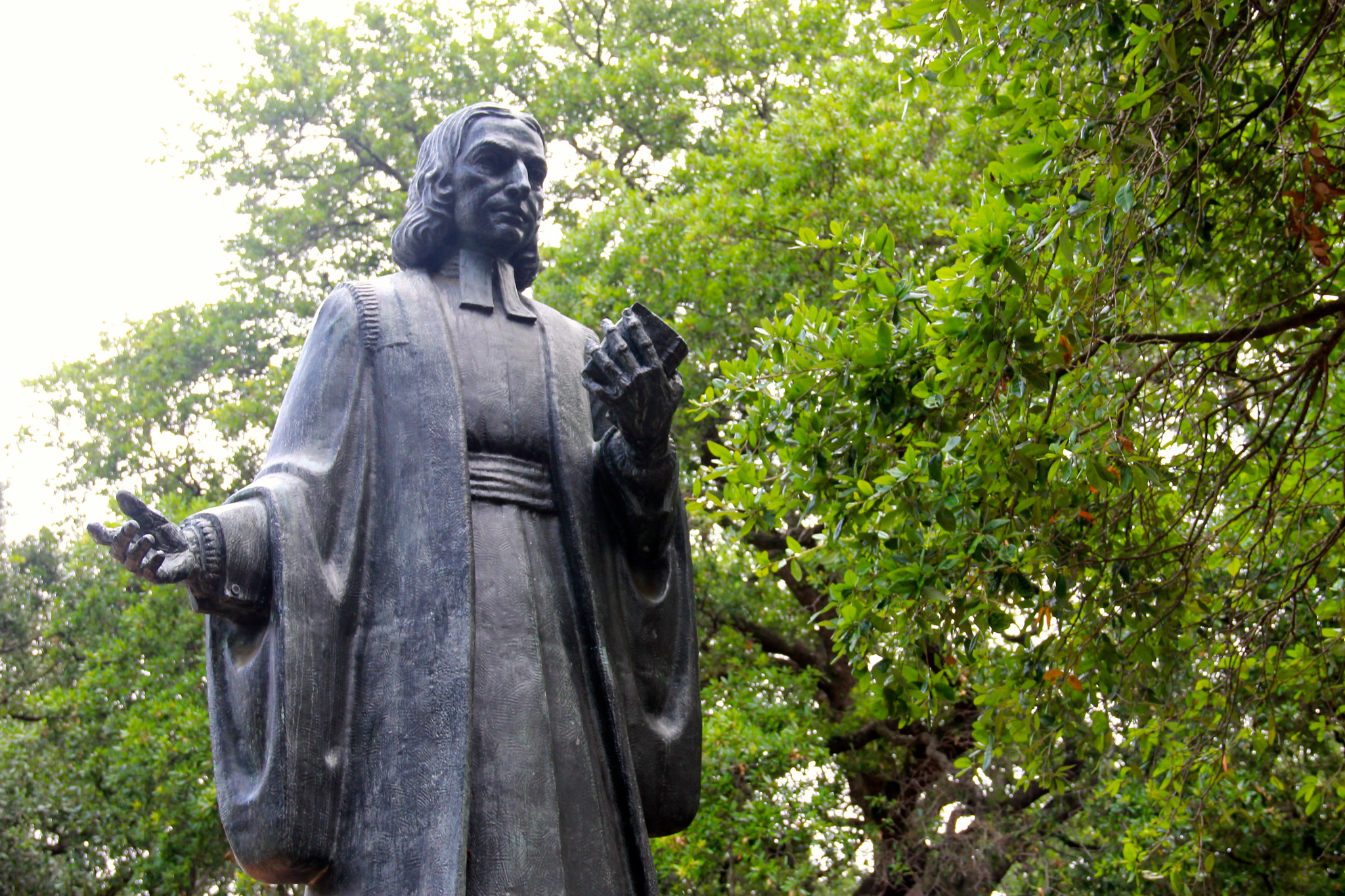
John Wesley Statue, Savannah, GA credit: Daniel X. O’Neil

On September 15, 1790, John Wesley wrote a letter to Robert Carr Brackenbury. Wesley wrote that his “body seems nearly to have done its work and to be almost worn out.” This acknowledgment of his own mortality seems to have led Wesley to reflect on his life and his involvement in Methodism. Wesley’s description of his sense of God’s purpose for “raising up” the “people called Methodists” is now fairly well known:


I am glad brother D — has more light with regard to full sanctification. This doctrine is the grand depositum which God has lodged with the people called Methodists; and for the sake of propagating this chiefly He appeared to have raised us up.


In other words, Wesley believed that there was a particular reason for Methodism. Methodists existed because God had given them a particular corporate calling – to spread the teaching about the possibility of full sanctification.


Wesley argued for and preached entire sanctification, full sanctification, or Christian perfection throughout his ministry.

In the essay “The Principles of a Methodist Farther Explained”, which was published in 1746, Wesley argued that “holiness… is religion itself” (Works, 9:227).

Forty years later in “Thoughts upon Methodism”, he described Methodism as follows, “Methodism… is only plain scriptural religion, guarded by a few prudential regulations. The essence of it is holiness of heart and life” (Works, 9:529).


Wesley defined Christian perfection in “A Plain Account of Christian Perfection” (1777) as:

In one view, it is purity of intention, dedicating all the life to God. It is the giving God all our heart; it is one desire and design ruling all our tempers. It is the devoting, not a part, but all our soul, body, and substance to God. In another view, it is all the mind which was in Christ, enabling us to walk as Christ walked. It is the circumcision of the heart from all filthiness, all inward as well as outward pollution. It is a renewal of the heart in the whole image of God, the full likeness of Him that created it. In yet another, it is the loving God with all our heart, and our neighbour as ourselves. (Works, Jackson, 11:444)


When Wesley talked about growth in holiness, and the ultimate goal of being made perfect in love, or being entirely sanctified, he was adamant that sanctification is by faith, just as justification is by faith.


In one of his best known sermons, “The Scripture Way of Salvation” (1765), Wesley described the faith by which Christians are entirely sanctified as a faith that:

1. God has promised this in Scripture.

2. What God promises, God is able to do.

3. God is able and willing to do it now.

4. God actually does this.


Wesley concluded the sermon by exhorting his audience to seek this faith now:

And by this token you may surely know whether you seek it by faith or by works. If by works, you want something to be done first, before you are sanctified. You think, I must first be or do thus or thus. Then you are seeking it by works unto this day. If you seek it by faith, you may expect it as you are; and expect it now. It is of importance to observe, that there is an inseparable connexion between these three points, –expect it by faith; expect it as you are; and expect it now! To deny one of them, is to deny them all; to allow one, is to allow them all. Do you believe we are sanctified by faith? Be true then to your principle; and look for this blessing just as you are, neither better nor worse; as a poor sinner that has still nothing to pay, nothing to plead, but “Christ died.” And if you look for it as you are, then expect it now. Stay for nothing: why should you? Christ is ready; and He is all you want. He is waiting for you: He is at the door! (Works, 2:169.)


Though Christian perfection is not often taught or preached by contemporary Methodists, it is still part of official United Methodist teaching.

“The Confession of Faith of the Evangelical United Brethren Church”, which is part of United Methodism’s doctrinal standards, contains this beautiful statement on Christian perfection:

Article XI—Sanctification and Christian Perfection

We believe sanctification is the work of God’s grace through the Word and the Spirit, by which those who have been born again are cleansed from sin in their thoughts, words and acts, and are enabled to live in accordance with God’s will, and to strive for holiness without which no one will see the Lord.

Entire sanctification is a state of perfect love, righteousness and true holiness which every regenerate believer may obtain by being delivered from the power of sin, by loving God with all the heart, soul, mind and strength, and by loving one’s neighbor as one’s self. Through faith in Jesus Christ this gracious gift may be received in this life both gradually and instantaneously, and should be sought earnestly by every child of God.

We believe this experience does not deliver us from the infirmities, ignorance, and mistakes common to man, nor from the possibilities of further sin. The Christian must continue on guard against spiritual pride and seek to gain victory over every temptation to sin. He must respond wholly to the will of God so that sin will lose its power over him; and the world, the flesh, and the devil are put under his feet. Thus he rules over these enemies with watchfulness through the power of the Holy Spirit. (Book of Discipline, 75.)


In addition to official United Methodist doctrine, every pastor who is ordained in the UMC must answer these three questions:

1. Are you going on to perfection?

2. Do you expect to be made perfect in love in this life?

3. Are you earnestly striving after it?

The anticipated answer to each of these questions is: “Yes, by the grace of God.”


Proclaiming and defending Christian perfection was one of Wesley’s deep passions, largely because he believed that God had given this teaching to Methodism in order to spread the good news that we can actually live fully for God in this life.


I am a Methodist because I believe, by the grace of God and the power of the resurrection of Jesus Christ, that we can experience freedom from sin now. I believe we have been entrusted with the most audacious, bold, and positive vision for the possibilities of transformation that are available on this side of Easter. I do not believe that the Christian life must be one of futility or frustration, where one does the best they can but is not able to completely give their lives in obedience to Christ.

By faith in Jesus, all who are created in the image of God can experience not only the joy of having our sin cancelled, but the deeper joy of experiencing God break the power of cancelled sin, as Charles Wesley so eloquently put it.

Teaching and preaching the possibility of being made perfect in love for God and neighbor, and seeking to actually become entirely sanctified are the reasons Methodism was “raised up.”

May we remember who we are and why the Holy Spirit brought us to life.

Kevin M. Watson teaches, writes, and preaches to empower community, discipleship, and stewardship of our heritage. Connect with Kevin here. Get future posts emailed to you here. Affiliate links used in this post.

Wesley Didn’t Say It: “Personal and Social Holiness”

20 Monday May 2013

Posted by Kevin M. Watson in Methodist History, Wesley

≈ 27 Comments

Tags

personal holiness, quotes, social holiness, Wesley

“Personal and social holiness.”

Wesley did not say this.

Andrew Thompson, who is Assistant Professor of Historical Theology and Wesleyan Studies at Memphis Theological Seminary, reminded me of this phrase that is often attributed to Wesley in a comment on my previous blog in this series. (Andrew also blogs here.)

Here is part of Thompson’s comment:

The one that gets me is the attribution of the phrase “personal and social holiness” to Wesley. There is no evidence I have ever seen that Wesley used this phrase. And in an article I did a couple of years ago, I looked as hard for it in Wesley as anyone ever has. Yet the phrase gets repeated ad nauseam, as if it is a given that Wesley used it. I would argue that it is neither historical to Wesley nor is it “Wesleyan,” in the sense that it bifurcates holiness in a way that Wesley was at pains to avoid (hence the use of the phrase, “no holiness but social holiness,” which is accurately Wesleyan).

At the end of his comment, Thompson cites the quote where Wesley does use the phrase “social holiness.” However, when social holiness is used by contemporary Methodists, it is almost always used in a way that is synonymous with social justice. And yet, in the only passage I know of where Wesley used the phrase “social holiness” he was talking not about justice, but about the importance of other people for growing in holiness. The passage “social holiness” occurs in is the preface to Wesley’s 1739 edition of Hymns and Sacred Poems. Here is the passage in its broader context:

Directly opposite to this is the gospel of Christ. Solitary religion is not to be found there. ‘Holy solitaries’ is a phrase no more consistent with the gospel than holy adulterers. The gospel of Christ knows of no religion but social; no holiness but social holiness.

In this context, then, Wesley is explicitly rejecting “holy solitaries”, or the attempt to become holy in isolation from other Christians. And he is insisting on the importance of community for becoming Christ-like.

I have previously written about this quote and its broader context on this blog here. Andrew Thompson has written about “social holiness” on his blog here and here. He has also published an excellent academic essay on Methodist Review. The essay can be accessed through his personal website here.

You can add “personal and social holiness” to the other quotes that are stubbornly connected to John Wesley, despite the fact that there is no source that connects them to Wesley’s pen. Others I have previously written about are:

“Do all the good you can, by all the means you can, in all the ways you can, in all the places you can, at all the times you can, to all the people you can, as long as ever you can.” [Original post here.]

“I set myself on fire and people come to watch me burn.” [Original post here.]

“In essentials, unity; in non-essentials, liberty; and, in all things, charity.” [Original post here.]

Kevin M. Watson teaches, writes, and preaches to empower community, discipleship, and stewardship of our heritage. Connect with Kevin. Get future posts emailed to you.

Experience in the so-called “Wesleyan Quadrilateral”

13 Monday May 2013

Posted by Kevin M. Watson in Christian Living, Methodist History, Wesley

≈ 40 Comments

Tags

Albert Outler, Experience, Quadrilateral, Wesley

For many Methodists, the most cherished piece of their heritage is the so-called “Wesleyan quadrilateral.” Yet, as has often been noted, the quadrilateral was largely Albert C. Outler’s invention in the mid-twentieth century. Towards the end of his life Outler wrote:

“The term ‘quadrilateral’ does not occur in the Wesley corpus – and more than once, I have regretted having coined it for contemporary use, since it has been so widely misconstrued” (36)

Nearly thirty years later, I wonder how Outler would feel today about his creation. It certainly continues to be widely misconstrued. The quadrilateral is not doctrine, it is a proposed method for theological reflection. But it is almost never used the way that it was intended. A tool that does not actually do what it is supposed to do is of limited usefulness. A bicycle pump that lets more air out of a tire than it puts in should be set aside. A screen cleaner that scratches the screen should be thrown away, not repeatedly reused.

So why is there such persistent loyalty to a tool for theological reflection that almost never works the way that it is supposed to?

For the sake of space, I will limit my comments here to the part of the quadrilateral that is most “widely misconstrued” – experience.

In his essay, “The Wesleyan Quadrilateral – in John Wesley” Outler described the rationale for Wesley’s theological method:

When challenged for his authority, on any question, his first appeal was to the Holy Bible… Even so, he was well aware that Scripture alone had rarely settled any controverted point of doctrine… Thus, though never as a substitute or corrective, he would also appeal to ‘the primitive church’ and to the Christian tradition at large as competent, complementary witnesses to ‘the meaning’ of this Scripture or that…

But Scripture and tradition would not suffice without the good offices (positive and negative) of critical reason. Thus, he insisted on logical coherence and as an authorized referee in any contest between contrary positions or arguments. And yet, this was never enough. It was, as he knew for himself, the vital Christian experience of the assurance of one’s sins forgiven that clinched the matter. (24)

Did you notice how specific Outler’s understanding of the role of experience is for John Wesley? It is not just any experience that a person has. It is not experience with a person and whether you find them to be a good or decent person. In fact, Outler almost always modifies the word experience with “Christian.” And it is not just any “Christian experience,” it is the particular Christian experience “of the assurance of one’s sins forgiven.”

In case the limited role of experience is missed, he adds that “Christian experience adds nothing to the substance of Christian truth; its distinctive role is to energize the heart so as to enable the believer to speak and do the truth in love” (25)

Outler goes on to argue that it was Wesley’s “special genius” to add experience to the Anglican “triad” of Scripture, tradition, and reason. Wesley did this, on Outler’s account, in order to “incorporate the notion of conversion into the Anglican tradition” (27).

Outler’s understanding of the role of experience in Wesley’s theology, then, is quite particular. It is not any experience that a person has, it is the distinctively Christian experience of assurance of the forgiveness of one’s sins. It is the experience of the witness of the Spirit. Wesley was quite fond of citing Romans 8:16 to illustrate this: “it is that very Spirit bearing witness with our spirit that we are children of God.”

When the quadrilateral is deployed as a means of theological reflection; however, experience is almost always defined far more broadly than this. In popular use of the quadrilateral, experience is usually understood as a kind of common sense. Experience is an authority for theological reflection (so the argument goes) because, if we are willing to pay attention, we can see the obvious things that are going on around us. Experience is also usually used to describe one’s encounters with the world around them, which often results in confirming the prevalent perspective of the current popular culture. Rarely, in popular discussions of the quadrilateral, is experience defined in the specific and more technical way that Wesley and Outler did.

We have come a long way from Outler’s qualification that “Christian experience adds nothing to the substance of Christian truth; its distinctive role is to energize the heart so as to enable the believer to speak and do the truth in love” (25)

And yet, it seems to me that one of the reasons that many contemporary Methodists are so loyal to the quadrilateral is precisely because the appeal to experience provides an authority for adding new things to Christian truth.

If Methodists are going to continuing citing the quadrilateral as their distinctive theological method, then we have a choice to make. We can return to an understanding of experience as it was defined by Outler in his creation of the quadrilateral. Or, we can knowingly reject the way that he defined experience as a legitimate source for Christian theology and use it in a way that he explicitly rejected. If we choose the latter, we ought to at least be honest that we are now using a method of theological reflection that neither John Wesley nor Albert Outler would have endorsed.

Kevin M. Watson teaches, writes, and preaches to empower community, discipleship, and stewardship of our heritage. Connect with Kevin. Get future posts emailed to you.

Wesley Didn’t Say It: Do all the good you can, by all the means you can…

29 Monday Apr 2013

Posted by Kevin M. Watson in Methodist History, Wesley

≈ 134 Comments

Tags

John Wesley, quotes

John Wesley, credit: Daniel X. O’Neil

“Do all the good you can, by all the means you can, in all the ways you can, in all the places you can, at all the times you can, to all the people you can, as long as ever you can.”

Wesley did not say this.

You may have seen this quote in a nice frame on the wall of a Methodist Church, or even published in a book, citing John Wesley as its author. (For example, it was cited in Bartlett’s Familiar Quotations.) Despite the persistence of the quote being attributed to John Wesley, you will not find in anywhere in his writing.

You can add this quote to other quotes that are stubbornly connected to John Wesley despite the fact that there is no source that connects them to Wesley’s pen. I have written about several other quotes misattributed to John Wesley:

“I set myself on fire and people come to watch me burn.”

“In essentials, unity; in non-essentials, liberty; and, in all things, charity.”

“Personal and social holiness“

“Holy conferencing“

“Be present at our table, Lord…“

There are many things I have come to appreciate about twitter, but one of the things that I find the most frustrating is the persistence of misquotes of historical figures. And due to my own area of specialization, misquoting John Wesley gets to me the most. Wesley and others were frequently misquoted before social media, but with the advent of twitter misquoting Wesley seems to be more regular. Wesley said enough interesting, surprising, and even controversial things that we should not need to attribute things to him that he did not actually say. Historical accuracy matters.

Do you want to know if Wesley did actually say something that is attributed to him? Check out Did Wesley Really Say That? (Here’s How to Find Out).

In any event, regarding this particular quote, there is no evidence that Wesley said this. We should stop saying that he did.

Kevin M. Watson teaches, writes, and preaches to empower community, discipleship, and stewardship of our heritage. Connect with Kevin. Get future posts emailed to you. This post was updated on April 25, 2020.

Coming Soon: Reclaiming the Class Meeting

18 Thursday Apr 2013

Posted by Kevin M. Watson in Accountability, Christian Living, Class Meetings, Methodist History, Ministry, Wesley

≈ 5 Comments

Tags

catechesis, Christian formation, Class Meetings, life in god, methodist class, relationship with god

photo (8)If I had to pick one thing that I believe would be most likely to be used by the Holy Spirit to bring renewal to the church, it would be a return to the early Methodist class meeting.

And that is why I have finally gotten around to writing a book that is designed to introduce people to what a class meeting is and to help create and sustain these groups. I have just submitted my manuscript and am excited to see this book in print.

Class meetings were groups of seven to twelve people who gathered together to discuss the state of their relationship with God. The question used in the eighteenth-century was, “How does your soul prosper?” Today it might be translated, “How is your life in God?” Regardless of how the question is phrased, the most important thing is that the group is focused on each person’s relationship with God.

In my experience, when people want to grow in their faith, they typically assume that they need to know more. The problem of a lack of formation is often perceived to be a lack of information. I agree that all of us could stand to learn more about our faith and there is a key role for catechesis.

However, following Jesus is ultimately a way of life, not a body of knowledge about him. Too often, Christians do not practice what they do know.

The key contribution that the early Methodist class meeting would make for contemporary Christianity is that it would help people learn to look for encounters with God in every part of their life. They have the potential to help Christians learn to interpret every part of their lives through the lens of the gospel.

Above all else, contemporary Christianity needs Christians who are Christian not in name only, but women and men who are passionate and confident in their faith in Christ and who can speak to the ways that they have seen and experienced God’s work in their lives and in the lives of others.

I believe that the Holy Spirit wants to use this form of communal Christian formation once again to help people have an active faith in Christ, not merely a passive intellectual faith. And I believe that if this practice were to be reclaimed, it would be used by the Spirit to bring renewal.

If you are interested in reclaiming the class meeting in your faith community, stay tuned! I will update the progress and availability of the book here and on twitter (@kevinwatson).

If you’d like to read more about the class meeting, check out the series of posts I wrote here.

Recent Wesleyan/Methodist Scholarship

04 Thursday Apr 2013

Posted by Kevin M. Watson in Book Review, Christian Living, Methodist History, Wesley

≈ 3 Comments

Tags

Book Review, Methodist Scholarship, Wesleyan Scholarship

I have recently found myself either purchasing or adding to my “wish list” a number of books in Wesleyan/Methodist studies. Here a few books that are newly released, or soon to be released.

New Releases:

The Ashgate Research Companion to World Methodism, edited by William Gibson, Peter Forsaith, and Martin Wellings, 537 p. ($149)

From the book description:

This Companion brings together a team of respected international scholars writing on key themes in World Methodism to produce an authoritative and state-of-the-art review of current scholarship, mapping the territory for future research.Leading scholars examine a range of themes including: the origins and genesis of Methodism; the role and significance of John Wesley; Methodism’s emergence within the international and transatlantic evangelical revival of the Eighteenth-Century; the evolution and growth of Methodism as a separate denomination in Britain; its expansion and influence in the early years of the United States of America; Methodists’ roles in a range of philanthropic and social movements including the abolition of slavery, education and temperance; the character of Methodism as both conservative and radical; its growth in other cultures and societies; the role of women as leaders in Methodism, both acknowledged and resisted; the worldwide spread of Methodism and its enculturation in America, Asia and Africa; the development of distinctive Methodist theologies in the last three centuries; its role as a progenitor of the Holiness and Pentecostal movements, and the engagement of Methodists with other denominations and faiths across the world.

Keeping Faith: An Ecumenical Commentary on the Articles of Religion and Confession of Faith of the United Methodist Church, D. Stephen Long, 118 p. ($18)

From the book description:

Keeping Faith offers resources to help Christians reclaim the importance of doctrine and thereby to know and love well God and God’s creation. Although it gives particular attention to the Wesleyan and Methodist tradition, it is of necessity an ecumenical effort. Neither the Wesleyans nor the Methodists invented Christian doctrine. In fact, the Wesleyan tradition contributes little that is distinctive or unique. This is a good thing, for unlike other disciplines where originality and uniqueness matter greatly, Christian doctrine depends on others and not the genius of some individual… This work is an ecumenical commentary on the Confession of Faith and the Articles of Religion found in the Wesleyan tradition and also draws on ancient and modern witnesses to God’s glory.

Key United Methodist Beliefs, William J. Abraham, and David F. Watson, 172 p. ($15.99)

Read my recent review here. From the book description:

Deepen your faith and enrich your life through this study of core Methodist beliefs. Written by popular seminary teachers, this book will connect you to the life and ministry of John Wesley, demonstrating relevance for the lives of Christians today as it offers an introductory examination of each.

Wesley, Wesleyans, and Reading Bible as Scripture, edited by Joel B. Green and David F. Watson, 350 p. ($39.95)

From the book description:

The theology of John Wesley has proven exceedingly influential in the religious and spiritual lives of Wesley’s followers and his critics. However, Wesley did not leave behind a written doctrine on scripture. This collection presents an array of diverse approaches to understanding John Wesley’s charge to read and interpret the Bible as scripture. Contributors move beyond the work of Wesley himself to discuss how Wesleyan communities have worked to address the difficult scriptural–and theological–conundrums of their time and place.

Coming Soon:

The Sermons of John Wesley: A Collection for the Christian Journey, edited by Kenneth J. Collins and Jason E. Vickers, 608 p. ($49.99)

From the Book Description:

With an eye on serious Christian development, Kenneth Collins and Jason Vickers have arranged this collection of the sermons of John Wesley in terms of the way of salvation in general and the “ordo salutis” in particular. This book contains the sermons that John Wesley approved, in addition to the standard 52 of the North American tradition, organized to correspond to the logic of Christian discipleship and formation. The editors include an outline and short introduction to each sermon detailing its importance and context. Sermons include “Sermon on the Mount,” which is key to understanding Wesley’s ethics, “Free Grace,” “On Working Out Our Own Salvation,” and “The Danger of Riches.” The book is designed to enhance the reader’s understanding of Wesleyan practical theology and written in an accessible style that will be appealing to the wider Wesleyan family of churches. Also included are all of the 44 standard sermons of the British tradition.

Wesley and the People Called Methodist 2nd ed., Richard P. Heitzenrater, 352 p. ($29.99)

This second edition of Richard P. Heitzenrater’s groundbreaking survey of the Wesleyan movement is the story of the many people who contributed to the theology, organization, and mission of Methodism. This updated version addresses recent research from the past twenty years; includes an extensive bibliography; and fleshes out such topics as the means of grace; Conference: “Large” Minutes: Charles Wesley: Wesley and America; ordination; prison ministry; apostolic church; music; children; Susanna and Samuel Wesley; the Christian library; itinerancy; connectionalism; doctrinal standards; and John Wesley as historian, Oxford don, and preacher.

The Works of John Wesley, vol. 13 Doctrinal and Controversial Treatises II, edited by Paul Wesley Chilcote and Kenneth J. Collins, 944 p. ($57.99)

From the book description:

The second of three volumes devoted to Wesley’s theological writings contains two major sets of material. The first set (edited by Paul Chilcote) contains writings throughout Wesley’s ministry devoted to defense of the doctrine of Christian perfection, including “A Plain Account of Christian Perfection.” The second set (edited by Kenneth Collins) collects Wesley’s various treatises focused on predestination and related issues, often in direct debate with Calvinist writers, including “Predestination Calmly Considered.”

The Cambridge Companion to American Methodism, edited by Jason E. Vickers, 398 p. ($32.99)

A product of trans-Atlantic revivalism and awakening, Methodism initially took root in America in the eighteenth century. In the mid-nineteenth century, Methodism exploded to become the largest religious body in the United States and the quintessential form of American religion. This Cambridge Companion offers a general, comprehensive introduction to various forms of American Methodism, including the African-American, German Evangelical Pietist, holiness, and Methodist Episcopal traditions. Written from various disciplinary perspectives, including history, literature, theology, and religious studies, this volume explores the beliefs and practices around which the lives of American Methodist churches have revolved, as well as the many ways in which Methodism has both adapted to and shaped American culture.

Key United Methodist Beliefs

27 Wednesday Mar 2013

Posted by Kevin M. Watson in Book Review, Christian Living, Methodist History, Wesley

≈ 4 Comments

Tags

Book Review, Key United Methodist Beliefs, UMC, Wesleyan theology

“Belief matters.”

These are the very first words of the introduction to Key United Methodist Beliefs by William J. Abraham and David F. Watson. In light of my recent thinking and writing about the connection between right belief and right practice, I can’t think of a better way to begin a Wesleyan catechism.

If you have been following my recent writing, you will also have noticed the discussion about the invisibility of the Wesleyan message in online and print media compared to other parts of the church catholic. One of my hypotheses is that a major reason that the Wesleyan message is not getting a broader hearing today is because there are so many different voices claiming to represent the Wesleyan or Methodist tradition.

All of this has led to the belief that renewal will come to Methodism in America through a renewal of both Wesleyan doctrine and practice.

The challenge, though, is that in some parts of American Methodism there is a persistent mistrust of the value of doctrine. The concern generally seems to be that a church with clear doctrinal commitments will use them to bludgeon other people or exclude them.

While I appreciate the concern, I continue to be convinced that a deep retrieval of the significance of doctrine will be a part of any coming renewal of American Methodism. Along these lines, William J. Abraham and David F. Watson (no relation) have given a gift to the church in their new book Key United Methodist Beliefs.

After the simple affirmation that belief matters, they continue:

What we believe about God, about God’s saving work within creation, about human wrongdoing, about the goal of our lives and our eternal destiny all matter. They make a difference with regard to how we think about ourselves and other people, about life and death, what we should value in life, and what kind of person we should hope to become. It is common to hear people talk about beliefs as if one is simply as good as another. For some, the one great sin is to insist on a clear difference between truth and falsehood, between right and wrong, but this perspective cannot coexist with Christianity. For that matter, it cannot coexist with Judaism or Islam, either, but that is not our topic here. The claims that we Christians make about what God has done for us – for all creation – in and through Jesus Christ really do matter. (ix)

Someone might concede that beliefs matter, but point out that belief itself is insufficient. Indeed, there have been many periods in the history of Christianity where movements have arisen in opposition to a fierce and rigid dogmatism that at times led to violence. It is not enough for those who take on the name of Jesus, calling themselves Christians, to have right thoughts or ideas about Jesus. Belief must lead to action. One of the beauties of Key United Methodist Beliefs is that Abraham and Watson anticipate this objection and address it head on at the beginning of the book. Here is how they conclude the introduction.

Right belief, by itself, of course, is not enough. As Wesley put it, a person may be “as orthodox as the devil… and may all the while be as great a stranger as he to the religion of the heart.” Right belief does matter, though, because it helps us know God more fully, and it is by knowing and loving God, and by God’s knowing and loving us, that we become the people God wants us to be. We read in the Roman Catholic catechism, “The whole concern of doctrine and its teaching must be directed to the love that never ends. Whether something is proposed for belief, for hope or for action, the love of our Lord must always be made accessible, so that anyone can see that all the works of perfect Christian virtue spring from love and have no other objective than to arrive at love.” The goal is love, and God is love. We should do all we can, therefore, to know God. (xii)

This book is helpful because it is a strong articulation of the importance of beliefs for United Methodism that also demonstrates that those who argue for the necessity of doctrine for the life of the church make the argument for both doctrinal and practical reasons. In other words, right doctrine is always connected to right practice. From start to finish, it is clear that the authors of this book are convinced not only that orthodoxy (right belief) matters but also that orthopraxy (right practice) matters.

Abraham and Watson’s consistent connection of belief to practice has the potential to advance the conversation about the role of doctrine in the church beyond the strawman argument that those who care about right belief do not care about practice, or Christian living.

To cite one of many examples. In the chapter “Who Is God the Father?” Abraham and Watson affirm a key belief: “To think of God as God the Father is to believe that God loves all people and wishes to save us from sin and death” (6) They then conclude: “The nature of God the Father is one of self-giving, and in like kind, we should give of ourselves to God and our neighbors as well” (7).

The title of the book is a bit misleading, as the book is about much more than “United Methodist” beliefs. To me, it is really a Wesleyan catechism. Unfortunately, the title of the book will likely narrow the potential audience, when many Wesleyan communities would have been likely to use the book if the title were “Wesleyan Beliefs” or “A Wesleyan Catechism.”

Each chapter is oriented around a central question and is divided into five sections: A Wesleyan Faith, A Lived Faith, A Deeper Faith, The Catechism, and In Your Own Words. The first three parts are narrative, as you would expect in a typical book. The fourth part, in true catechetical format, is a question and answer format, which often includes Scripture passages that amplify the answer. The fifth chapter is basically questions for discussion, which could help an individual reader reflect more on the impact of a particular belief for their own life or it could be used as a basis for discussion in small groups.

And just in case I was on the fence for the first nine chapters, chapter ten, “How Should Wesleyans Live?” is largely an engagement with the “General Rules”: do no harm, do good, and attend upon the ordinances of God.

Key United Methodist Beliefs is an exceptional resource that has the potential to be useful in a variety of contexts. If I were a local church pastor, this would be a resource I would use in preparing people for confirmation or membership. I highly recommend this book. At a minimum, it should be in every Wesleyan/Methodist pastor’s personal library.

The Gospel in a Wesleyan Accent #andcanitbe

13 Wednesday Mar 2013

Posted by Kevin M. Watson in Christian Living, Ministry, Wesley

≈ 14 Comments

Tags

#andcanitbe, gospel, Methodism, Wesley, Wesleyan tradition

How do you preach the gospel in a Wesleyan accent? This has been on my mind quite a bit over the last month. My last two blog posts were about this to some degree. In the first post, I discussed my sense of the current state of United Methodism, arguing that what we are in favor of is not good enough. One of the key arguments of that post was that United Methodism’s common discourse is thin and impoverished doctrinally. Another way of putting it is that there seems to me to be deep disagreement about what we are for. It is more clear that we are confident that we can change the world than that we believe that we are desperately dependent on the Triune God to do anything that matters.

A few days later I wrote another post noting that the Wesleyan message is almost entirely invisible in print and social media in comparison to other expressions of Christianity. The conversation from the initial question I raised has taken on a life of its own, particularly with the use of the hashtag #andcanitbe on twitter. (To be clear, I did not come up with the idea for the hashtag and I do not have any control over what is happening with this conversation, which I’m sure is obvious to anyone who uses twitter – nobody controls what happens there! Please do feel free to follow me [@kevinwatson] and contribute to the conversation.)

Those two posts were more related for me than I initially realized. I am starting to wonder if one of the most significant factors in the decline of the United Methodist Church is an inability to agree on and articulate a clear and compelling theology. Some see this as an asset of contemporary Methodism – there is plenty of room to agree to disagree. But I wonder what the fruit is of this “big tent” vision of Methodism. Relating this to my second post, I suspect that the Wesleyan message is invisible because those who claim to be Wesleyan do not themselves agree on what the Wesleyan message is?

As the #andcanitbe conversation has gained some momentum, I have been asking myself what my hopes are for this conversation. Here are my current hopes:

First, I want to see God show up in amazing ways. I want to see broken and hurting peoples’ lives changed by the amazing grace of God. This is really central to everything else for me. I want to be a part of something where I can say, “God did that” and where everyone knows that is absolutely the case. Not that we did something cool for God, but that the almighty One dwelt among us in tangible ways.

Second, for #andcanitbe more specifically, I hope that the conversation will result in an articulation of the gospel in a particularly Wesleyan accent with clarity and conviction to a broader audience. I really appreciated the phrase Matt Judkins (@matt_judkins) used early on. He spoke of the need to identify “core unifying commitments” of the Wesleyan tradition. I would love to see a result of this conversation be a network of spirit-filled women and men who have clarity about the key unifying beliefs and practices for contemporary Christianity. I would begin by naming the following as core beliefs: sin and the need for repentance and forgiveness; justification by faith; the new birth and assurance; and sanctification by faith, even unto entire sanctification. Another way this has been put is:

All need to be saved.
All may be saved.
All may know themselves to be saved.
All may be saved to the uttermost.

And it will not surprise those of you who are familiar with my work that I think a crucial core practice of any expression of the gospel in a Wesleyan accent would be Christian conferencing (by which Wesley meant small group accountability structures, like the class meeting and band meeting and not “polite conversation,” which is how some UM leaders are increasingly redefining it). There are, of course, other practices that are crucial as well.

Arguing that core unifying commitments are crucial may be a difficult sell in a tradition that not too long ago was best known for slogans like “you can be anything and be United Methodist” or which defined its distinctiveness not by any particular theological commitments, but by a method of reflecting theologically (the Outlerian Quadrilateral). Thankfully, fewer people today seem to want to be known as the church that has no beliefs. Yet, the UMC has recently presented itself to the world with slogans like “open hearts, open minds, open doors” and by suggesting the need to “rethink church.”

For my part, I am increasingly convinced that an inability to clearly and passionately articulate a common message is a liability, not something to be celebrated. I would even go so far as to say that a clear message that people are burdened to share with as many people as possible is of more urgency than openness.

Third, I would like the conversation to be clearly focused on the Father, Son, and Holy Spirit and not on ourselves. Being in the Pacific Northwest and at Seattle Pacific University where I am around non-UMs at least as often as I am around UMs has made me more aware of the ways that United Methodists (myself included) often talk and act as if we are the center of the ecclesial universe. I have particularly found myself questioning whether the things that people sometimes assert as unique about Methodism would not also be claimed by most of the Church. All that to say, I am less interested in being a part of something that focuses on defining how Wesleyans are different from others, than I am in working to more effectively proclaim the gospel with a Wesleyan accent.

Finally, while I think unity matters, I am not arguing for homogeneity. My sense is that if the Holy Spirit brings renewal to United Methodism, or the broader Wesleyan tradition, the Spirit will bring together a variety of voices from miraculously different backgrounds, who feel a common leading to articulate a message that is theologically in harmony and not a cacophony. In other words, I expect that if God does show up in miraculous ways, one fruit will be that people who have not been working together will start working together. People would become deep partners in ministry with people they have never met before and would not have met if God had not sovereignly brought them together. A sign of revival would be the Holy Spirit bringing people together from different cultures, races, ethnicities, and genders. I am thinking of Pentecost. I am thinking of early American Methodism. I am thinking of Azusa Street. And I am thinking of Revelation 7:9-17:

After this I looked, and there was a great crowd that no one could number. They were from every nation, tribe, people, and language. They were standing before the throne and before the Lamb. They wore white robes and held palm branches in their hands. They cried out with a loud voice: ‘Victory belongs to our God who sits on the throne, and to the Lamb.’ All the angels stood in a circle around the throne, and around the elders and the four living creatures. They fell facedown before the throne and worshipped God, saying, ‘Amen! Blessing and glory and wisdom and thanksgiving and honor and power and might be to our God forever and always. Amen.’ Then one of the elders said to me, ‘Who are these people wearing white robes, and where did they come from?’ I said to him, ‘Sir, you know.’ Then he said to me, ‘These people have come out of great hardship. They have washed their robes and made them white in the Lamb’s blood. This is the reason they are before God’s throne. They worship him day and night in his temple, and the one seated on the throne will shelter them. They won’t hunger or thirst anymore. No sun or scorching heat will beat down on them, because the Lamb who is in the midst of the throne will shepherd them. He will lead them to the springs of life-giving water, and God will wipe away every tear from their eyes.’

Now that, I want to be a part of! Come Lord Jesus.

← Older posts
Newer posts →

Blog at WordPress.com.

  • Subscribe Subscribed
    • Kevin M. Watson
    • Join 369 other subscribers
    • Already have a WordPress.com account? Log in now.
    • Kevin M. Watson
    • Subscribe Subscribed
    • Sign up
    • Log in
    • Report this content
    • View site in Reader
    • Manage subscriptions
    • Collapse this bar
 

Loading Comments...