• About Me

Kevin M. Watson

Kevin M. Watson

Category Archives: Methodist History

New in Wesleyan Scholarship: The Sermons of John Wesley

09 Friday Aug 2013

Posted by Kevin M. Watson in Book Review, Christian Living, Methodist History, Wesley

≈ 3 Comments

Tags

Book Review, Early Methodism, John Wesley, sermons

The Sermons of John Wesley: A Collection for the Christian Journey, edited by Kenneth J. Collins and Jason E. Vickers is now in print. I have been anticipating the arrival of this book since I was asked to write an endorsement of it last fall. Here is the full endorsement I originally wrote:

Collins and Vickers have provided a collection of John Wesley’s sermons that is a gift to both the church and the academy. The organization according to the Wesleyan way of salvation appropriately emphasizes Christian formation and the potential for the sermons to function as a means of grace. The decisions about which ones to include (especially including all of the standard forty-four sermons) provides important continuity with Wesley’s own decisions about which of his sermons were the most essential for the “people called Methodists.”

This volume provides an alternative to the standard one volume collection of Wesley’s sermons, John Wesley’s Sermons: An Anthology, edited by Albert C. Outler and Richard P. Heitzenrater. The Oulter and Heitzenrater volume is the one I read when I was in seminary and I expect that it will continue to be used in many seminary courses. John Wesley’s Sermons is an exceptional volume that uses the critical edition of Wesley’s sermons from the Bicentennial Edition of the Works of John Wesley and was edited by two heavy-weights of Wesleyan studies.

A reasonable question, then, would be: Why the need for a new collection of Wesley’s sermons?

Collins and Vickers anticipate this question in their introduction to the volume. The key contribution that the volume makes is that it contains all of the original forty-four sermons that were printed in the edition of Wesley’s Sermons on Several Occasions. These sermons were included in the “Model Deed” that stipulated that Methodist preachers must not preach or teach doctrine contrary to that which was contained in this collection. Collins and Vickers argue that “when Wesley drafted this disciplinary instrument, he obviously viewed these forty-four sermons, and not his entire sermon corpus, as being of remarkable and distinct value in the ongoing life of Methodism” (xiii). The Outler and Heitzenrater volume, on the other hand, omits nineteen of the forty-four sermons. A strength of this new collection, then, is that it contains all these sermons, which Wesley indicated were of particular value for the “people called Methodists,” in one volume.

The Collins and Vickers volume also contains eight of the nine sermons that Wesley added in 1771, omitting the sermon “On the Death of George Whitefield.”

This new volume has the advantage of presenting a (nearly) complete collection of the entirety of the sermons Wesley identified as having particular significance for early Methodism. It also includes an additional eight sermons that the editors felt were particularly helpful in “pass[ing] on the legacy of the Methodist tradition in a practical and relevant way to the current generation” (xix).

As indicated in my endorsement of the book, I think the most important contribution of this volume is that it is organized according to the Way of Salvation. The Outler and Heitzenrater volume was organized to focus on the development of Wesley’s thought over the course of his own life. This approach has significant value for seminars in Methodist history and doctrine. The main strength of the organization of the Collins and Vickers volume, on the other hand, is that it can readily function as a catechetical tool for helping form contemporary Wesleyans in their own theological tradition.

For more on The Sermons of John Wesley, including some insightful questions about the collection, see Fred Sanders’s interview with co-editor Jason Vickers at Patheos.

The Sermons of John Wesley: A Collection for the Christian Journey will be an important resource for helping to form the next generation of Wesleyans in the Christian faith.

Holy Conferencing: What Did Wesley Mean? (Part 2)

18 Thursday Jul 2013

Posted by Kevin M. Watson in Christian Living, Class Meetings, Methodist History, Ministry, Wesley

≈ 15 Comments

Tags

Christian Conference, Christian Fellowship, Class Meetings, Holy Conferencing, Methodism, Wesley

“Holy conferencing” seems to be one of the buzz words for contemporary United Methodism. This post is the second post on this topic. (It could be seen as the second of three posts, as an earlier post pointed out that Wesley himself did not use the phrase “holy conferencing.”) The first post discussed the contemporary use of “holy conferencing.” This post discusses what Wesley meant by the phrase “Christian Conference,” which is the phrase from Wesley that is usually connected to contemporary uses of holy conferencing.

What did Wesley mean by the phrase “holy conferencing”?

Well, he did not actually use the phrase. Nevertheless, most contemporary appeals to “holy conferencing” ground the phrase in the authority of John Wesley by suggesting that the phrase is synonymous with Wesley’s use of the phrase “Christian Conference.” So, this post is actually a discussion of Wesley’s use of the phrase “Christian Conference.”

In order to understand Wesley’s use of Christian Conference, it is helpful to think about how he uses the phrase as a general concept and how it functions as a practice. When Wesley talks about Christian Conference as a concept, he is generally talking about how Christians ought to converse with one another. However, when he talks about Christian Conference as a practice, it is located within his understanding of “social holiness” or communal formation. My argument here, then, is that Christian Conference should be understood to be a concept that is located within a particular understanding of communal formation. If you divorce the concept from the way it is located in a particular set of practices, you no longer have the full Wesleyan understanding of Christian Conference.

In order to understand Wesley’s use of Christian Conference, then, we will need to discuss the way he used the phrase as a general concept and the way he located it within a particular set of practices.

How did Wesley understand Christian Conference as a general concept? To start, I only found one use of the phrase in Wesley’s corpus. The passage where Wesley discusses Christian Conference is the “Large Minutes,” where it is listed as one of five instituted means of grace (meaning that it has a privileged position because it was instituted by Christ in scripture). The first four instituted means of grace are: Prayer, Searching the Scriptures, the Lord’s Supper, and Fasting. Here is what Wesley says about Christian Conference:

5. Christian Conference.
Are we convinced how important and how difficult it is to order our conversation right? Is it always in grace? Seasoned with salt? Meet to minister grace to the hearers?
Do we not converse too long at a time? Is not an hour at a time commonly enough?
Would it not be well to plan our conversation beforehand? To pray before and after it? (Wesley, Works, 10: 856-857)

This passage is interesting because it consists entirely of questions. It does not clearly define what Christian Conference is. We can only discern what it is by inferring what the questions imply. For the most part, this is relatively easily done with these particular questions. For example, Wesley believes that Christian Conferencing should usually be limited to an hour and it should be started and concluded with prayer. And yet, Wesley also seems to assume that there is clarity about the meaning of this phrase, so he doesn’t define it. Instead of talking about what Christian Conference is, he focuses on a few ways the practice could be improved.

The best passage that I am aware of where Wesley expands on this concept is in his sermon “The First-fruits of the Spirit.” (Thanks to Dr. Andrew C. Thompson for pointing me to this.)

5. They who ‘walk after the Spirit’ are also led by him into all holiness of conversation. Their speech is ‘always in grace, seasoned with salt’, with the love and fear of God. ‘No corrupt communication comes out of their mouth, but (only) that which is good; that which is ‘to the use of edifying’, which is ‘meet to minister grace to the hearers’. And herein likewise do they exercise themselves day and night to do only the things which please God; in all their outward behaviour to follow him who ‘left us an example that we might tread in his steps’; in all their intercourse with their neighbor to walk in justice, mercy, and truth; and ‘whatsoever they do’, in every circumstance of life, to ‘do all to the glory of God.’

6. These are they who indeed ‘walk after the Spirit’. Being filled with faith and with the Holy Ghost, they possess in their hearts, and show forth in their lives, in the whole course of their words and actions, the genuine fruits of the Spirit of God, namely, ‘love, joy, peace, long-suffering, gentleness, goodness, fidelity, meekness, temperance’, and whatsoever else is lovely or praiseworthy. They ‘adorn in all things the gospel of God our Saviour’; and give full proof to all mankind that they are indeed actuated by the same Spirit ‘which raised up Jesus from the dead’. (Wesley, Works, 1:236-237)

Note that Wesley uses many of the same phrases here that he uses in the questions in the “Large Minutes.” It is also significant that Wesley ties “holiness of conversation” so closely to the rest of a holy life. He wrote, “herein likewise do they exercise themselves day and night to do only the things which please God; in all their outward behaviour to follow him [Jesus].”

It is also significant that the discussion of holy conversation occurs within a sermon about “walking after the Spirit.” Holy conversation, then, is a part of a greater whole, where people are “filled with faith and with the Holy Ghost” and “possess… the genuine fruits of the Spirit of God.” Moreover, “holy conversation” is the result of being led by the Holy Spirit. It isn’t something that we bring with us to difficult conversations, it is something God does for us and in us.

So, how was this concept situated within the particular practices of early Methodism?

This is where, in my view, there is a clear divergence from the way that “holy conferencing” is most often used or understood in contemporary United Methodism, where it largely remains an abstract concept that generally applies to talking to other people, particularly about difficult topics.

For Wesley, Christian Conference was grounded in his emphasis on the importance of Christian communal formation, or social holiness. Several of the questions where Wesley discusses Christian Conference as an instituted means of grace suggest that Wesley was thinking of something like the class and band meetings. Wesley believed that the class meeting served to “minister grace to the hearers” through talking about the state of each person’s soul. He also pointed to the need to limit the duration of the meetings. And the “Rules of the Band Societies” include instructions to begin and end the meetings with prayer.

Consider, for example, the following passage where Wesley discussed the benefits of the class meeting:

It can scarce be conceived what advantages have been reaped from this little prudential regulation. Many now happily experienced that Christian fellowship of which they had not so much as an idea before. They began to “bear one another’s burdens,” and “naturally” to “care for each other.” As they had daily a more intimate acquaintance with, so they had a more endeared affection for each other. And “speaking the truth in love, they grew up into him in all things which is the head, even Christ; from whom the whole body, fitly joined together, and compacted by that which every joint supplied, according to the effectual working in the measure of every part, increased unto the edifying itself in love.” (Wesley, “A Plain Account of the People Called Methodists” Works 9: 262)

Scholars have argued that for Wesley Christian Conference and Christian fellowship are nearly synonymous. (Thanks, again, to Andrew Thompson for pointing me to this.) So, when Wesley talked about Christian Conference as an instituted means of grace, he most likely had in mind a way of conversing that occurred within a particular context, where something like “bearing one another’s burdens” or “speaking the truth in love” was happening for the sake of growing in holiness. The place where this kind of conversation was expected to happen in early Methodism would have been obvious: the class meeting and the band meeting.

My sense, then, is that the early Methodist classes and bands would have been in the back of Wesley’s mind when he talked about Christian Conference, and not merely generic polite conversation. This becomes even more plausible when it is noted that immediately following Wesley’s list of the instituted means of grace, Wesley lists the “prudential” means of grace (because they are prudent, even though not explicitly instituted by Christ). Under the prudential means of grace “As Methodists” Wesley asks: Do you never miss any meeting of the society? Neither your class or band?” (Wesley, Works 10: 857)

As I began working on this, I emailed Dr. Randy L. Maddox and asked him for his thoughts on Christian Conference. In his response he said, “When Wesley refers to Christian Conference as an instituted means of grace, I think the class meeting is the best example of what he has in mind. This is particularly the case if we assume his primary focus in ‘means of grace’ is sanctification” (quoted with permission).

But why is the class meeting listed explicitly as a prudential means of grace for Methodists, and not also as an instituted means of grace for all Christians?

Wesley clearly acknowledged that the class meeting was not prescribed by Jesus. However, he did believe that something like the class meeting was. So, Wesley did believe that the general idea of small groups focused on our lives as followers of Christ was a general principle for all Christians. The class meeting was simply the particular way that Methodists were living out this principle.

So, what did Wesley mean by Christian Conference?

Christian Conference was honest, direct, piercing conversation with other Christians that was intended to help the participants grow in holiness. These conversations were most obviously situated within the weekly class meetings and band meetings. This relates to the first post on the contemporary use of holy conferencing, then, because Christian Conferencing was not generally understood to be having a one-time polite conversation about a controversial subject. Rather, it was focused on the details of individual people’s lives, where they were experiencing God and growing in faith and holiness, and where they were not experiencing God or failing to grow in faith and holiness.

The goal of Christian Conference, then, is to “walk after the Spirit,” and to be “filled with faith and with the Holy Ghost.” The means to this end, then, was through weekly meetings for prayer and “watching over one another in love.”

Now that is a practice worth reclaiming!

Kevin M. Watson is Assistant Professor of Historical Theology & Wesleyan Studies at Seattle Pacific University. You can keep up with this blog on twitter @kevinwatson or on facebook at Vital Piety.

Holy Conferencing: What Is It? (Part 1)

10 Wednesday Jul 2013

Posted by Kevin M. Watson in Christian Living, Methodist History, Ministry, Wesley

≈ 17 Comments

Tags

Christian Conference, Holy Conferencing, Methodism, Wesley

What is “holy conferencing”?

This phrase seems to be one of the buzz words for contemporary United Methodism. This post is the first of two posts on this topic. (It could be seen as the second of three posts, as yesterday’s post pointed out that Wesley himself did not use the phrase “holy conferencing.”) This post discusses the contemporary use of “holy conferencing.” The second post will discuss what Wesley meant by the phrase “Christian conference,” which is the phrase from Wesley that is usually connected to contemporary uses of holy conferencing.

At the 2012 General Conference of The United Methodist Church in Tampa, FL “holy conferencing” was the explicit rationale for three scheduled times when delegates would break into thirteen groups for “holy conversation.”

Following General Conference, in the September/October 2012 issue of Interpreter the feature article was “Holy Conferencing: Bringing Grace to Tough Conversations.” I have to admit I was predisposed to be critical of the article by the subtitle, which to me suggested that we are the ones who bring grace to tough conversations because of our mastery of the skill of holy conferencing. I’m not exactly sure what the subtitle intended to convey, but it would be too easy of a target for outsiders who already suspect that Methodists are peddling works righteousness.

Nevertheless, I take this article as a good example of what many United Methodists mean today when they invoke the value of “holy conferencing.”

The article does not itself provide a clear definition of holy conferencing, but instead defines it by quoting a variety of church leaders. The main place where the article does interact with the concept is in this passage:

“Holy or Christian conferencing is a practice John Wesley included, along with prayer, Scripture reading, fasting and the Lord’s Supper, as a way of experiencing God’s grace. The roots are biblical. Leaders assert that every Christian should practice it, within and beyond the walls of the church.”

This is a helpful quote because it makes both moves that are typical in discussions of holy conferencing. 1) Its roots are in John Wesley. 2) It is important because Wesley included it as an “instituted” means of grace. So, similar to many of the other buzzwords in contemporary United Methodism, the grounding for the practice is – at least loosely – the authority of John Wesley.

But the above quote doesn’t tell us much about what holy conferencing is. From the above we know it is something that Wesley included with other basic Christian practices as a way of experiencing God’s grace (which, again, is in tension with the subtitle of the article). And that we should practice it in and out of church because the roots are biblical. This sounds important! So, again, what is it?

Here are a few quotes from the article where various United Methodist leaders use holy conferencing as a concept:

“Holy conferencing became really important as we gathered at the table to listen to all the reasons of why we should or shouldn’t move forward… When there would be a conflict or some tension or a variety of opinions, we would commit to listen to each other and approach each other with grace as much as possible. We always remembered that we have a place to stand together even if we don’t end up in the same place at the end of the conversation.” – Rev. Trudy Robinson, First UMC Littleton, CO

“Holy conferencing developed out of recognizing who people were, with a theological commitment that each person is a child of God and deserves to be treated as one.” – Rev. Stephen Cady, Kingston UMC, NJ

“In our culture today, there’s so much divisiveness that it’s really important to call ourselves to that means of grace… People, particularly in the United States, understand how uncivil conversation and discussion have become. People desire something different. In general society, there’s a fair amount of conversation about civil discourse. As Christians, (we have) a number of (Scripture) passages and admonitions in terms of how we treat one another.” – Bishop Sally Dyck, Chicago Area of The UMC

“It’s not just an exchange of opinions… but a real attempt to move toward a common understanding of God’s will and intention towards Christians. It’s a holy thing to be undertaken with seriousness and integrity. It’s an opportunity to build on the trust that is already there and to allow people to seek together for the truth.” – Rev. Tom Lambrecht, vice-president, Good News

With the exception of the quote from Lambrecht, it seems like holy conferencing means being nice to each other when we disagree.

One gets a similar sense from the “Principles of Holy Conferencing” that are published as a sidebar in the same article. (Note: This is a condensed version of a longer paper Bishop Dyck wrote. The full paper can be accessed here.) Here are the eight principles:

1. Every person is a child of God
2. Listen before speaking
3. Strive to understand from another’s point of view
4. Strive to reflect accurately the views of others
5. Disagree without being disagreeable
6. Speak about issues; do not defame people
7. Pray, in silence or aloud, before decisions
8. Let prayer interrupt your busy-ness

This is a helpful list. And these principles are important to keep in mind when having difficult conversations. I have seen too many examples in person and (more often) online where these principles have not been practiced by contemporary Methodists. So, I think this is a well thought out and helpful guide to having difficult conversations. However, at the end of the day, it still looks like the focus is on being nice.

My sense from thinking about the use of “holy conferencing” in contemporary discourse over the past six months or so is that it is being appealed to so heavily because, during a time when there are areas of profound disagreement among Methodists, it is a way to find something we can agree on. We should be able to agree to be nice when we disagree with each other, to “disagree without being disagreeable.”

There are at least two problems with this approach. First, the areas of disagreement often go so deep that someone finds the clear statement of a particular position to itself be disagreeable. In other words, the use of “holy conferencing” presumes an ability to not take the beliefs and convictions of another as a personal attack. I am not sure we are currently in a place where people are always able to make a distinction between honest disagreement and intentionally being disagreeable, or intentionally hurtful.

The second problem with this approach is that it deemphasizes the importance of the beliefs themselves. At best, it does not provide a way to resolve any disagreement. The only solution offered is polite conversation. At worst, it implies that there are no right answers.

The use of holy conferencing seems naïve because the solution it appears to offer is that if enough people could just sit down long enough, be nice enough, and hear each other, agreement would come from clear and kind articulation of each perspective. I think this underestimates the depth of genuine disagreement that often exists. There also may be a subtle form of arrogance that believes that I can convince you that I am right if we can just talk about this long enough because you have never actually thought about this in a careful rational way (or, that my beliefs are in themselves rational and logical in some way that yours are not).

I do not think that is what people who are advocating for holy conferencing intend to be the outcome of this practice. I think they are rightly broken-hearted by the extent of disunity, even anger and bitterness, in contemporary Methodism. And so, leaders are rightly trying to come up with anything that will move Methodism in a better direction. From that perspective, I think polite conversation is a step in the right direction.

My concern is that what was likely initially intended as a step is coming to be seen as a solution. The process of coming to theological convictions seems to be valued above the convictions themselves.

William J. Abraham has argued that the quadrilateral was conceived as a way to create a big tent vision for Methodism when it could not agree on basic Christian doctrine. (See especially his Waking from Doctrinal Amnesia). So, instead of focusing on doctrine, Outler created a way of thinking about doctrine. The idea was that we may not agree on the outcomes, but we can agree on the method we use to come to our different conclusions.

Is “holy conferencing” another Act in this same play? Some of the quotes from the Interpreter article, in fact, emphasized that “standing together” was more important than “ending up in the same place at the end of the conversation.” Think about the imagery in that quote. The image itself shows how insufficient a vision this is. The goal is to stand together, even though we are not in the same place?!

Recall that the common rationale given for the importance of holy conferencing is that it was endorsed by John Wesley in the “Large Minutes” as one of five instituted means of grace (meaning that they were explicitly given to us by Christ). The other four instituted means of grace are: prayer, searching the Scriptures, the Lord’s Supper, and fasting. These are rich, robust practices that have been a part of the Christian life from the early church. Could Wesley have really meant by “Christian conference” that Christ instituted the practice of “standing together, even though we are not in the same place” as just as reliable of a way of encountering God’s presence as prayer, searching the Scriptures, the Lord’s Supper, and fasting? Surely not!

The next post will answer the question: What did Wesley mean by the phrase “Christian conference”? It will also consider the role of “Christian conference” for contemporary Christianity, suggesting that it is much more than being nice when we disagree.

In the meantime, what do you think about the way that “holy conferencing” is used in contemporary Methodism?

Kevin M. Watson is Assistant Professor of Historical Theology & Wesleyan Studies at Seattle Pacific University. You can keep up with this blog on twitter @kevinwatson or on facebook at Vital Piety.

More on Experience in the so-called “Wesleyan Quadrilateral”

02 Tuesday Jul 2013

Posted by Kevin M. Watson in Christian Living, Methodist History, Wesley

≈ 7 Comments

Tags

Albert Outler, Experience, John Wesley, Quadrilateral

About a month and a half ago I wrote a post on the quadrilateral that focused on Albert Outler’s (the one who coined the phrase) understanding of John Wesley’s understanding of experience. There were many lively reactions to the post here and in various other places online. It provided a helpful, if disheartening, reminder that many contemporary Methodists see the quadrilateral as what is most distinctive about Methodism. Today I received the most perceptive question about Outler’s understanding of experience I have received thus far. I responded to the question at the original post, but because of the length of my response and the importance of the question, I wanted to publish it as its own post for broader engagement. Here is the question, which was from Brandon Blacksten:

Kevin, I’m late to this party, but I’m having trouble seeing how experience construed in the way Outler puts forth is useful or relevant to theological reflection. In the blockquote above from Outler, I understand his descriptions of Wesley’s use of the Bible, tradition, and reason, but it is not at all clear to me how assurance of pardon might “clinch the matter” in a theological discussion. Maybe Outler clarifies this elsewhere in the essay. Could you perhaps provide an example of how experience construed in this way would play out in theological reflection?

My response:

From where I’m sitting, my post “Experience in the so-called ‘Wesleyan Quadrilateral’” has been one of the most misunderstood posts I have written (which may say more about the author of the post than the audience). My intention was to flesh out Albert Outler’s understanding of Wesley’s understanding of experience. The reason for doing so was to shine a light on how different contemporary uses of experience in the quadrilateral are from the intended use of the person who created the quadrilateral (Outler). Many over-read my initial post, assuming that what I was really saying was that experience is bad, or illegitimate, etc.

I appreciate your perceptive question. On Outler’s understanding of experience, it is difficult to see what the role of Christian experience is in theological reflection. My sense is that part of what Outler is saying is that, for Wesley, the experience of new birth gives people a new set of sense experience (spiritual senses, by which we perceive our adoption as God’s children) and that this experience helps us to better know God, and choose between “contrary positions.”

So, when choosing between two contrary positions, Christian experience would be an essential aid in your discernment – it could be thought of as being like glasses that help you see more clearly the two positions and what their implications are. My sense is that what most contemporary Methodists do when they deploy experience as a general category is that they use their life experience to ask which of the two contrary positions makes the most sense in light of what they know about life and the people around them. In this sense, it doesn’t seem to function as spiritual discernment but more as common sense (which is even more odd, because if it were truly common sense, why the contrary positions in the first place?). Experience as it is most often used today also appears to function as a category that does not need to be informed or infused by Christian content.

I could be wrong, but my reading of Outler’s understanding of Wesley’s understanding of experience is that experience would not actually add much in theological reflection, at least as far as bringing new content to the table. He does not think that your general life experience provides new content that you can legitimately set alongside the Scriptures, for example. In fact, Outler clearly ruled out pitting experience against Scripture.

When I read Outler himself, I was surprised at how clear he was on this point, because it seems to me that this is precisely the main reason the quadrilateral is deployed. Instead, Outler is saying that Wesley added Christian experience to the Anglican triad of Scripture, tradition, and reason because he felt that people were missing the basic reality that theological reflection is not agnostic or secular. It is done by Christians, those who have experienced awakening, justification by faith, the new birth, and in whom the Spirit witnesses with their spirits that they are children of God.

It is entirely possible that Outler’s reading of Wesley is wrong. But, at least from this essay written well after his initial statement of the quadrilateral, this is the way that Outler himself defined and limited the use of experience in the method for theological reflection that he created (because of what he thought Wesley meant by experience).

My main motivation in the original post was to try increase awareness within the UMC (and other parts of the Church that lift up the quadrilateral as a helpful tool for theological reflection) that the way that we are currently using the quadrilateral is in many ways profoundly different from and perhaps even contrary to the intended use of its creator.

Kevin M. Watson is Assistant Professor of Historical Theology & Wesleyan Studies at Seattle Pacific University. You can keep up with this blog on twitter @kevinwatson or on facebook at Vital Piety.

Book Review: From Aldersgate to Azusa Street

21 Friday Jun 2013

Posted by Kevin M. Watson in Book Review, Methodist History

≈ Leave a comment

Last summer I was asked to write a book review of From Aldersgate to Azusa Street: Wesleyan, Holiness, and Pentecostal Visions of the New Creation, edited by Henry H. Knight III for Pneuma, which is the academic journal for the Society for Pentecostal Studies. The key contribution of the volume is that it points to the similarities between the Wesleyan, Holiness, and Pentecostal traditions. The similarities are deep enough that the three traditions are rightly viewed as a distinct theological family.

From Aldersgate to Azusa Street demonstrates the common vision that unites these traditions in chapters that focus on thirty different figures. There are many names you would expect to find in a book like this: John Wesley, John Fletcher, Francis Asbury, Richard Allen, B.T. Roberts, Phineas Bresee, Charles Parham, William Seymour, and E. Stanley Jones. However, one of the reasons I think this book should be read by pastors and laity is because of the way it provides an accessible introduction to so many lesser known (but very significant) historical figures. A few examples are: Lorenzo Dow, Julia Foote, Amanda Berry Smith, Ida Robinson, and Mildred Bangs Wynkoop. Some of you will be familiar with these people. However, too many people have never heard of them. If you are unfamiliar with these women and men, they are worth knowing! And this book provides a great introduction.

Here is how I summarized the significance and contribution of From Aldersgate to Azusa Street in the conclusion of my review for Pneuma:

The volume provides a long overdue description of common theological emphases and experiences in the Wesleyan, Holiness, and Pentecostal traditions. The biographical approach brings into focus a broader movement of Christians who expected and anticipated a transformational encounter with God’s grace that, impacted their personal lives in profound ways and changed how they thought about and interacted with their broader cultural context. Several decades ago in Discovering an Evangelical Heritage, Donald W. Dayton argued that the Wesleyan and Holiness traditions were concerned about gender equality, racial reconciliation, and lifting up the oppressed before liberal Protestantism turned its attention in that direction. In his subsequent work, Theological Roots of Pentecostalism, Dayton traced the development of the theology of entire sanctification from Wesley through American Methodism and into the holiness movement, arguing that Pentecostalism is rooted in the Wesleyan tradition. From Aldersgate to Azusa Street develops both of these themes in crucial ways, showing an unmistakable family resemblance among the Methodist, Holiness, and Pentecostal traditions. The book narrates the stories of women and men who, because of their common concern for personal and corporate holiness worked to correct issues of systemic injustice and accepted leaders who often challenged prevailing assumptions about race and gender. Methodist historians, in particular, have not given sufficient attention to their spiritual offfspring in the Holiness and Pentecostal traditions. This book addresses that deficiency and ought to spark renewed scholarly interest in this neglected trajectory. For these reasons, From Aldersgate to Azusa Street is a gift to the academy, and a useful resource to help members of these traditions recognize just how much they have in common.

You can read my review for Pneuma in its entirety here.

Kevin M. Watson is Assistant Professor of Historical Theology & Wesleyan Studies at Seattle Pacific University. You can keep up with this blog on twitter @kevinwatson or on facebook at Vital Piety.

The Integration of Perkins School of Theology

11 Tuesday Jun 2013

Posted by Kevin M. Watson in Methodist History

≈ Leave a comment

Tags

integration, James V. Lyles, Joe Perkins, Lois Perkins, Merrimon Cuninggim, Perkins School of Theology

During my time as a PhD student at Southern Methodist University, I had the privilege of researching the history of the integration of Perkins School of Theology (the seminary at SMU). The story of the integration of Perkins is fascinating and has been largely untold. It is particularly surprising that this story is not better known because Perkins was integrated in the fall of 1952, which was two years before Brown v. the Board of Education of Topeka. It was also more than a decade before Candler School of Theology at Emory University (another Methodist seminary) integrated their student body.

It was interesting to learn more about the role of Joe and Lois Perkins, whom the School of Theology was named after as the result of a substantial financial gift. Joe Perkins was at times explicitly against the integration of the school, while Lois was at times a key voice in favor of integration. Merrimon Cuninggim’s role as the dean of the school was also intriguing. The highlight of my work on this history was by far the captivating phone conversation I had with James V. Lyles, who was one of the five African-American students who integrated Perkins. I can still hear his voice.

I was first able to present my research as a paper at the 2010 meeting of the American Academy of Religion. However, because of the demands of finishing my dissertation and beginning to teach at Seattle Pacific University, I had to put the paper aside for a few years. Last summer I was able to work on revisions and the paper was recently published in Methodist History. You can read the entire paper here.

I would also highly recommend Joseph L. Allen’s recent full history of Perkins, Perkins School of Theology: A Centennial History (Southern Methodist UP, 2011).

Kevin M. Watson is Assistant Professor of Historical Theology & Wesleyan Studies at Seattle Pacific University. You can keep up with this blog on twitter @kevinwatson or on facebook at Vital Piety.

Recommended Resources for Wesleyan Theology

31 Friday May 2013

Posted by Kevin M. Watson in Book Review, Methodist History, Wesley

≈ 5 Comments

Tags

Wesleyan Resources, Wesleyan theology

I was recently asked to write a piece for Seedbed on key texts for understanding Wesleyan theology. Here are the books I recommended:
1. John Wesley’s Sermons: An Anthology, edited by Albert C. Outler and Richard P. Heitzenrater (Abingdon, 1991) or The Sermons of John Wesley: A Collection for the Christian Journey, edited by Kenneth J. Collins and Jason E. Vickers (Abingdon, 2013) when it is released by Abingdon.

2. Key United Methodist Beliefs, William J. Abraham and David F. Watson (Abingdon, 2013).

3. Responsible Grace: John Wesley’s Practical Theology, Randy L. Maddox (Kingswood, 1994).

4. The Theology of John Wesley: Holy Love and the Shape of Grace, Kenneth J. Collins (Abingdon, 2007).

5. Mainline or Methodist: Rediscovering our Evangelistic Mission, Scott Kisker (Discipleship Resources, 2008).

6. Wesley and Sanctification, Harald Lindström (Francis Asbury Press, 1996).

7. Aiming at Maturity: The Goal of the Christian Life, Stephen W. Rankin (Cascade Books, 2011).

In the original post, I provided a brief introduction to each book. You can read the entire post here.

What resources do you see as essential to understanding Wesleyan theology?

Christian Perfection: The Reason for Methodism

27 Monday May 2013

Posted by Kevin M. Watson in Methodist History, Wesley

≈ 12 Comments

Tags

Christian Perfection, entire sanctification, John Wesley, Methodism

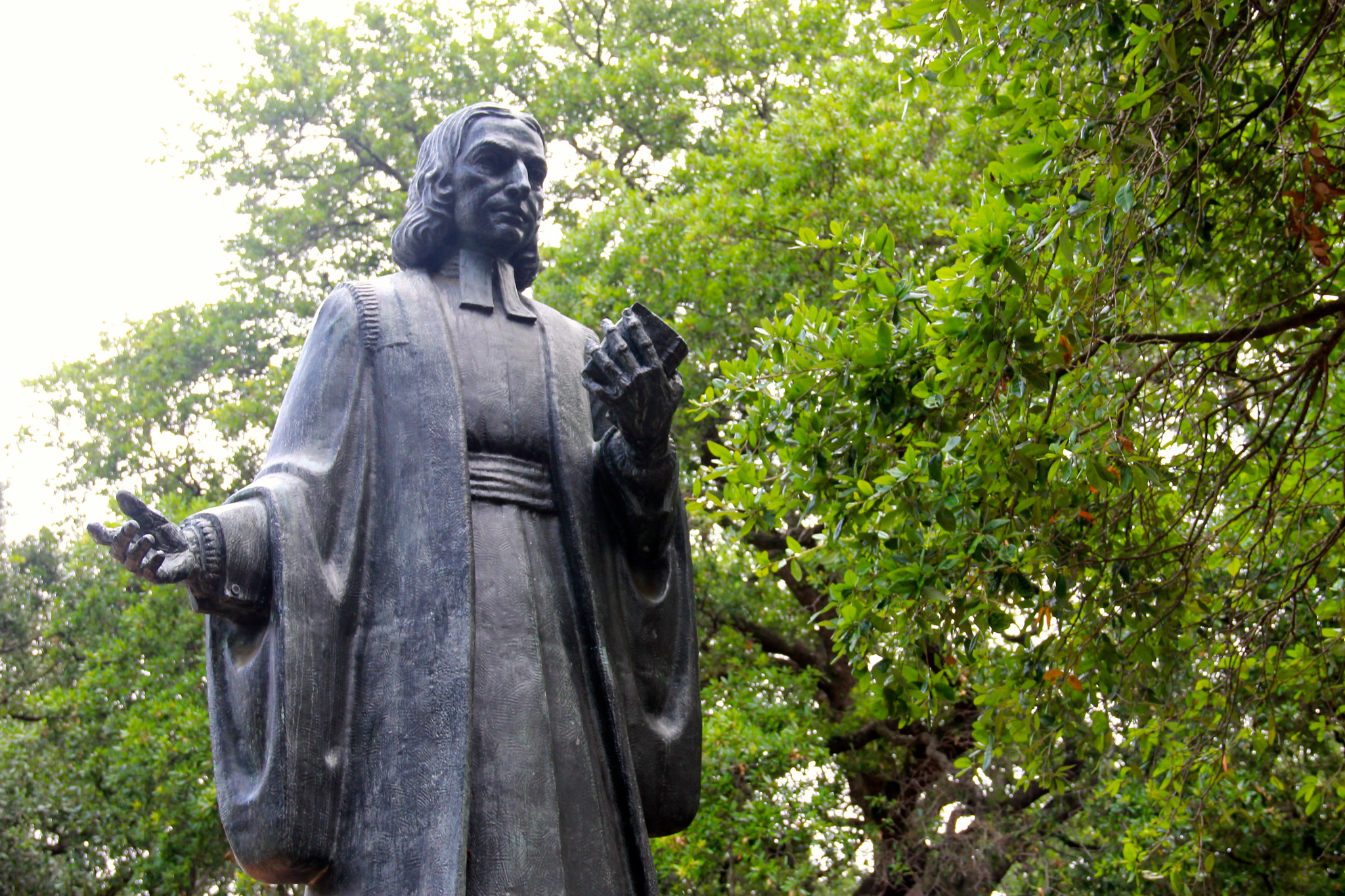
John Wesley Statue, Savannah, GA credit: Daniel X. O’Neil

On September 15, 1790, John Wesley wrote a letter to Robert Carr Brackenbury. Wesley wrote that his “body seems nearly to have done its work and to be almost worn out.” This acknowledgment of his own mortality seems to have led Wesley to reflect on his life and his involvement in Methodism. Wesley’s description of his sense of God’s purpose for “raising up” the “people called Methodists” is now fairly well known:


I am glad brother D — has more light with regard to full sanctification. This doctrine is the grand depositum which God has lodged with the people called Methodists; and for the sake of propagating this chiefly He appeared to have raised us up.


In other words, Wesley believed that there was a particular reason for Methodism. Methodists existed because God had given them a particular corporate calling – to spread the teaching about the possibility of full sanctification.


Wesley argued for and preached entire sanctification, full sanctification, or Christian perfection throughout his ministry.

In the essay “The Principles of a Methodist Farther Explained”, which was published in 1746, Wesley argued that “holiness… is religion itself” (Works, 9:227).

Forty years later in “Thoughts upon Methodism”, he described Methodism as follows, “Methodism… is only plain scriptural religion, guarded by a few prudential regulations. The essence of it is holiness of heart and life” (Works, 9:529).


Wesley defined Christian perfection in “A Plain Account of Christian Perfection” (1777) as:

In one view, it is purity of intention, dedicating all the life to God. It is the giving God all our heart; it is one desire and design ruling all our tempers. It is the devoting, not a part, but all our soul, body, and substance to God. In another view, it is all the mind which was in Christ, enabling us to walk as Christ walked. It is the circumcision of the heart from all filthiness, all inward as well as outward pollution. It is a renewal of the heart in the whole image of God, the full likeness of Him that created it. In yet another, it is the loving God with all our heart, and our neighbour as ourselves. (Works, Jackson, 11:444)


When Wesley talked about growth in holiness, and the ultimate goal of being made perfect in love, or being entirely sanctified, he was adamant that sanctification is by faith, just as justification is by faith.


In one of his best known sermons, “The Scripture Way of Salvation” (1765), Wesley described the faith by which Christians are entirely sanctified as a faith that:

1. God has promised this in Scripture.

2. What God promises, God is able to do.

3. God is able and willing to do it now.

4. God actually does this.


Wesley concluded the sermon by exhorting his audience to seek this faith now:

And by this token you may surely know whether you seek it by faith or by works. If by works, you want something to be done first, before you are sanctified. You think, I must first be or do thus or thus. Then you are seeking it by works unto this day. If you seek it by faith, you may expect it as you are; and expect it now. It is of importance to observe, that there is an inseparable connexion between these three points, –expect it by faith; expect it as you are; and expect it now! To deny one of them, is to deny them all; to allow one, is to allow them all. Do you believe we are sanctified by faith? Be true then to your principle; and look for this blessing just as you are, neither better nor worse; as a poor sinner that has still nothing to pay, nothing to plead, but “Christ died.” And if you look for it as you are, then expect it now. Stay for nothing: why should you? Christ is ready; and He is all you want. He is waiting for you: He is at the door! (Works, 2:169.)


Though Christian perfection is not often taught or preached by contemporary Methodists, it is still part of official United Methodist teaching.

“The Confession of Faith of the Evangelical United Brethren Church”, which is part of United Methodism’s doctrinal standards, contains this beautiful statement on Christian perfection:

Article XI—Sanctification and Christian Perfection

We believe sanctification is the work of God’s grace through the Word and the Spirit, by which those who have been born again are cleansed from sin in their thoughts, words and acts, and are enabled to live in accordance with God’s will, and to strive for holiness without which no one will see the Lord.

Entire sanctification is a state of perfect love, righteousness and true holiness which every regenerate believer may obtain by being delivered from the power of sin, by loving God with all the heart, soul, mind and strength, and by loving one’s neighbor as one’s self. Through faith in Jesus Christ this gracious gift may be received in this life both gradually and instantaneously, and should be sought earnestly by every child of God.

We believe this experience does not deliver us from the infirmities, ignorance, and mistakes common to man, nor from the possibilities of further sin. The Christian must continue on guard against spiritual pride and seek to gain victory over every temptation to sin. He must respond wholly to the will of God so that sin will lose its power over him; and the world, the flesh, and the devil are put under his feet. Thus he rules over these enemies with watchfulness through the power of the Holy Spirit. (Book of Discipline, 75.)


In addition to official United Methodist doctrine, every pastor who is ordained in the UMC must answer these three questions:

1. Are you going on to perfection?

2. Do you expect to be made perfect in love in this life?

3. Are you earnestly striving after it?

The anticipated answer to each of these questions is: “Yes, by the grace of God.”


Proclaiming and defending Christian perfection was one of Wesley’s deep passions, largely because he believed that God had given this teaching to Methodism in order to spread the good news that we can actually live fully for God in this life.


I am a Methodist because I believe, by the grace of God and the power of the resurrection of Jesus Christ, that we can experience freedom from sin now. I believe we have been entrusted with the most audacious, bold, and positive vision for the possibilities of transformation that are available on this side of Easter. I do not believe that the Christian life must be one of futility or frustration, where one does the best they can but is not able to completely give their lives in obedience to Christ.

By faith in Jesus, all who are created in the image of God can experience not only the joy of having our sin cancelled, but the deeper joy of experiencing God break the power of cancelled sin, as Charles Wesley so eloquently put it.

Teaching and preaching the possibility of being made perfect in love for God and neighbor, and seeking to actually become entirely sanctified are the reasons Methodism was “raised up.”

May we remember who we are and why the Holy Spirit brought us to life.

Kevin M. Watson teaches, writes, and preaches to empower community, discipleship, and stewardship of our heritage. Connect with Kevin here. Get future posts emailed to you here. Affiliate links used in this post.

Wesley Didn’t Say It: “Personal and Social Holiness”

20 Monday May 2013

Posted by Kevin M. Watson in Methodist History, Wesley

≈ 27 Comments

Tags

personal holiness, quotes, social holiness, Wesley

“Personal and social holiness.”

Wesley did not say this.

Andrew Thompson, who is Assistant Professor of Historical Theology and Wesleyan Studies at Memphis Theological Seminary, reminded me of this phrase that is often attributed to Wesley in a comment on my previous blog in this series. (Andrew also blogs here.)

Here is part of Thompson’s comment:

The one that gets me is the attribution of the phrase “personal and social holiness” to Wesley. There is no evidence I have ever seen that Wesley used this phrase. And in an article I did a couple of years ago, I looked as hard for it in Wesley as anyone ever has. Yet the phrase gets repeated ad nauseam, as if it is a given that Wesley used it. I would argue that it is neither historical to Wesley nor is it “Wesleyan,” in the sense that it bifurcates holiness in a way that Wesley was at pains to avoid (hence the use of the phrase, “no holiness but social holiness,” which is accurately Wesleyan).

At the end of his comment, Thompson cites the quote where Wesley does use the phrase “social holiness.” However, when social holiness is used by contemporary Methodists, it is almost always used in a way that is synonymous with social justice. And yet, in the only passage I know of where Wesley used the phrase “social holiness” he was talking not about justice, but about the importance of other people for growing in holiness. The passage “social holiness” occurs in is the preface to Wesley’s 1739 edition of Hymns and Sacred Poems. Here is the passage in its broader context:

Directly opposite to this is the gospel of Christ. Solitary religion is not to be found there. ‘Holy solitaries’ is a phrase no more consistent with the gospel than holy adulterers. The gospel of Christ knows of no religion but social; no holiness but social holiness.

In this context, then, Wesley is explicitly rejecting “holy solitaries”, or the attempt to become holy in isolation from other Christians. And he is insisting on the importance of community for becoming Christ-like.

I have previously written about this quote and its broader context on this blog here. Andrew Thompson has written about “social holiness” on his blog here and here. He has also published an excellent academic essay on Methodist Review. The essay can be accessed through his personal website here.

You can add “personal and social holiness” to the other quotes that are stubbornly connected to John Wesley, despite the fact that there is no source that connects them to Wesley’s pen. Others I have previously written about are:

“Do all the good you can, by all the means you can, in all the ways you can, in all the places you can, at all the times you can, to all the people you can, as long as ever you can.” [Original post here.]

“I set myself on fire and people come to watch me burn.” [Original post here.]

“In essentials, unity; in non-essentials, liberty; and, in all things, charity.” [Original post here.]

Kevin M. Watson teaches, writes, and preaches to empower community, discipleship, and stewardship of our heritage. Connect with Kevin. Get future posts emailed to you.

Experience in the so-called “Wesleyan Quadrilateral”

13 Monday May 2013

Posted by Kevin M. Watson in Christian Living, Methodist History, Wesley

≈ 40 Comments

Tags

Albert Outler, Experience, Quadrilateral, Wesley

For many Methodists, the most cherished piece of their heritage is the so-called “Wesleyan quadrilateral.” Yet, as has often been noted, the quadrilateral was largely Albert C. Outler’s invention in the mid-twentieth century. Towards the end of his life Outler wrote:

“The term ‘quadrilateral’ does not occur in the Wesley corpus – and more than once, I have regretted having coined it for contemporary use, since it has been so widely misconstrued” (36)

Nearly thirty years later, I wonder how Outler would feel today about his creation. It certainly continues to be widely misconstrued. The quadrilateral is not doctrine, it is a proposed method for theological reflection. But it is almost never used the way that it was intended. A tool that does not actually do what it is supposed to do is of limited usefulness. A bicycle pump that lets more air out of a tire than it puts in should be set aside. A screen cleaner that scratches the screen should be thrown away, not repeatedly reused.

So why is there such persistent loyalty to a tool for theological reflection that almost never works the way that it is supposed to?

For the sake of space, I will limit my comments here to the part of the quadrilateral that is most “widely misconstrued” – experience.

In his essay, “The Wesleyan Quadrilateral – in John Wesley” Outler described the rationale for Wesley’s theological method:

When challenged for his authority, on any question, his first appeal was to the Holy Bible… Even so, he was well aware that Scripture alone had rarely settled any controverted point of doctrine… Thus, though never as a substitute or corrective, he would also appeal to ‘the primitive church’ and to the Christian tradition at large as competent, complementary witnesses to ‘the meaning’ of this Scripture or that…

But Scripture and tradition would not suffice without the good offices (positive and negative) of critical reason. Thus, he insisted on logical coherence and as an authorized referee in any contest between contrary positions or arguments. And yet, this was never enough. It was, as he knew for himself, the vital Christian experience of the assurance of one’s sins forgiven that clinched the matter. (24)

Did you notice how specific Outler’s understanding of the role of experience is for John Wesley? It is not just any experience that a person has. It is not experience with a person and whether you find them to be a good or decent person. In fact, Outler almost always modifies the word experience with “Christian.” And it is not just any “Christian experience,” it is the particular Christian experience “of the assurance of one’s sins forgiven.”

In case the limited role of experience is missed, he adds that “Christian experience adds nothing to the substance of Christian truth; its distinctive role is to energize the heart so as to enable the believer to speak and do the truth in love” (25)

Outler goes on to argue that it was Wesley’s “special genius” to add experience to the Anglican “triad” of Scripture, tradition, and reason. Wesley did this, on Outler’s account, in order to “incorporate the notion of conversion into the Anglican tradition” (27).

Outler’s understanding of the role of experience in Wesley’s theology, then, is quite particular. It is not any experience that a person has, it is the distinctively Christian experience of assurance of the forgiveness of one’s sins. It is the experience of the witness of the Spirit. Wesley was quite fond of citing Romans 8:16 to illustrate this: “it is that very Spirit bearing witness with our spirit that we are children of God.”

When the quadrilateral is deployed as a means of theological reflection; however, experience is almost always defined far more broadly than this. In popular use of the quadrilateral, experience is usually understood as a kind of common sense. Experience is an authority for theological reflection (so the argument goes) because, if we are willing to pay attention, we can see the obvious things that are going on around us. Experience is also usually used to describe one’s encounters with the world around them, which often results in confirming the prevalent perspective of the current popular culture. Rarely, in popular discussions of the quadrilateral, is experience defined in the specific and more technical way that Wesley and Outler did.

We have come a long way from Outler’s qualification that “Christian experience adds nothing to the substance of Christian truth; its distinctive role is to energize the heart so as to enable the believer to speak and do the truth in love” (25)

And yet, it seems to me that one of the reasons that many contemporary Methodists are so loyal to the quadrilateral is precisely because the appeal to experience provides an authority for adding new things to Christian truth.

If Methodists are going to continuing citing the quadrilateral as their distinctive theological method, then we have a choice to make. We can return to an understanding of experience as it was defined by Outler in his creation of the quadrilateral. Or, we can knowingly reject the way that he defined experience as a legitimate source for Christian theology and use it in a way that he explicitly rejected. If we choose the latter, we ought to at least be honest that we are now using a method of theological reflection that neither John Wesley nor Albert Outler would have endorsed.

Kevin M. Watson teaches, writes, and preaches to empower community, discipleship, and stewardship of our heritage. Connect with Kevin. Get future posts emailed to you.

← Older posts
Newer posts →

Blog at WordPress.com.

  • Subscribe Subscribed
    • Kevin M. Watson
    • Join 369 other subscribers
    • Already have a WordPress.com account? Log in now.
    • Kevin M. Watson
    • Subscribe Subscribed
    • Sign up
    • Log in
    • Report this content
    • View site in Reader
    • Manage subscriptions
    • Collapse this bar