• About Me

Kevin M. Watson

Kevin M. Watson

Tag Archives: class meeting

Reflections on Teaching and Learning at Asbury

24 Thursday Apr 2025

Posted by Kevin M. Watson in Life, Methodist History, Ministry, Teaching, Underground Seminary

≈ 2 Comments

Tags

Asbury, Bible, Christian formation, Christianity, class meeting, deliverance, faith, God, Jesus, John Wesley, Methodism, prayer, Seminary, small groups, Teaching, Wesley

I have previously shared here about my conviction that the culture or atmosphere of the classes I teach is more important than being sure I say all the words I want to say or get all the content in before the class ends. 

I am not sure I always get this right. Actually, I’m sure I don’t always get this right. 

However, I am increasingly confident that students are most impacted by the things that happen in my classes because I intentionally create an atmosphere that is open to the Holy Spirit than they are by the lectures that I give. And maybe even more than that, I find that students are more willing to listen to what I have to say when they are convinced that I care about them. So, I think that prioritizing the culture or atmosphere of classes I teach enhances student learning and engagement with the content of the course.

And I don’t think this goes the other direction.

This week, I’ve found myself reminiscing on the things I saw the Lord do over the past month. I wanted to share a few highlights here.

I taught back-to-back intensives a few weeks ago. And they were such a blessing!

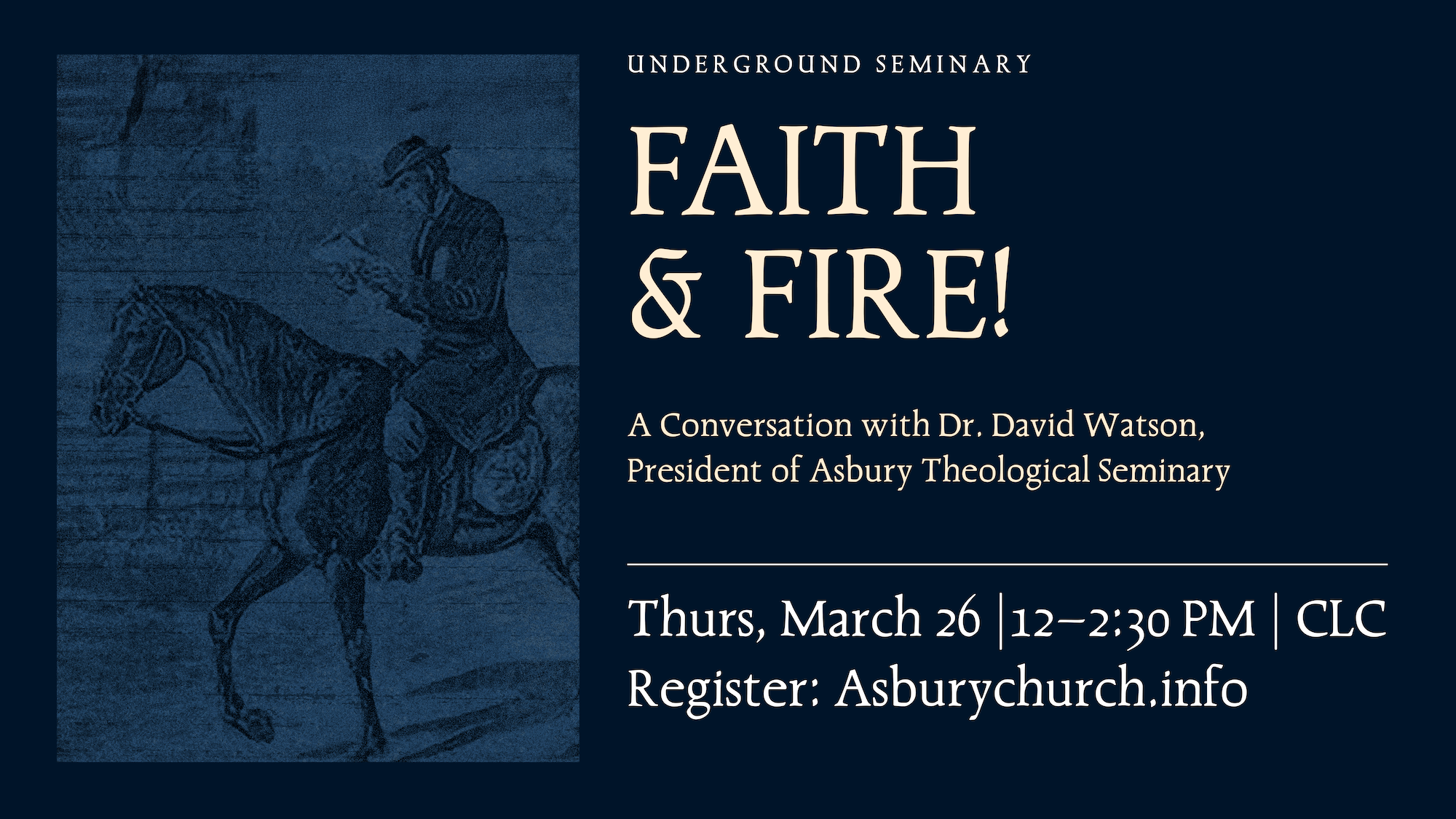
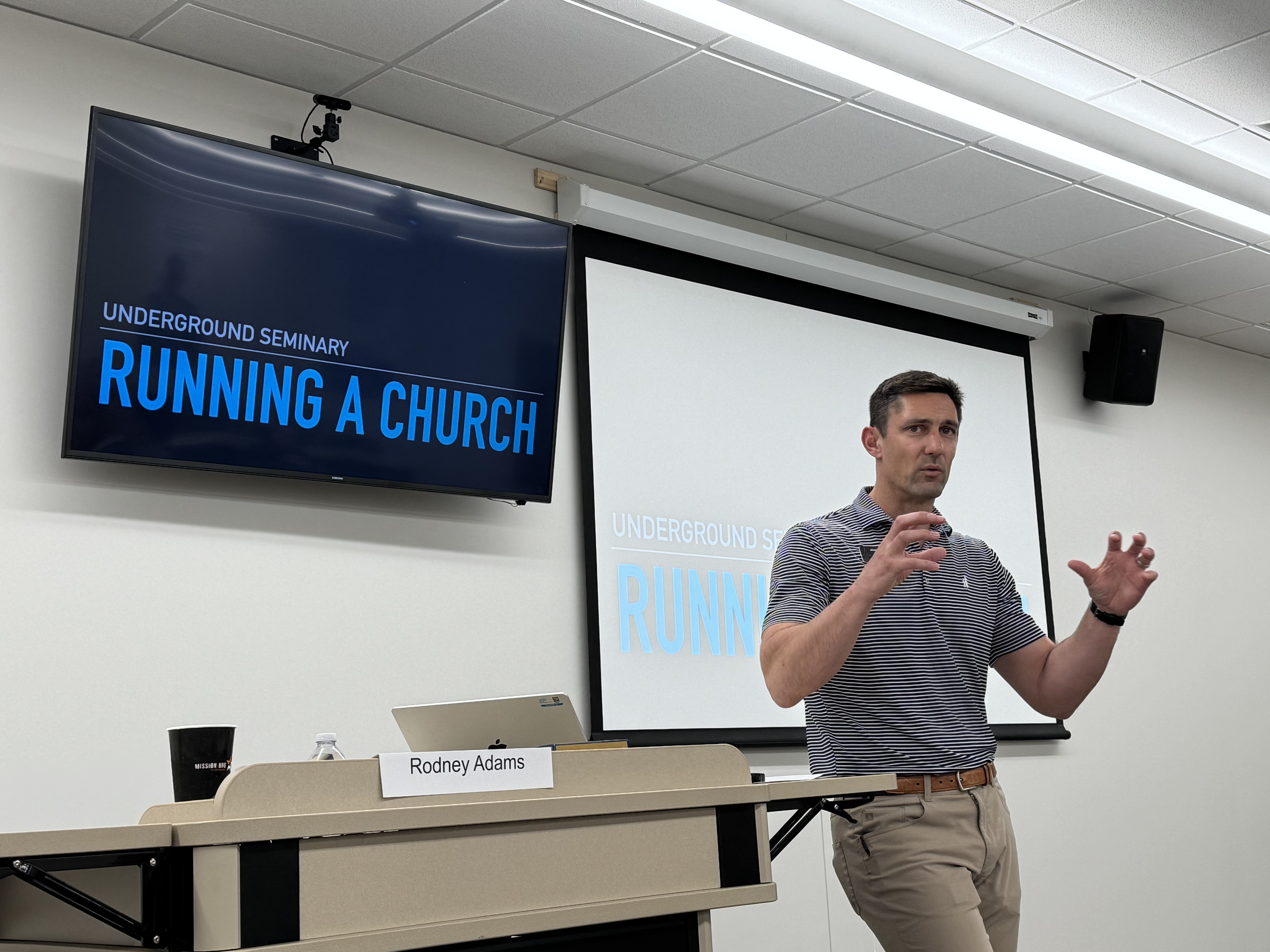
Before my Basic Christian Doctrine class, I put together the second Underground Seminary event. We called it “What They Don’t Teach You in Seminary.” It was led by Rodney Adams, the Executive Director of Asbury Church. Rodney gave a detailed behind the scenes look at how a large church like Asbury is run, the strategic decisions he makes as Executive Director, and the challenges of leading that are particular to a church. (You can read about the original announcement here.)

From my perspective, it was a fantastic success. There were 23 people who came to this meeting, which was immediately before a class that had 16 students. I am encouraged both by such a strong turnout and that the Underground Seminary idea is building energy for what is happening at Asbury-Tulsa. It is energizing to me to have people in the building talking to each other about ministry. I am best at inviting people to things I passionately believe in. Asbury Church is one of those things for me.

During the class itself, I had a sense that the Lord wanted to minister in some ways to the specific people in the room. I am still learning and growing in how to lead and take risks appropriately in this space. These students were so gracious and hungry for Jesus. It was wonderful. The highlight of the weekend for me was checking in with someone at the end of class that I had particularly felt a burden to pray for and they said, “I feel like myself again for the first time in a year.”

Thank you, Jesus!

Several students stayed with members of Asbury Church. On Sunday morning, one of the students ran into the family that had hosted them, and they were so excited to see each other. The hosts sat with the group of students and my family in worship. I was so blessed by such a tangible connection of my church loving my students well and seeing church and academy connected in such a lovely way.

The next week I had another hybrid. First Methodist Church in Tulsa hosted a Holy Spirit Conference that was amazing. I was invited to lead a breakout on spiritual parenting. This is something I have thought a lot about and am passionate about but had not had a chance to teach on to a group of people. I learned a lot in preparing and was challenged and blessed in thinking it through in order to lead the workshop. I drove straight from First Methodist to Asbury to prepare to teach my second intensive in two weeks, The Theology of John Wesley (with 23 students).

I love getting to teach this material. It has been a blessing to systematically read through Wesley’s sermon corpus in a short window of time. (I highly recommend this if you are a leader in a Wesleyan context and have not done this.) The biggest gift for me personally was rereading two great books by one of the academics I most respect, Dr. Kenneth J. Collins. The two books are core texts for The Theology of John Wesley (which is a required class for every major at Asbury Theological Seminary) and I highly recommend them both. Read Collins’s John Wesley: A Theological Journey first to get a sense of Wesley’s life. It is a great book because it unpacks Wesley’s own life and legacy, but from a rich theological lens. 

After you read this, you should read The Theology of John Wesley: Holy Love and the Shape of Grace. In my opinion, this is Collins’s masterpiece. Reading this book in preparation to teach helped me teach with greater clarity than the last time I taught this material. Collins does a masterful job explaining core concepts like justification, the new birth, and entire sanctification. He is fearless in his fidelity to the witness of Scripture and Wesley’s understanding of it.

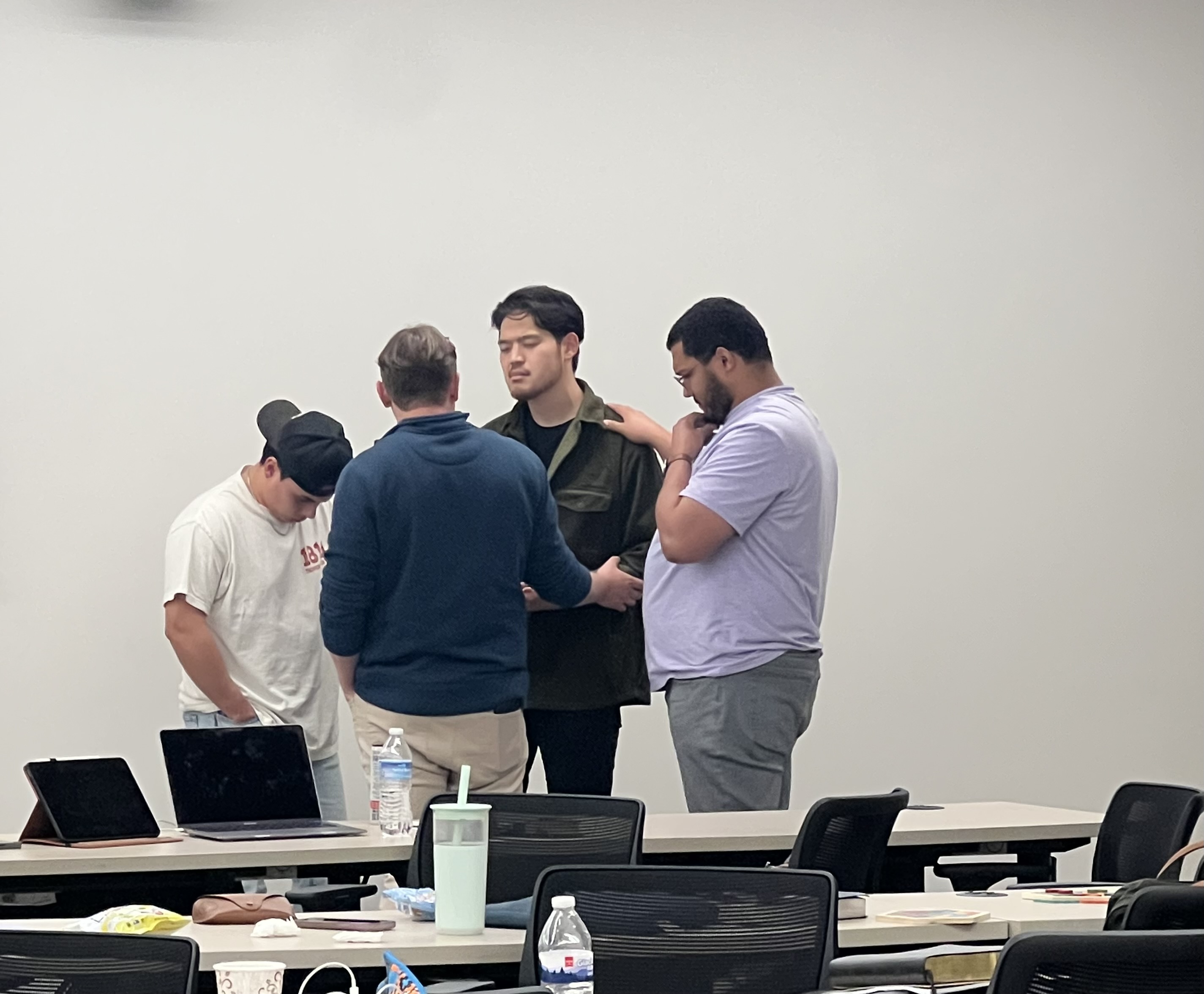
In addition to this class just being a delight, there were some powerful moments where the Spirit met us. Rev. Graeme Collett, one of the associate pastors at Asbury Church, preached for the Asbury Seminary chapel service on Friday. Graeme has become a good friend and one of the best surprises in our move here to Tulsa. And unlike any sermon I’ve experienced here yet, the Lord gave Graeme a clear word for this specific class at this specific time. (And this is saying something, because we’ve had an embarrassment of riches in terms of the quality of preaching we’ve had in our chapels here!) The highlight was Graeme’s burden to anoint students to remind them of their callings and to seal the work of the Holy Spirit in them. I believe every single person in the room came forward for prayer at some point. Lots of beautiful Holy Spirit tears and ugly crying. It was one of those times you are just aware the Lord is doing deep work in people right before your eyes. I am so thankful for Pastor Graeme’s leadership and for the Spirit’s presence with us in chapel.

We lost track of time and went more than thirty minutes over, but that is one of the special things about these intensives. It didn’t matter! Sometimes people will say in ministry that “the trains have to run on time.” The great thing about the intensives I teach is that there is one train and we’re all on it! So, we got where we were supposed to go when we were supposed to get there.

The second highlight of the Theology of John Wesley hybrid was a word I felt like I got from the Lord on Saturday morning, before the last day of the intensive. As I was praying that morning, I had the impression that the Lord wanted me to start the day by inviting people to share testimonies to what they had seen the Lord do so far in our time together.

I need to admit that this is often hard for me. Sometimes I’m afraid nobody is going to say anything, and it will bomb. I’ve gotten more comfortable holding space as time has gone on, but it is still an area I’m growing in. And I felt that Saturday morning. 

Goodness was I wrong to be concerned. There were so many wonderful testimonies people were ready to share about how the Lord had met them. God is so good!

That part went so well, the Lord nudged me to notice the second thing I had written down as I had been praying that morning: 

“Deliverance?”

In part, I think this came from witnessing a powerful deliverance at the Holy Spirit Conference the Wednesday night before my class started. I also think it came from reflecting on how important deliverance ministry was in John Wesley’s own ministry. (For more on this, see Dr. Peter J. Bellini, Thunderstruck! The Deliverance Ministry of John Wesley Today )

I gave what felt like a pretty timid invitation to receive prayer for deliverance if someone felt like they needed it. I am not going to go into details here for a variety of reasons, except just to say that the Father, again, showed me His desire to communicate with His children. I also experienced the power and authority of Jesus Christ in a deeper way that I don’t think I can adequately express. It was just a blessing.

I have so much to learn. One thing that I have found really helpful is thinking about my classes as laboratories. Here is what that image means to me: in a lab, you do something real but you also reflect on it and can interrogate the experiment itself. So we can meet in a small group in my Wesleyan discipleship class and talk authentically about the state of our souls. And we can also then ask how the conversation felt, what could we do differently? Was there something that felt unhelpful or could have been more helpful? Lowering the stakes and explicitly thinking of the time together in class as a learning environment gives permission to make mistakes and raises the expectation for pursuing excellence. I love that combination.

I’ve seen this with prayer for healing in my classes. I’ve seen this with seeking to hear the Lord’s voice and be guided by the Holy Spirit. And I’ve seen it in lively classroom conversations about deep matters of theology. It is challenging. And it is fun.

I can’t wait to see what the Holy Spirit does next!

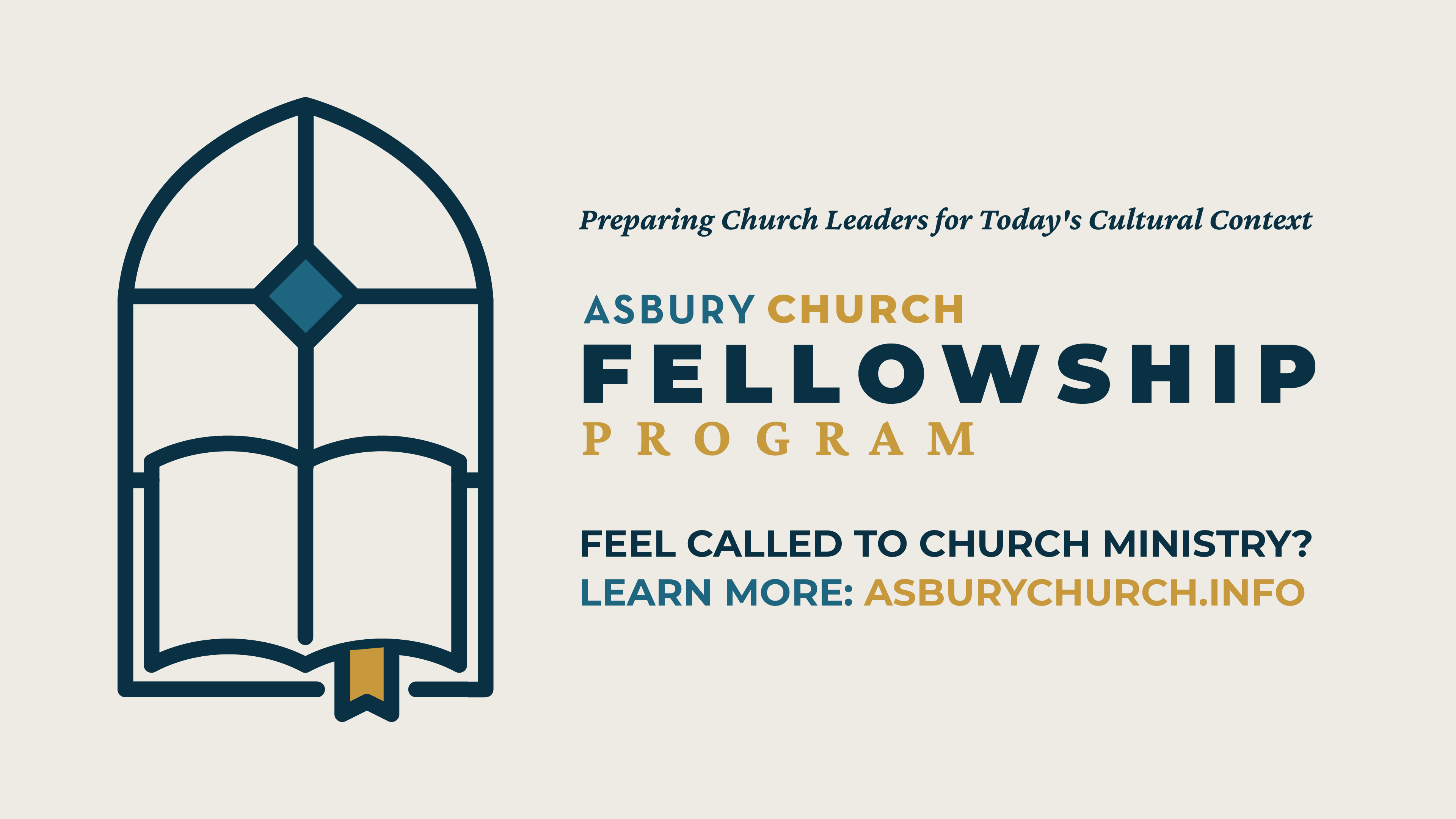
P.S. Did you know that I am launching a Fellowship Program at Asbury Church? We are hiring two Fellows that will be paid full-time positions, with benefits. Starting this August. More details about the Fellowship Program and how to apply here.

My Wesleyan Discipleship Class and What God Is Doing in Tulsa

15 Wednesday Jan 2025

Posted by Kevin M. Watson in Class Meetings, Life, Ministry

≈ 1 Comment

Tags

Christian formation, class meeting, Methodism, small groups, Wesley

For the first time in my career as a seminary professor, I have had to be concerned about whether the classroom would fit all the students who were signing up to take my class. For the first time, I have had to tell people who wanted to take vacation time off work and pay their own way to travel to Tulsa just to sit in on the class as auditors (which means they get no academic credit!) that I could not let them in the class. 

Oh, and this class is just an elective. 

What is happening?!

A few years ago, I taught a class that was unlike any other I had taught. I have had a handful of great experiences as a seminary professor. But this class was different.

If you had asked me when I was teaching Methodist History at Candler School of Theology, for example, to describe the best class I’d taught, I would have talked about feeling like the students really “got it.” They left the class with a mastery of the key concepts and ideas I wanted them to receive. They were engaged and genuinely interested in the material. And having a better understanding of the meaning of Methodism, they had a deeper commitment to working, by the grace of God, to renew the Wesleyan theological tradition.

And yet, I often felt like something was missing. Or maybe better, it felt like something hadn’t quite come into alignment in terms of what I was trying to do overall.

In the Fall of 2022, I had the opportunity to teach a course that, at the time, I would have said was the best class I had ever taught. But it also occurred during the most painful and confusing time of my life.

On the one hand, I had certainty during the class that exactly what I was wanting to see happen was happening in my students during the class. As a teacher, you don’t always know what is happening with your students. But sometimes you do. Sometimes it is not awesome. And you know it. And sometimes you know that your students are experiencing exactly what you are hoping they experience. And that is so awesome you can’t really appreciate it until it happens, or at least I didn’t know it could be that good until it was.

On the other hand, I found out in the last half of the semester that I had not been selected for a position I had applied for and, as a result, I was being terminated at the end of the semester.

The class was a great experience for me. I loved those students so much. I was thankful I got to finish this class and the other one I was teaching. It was also one of the most gut-wrenching things I’ve ever done.

I walked through it the best I could. I’m sure I made mistakes. I am so thankful for the healing that has happened and continues to happen.

One thing that was really challenging was the sense that I had finally figured something out. It felt like magic in the classroom. And I was gutted that I was not going to get to continue doing the things I had learned that worked.

But God.

The Lord, in his kindness to me, opened a door to teach at Asbury Theological Seminary, the school I’d been yearning for more connection with for years, in the city (Tulsa, OK) I had been feeling drawn to for years.

Last Spring, I was given the opportunity to teach this same class again for Asbury at our main campus in Wilmore, KY. Seven students enrolled in a class that was brand new and not even in the ATS catalogue yet. I was so thankful to get to teach again. 

My second time through the class showed me that the previous class was not a fluke. 

The things I learned were repeatable, which is a key principle of disciple-making work.

But looking back I also think there was some spiritual interference. For example, just before the intensive part of the class (where we all gathered for 20 hours of class in 2.5 days), I lost my voice! I mean I really lost my voice, for the first time in my life. It was bizarre. The Lord gave me just enough strength to communicate each day of the intensive and it improved just enough for me to manage to preach in chapel after my class ended before I headed back to Tulsa.

Tomorrow evening, I will start teaching my Wesleyan Discipleship class for the third time. 

And this time 34 students are coming to Tulsa. 

34 students! 

As far as I know, this is the largest class we’ve ever had in Tulsa. And it is an elective.

And I have this deep confidence in my spirit that collectively this class is going to experience the blessing of the Lord’s presence with us.

At every intensive I’ve taught in Tulsa, the Spirit has been present in a powerful way. It has felt to me like Asbury Theological Seminary’s Tulsa Extension Site is a laboratory of the Holy Spirit. We dive deep into the content and information of the course, while also actively seeking to experience the things we are learning about. 

A course on Wesleyan Discipleship is tailor made for just that. We will learn about band meetings and class meetings, laying the historical and theological foundation for these core practices. And we will not only learn about the class meeting, we will experience it in a laboratory where we can do the real thing, talk about it, and discuss how we can practice it more effectively.

By the grace of God, we will learn about the stages of growth in faith and how to help people move from being spiritual infants all the way to spiritual parents.

And the Father will be given permission to do whatever He wants to do during our time together.

The past year and a half has been so good. So fun. 

Today, I feel like a kid on Christmas Eve. I cannot wait to see what God does tomorrow and this weekend! 

Please pray for me to teach well and for all of us to be open and receptive to receive what the Spirit has for us!

Thank you, Jesus.

Interested in studying with me in Tulsa? Check out Asbury Theological Seminary here: https://asburyseminary.edu

Podcasts Featuring My New Book: Doctrine, Spirit, and Discipline

21 Thursday Nov 2024

Posted by Kevin M. Watson in Book Review, Life, Methodist History

≈ Leave a comment

Tags

class meeting, John Wesley, Methodism, small groups, Wesley

This is a short post to share two podcasts appearances from this week.

The prompt for both invitations was the release of my new book Doctrine, Spirit, and Discipline: A History of the Wesleyan Tradition in the United States. #affiliate I did quite a few interviews in the weeks the book was released in late June. The first print run sold out in a few weeks. The timing of these conversations is great because Doctrine, Spirit, and Discipline is back in stock!

If you enjoy these kinds of conversations, I think you’ll enjoy both episodes as they went in significantly different directions.

I was interviewed by Dr. Brian Russell on his podcast Deep Dive Spirituality. This was my second time on Dr. Russell’s podcast. I really enjoyed the conversation with him about my new book. My favorite part of the conversation, however, was when he asked me what I am most hopeful about the future. He set it up with a great image. Audio only is available here.

YouTube version here: https://www.youtube.com/watch?v=-EYBwB2T2aw

I was also interviewed by Rev. Jeffrey Rickman on his podcast Plain Spoken. We also talked about the book and spent time talking about implications of the book’s argument for theological education and developments in the Global Methodist Church. Check out my conversation with Rev. Rickman here: https://plainspokenpod.substack.com/p/american-methodist-history-and-its

Thanks to Brian and Jeffrey for having me on their podcasts! I hope you’ll check them both out.

Join My Seminary Course in Wesleyan Discipleship in Tulsa [January 2025]

24 Thursday Oct 2024

Posted by Kevin M. Watson in Accountability, Class Meetings, Holiness, Methodist History, Ministry

≈ Leave a comment

Tags

Band meeting, Christian formation, class meeting, discipleship, John Wesley, Methodism, Methodist, small groups, Wesley

I am teaching a course on Wesleyan Discipleship in Tulsa as a January-Term course at Asbury Theological Seminary this coming January (2025). You should join me! 

What is the course about?

Here is my description of the course:

Wesleyan Discipleship explores the history, theology, and practice of discipleship through a Wesleyan lens. Particular attention is given to the role of communal formation in eighteenth-century Methodism. John Wesley’s theology of discipleship is explored, along with a variety of aspects of Christian formation in community in early Methodism. Particular attention is given to the way Wesley’s theology of social holiness was expressed in early Methodist small groups, especially the class meeting and the band meeting. Students will apply the historical and theological understanding of Wesleyan discipleship to contemporary ministry contexts.

Why I am FIRED UP about this class:

This class will have an intensive on site here in Tulsa from the evening of January 16th through January 18th, 2025. I LOVE the time together with students at intensives! This class beautifully lends itself to teaching in this format. 

Hybrid classes have 20 hours of in-person instruction over 2.5 days. (The rest of the course requirements are met through online engagement and completion of online modules.) It is intense! But I have also found, perhaps surprisingly, that it is also an opportunity for a spiritual retreat for students. 

The in-person experience gives us the opportunity to worship together. We will start the class by attending worship at the Thursday evening service at Asbury Church, where Rev. Andrew Forrest will be preaching. Andrew is an exceptionally gifted preacher of the Scriptures and a brilliant communicator. I love being able to start class off by tangibly connecting the church and academy by walking across the parking lot to go to worship.

We will also have an Asbury Theological Seminary – Tulsa chapel service for the class and students in the area on Friday January 17.

I will get to spend hours talking about my scholarly passion – the importance of community and connection for the Christian life. I love getting to teach students and engage their questions around these topics!

And most important, we will spend time talking about and practicing ways to reintroduce these tried and tested methods that gave Methodism its name.

At the end of the course, students will have the kind of knowledge gain you would expect from a typical seminary course. But they will also have experience participating in class meetings, experiencing small group dynamics, and reflecting on various challenges and opportunities of leading small groups like class and band meetings.

I think of this course as like a laboratory. We will learn a lot about the concepts, but we will also engage them in a hands-on way. In a laboratory you can not only experience a class meeting, but you can also talk about your experience of a class meeting. In my view, this is essential for becoming an expert practitioner. You need not only a theoretical framework and some practical experience, but you also need a place to talk about your experience so you can acknowledge, address, and overcome obstacles and challenges.

I am more confident than I have ever been that groups like the Wesleyan class meeting and band meeting will be at the center of Christian discipleship in these new and strange times we are entering.

These intensives are aptly named. They are not easy. J-term is not a short cut. In fact, it is a three-week academic sprint. My goal is to maximize the 20 hours we get to spend together to suck the marrow out of the class and be as fully equipped to make disciples of Jesus Christ in the contemporary church as possible. 

I want students who come hungry and ready to learn and grow. And that is what we are seeing here in Tulsa. It is SO FUN!

How is the course being taught?

I am teaching this course as a hybrid course at Asbury Theological Seminary at our Tulsa, OK Extension Site (housed at Asbury Church).

What is a January-Term, or J-Term, course?

A J-Term course is a full three credit course that is offered entirely within the month of January. This coming J-Term will start on January 2, 2025 and conclude on January 24, 2025.

What is a hybrid course?

A hybrid course is a course that has parts that are online and parts that are in person. This specific course will have four online modules based on four main sets of reading, students will write a reflection paper that summarizes the content of the reading, critically engages it, and applies it to their own ministry context.

The in-person part is January 16-18, 2025 at Asbury Church’s Development Center in Tulsa, OK. The in-person meeting will be from 6:00pm-9:00pm January 16, 8:30am-5:30pm January 17, and 8:30-5:30pm January 18. The in-person meeting is required for completion of the course. It is also the highlight of the entire course!

Does this course meet the Wesleyan Discipleship and Spiritual Formation requirement for ordination in the Global Methodist Church?

The Convening General Conference of the Global Methodist Church, which met a few weeks back, updated the educational requirements for ordination. And one of the changes that was made was the addition of a course called “Wesleyan Discipleship and Spiritual Formation.” I don’t mean to brag, but I believe this course hits the bullseye for what the GMC is looking for here! So, yes, if you are seeking ordination in the GMC, this course meets the Wesleyan Discipleship and Spiritual Formation course requirement. You can take this course and meet all GMC ordination requirements with either an Asbury Theological Seminary M.Div. or our 60 credit (exactly 20 courses) Master’s in Christian Ministry (MACM).

Should I take this course if I am not in the Global Methodist Church?

Yes! 

If you want to help your church more effectively make discipleship of Jesus Christ, this course is for you. 

I am passionate about Wesleyan Discipleship, not because I am most passionate about John Wesley, but because I believe the Wesleyan theological tradition has a proven track record of excellence in intentional and effective disciple making. We do well to learn from experts who have gone before us. This course is not specifically for students from any one denominational tradition. I mentioned the GMC above only because there is obvious relevance for the GMC because they just made this exact course a required course to be ordained an elder in the GMC. (Your church or denomination should too. This topic really is that essential for succeeding in the 21st century church.)

Can I take this course if I am not an Asbury Theological Seminary student?

Yes! The easiest way to do this would be to apply now to become an Asbury Theological Seminary student. We have a variety of degree programs, and I would be thrilled to talk to you about any of them! There is time to apply now and start this January.

If you are interested in applying to Asbury Theological Seminary or for this course in particular, reach out to me here (scroll down to the bottom of the page) and I will get back to you soon. Be sure to include your email so I know how to reach you. 

Not ready to apply to one of our Master’s degree programs? You may be able to apply to take the course as a non-degree seeking student. You also may be able to audit the course. Both require an application and auditing requires permission from the instructor. For either of these, reach out to me at the link immediately above.

I am open to considering some auditors. Auditors do not receive any academic credit for the course and do not turn in any assignments. They are given permission to sit in on the in-person part of the class and participate in class discussions and activities. However, I will only open the class up to auditors if there are open seats after the registration period closes. (I would assume auditing the course would not satisfy denominational ordination requirements, but you should check with your own denominational leaders.)

What is the official title of the course?

The course is cross listed as a Spiritual Formation course and a Theology course. So you can sign up for either TH650 Wesleyan Discipleship or SF650 Wesleyan Discipleship.

What are the assigned readings in the course?

Students will read a few short essays from John Wesley. And they will read these three books (affiliate links):

The Class Meeting: Reclaiming a Forgotten (and Essential) Small Group Experience, Kevin M. Watson

The Band Meeting: Rediscovering Relational Discipleship in Transformational Community, Kevin M. Watson and Scott T. Kisker

Real-Life Discipleship: Building Churches that Make Disciples, Jim Putman

I cannot wait for this class! I hope to see you here in Tulsa January 16-18, 2025.

Powerful Moments at West Plains Annual Conference: A Reflection

21 Friday Jun 2024

Posted by Kevin M. Watson in Christian Living, Class Meetings, Life, Ministry

≈ Leave a comment

Tags

book announcement, Christian formation, class meeting, Methodism, small groups, speaking

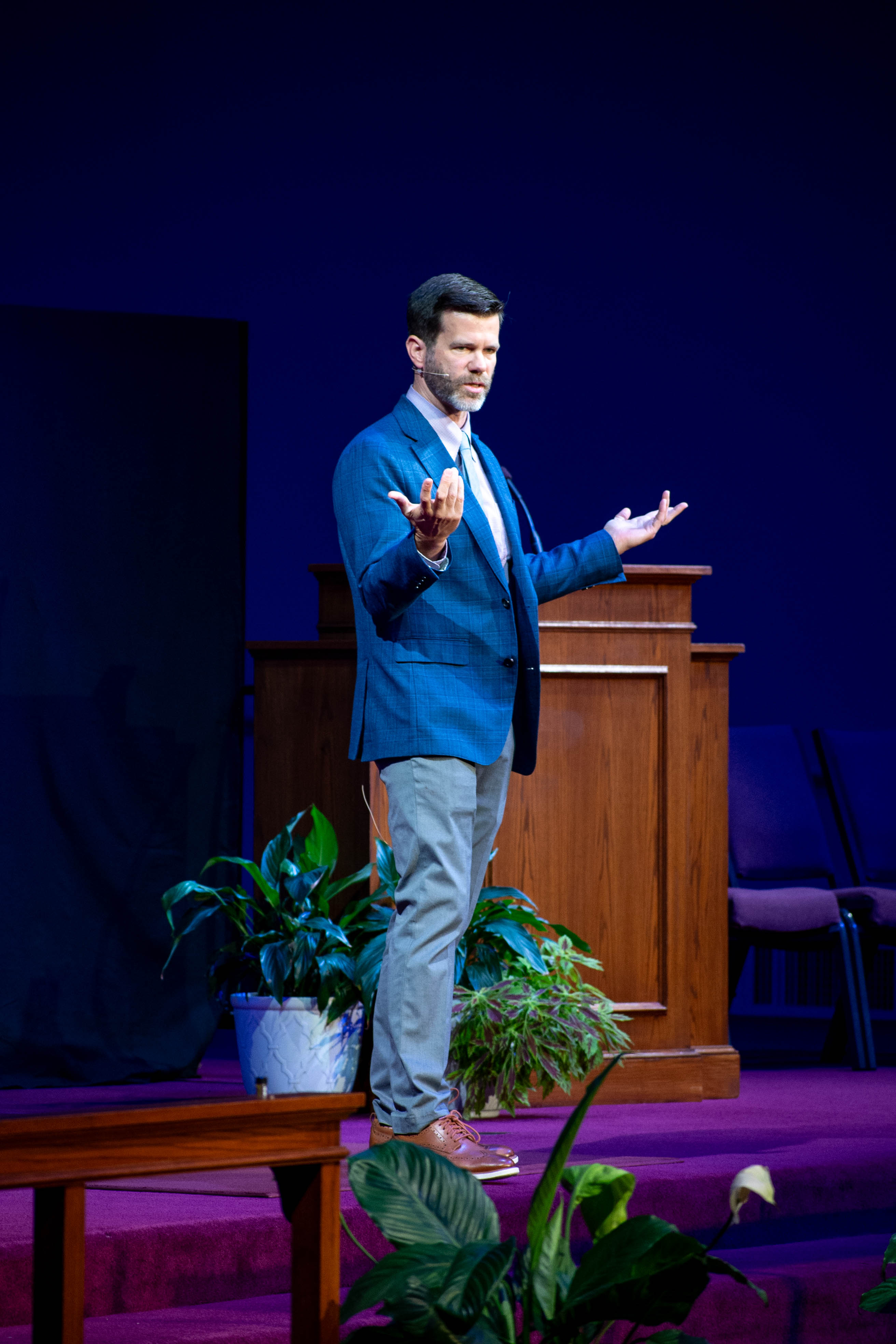
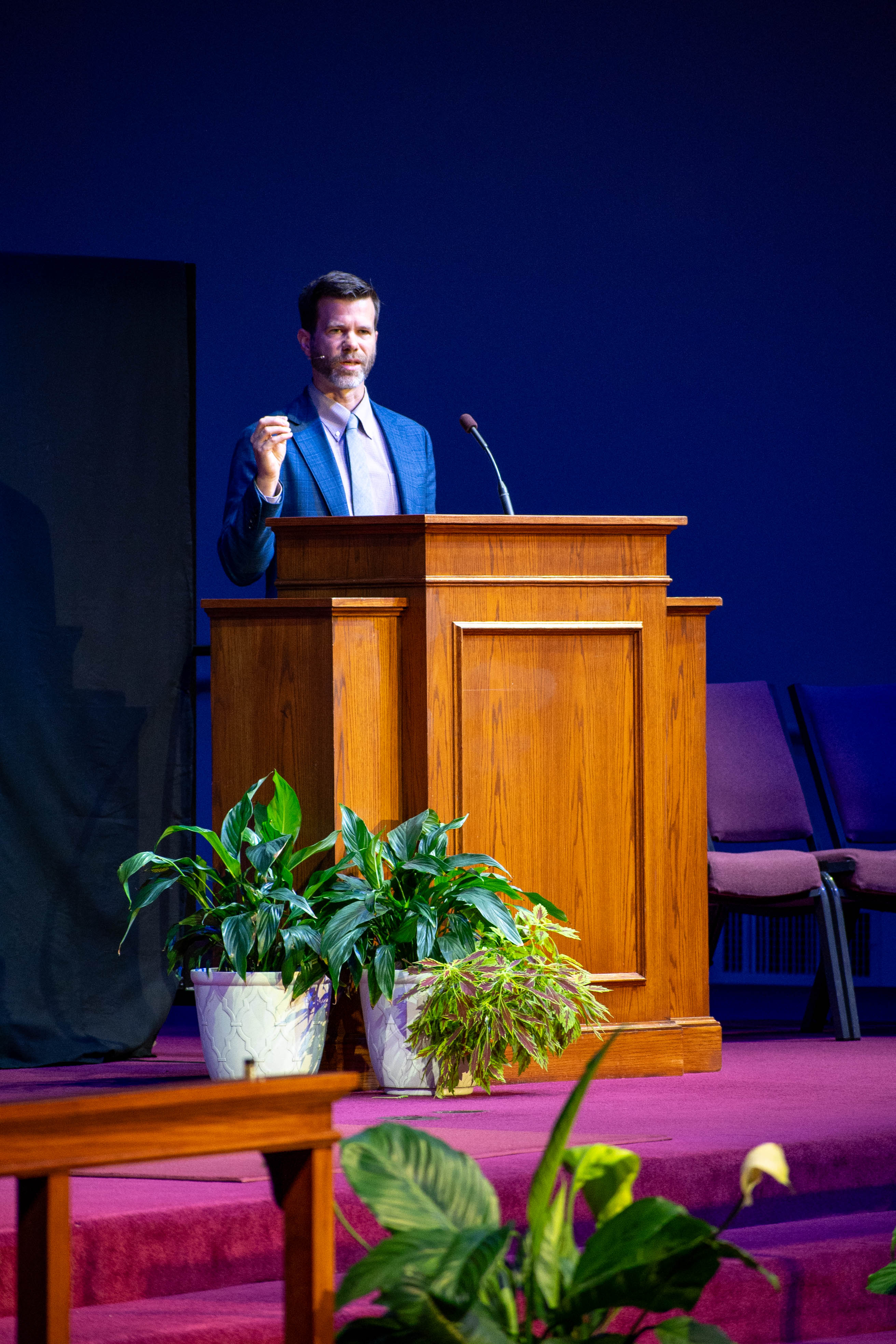
When Rev. Mike Schafer, President pro tem, of the West Plains GMC Annual Conference reached out to me last fall and asked me to preach and teach at the upcoming conference, I was thrilled! And the West Plains Annual Conference exceeded my expectations.

One of my favorite moments of the conference was when Mike described something he had never had happen in his entire ministry: an Annual Conference attendee asked if they could bring a friend! That gives an idea of the atmosphere and spiritual environment in West Plains.

I showed up planning to preach one message, and instead spoke on Matthew 13:44:

The kingdom of heaven is like treasure hidden in a field, which someone found and hid; then in his joy he goes and sees all that he has and buys that field. [NRSV]

I shifted because the Spirit did something when Mike prayed for me right before my sermon. I don’t remember exactly what he prayed, but it had something to do with the Spirit opening me up to receive what he wanted to say, even if it was different than what I’d planned. I had been wrestling with a sense that what I had prepared was not quite right and Mike’s prayer brought clarity that I was supposed to change courses and trust the Lord.

The truth is that I don’t really remember most of what I said because it was so unscripted. That is not a comfortable place for me. And I didn’t think I did a great job. When Mike gave an altar call after my sermon, I went to the altar and repented and apologized to the Lord because I just felt like I missed it with my message.

I am grateful for the exceptionally gracious feedback I received from many people in West Plains about how the Lord had used the sermon for them.

God is good!

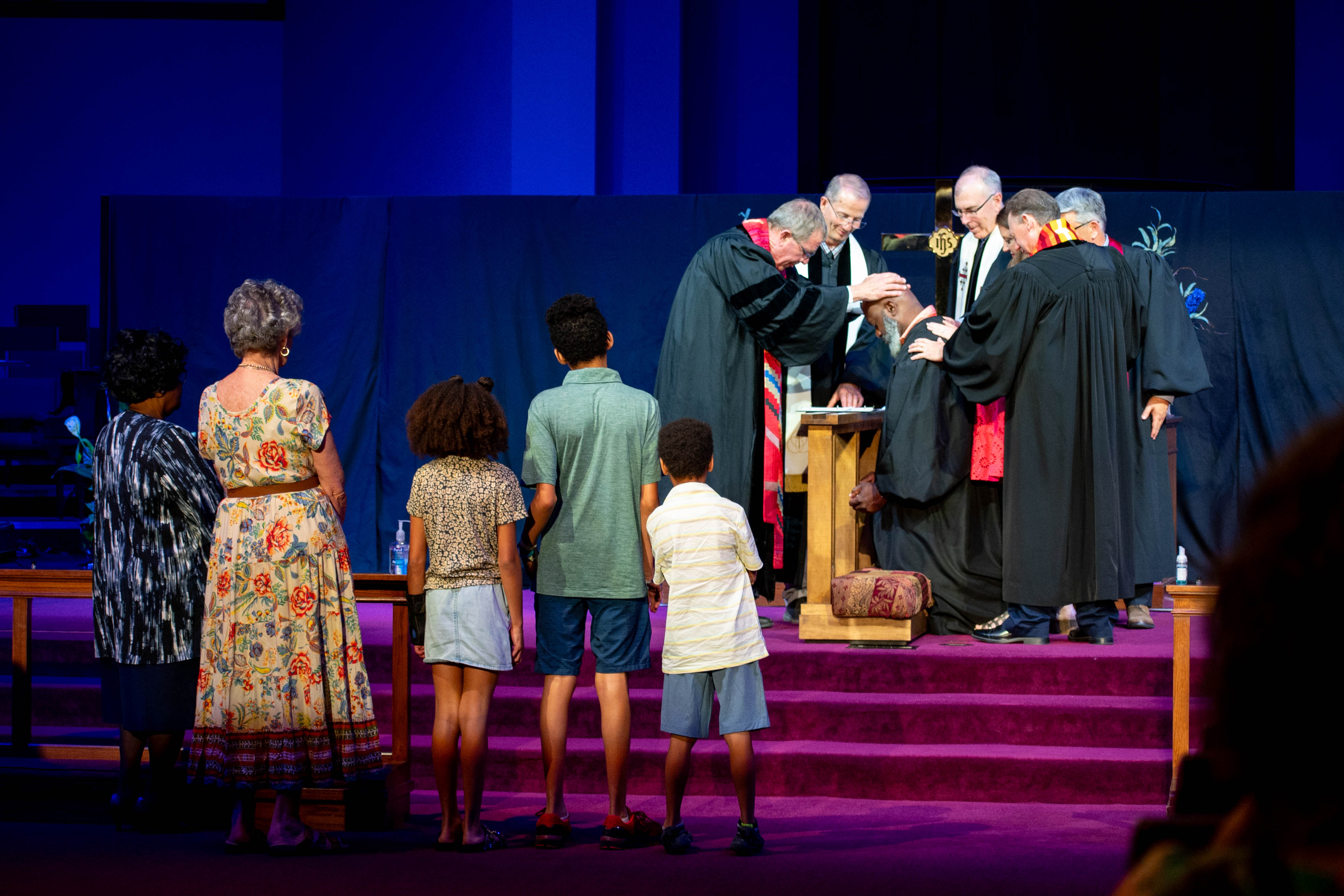
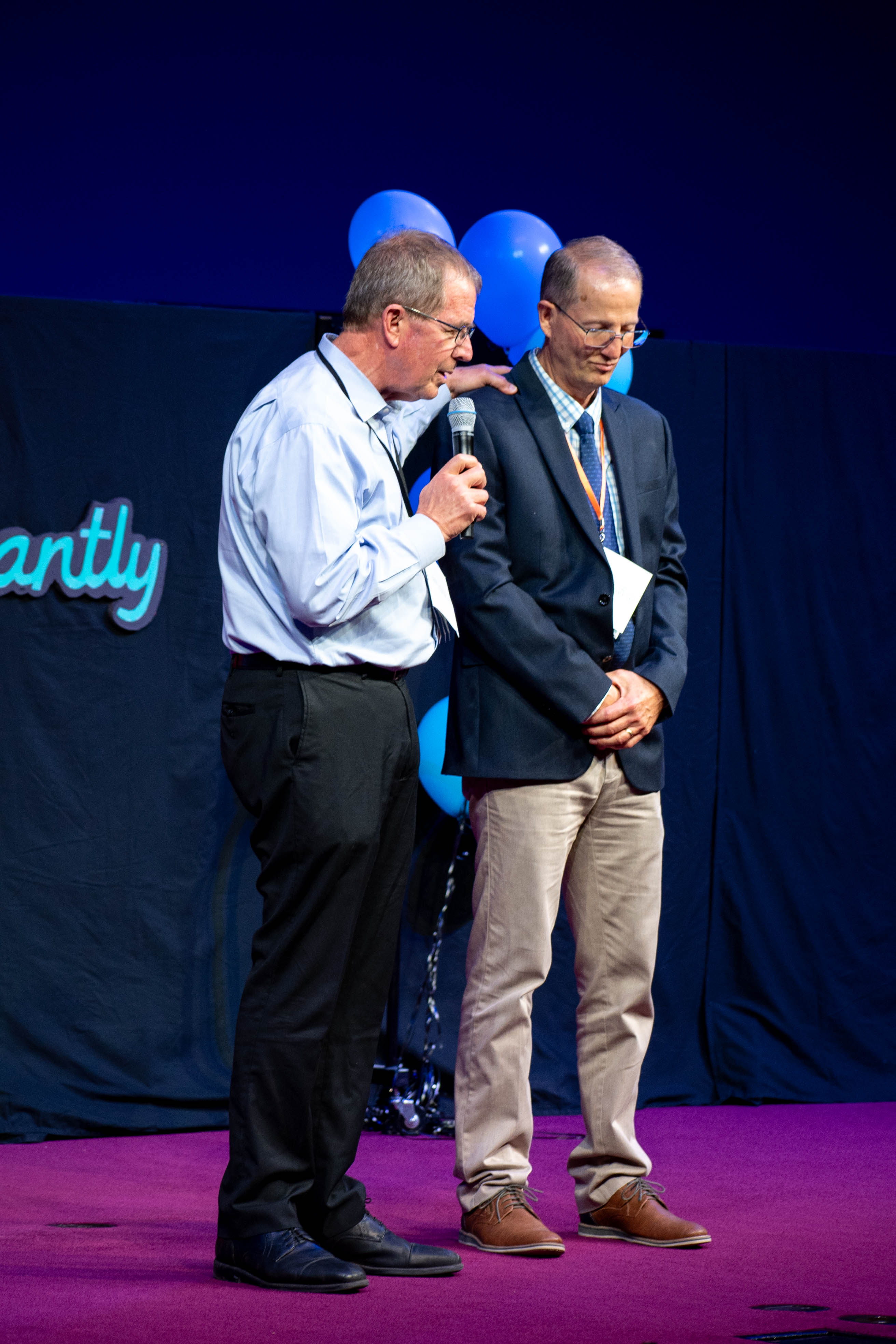
The ordination service was powerful as well. A few things really stood out to me. First, the unity in the room, not only among the ordinands, but also among the clergy and laity in attendance was palpable and a joy. When Bishop Jones went through the Historic Questions, it was the first time in my ministry I wasn’t wondering if people meant “No” even though they were saying “Yes.”


Bishop Jones led in a way that kept the focus on the main thing and the seriousness of what was happening. That was a gift to experience. 

Two other things happened in the ordination service that were beautiful. First, immediately after ordination, Bishop Jones celebrated Communion and the newly ordained served the rest of the congregation. It was so well done! Second, after Communion, Bishop Jones gave an invitation to receive a call to ministry during the final song. I saw at least three people from the congregation respond to that invitation! I don’t think I’ve ever witnessed that before. It was so hopeful and encouraging to just have a strong focus on the significance of ordination and even more so on the Triune God who speaks and calls us to serve.

Rev. Schafer asked me to speak on Wesleyan discipleship, focusing on class and band meetings on Saturday morning. If you know me, it is pretty easy to convince me to do that! I have been thinking quite a bit about the old(er) Barna survey that is outlined in the book Maximum Faith (you can find a summary of the ten stops of the Christian life here). I summarized those findings and the way they point to the need for relational connection and deeper discipleship across the church in the United States. This, in my view, only increases the importance of returning to our Wesleyan heritage of intentional discipleship through small groups.

I had a blast teaching that material!

Finally, I got to experience two of the three TED-style talks given by folks in West Plains. Wow! The first talk was about a fire ministry after the massive fires in Texas last year. Even more than that, it was a powerful testimony about God’s work in one woman’s life. The second talk was by a rancher and a lawyer who felt called to co-pastor the GMC church in their town. The commitment to the local church and the authority of Scripture was powerful! I wish I’d been able to stay for the final one and the rest of the afternoon!

Preaching and teaching at a place like the West Plains Conference is an enormous privilege. It still surprises me to be asked to speak in places like this. I love doing it and it is a blessing to me. Every time, I think, I can’t believe I get to do this! God has been so kind to me and I am thankful.

One final thing about my time at this conference. Mike Schafer will become the first Connectional Operations Officer for the Global Methodist Church, starting August 15, 2024. Leadership in West Plains recognized Mike for his service as the first President of the West Plains Conference and gave thanks for this new role. One of the people who praised Schafer’s leadership in West Plains commented that he was exactly the right person to serve in this new key leadership role in the GMC because he had not spent his entire career trying to receive this kind of position. I loved the way that was put! And it rings true of my experience with Mike. His selection for this role is encouraging to me and a hopeful sign of things to come for the Global Methodist Church. (You can read more about Rev. Schafer and his new role here.)

Thank you, West Plains, for having me! And special thanks to Emma Stonum for sharing the photos I’ve used in this post.

Reminder: My new book releases next Tuesday, June 25th

My new book Doctrine, Spirit, and Discipline: A History of the Wesleyan Tradition in the United States releases on Tuesday, June 25th. I wrote a post about the book here. Please check it out. This is the first book I’ve directly asked folks to pre-order. Doing so helps the long-term success of the book in a variety of ways. It would really help me out if you would take a moment to head to Amazon (affiliate link) or Zondervan and order the book now. I am really encouraged by the early interest in this book! Thank you so much to all of you who have already pre-ordered it.

In this time of rapid change and chaos, it is imperative that we reground ourselves in our identity. This book explains the core identity of the Wesleyan theological tradition and points to lessons from the past that will help us be more faithful in the present and future.

Thank you!

Now Available: The Class Meeting

17 Tuesday Dec 2013

Posted by Kevin M. Watson in Accountability, Christian Living, Class Meetings, Methodist History, Ministry, Wesley

≈ 1 Comment

Tags

21st Century Class Meeting, books, class meeting, Methodism, small groups, Wesley

Life has been hectic the last month and a half! My thoughts recently turned to this blog and I realized that I had not announced here that The Class Meeting: Reclaiming a Forgotten (and Essential) Small Group Experience is now available. The book can be purchased in print directly from Seedbed at the previous link. (It is only available in print directly from Seedbed.) It can also be purchased electronically through a variety of e-formats, including Amazon Kindle. This link will take you directly to Amazon’s Kindle listing for the book.

Seedbed has created a page for the book that has much more information: http://classmeeting.seedbed.com/

Seedbed has also included a page that contains links to reviews written online: http://classmeeting.seedbed.com/reviews/

My previous post included several of the advanced reviews that the book received.

Finally, I wrote a post for Seedbed.com that was published on the day the book was released. I also did a video interview that they published. You can view the post here and the interview here.

I am encouraged and grateful for the enthusiasm I am seeing for reclaiming the Wesleyan class meeting. Thank you for your support!

Online Class Meetings

25 Wednesday Jul 2012

Posted by Kevin M. Watson in Accountability, Christian Living, Methodist History, Ministry, Wesley

≈ 7 Comments

Tags

class meeting, online class meeting

In my writing and teaching about reclaiming the Wesleyan class meeting, I am sometimes asked about the potential for online class meetings. The class meeting was a small group of seven to twelve people that was centered on each person answering the question “How does your soul prosper?” (For more on the class meeting, click here for a previous series I wrote.)

The more I have thought about the class meeting, the more I have become convinced that the class meeting is more of an archaeological relic from when early Methodism’s days as a movement focused on justification by faith, the new birth, and growth in holiness. Today, most United Methodists do not have the vocabulary to talk about their personal experience of God. I’ve been in class meetings where we revised the original question so it was either “how is it with your soul?” or “how is your life in God?” People who do not have previous experience with a group like this often struggle to find the words to answer the question.

I mention this because I am often asked by people who want to be in a class meeting, but are struggling to find the critical mass to start a class, about the potential for an online class meeting.

Here are my initial thoughts (with the caveat that these are very much still in process for me):

I think there is some potential for online class meetings, but I would have a strong preference for class meetings that meet in real life. Here is my guess: Groups that meet in person in someone’s home have a much better chance of being successful in the long run than do those that are started by people who have met online and cannot meet in person because of geographical distance.

There are two scenarios where I think online class meetings would be most likely to succeed. 1) Technology could be used to sustain community that would otherwise be interrupted by a move. Imagine, for example, an amazing seminary that requires its students to participate in weekly class meetings during their time in seminary, the seminary I teach at does have this requirement! 😉 Here, many of our students have formed close friendships and want to stay accountable to one another, even as they are sent out from SPU. Given a context where people have met together for years and have built deep relationships, I think an online version of the class meeting could be used to help people continue the community that has been built.

2) Technology could be used to help pastors participate in a class meeting themselves, especially if they have never participated in one previously. There are a host of issues here that could be explored further. There is disagreement, for example, about whether pastors should or should not be involved in something like a class meeting with their parishioners. I think it would be better for the church if the pastor is in a group like this within their congregation; however, I am more of a pragmatist than a purist on this. I would rather a pastor be in a group than not, so if it helps a pastor enter into a class meeting by joining a group of other pastors, then by all means they should do it! And if it is not feasible to meet in person because of geographical proximity and scheduling issues, then an online meeting could work really well.

Before I sketch what I think would be the ideal way to organize an online class meeting, I want to make one qualification. One of the values of the class meeting is that it was a way to ensure that every person who was associated with “the people called Methodists” was connected to a community of people who were seeking to be saved from their sins and would watch over one another in love. A concern I always have when discussing online class meetings is that it will be a way for people to play it safe and join together with those they are already comfortable with, rather than risking inviting people around you to try something new. In early Methodism, the class meeting was one of the major pieces of the early Methodist movement. Better to start a class meeting in any form than not start one. But in my mind, it is even better to start one with people in your local church, to invite and encourage them to grow in their love and knowledge of God. I believe that a return to a form of small group practice like the class meeting is one of the best hopes for Wesleyan faith communities, but can only bring renewal to local churches to the extent that they are connected to local churches.

Conducting an online class meeting:

Here’s how I would organize an online class meeting. First, contact the people you would like to be in the group. Agree on a consistent time to meet weekly (remember to take time zone differences into account, if applicable). The best news about trying an online class meeting today is that technology makes it possible to meet as close to in person as possible. I would use skype, facetime, or some other online chat forum to meet. It is ideal if participants can see each other, but not essential. I do think it is nearly essential that the group be able to hear each other’s voices. Instead of sitting together in a circle, or around a table, you will be sitting in front of your computer. But you will still be able to answer the weekly question, pray for each other, and even sing (as long as I don’t have to lead the singing)!

Ultimately, I think online class meetings offer both potential and peril. The potential is that the virtual format may help some folks stay connected to Christian community that God has used to help them grow in holiness. It could also help people find a class meeting to participate in if they are in a culture that is not willing to try a class meeting. And best of all, everything that is essential about the class meeting can be preserved (i.e., people talking to each other about their relationship with God and their pursuit of growth in grace). The peril is that virtual classes could discourage vulnerability and intimacy. They could also encourage people to avoid their literal neighbors and inviting new people into the group.

A good rule of thumb is that you are doing something right if the class meeting is both a means of grace to you personally and it is also used to invite people into a deeper relationship with the Father, Son, and Holy Spirit.

Peter Cartwright on Class Meetings

10 Tuesday Apr 2012

Posted by Kevin M. Watson in Accountability, Christian Living, Methodist History, Ministry

≈ 1 Comment

Tags

class meeting, Peter Cartwright

The following extended quote is from The Autobiography of Peter Cartwright. Cartwright was a nineteenth century Methodist and politician in Illinois. (He ran against Abraham Lincoln for a seat in the US Congress in 1846, and lost.) Towards the end of his autobiography, Cartwright reflected on the importance of the class meeting for American Methodism. His account reveals not only his sense of the significance of the class meeting for nineteenth century American Methodism, but also the key emphases of the class meeting.

Class-meetings have been owned and blessed of God in the Methodist Episcopal Church, and from more than fifty years’ experience, I doubt whether any one means of grace has proved as successful in building up the Methodist Church as this blessed privilege. For many years we kept them with closed doors, and suffered none to remain in class-meeting more than twice or thrice unless they signified a desire to join the Church. In these class-meetings the weak have been made strong; the bowed down have been raised up; the tempted have found delivering grace; the doubting mind has had all its doubts and fears removed, and the whole class have found that this was ‘none other than the house of God, and the gate of heaven.’ Here the hard heart has been tendered, the cold heart warmed with holy fire; here the dark mind, beclouded with trial and temptation, has had every cloud rolled away, and the sun of righteousness has risen with resplendent glory, ‘with healing in his wings;’ and in these class-meetings many seekers of religion have found them the spiritual birthplace of their souls into the heavenly family, and their dead souls made alive to God.

Every Christian that enjoys religion, and that desires to feel its mighty comforts, if he understands the nature of them really, loves them and wishes to attend them. But how sadly are these class-meetings neglected in the Methodist Episcopal Church. Are there not thousands of our members who habitually neglect to attend them, and is it any wonder that so many of our members grow cold and careless in religion, and finally backslide? Is it not for the want of enforcing our rules on class-meetings that their usefulness is destroyed? Are there not a great many worldly-minded, proud, fashionable members of our Church, who merely have the name of Methodist, that are constantly crying out and pleading that attendance on class-meetings should not be a test of membership in the Church? And now, before God, are not many of our preachers at fault in this matter? they neglect to meet the classes themselves, and they keep many class-leaders in office that will not attend to their duty; and is it not fearful to see our preachers so neglectful of their duty in dealing with the thousands of our delinquent members who stay away from class-meetings weeks, months, and for years? Just as sure as our preachers neglect their duty in enforcing the rules on class-meetings on our leaders and members, just so sure the power of religion will be lost in the Methodist Episcopal Church.O for faithful, holy preachers, and faithful, holy class-leaders! Then we shall have faithful, holy members. May the time never come when class-meetings shall be laid aside in the Methodist Episcopal Church, or when these class-meetings, or an attendance on them, shall cease to be a test of membership among us. I beg and beseech class-leaders to be punctual in attending their classes, and if any of their members stay away from any cause, hunt them up, find out the cause of their absence, pray with them and urge them to the all-important duty of regularly attending class-meeting. Much, very much, depends on faithful and religious class-leaders; and how will the unfaithful class-leader stand in the judgment of the great day, when by his neglect many of his members will have backslidden, and will be finally lost?

(Source: The Autobiography of Peter Cartwright. (New York: Carlton and Porter, 1857), 519-520)

The Class Meeting and Covenant Discipleship

02 Monday Apr 2012

Posted by Kevin M. Watson in Accountability, Christian Living, Methodist History, Ministry, Wesley

≈ 7 Comments

Tags

class meeting, Covenant Discipleship

As readers of this blog and other pieces I have written are aware, I see the early Methodist class meeting as not only an ancient relic of days or yore, but as a practice that can and should be reclaimed by Wesleyans (and so does the seminary where I teach, where all students participate in a class meeting during their first year). There is one piece of this that comes up frequently in conversations about reclaiming the class meeting that I have not yet directly addressed – the relationship between the early Methodist class meeting and Covenant Discipleship (CD). I believe that there are some important differences between the class meeting and CD. Yet, I have been hesitant to speak directly to the similarities and differences between the class meeting and CD for several reasons.

First, I am a big fan of David Lowes Watson’s work. In many ways, I am standing on his shoulders. The renewed interest in the class meeting is largely a product of the time and energy he has invested as a scholar and a churchman in describing the class meeting, and in seeking to find ways to help contemporary Wesleyans reclaim this practice. His Early Methodist Class Meeting remains the standard book on the class meeting in early Methodism. And his vision for CD groups remains the most constructive proposal for how people can be equipped to return to a form of accountable discipleship (Steve Manskar also has a great book by that name and is doing wonderful things to keep Wesleyan discipleship before the broader UMC). In countless conversations I have had about the class meeting, people have spoken of their participation in CD groups and the valuable role they have played in their lives.

I am also hesitant to critique CD, because I think it is valuable. I am not interested in being seen as someone who is an opponent of CD. The differences that I see between CD and the class meeting are not serious objections or major flaws to CD itself. In other words, I am glad that people participate in CD groups. Further, I don’t want to fall into the trap of doing nothing because it isn’t perfect or exactly the way that I would do it.

CD almost always comes up in conversations about reclaiming the class meeting, particularly in several recent conversations I have had. I do have some concerns about how easily people assume that the two are synonymous. Because of my interest in reclaiming the classing meeting, I have decided it is time to spell out my concerns about CD as a contemporary version of the class meeting. Nevertheless, I want to stress that I offer this as a sympathetic critique.

I attended Wesley Theological Seminary in from 2002 – 2005. During my first year as a student at Wesley, we were required to participate in a weekly CD group. We were also required to form a weekly CD group as a part of our field education/internship experience in our second and third years. These experiences were generally positive for me, particularly the group that I was a part of during my internship. However, as I began to study the class meeting in its own rite, I increasingly began to feel a sense of unease about the assumption that CD was the same thing as the class meeting.

My sense is that a major assumption that went into the development of CD was that the General Rules functioned as a clear structure or guideline for the time that was spent in the class meeting. In other words, the content of the class meeting looked something like each person in the meeting being asked whether they had avoided doing harm, had done all the good that they could, and had practiced the means of grace. If this were the primary activity of the class meeting, CD would be a fantastic translation of the class meeting that provides a practical acknowledgment that the contemporary UMC is so diverse theologically that there is no longer an agreed upon list of sins that should be avoided (i.e., we no longer agree on what should be included under the first General Rule). A major positive of CD is that it allows individual groups to create a customized list of General Rules. It helps groups to reclaim a rule of life. And this is a valuable thing to reclaim!

However, I do not believe that the General Rules provided the major structure for the early Methodist class meeting. My sense is that they were in the background and that people were clearly expected to keep them, and would be called out if they were clearly violating one of the General Rules. But I do not think the major activity of the class meeting was giving an account of how you had kept the General Rules in the past week, which I take to be the main function of CD. Rather, I think the major activity of the class meeting was answering the question that is listed in the General Rules itself, to talk about one’s experience of God, how one’s “soul prospers.”

The General Rules begin with a description of people who came to John Wesley “deeply convinced of sin” and “earnestly groaning for redemption.” As Wesley began to meet with this group, and it began to grow, the first “United Society” was formed in London. These societies consisted of people “having the form and seeking the power of godliness, united… that they may help each other to work out their salvation.”

The class meeting, according to Wesley in the General Rules, arose in order to “more easily” keep track of whether people in the societies “are indeed working out their own salvation.” And class leaders, again, according to the General Rules, were to meet with the people in their classes each week in order to do three key things:

“1. To inquire how their souls prosper.
2. To advise, reprove, comfort or exhort, as occasion may require.
3. To receive what they are willing to give toward the relief of the preachers, church, and poor.”

This list suggests to me that the primary activity of the class meeting was conversation about the state of each person’s life with God. Wesley’s narration of the beginnings of the United Societies is filled with language that points to the search for a direct experience of God being one of the key emphases of early Methodism in general, and of the class meeting in particular.

To put this differently, I think CD can much more plausibly be viewed as a contemporary adaptation of the Anglican Religious Societies for the 21st century, than the Methodist class meetings. The Religious Societies would come up with a list of rules that they would commit to keep and be accountable to, just as in CD. In the class meeting, one was accountable to the General Rules, but this was in the background and only came to the foreground if there was a pressing reason for this to happen (like someone violating one of the rules).

I became more convinced of the difference between CD and the early Methodist class meeting when I began formally studying the popular Methodist experience of communal formation as a PhD student. To the best of my memory, I do not recall ever reading an account of a class meeting that stated explicitly, or suggested that the rhythm of the class meeting was taking turns discussing the member’s faithfulness to the General Rules. There were examples of people being asked if they were keeping the means of grace, etc. However, these questions were part of a broader conversation that centered on the search for an experience of justification by faith and the witness of the Spirit of one’s adoption as a child of God. The overwhelming sense I had after reading popular Methodist accounts at the Methodist Archives was that people were desperately seeking an encounter with the living God.

Ultimately, I think there is a serious mistake that comes in equating CD with the class meeting. CD is focused on a covenant that you and the group are held accountable to. Unless my experience in these groups was a complete aberration, (and my reading of texts about CD was way off base), a person who is involved in a CD group will not necessarily ever be asked about how they are doing in their walk with God. Based on the way it is conceived, it would seem that CD itself could become yet another way of insulating ourselves from asking difficult questions about what is actually happening in our lives with God. (I’m not saying that this is what typically, or even frequently, actually happens in CD groups.) Based on the way CD is designed, it would seem to be possible to do all of the things in a CD covenant and not grow in your love and knowledge of God, or even have someone ask you about this vital aspect of your life.

Someone recently said to me that it is very difficult for many contemporary Methodists to know where to start in answering a question like, “How is it with your soul?” I think this person is right. We have largely lost the language for speaking of a living breathing relationship with the Father, Son, and Holy Spirit. It was suggested that CD could be a way of backing into these kinds of conversations. I think that is possible, and I know many people who would testify that their relationship with God is stronger because of their involvement in CD. However, I think most people avoid conversations that are uncomfortable or feel risky, rather than accidentally stumbling into them.

Ultimately, I think Covenant Discipleship does more work than is necessary. It is more complicated than it needs to be. I do not see a reason why the class meeting cannot be picked back up as it was generally left off (well, historians could do some needed quibbling here). There is no reason why people who want to be faithful Christians cannot begin to gather together in small groups to talk about how things are going in their lives as followers of Jesus Christ, to support each other and to encourage each other to grow in grace.

I think the best way to reclaim the language of a lived experience of God is by trying to speak it, even if by fits and starts. Ultimately, reclaiming the early Methodist class meeting may be scary and intimidating, but it does not need to be complicated.

What do you think?

On the Class Meeting

27 Tuesday Mar 2012

Posted by Kevin M. Watson in Accountability, Christian Living, links, Methodist History, Ministry

≈ 4 Comments

Tags

class meeting, Seedbad

I recently wrote a post for Seedbed on “How to Reclaim Wesleyan Class Meetings.” Check it out if you are interested.

For those of you who are finding your way to my blog for the first time because of the Seedbed article – Welcome!

A year and a half ago I wrote a series of posts on the Wesleyan Class Meeting for the 21st century that may be of interest to Seedbed readers who want to learn more. For convenience, here are the titles of the posts in that series:

1. The Origin and Development of the Class Meeting.
2. The Potential Contribution of the Class Meeting for 21st c. Wesleyans/Methodists.
3. The Target Audience of Class Meetings.
4. Top Ten Ways to Guarantee Your Class Meeting Will Fail (Intended to be humorous).
5. Is the Class Meeting too Judgmental and Exclusive?
6. The Role of the Class Leader.

A good friend of mine from Munger Place, a church plant from Highland Park UMC in east Dallas, described his experience being a contemporary class leader in an excellent and insightful series of posts that gives a valuable perspective into the lay experience of the class meeting. His posts can be found here:

1. My experience with classes and the role being in a small group has played in my faith journey.
2. The impact leading a class meeting has had on my Christian faith.
3. The impact of classes on my church.
4. The potential impact of class meetings on The UMC.

Finally, I have received questions in various online forums about the difference between the early Methodist class meeting and contemporary Covenant Discipleship groups. I am working on a post to describe the similarities and differences of these two groups as I see them.

As always, if you would like to subscribe to this blog and automatically receive future posts, you can subscribe by email by clicking here or in a reader by clicking here.

← Older posts

Blog at WordPress.com.

  • Subscribe Subscribed
    • Kevin M. Watson
    • Join 369 other subscribers
    • Already have a WordPress.com account? Log in now.
    • Kevin M. Watson
    • Subscribe Subscribed
    • Sign up
    • Log in
    • Report this content
    • View site in Reader
    • Manage subscriptions
    • Collapse this bar
 

Loading Comments...