• About Me

Kevin M. Watson

Kevin M. Watson

Tag Archives: church

Cultivating Culture: Doing Common Things Uncommonly Well

29 Wednesday Oct 2025

Posted by Kevin M. Watson in Christian Living, Church culture, Ministry, Underground Seminary

≈ Leave a comment

Tags

Asbury Church, Bible, Christian formation, Christianity, church, Church culture, church staff, culture, faith, Jesus, Methodism, Methodist

One of the things I have really appreciated about my time in Tulsa has been learning about the importance of culture in an organization. I knew quite a bit in theory about this before coming to Asbury Church. But I did not have firsthand experience of an organization intentionally working on setting a healthy culture with excellence and experiencing breakthrough like I have here.


I’ve experienced this in a handful of ways. One of my favorites is the way Andrew Forrest, Asbury’s Senior Pastor, and Rodney Adams, Asbury’s Executive Director, develop and use punchy short phrases over and over again that point to and motivate desired outcomes within the staff and the Church. I’ll share some of these here from time to time because I think they will be helpful to you. Here is the first one:

“At Asbury, we do the common uncommonly well.”

This is a great phrase for so many reasons. Here are a few:

1. It changes the way we think about the things we commonly do.

There is a tendency to think that because something is common, we already know how to do it with excellence. But that is not the case. In fact, the common is often done exceptionally poorly. And that is a disaster for the culture of any organization!

Can I give you an example? 

Since moving to Tulsa, I occasionally lead the first part of our worship service. When I do this, my job is to kickstart the service with appropriate tone and confidence. 

If you have been to any worship service, they all have this in common. There is some moment that starts the worship service. And most of the time there is not much forethought given to that moment.

But it sets the tone for the entire service! It is crazy to not practice, rehearse, and prepare with uncommon effort for this moment.

And so, I have practiced over and over and over again in my office, in front of the mirror, and in front of colleagues. And I still have room to get better.

Boy has this been humbling. 

As I’ve tried to do the common welcome and greeting uncommonly well, I have made mistakes. I once showed our staff a recording of a welcome and greeting at our Thursday evening service when I forgot to introduce myself, take off my name tag, and empty my pockets. I then showed the recording of the 11am Sunday service where I had ironed out these mistakes to illustrate the difference practice makes.

Working to do the common welcome and greeting to a worship service uncommonly well has been difficult and challenging.

And it has been SO FUN! I have really enjoyed being part of a culture of excellence and seeing myself improve in a basic skill for pastoral ministry. Growth is fun.

2. This phrase makes it obvious that we are a place that expects hard work, consistent effort, and commitment to improve. 

Doing basic things with excellence takes work. It takes effort. It takes hunger and commitment to grow. It requires a willingness to receive feedback and be coached up.

And, guess what? 

These are also all qualities we want to see embedded in the culture at Asbury Church. 

3. Doing the common uncommonly well gives everyone the opportunity to focus on doing their work with excellence.

In church work, the Sunday morning worship service is the most important part of the week. It’s true. But this can also lead people to thinking excellence is only required at the most public facing and visible thing happening on Sunday morning, such as the music and the sermon. 

Emphasizing doing the common uncommonly well helps everyone be engaged in doing their work with excellence. 

Am I currently working to do the basic functions of my job with excellence? Even asking that question almost always surfaces areas where I can grow as a leader. 

4. This phrase creates a disincentive to join the team at Asbury, or remain on it, if someone does not want to work with excellence.

I love the way doing the common uncommonly well puts the focus on a positive target. And so this last one may initially seem negative or off-putting to you. However, another thing we often say at Asbury is, “clarity is kindness.” We are pursuing excellence. We expect everyone on our staff to do the common uncommonly well. Therefore, I see it as a kindness to folks considering joining our team to make this expectation clear.

One of the reasons working on the culture of an organization matters is because different places have different cultures. I love being at Asbury Church! But Asbury may not be someone else’s cup of tea. 

That is ok!

It just means Asbury won’t be the right place for them to work.

I am thankful for the ways Andrew and Rodney are intentionally bringing clarity to the staff at Asbury Church here in Tulsa, OK.

And I have found it energizing to think intentionally about the ways I can do the common uncommonly well in my work. Growth and improvement are fun. And I always have room for more of both in my work. 

Next Step: What is one area in your current work where deciding to do basic work with greater intentionality and excellence would make a significant impact? Start with a basic and simple step and build from there. 

Here is an example of a next step from Asbury: 

The first practical step toward doing the common uncommonly well here was a focus on email, especially subject lines. Andrew took time in several monthly staff meetings to explain this emphasis and then walk through how to improve use of email, especially writing subject lines that provide clear communication to the sender, especially when they are for internal work at the church. Immediately after that meeting, I started thinking about the purpose of an email subject line differently, and working on writing them with greater intentionality. 


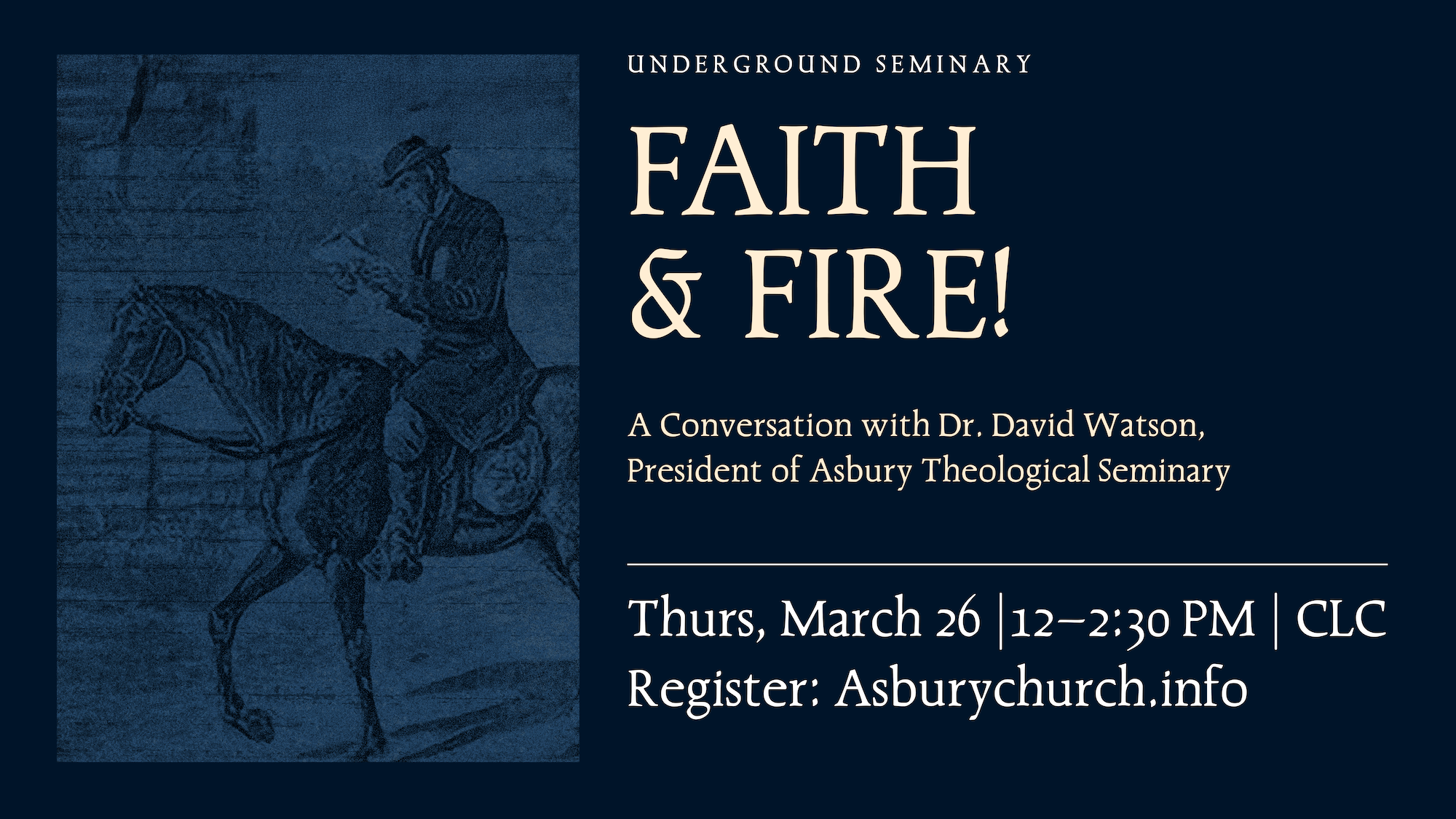
P.S. Have you registered for our Underground Seminary event yet? The deadline to register is October 30th. This is an opportunity to hear Asbury Church’s Senior Pastor, Rev. Andrew Forrest, talk about his new book Love Goes First. This is one of the best books I’ve read in the past decade. If you are in the area, you don’t want to miss this. Register now before time runs out. Details here.


P.P.S. I am teaching two classes at Asbury Seminary in Tulsa this coming Spring. Both classes are hybrid classes, which means you only have to be on-site in Tulsa for three days for the entire class (the rest is online). I am teaching a class on Basic Christian Doctrine March 5-7, 2026. And I am teaching a class on Wesleyan Discipleship March 26-28, 2026. They are worth taking in their own rite. But they also meet ordination requirements for various denominations, including the Global Methodist Church’s new ordination requirement for a class in Wesleyan Discipleship. I love getting to teach from my research and publishing on Wesleyan small groups like the class and band meeting. And this class is not only about the ideas but equipping to do them. It is so fun! Don’t miss it. (For more information, click here, scroll down, and shoot me an email.)


Kevin M. Watson is a Pastor and the Senior Director of Christian Formation at Asbury Church in Tulsa, OK. He is also on the faculty at Asbury Theological Seminary, anchoring the Seminary’s Tulsa, OK Extension Site. His most recent book, Doctrine, Spirit, and Discipline describes the purpose of the Wesleyan tradition and the struggle to maintain its identity in the United States. Affiliate links, which help support my work, used in this post.

Underground Seminary: Love Goes First with Rev. Andrew Forrest

08 Wednesday Oct 2025

Posted by Kevin M. Watson in Book Review, Christian Living, Ministry, Underground Seminary

≈ 2 Comments

Tags

Andrew Forrest, Asbury Church, Asbury Theological Seminary, Bible, Christianity, church, faith, Jesus, Love Goes First, Underground Seminary

Underground Seminary is back! 

The first events we have done have been so fun! And I am more excited about this conversation than any that we’ve had yet. I can’t wait!

Francis Asbury statue at Asbury Church in Tulsa, OK

What is Underground Seminary?

There are some things that don’t fit in courses I teach, or perhaps even in the seminary curriculum at all, that people preparing to lead in the local church need to wrestle with, think about, or just have someone tell them. There are also conversations that I want to have with people who are preparing to in the church that I think will be helpful to them and I don’t know where they would fit in specific classes.

In my role for Asbury Church, I’m still interested in shaping pastors. So, I have been working on optional, not-for-credit, opportunities that typically come alongside classes I am teaching for Asbury Theological Seminary. I’m calling these special events “Underground Seminary.”

Underground Seminary is for people preparing to lead in the church who are hungry to learn and grow. They want to gain as much wisdom and experience as they can from as many different places as possible as they are prepared and equipped to lead.

I’m most excited to work with people who know God has more for them and they are going after it. Underground Seminary is for these people.


Our next Underground Seminary meeting:

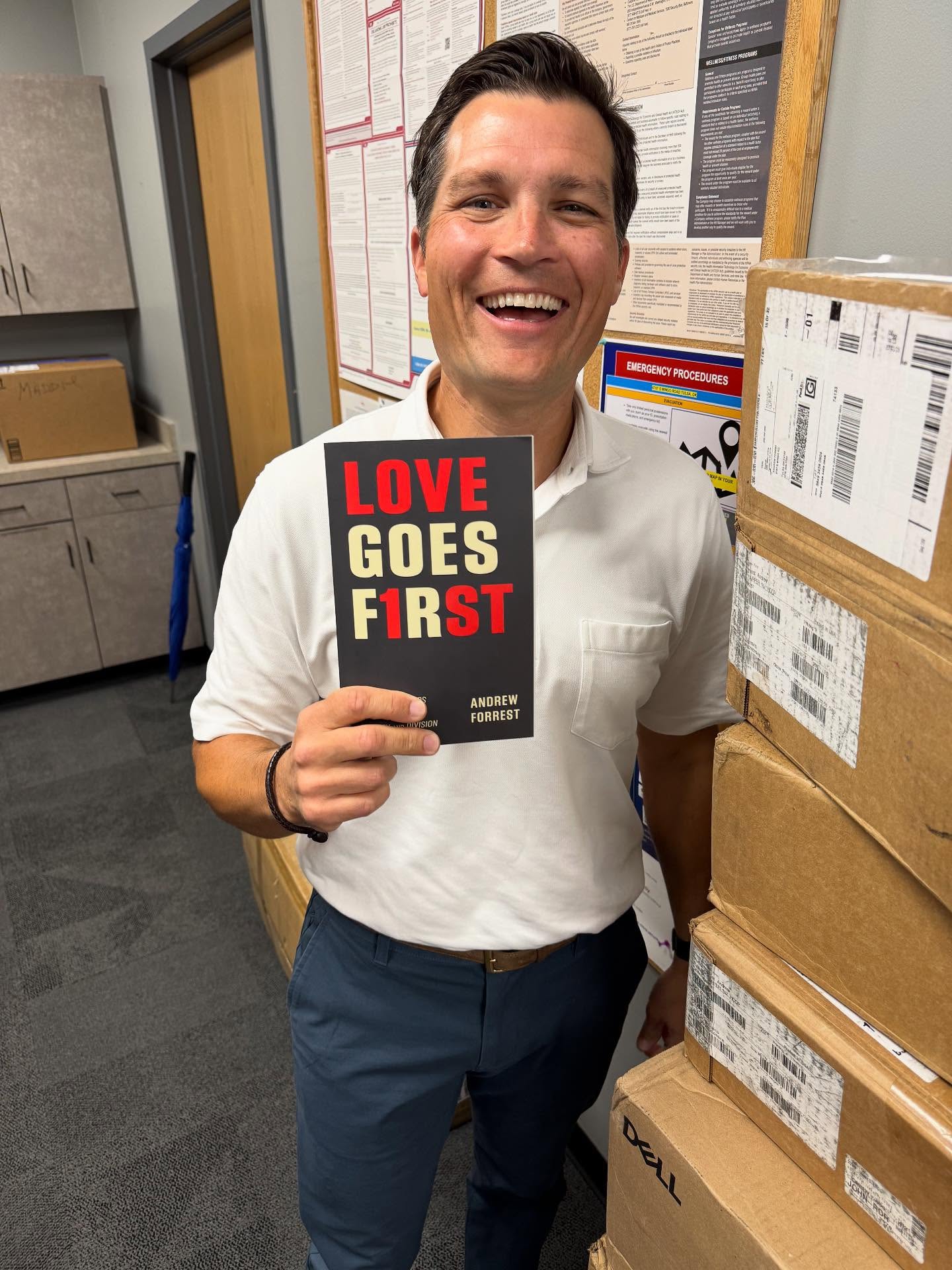
Rev. Andrew Forrest, Asbury Church’s senior pastor, will lead our next Underground Seminary on his new book Love Goes First.

Yesterday was the official release date for Love Goes First. I believe in the message of this book and I am really excited for this book to be out in the world. (If you can’t make it to this event, you should still buy the book!)

I wrote a review of the book, last week. Here is an excerpt from my review:

Here is the unique challenge facing the American church today: For the first time ever, we are faced with reaching a culture that has been exposed to the gospel and is largely built on Christian foundations but is now post-Christian. As Forrest puts it, “It is certainly nothing new for the church to be hated… but it is unprecedented for the church to be hated by a culture that once used to honor and respect it.” (8-9)

And so, Love Goes First is “about how we, as American Christians, can reach the people who believe we are the problem, those who hate us and all we stand for.” (7)

Here is the big idea of the book: 

“If you want to change the world, you have to go first, because love goes first.” (10)

Read the review here.


Andrew is a brilliant strategic thinker about the local church and its role in the world. He has boldness and courage that I admire. He is willing to do the deep work it takes to get to clarity about hard things and big ideas.

If you are a pastor or want to be a church leader, Andrew is someone you should learn from. He has a proven track record as a church planter, leader, and pastor.

To give just one example: In his first three years here at Asbury Church, in person attendance has increased by nearly 25%.

This Underground Seminary gives you the opportunity to hear from Andrew in a smaller more intimate setting than the places he typically speaks. I think this will be challenging, convicting, and fun.


How to join us:

This Underground Seminary will be Thursday November 6th from 12:00 – 2:30pm here at Asbury Church in Tulsa, OK. Those who register will receive lunch and a copy of Love Goes First. Registration is $10. You can register by emailing amiller@asburytulsa.org. You will receive details on the exact location after you register. Deadline to RSVP is October 30th. 

This event is sponsored by Asbury Church. This should be obvious, but lunch and a copy of the book will cost the church more than $10 per person – the book itself is currently $18.78 on Amazon. The point of having a cost of registration is that when people have skin in the game, they tend to follow through and show up. In other words, you can get a copy of the book for basically half price and a free lunch! The church is not making money off of this event. Rather, we are investing in you because we are committed to raising up the next generation of leaders for the church.


There is a lot of mystery and chance in the world of publishing. It is very difficult to predict the success of a new publication. I don’t know if Love Goes First will get the kind of boost needed for it to become a spectacular commercial success. I do know it is the rare book that is worthy of a wide reading. Love Goes First is on the short list of the most important books I’ve read in my ministry career. I think this book is going to be a catalyst for bringing together a new network of Christian leaders who are willing to step into the unknown and risk everything for the Gospel for such a time as this.

Let’s go!


Kevin M. Watson is a Pastor and the Senior Director of Christian Formation at Asbury Church in Tulsa, OK. He is also on the faculty at Asbury Theological Seminary, anchoring the Seminary’s Tulsa, OK Extension Site. His most recent book, Doctrine, Spirit, and Discipline describes the purpose of the Wesleyan tradition and the struggle to maintain its identity in the United States. Affiliate links, which help support my work, used in this post.
Raising Up Next-Gen Church Leaders

21 Friday Feb 2025

Posted by Kevin M. Watson in Christian Living, Ministry, Teaching

≈ 1 Comment

Tags

apprentice, Bible, Christianity, church, discipleship, faith, Leadership, local church, mentoring, Ministry, Next-Gen, pastoring, Seminary

I’m trying to think more clearly about how to raise up the next generation of leaders for the church. It seems clear to me that things are shifting and changing, sometimes dramatically. Institutions are changing and sometimes failing. Key leaders are leaving the scene, sometimes because they have retired or died, and other times because a moral failing has been exposed.

I don’t have it figured out yet. But I want to start talking about it more.


My writing often comes from a burden to figure out what I think about something and then try to communicate it as clearly as I can. I think some of my best writing comes when there are two things working in me:

First, I notice that I am working over a problem in my mind and am working hard to get clear about what I think is at stake (something that seems important and complicated or confusing).

Second, I notice a sense of pressure to not talk about it. This is usually unspoken and intuitive on my part. This means I could be wrong, or I could be seeing things. The pressure to not talk about it can either be because it seems like everyone views something as settled, while I have questions or concerns. Or, silence could come from the sense that speaking out could be problematic in terms of upsetting people in power.

Here are two examples of writing that has come from this:

1. I urged churches to start reopening five months into the Covid-19 pandemic. 

2. I expressed my concerns with the proposal of United Methodist bishops to make affirmation or prohibition of same sex marriage dependent on the surrounding dominant culture. 

Neither of those posts are perfect. In rereading them today, I would say things differently in both. But they both helped me think more clearly about matters that were very important to me (and to the church I was part of) when I wrote them. I am proud of them because I believe the Lord used them to help people think more clearly and make hard decisions during very challenging circumstances.

If you aren’t familiar with my writing, these will give you a sense of it. I hope they show my commitment to telling the truth. Of course, I also make mistakes. One of things I think I have often done well is move a conversation forward and bring clarity where it has gotten bogged down or stuck.


So, I’ve been thinking about raising up the next generation of leaders for Jesus’s church.  I’ve been thinking about this longer than I usually think about the kinds of things I write about here. And to my own frustration, I don’t feel like I’ve made as much progress as I usually would have by this point.

I want to articulate why I think this it is hard. It is important to work to understand the moment in which we find ourselves. And I want to begin by naming two models that have been used to raise up the next generation of leaders for the church. I want to suggest that people in my networks have almost completely missed the importance of the second model. But first, why is this so hard to think through?


The church in the United States is experiencing major challenges due to massive shifts in the culture, academy, and the church herself.

Aaron Renn does a great job talking about the changes in the dominant culture and how it impacts the church. Check out his book Life in the Negative World [Affiliate link]. I also follow his work at aaronrenn.com.

The academy is also undergoing massive change, which includes theological education (the seminaries where pastors are trained). This would be another post, so I won’t unpack this further right now.

And finally, the church herself is undergoing dramatic change. I think most of the changes in the church come from the influence of the first two. Many large non-denominational and congregational churches have also been impacted by the fall from grace of senior leaders of these churches. This has happened enough over the past few years, many feel uneasy in these kinds of churches, even if their own local church has not been directly impacted.

Here is an image I have used to describe what I think is happening:

Tectonic plates are shifting in the culture. When tectonic plates shift, there are earthquakes. There is rumbling. There is shaking. Often major edifices are damaged or even collapse when tectonic plates shift.

I think we are seeing this kind of major disruption and change in the church today.


There have been (at least) two major models for raising up leaders for the church.

I’m sure much more nuance could be added here, so feel free to fill this out in your own thinking or experience. The point here is to get some things in place in order to move forward.

My own experience was largely with the first model. I will call it the ecclesial bureaucracy model. I’ll use my experience to explain it:

I received a calling to ordained ministry through a short-term mission trip to Mexico when I was a junior in college. One short week changed my life in so many ways. By the end of the week, I had a deep sense that there was nothing more fulfilling I could do than give my life in service to the church, by the grace of God. I remember time and time again being stunned by how joyful it was to serve the Lord through the church.

I knew nothing. I had no clue what I was getting myself into. And I made a lot of mistakes along the way.

But there were also a lot of things that were clear and decisions I didn’t really have to make. I was a United Methodist and didn’t question whether I should pursue ordination in the UMC or not.

The blessing of this was that the path forward was clear. The obvious next step was to attend seminary after I graduated from college. I began having conversations with the senior pastor of the church I was attending, who was generous with his time and wisdom. I formally applied to become a “certified candidate” during my first year of seminary.

I did not have a long-term relationship with the same local church throughout my time in the ordination process. I moved quite a bit from my freshman year of high school through seminary.

So to summarize: Once I felt a calling to ministry, I basically got on a moving walkway where the next step was fairly clear. And if I was approved for ordination by denominational authorities, I would also be appointed to pastor in a local church. If approved for ordination, I would, literally, be guaranteed an appointment (a pastoral position in a local church).

I think there are strengths and weaknesses of this model. And they could be done better or worse than it was done in the UMC when I went through the process. When I was teaching United Methodist polity, I used to tell students that the number one value of the UMC ordination process appeared to me to be persistence. If you kept going, you would almost certainly be ordained. 

(This was most evident to me when someone in the conference I was ordained in clearly revealed that they did not believe in the bodily resurrection of Jesus. They were not discontinued or removed from the process at that point. They were deferred and had to rewrite and repeat the interview process the next year. They were then approved and ordained. Is it more likely this person’s views on the bodily resurrection of Jesus changed, or that they found a more acceptable way to present (or cover up) their heretical views?)

The second model I’ll call the apprenticeship model. It was not my experience, so I can’t give as much detail. I think this approach is most common in non-denominational and congregational church polities. For this reason, I also suspect it is less uniform and more organic and relational.

This one is pretty self-explanatory. A person is raised up for leadership in the church by someone who is recognized as an excellent leader in the church. Preparation for ministry comes by being invited to get closer to the senior leader with behind-the-scenes access. Over time, they are given opportunities to lead with the senior leader’s oversight and feedback. And eventually, they are released to lead on their own, though likely with continued oversight or spiritual covering.

Sometimes a person in this system will replace the senior leader when they step down. Depending on the system, they might move to a different context taking on significant leadership responsibilities.

This model is highly relational. The person who is being raised up for leadership in the church spends significant time with the person who is discipling, mentoring, or apprenticing them. It is inefficient in the sense that it requires proximity and a lot of time together. It is also driven by the needs of the person being raised up and so is very contextual and responsive to where they are and how they need to grow. It is also inefficient because one person cannot have this kind of relationship with an unlimited number of people.

Another way to think of this model is to think of Robert Coleman’s Master Plan of Evangelism and other relational discipleship making tools. These are usually focused on discipleship as the goal for all who come to faith in Jesus Christ. It is not surprising that those who are raised up to lead in these kinds of contexts continue to be raised up to lead in this way.

I suspect that very often a sense of calling to lead in the church comes within the context of these discipling relationships.

During the season when I first began to feel a tug to rethink some of my assumptions about how to best raise up leaders for the church, I started getting to know a non-denominational church near where I lived. The folks in this church were very gracious to me and the senior pastor met with me. I wanted to ask him two questions in particular:

How did you get to be in your position? I remember the answer, though it was more fleshed out than just this, because I had heard it from others in the same church family: I lived in Buddy’s basement. 

In other words, the founding pastor invited him to come closer, literally into his home, for a season. And he poured into him and raised him up.

The second question was: Is there anything that I do that can help you and those you are raising up? We developed a degree at Asbury Theological Seminary that came directly out of my conversations with this pastor and the pastor of another large non-denominational church at another place I taught. (Send me an email [scroll down] if you want to know more about it.)


I think both models would be improved by the other.

Non-denominational and congregational churches that don’t require any formal education outside of themselves make themselves vulnerable.

Large denominations that have heavily bureaucratic ordination processes have greater risk in my view.

My working hypothesis is that the most effective pastors in the United States at present came up through more of the apprenticeship model than the ecclesial bureaucracy model. My experience is that almost all of them end up pursuing a seminary education, but it usually comes after they have been leading in meaningful ways in the local church.


So, Now What?

For most established leaders reading this, the action step is most likely to look for people to bring in closer to walk with you and build them up. One of the problems with bureaucratic approaches to ordination is that they are so depersonalized. People don’t grow in self-awareness because the kind of one-on-one conversations that happen in an apprenticeship don’t happen nearly as often.

Here is what I am seeing: I believe the church, particularly healthy large congregations with stable leadership and deep roots, is only going to be more important going forward for the work of raising up leaders for the church. All churches are important in this work. The local church is the ordinary context for hearing a calling to ministry. I think larger churches just have the capacity and the resources to invest in the next generation for their own sake.

I think large churches will develop coaching trees like Nick Saban did at Alabama. People will serve for a season in these churches and experience accelerated growth in a host of ways in these contexts. Some, who can joyfully stay long-term in an associate type of role, will stay for decades. But most will serve for a season, be built up, equipped, and sent out to lead with excellence.

And I have a feeling this will be less dependent on denominational affiliation than it has ever been in the history of Christianity in the United States.

This vision excites me because Asbury Church (where I am) is the kind of church that can do an excellent job of apprenticing people to be excellent leaders.

Asbury is a conservative evangelical church from the Wesleyan theological heritage that averages about 2,500 in person in weekly worship at one campus. At Asbury, intentional and strategic attention is given to the culture of the church. Asbury not only has a great culture, but the senior leaders can tell you why they are doing what they are doing and how to work to set, shift, or move culture. This is so important! And there is a clear emphasis on discipleship. As with our work to build and maintain a great culture, the church can articulate a coherent vision for how we make disciples.

And one of the most unique things about Asbury Church, within the context of this post, is that Asbury has a passion for education. Asbury hosts the Asbury Theological Seminary Tulsa Extension Site on its campus. So, a person preparing to become a pastor could come to Asbury Church and be in seminary here at the same time.

Asbury Church’s commitment to education is also evident in its decision to launch Asbury Classical School this year.

One of the saddest things to me about my time in theological education has been seeing the negative impact a seminary tends to have on local churches in the immediate geographical area of the seminary. At a previous institution, someone commented on the “dead zone” that surrounded the seminary. 

What a gift that I get to teach at a seminary whose mission and values I agree with at a church I am proud to be part of and that I am confident will bless my students.

If you, or someone you know, is wrestling with a calling to ministry, I would love to connect with you. Maybe you should move to Tulsa and see for yourself. I am learning more and more that proximity and time within a relational atmosphere are crucial to raising up the next generation of leaders for the church.

I can’t wait to see what happens next!

Kevin M. Watson is Director of Academic Growth and Formation at Asbury Theological Seminary’s Tulsa, OK Extension Site. He is also Scholar in Residence at Asbury Church. His most recent book, Doctrine, Spirit, and Discipline describes the purpose of the Wesleyan tradition and the struggle to maintain its identity in the United States.

It is time to start reopening churches #Covid-19

07 Friday Aug 2020

Posted by Kevin M. Watson in Christian Living, Ministry

≈ 2 Comments

Tags

church, Covid-19, Reopening

I think I have wrestled with this post more than anything I have written here. I want you to know that before I say anything else because I have been trying very hard not to make things worse by speaking rashly or condemning others. Covid-19 is an unprecedented crisis in world history, at least in my lifetime. I believe everyone is doing the best that they can. And I believe that we are all under great pressure and strain. I have often been afraid, and I bet you have been too. In these kinds of moments, it can be virtually impossible to hear each other well, particularly in this kind of medium. (The pandemic has also been so politicized it seems to make it close to impossible to talk in a way that can be heard as something other than partisan talking points. I have done everything I can to avoid that here.) For what it is worth, I have done the best I can to be charitable and gentle. I have written this out of love and concern for the church, which I see as increasingly paralyzed by fear. And so, I have decided to risk saying something. And of course, I could be wrong about everything I’ve said here. We all have extremely limited vision at the moment. If you experience conviction as you read, I’ll leave that between you and the Holy Spirit.

We need to be more aggressive in reopening churches.

I appreciate that it is not prudent to return to large in person gatherings inside the church. But I think we are being far too complacent and content to limp along with the temporary solutions we cobbled together when the first wave of the pandemic hit.

The church seems paralyzed by a culture of fear and safety that is not from God.

It seems to me that the criteria for returning to in person gatherings of any form have shifted radically from the initial shutdown in March. Do you remember the reason we embraced radical new measures like social distancing and even shelter in place in the Spring? The rationale for flattening the curve was to prevent hospitals from being overrun, which would lead to people dying because they did not have access to an ICU room or a ventilator.

The goal now seems to be to prevent anyone from getting sick. Many of us are embracing severe restrictions to prevent the disease from spreading at all. This is well-intentioned at first glance, but impossible.

In some context the burden of proof seems to be even higher: a church must stay closed until they can guarantee that no one who is sick will be on church grounds. That is an unreasonable standard. If that is the goal, for example, why would you need any other protocols? Isn’t the reason we wear masks and social distance built on the assumption that sick people are in our midst, we just can’t know which ones of us are?

And so many churches are finding themselves in a cycle of announcing a target date for reopening, pushing it back, and then pushing it back again, and again. You get the point.

Churches should respond to the changing circumstances in their communities. This is wise and prudent. However, I see increasing fear and decreasing clarity about when church leaders would feel safe reopening in some way.

If a church cannot open in a week because there is a risk that someone who is sick will come to worship, when is it realistic that that level of risk will no longer be present? If church leaders intend to embrace that level of safety, they need to be honest and direct about it. And they also need to be honest and direct that this means churches will be asked to stay closed not only for a few more weeks, but likely for years.

To key leaders like bishops, district superintendents, and senior pastors, I understand why many of you remain concerned about churches reopening. I appreciate your desire to limit the spread of a highly contagious disease that has no treatment. I do not take this lightly and agree that it is a crucial concern, particularly for those who have high-risk factors for Covid-19.

And yet, it feels like many of you are more passionate about keeping the church closed than you are about them reopening. I have heard from many people across the connection who feel that the burden is on churches that want to reopen to prove that they can do so in a way that guarantees there will be no transmission, or even presence, of Covid-19.

My concern with that burden of proof is that just isn’t how pandemics work. The church needs you to be clear that you are ultimately passionately in favor of churches reopening. There will be times when the threshold of community spread in particular areas makes it imprudent for churches to gather. But we need you to do far more than discourage churches to reopen. We need you to actively encourage churches to fight to find creative ways to wisely and courageously gather. Wisdom and courage need not be in opposition to each other.

I would like to see bishops, district superintendents, and pastors in charge, shift from pressuring churches to stay closed to pressuring them to reopen in the best ways that they can.

Much of my concern comes from the feeling that we are drastically underestimating the essential need for public worship for those who are Christians and for those who have not yet received the gift of faith in Jesus.

Here is how my own denomination defines the local church:

“The local church provides the most significant arena through which disciple making occurs. It is a community of true believers under the Lordship of Christ. It is the redemptive fellowship in which the Word of God is preached by persons divinely called and the sacraments are duly administered according to Christ’s own appointment. Under the discipline of the Holy Spirit, the church exists for the maintenance of worship, the edification of believers, and the redemption of the world.” [The Book of Discipline of The United Methodist Church, 2016 ¶201)

The United Methodist Church explicitly teaches that the local church exists to maintain worship. It needs to be stated unequivocally that the maintenance of public worship is not some optional side show that is nice when possible. It is at the very center of why the church exists at all.

I anticipate that some reading this will object, “but we have been maintaining worship throughout the pandemic.” First, there are many, many churches that are not able to maintain public worship right now because they have not had the ability to have video worship services either in advance or live. These churches are doing the best that they can. And I do not intend to condemn them. But we need to acknowledge that many parts of the church have not been maintaining worship at all for five months. This is devastating to the faithful and needs to be acknowledged explicitly and regularly by anyone who is convinced that the harm of reopening churches is greater than the good of fulfilling the reason the church exists.

Second, can we be honest that the vast majority of churches that have started online worship services during the pandemic fall far short of the in-person services we’d had before? The efforts to start these services were faithful and went above and beyond by all who have been involved in getting them up and running. But they are not close to an adequate replacement for in person worship.

Pastors and worship leaders: many faithful members of your churches will stick with you through this season because they love you and appreciate what you are doing. This has been exceptionally difficult. But many laity also find much of the experience of online worship to be frustrating and hard to follow. There are often a host of technological glitches that make the production quality very poor overall.

We need to be clear that online worship is not the future of the church.

Study Gnosticism, why it is a heresy, and why the body is an essential part of the Christian life and part of what needs to be saved. Corporate worship with bodies present matters. There are going to be seasons in the midst of a pandemic when it is impossible to responsibly gather corporately in the flesh. But we must not pretend that what we do in the midst of those times is as good as the physically gathered body. It just isn’t.

I am also concerned that there is a failure to recognize the ways that people in our churches are fighting to be together and taking risks to do so. Are we noticing what is happening outside of our churches?

Parents are enrolling their children in sports leagues (despite the very public spread of Covid-19 in various attempts to return to professional sports).

Parents are enrolling their children in preschools, in many cases preschools run by churches that are otherwise closed.

[I will resist unpacking this further here, but church preschools reopening in closed churches is a stunning illustration of the present confusion.]

Private schools seem to mostly be reopening, though that is subject to change. Public schools are closed in some areas and opened in others. Many parents who were given a choice whether to send the children back to school want their kids to have in person instruction, though many others elected not to.

This list gets to a related concern: The formation of Christians for more than a generation seems to have produced Christians who believe that worship is not that big a deal. There is a crisis of faith (and I mean a crisis of faith in the gospel of Jesus Christ in a basic way) when parents can be expected to consistently prioritize secular extra-curricular activities over worship and participation in the life of the church.

If extracurricular activities come back faster than the church brings back public worship, we will reinforce a serious and devastating confusion about what it means to be in Christ and what it looks like to be connected to the church.

Death is not the worst thing that can happen to a person.

There are a host of bad outcomes that can come from not gathering. We may decide they are not sufficient to take on any additional risk of gathering together. But they are important enough they ought to be named and considered.

How do we balance the real risk that people will get sick if we reopen with the real risk that people will walk away from the church or lose their faith entirely if we don’t?

In a time when people are dying from a pandemic, the need to proclaim the gospel of Jesus Christ to those who have not come to faith in Jesus needs to at least be considered along with concerns about safety.

I have seen the phrase “Do no harm” used many times in discussing closing churches and keeping them closed. United Methodists will recognize this as the tagline of the first “General Rule.” We need to consider the kinds of harm happening right now in a much broader way than only the concern to limit the spread of Covid-19 (and I hope we can all agree that everyone wants that).

How do we balance the concern that there could be harm if we open the church with the harm that comes from long-term isolation, depression, overdoses, and suicide?

Are we considering the deaths related to Covid-19 that have nothing to do with contracting the virus?

In the current climate it is a virtual guarantee that any church that can be connected to an outbreak will receive major negative media attention.

But what about all of the churches that have already resumed in person worship in various forms without major incident? How do we account for those churches and the good that has come each time they have faithful maintained worship?

It is perhaps too much to ask, but I would love to see bishops and other leaders come alongside churches and use their power and authority to encourage them and bless them. What if a bishop were to say to a pastor considering opening a church, “I trust you. You know your context and the conditions there better than I do. If you, as the pastor in charge, decide to reopen I will commit to pray for your success. And if there is an outbreak, I will stand with you and defend you in every way and in every place that I can.”

In the diminished trust in the current UM environment, I cannot imagine how encouraging that would be to a pastor to hear. And that would strike me as a powerful example of leadership in a basic way, not to mention the episcopal office.

It is quite discouraging to hear the number of clergy who cannot imagine such a scenario, and instead anticipate their bishop would make an example of them to press other churches to stay closed and to protect themselves from criticism.

I am not asking bishops to stop advocating and educating their conferences based on current realities and what they see. I am asking them to have much greater urgency about the church gathering together in some way in person. The space between a church being completely closed and meeting as it did back in February is enormous. There are infinite ways to not be completely closed to in person meetings without imprudently jumping straight into a 250 person indoors sanctuary service.

The church needs to be taking proactive steps to reopen. That may not mean meeting indoors. Indeed, in most of the U.S. I think it would be premature to begin meeting as we had before March. We need to be prudent and aware that there is a deadly pandemic in our midst.

But the fact that a church cannot have their normal 11 o’clock sanctuary service does not mean they have no other options. We need to do a much better job thinking outside the box. We can have outdoor worship services, which most health experts believe is safer than indoors. We can multiply the number of worship services and cap the number of attendees to follow recommended best practices.

There are a multitude of other options. It is time for leaders to lead out of the place we’ve been stuck for the past several months. The hard truth is that it appears the pandemic is going to be an unwelcomed presence in our midst quite a while longer.

We can’t be content with the new pandemic status quo any longer.

Here is an example of what I’m envisioning: After prayerful consideration, the leadership of a church near us (not United Methodist) decided it would be premature to return to normal worship in the building. They also refused to be complacent and recognized online only gatherings were spiritually malnourishing. So they began meeting on Wednesday evenings for a worship service outside in front of the church. And they encouraged small groups to meet together in person on Sunday morning to view the worship service together. These are creative ways to reconnect the Body of Christ and move in a positive, though measured direction.

At the end of the day, it may not be time for your church to open yet. I can live with that. I can even respect that. Really. You may need more time to plan for a wise and courageous reopening, that will be significantly different than it was in February.

And circumstances can change rapidly. We should respond rapidly to changing circumstances.

My concern here is that it feels to me like the church has pulled into a shell and it seems increasingly unlikely to come back out until there is a guarantee that everything will be ok. The problem is we are not going to get such a guarantee.

There are no paths without risk. This is an extremely challenging time. I yearn to see leaders of the Church of Jesus Christ take the right kinds of risks and make the right kinds of mistakes.

I understand that there are deep disagreements about how and when to best move forward. I am not trying to start a fight here or score cheap rhetorical points. I am for you and your churches. I want to encourage us to prayerfully seek God’s guidance and scratch and claw to reclaim as much of what we’ve lost as possible, because the local church exists for the maintenance of worship.

Come Holy Spirit. Not being able to worship together has been so hard. Guide, direct, and bless your church. Give us prudence and courage. For Jesus’ sake. Amen.


Kevin M. Watson is a professor at Candler School of Theology, Emory University. He teaches, writes, and preaches to empower community, discipleship, and stewardship of our heritage. Click here to get future posts emailed to you.

I have closed comments on this post because I do not intend to start a fight or encourage people who agree or disagree to fire off a quick response that has more heat than light. You’re welcome to contact me directly here. I read all comments I receive, though I am not able to respond to all of them.


Newkirk UMC Fire

18 Tuesday Dec 2007

Posted by Kevin M. Watson in Ministry

≈ 5 Comments

Tags

church, fire, Newkirk


Newkirk Fire

Originally uploaded by deeplycommitted

Newkirk United Methodist Church caught fire around 4:30am this morning. The fire resulted in a total loss of the church, as is obvious from this picture. Newkirk UMC is in the Oklahoma Conference of the UMC. Please join with me in prayer for Rev. Jim Hollifield and the community of faith in Newkirk, Oklahoma. The sign in front of the church reads, “Every Day Gives You Another Chance.” May God bring new life out of this tragedy.

Blog at WordPress.com.

  • Subscribe Subscribed
    • Kevin M. Watson
    • Join 369 other subscribers
    • Already have a WordPress.com account? Log in now.
    • Kevin M. Watson
    • Subscribe Subscribed
    • Sign up
    • Log in
    • Report this content
    • View site in Reader
    • Manage subscriptions
    • Collapse this bar
 

Loading Comments...