• About Me

Kevin M. Watson

Kevin M. Watson

Author Archives: Kevin M. Watson

Reflections on Teaching and Learning at Asbury

24 Thursday Apr 2025

Posted by Kevin M. Watson in Life, Methodist History, Ministry, Teaching, Underground Seminary

≈ 2 Comments

Tags

Asbury, Bible, Christian formation, Christianity, class meeting, deliverance, faith, God, Jesus, John Wesley, Methodism, prayer, Seminary, small groups, Teaching, Wesley

I have previously shared here about my conviction that the culture or atmosphere of the classes I teach is more important than being sure I say all the words I want to say or get all the content in before the class ends. 

I am not sure I always get this right. Actually, I’m sure I don’t always get this right. 

However, I am increasingly confident that students are most impacted by the things that happen in my classes because I intentionally create an atmosphere that is open to the Holy Spirit than they are by the lectures that I give. And maybe even more than that, I find that students are more willing to listen to what I have to say when they are convinced that I care about them. So, I think that prioritizing the culture or atmosphere of classes I teach enhances student learning and engagement with the content of the course.

And I don’t think this goes the other direction.

This week, I’ve found myself reminiscing on the things I saw the Lord do over the past month. I wanted to share a few highlights here.

I taught back-to-back intensives a few weeks ago. And they were such a blessing!

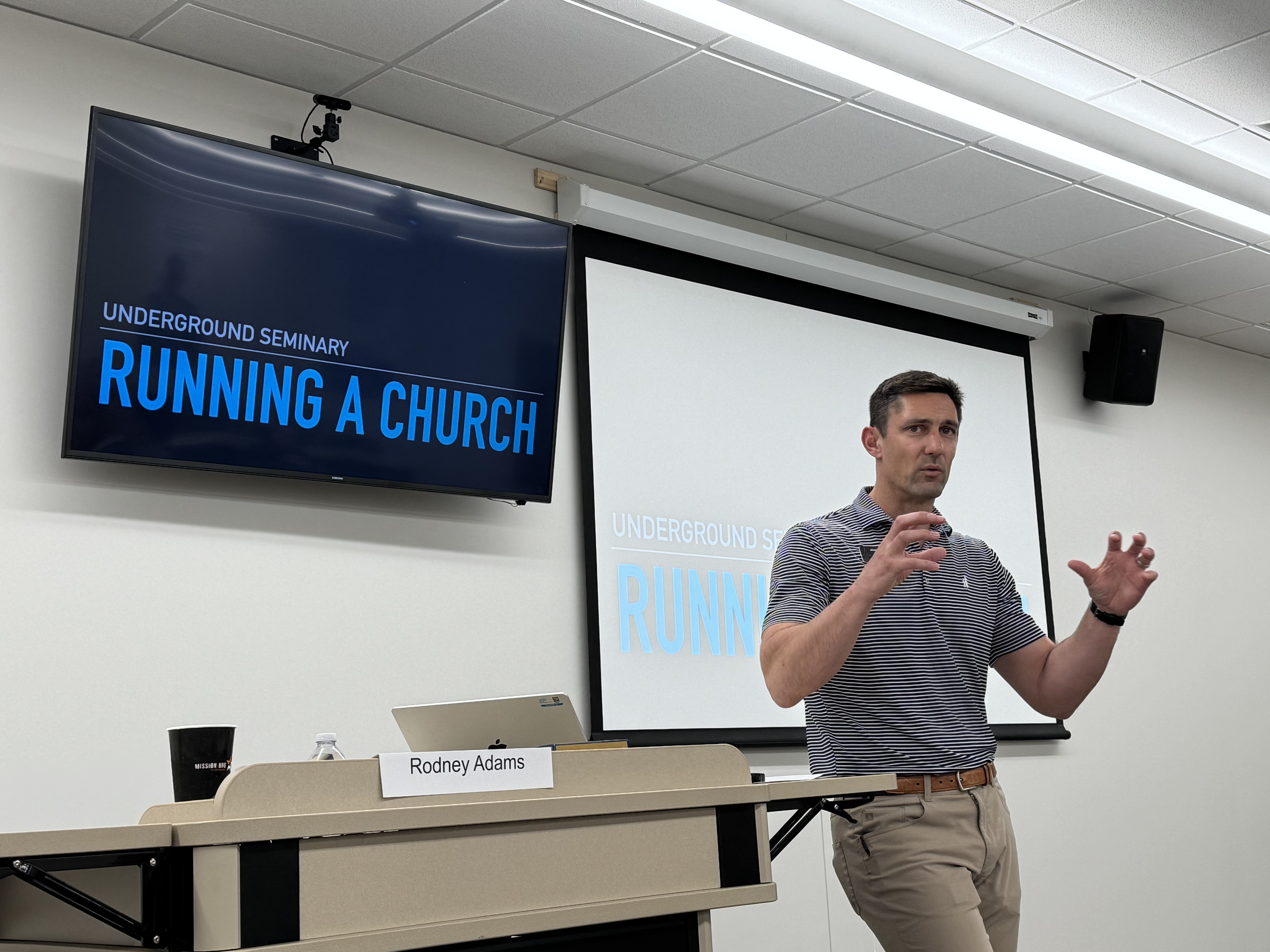
Before my Basic Christian Doctrine class, I put together the second Underground Seminary event. We called it “What They Don’t Teach You in Seminary.” It was led by Rodney Adams, the Executive Director of Asbury Church. Rodney gave a detailed behind the scenes look at how a large church like Asbury is run, the strategic decisions he makes as Executive Director, and the challenges of leading that are particular to a church. (You can read about the original announcement here.)

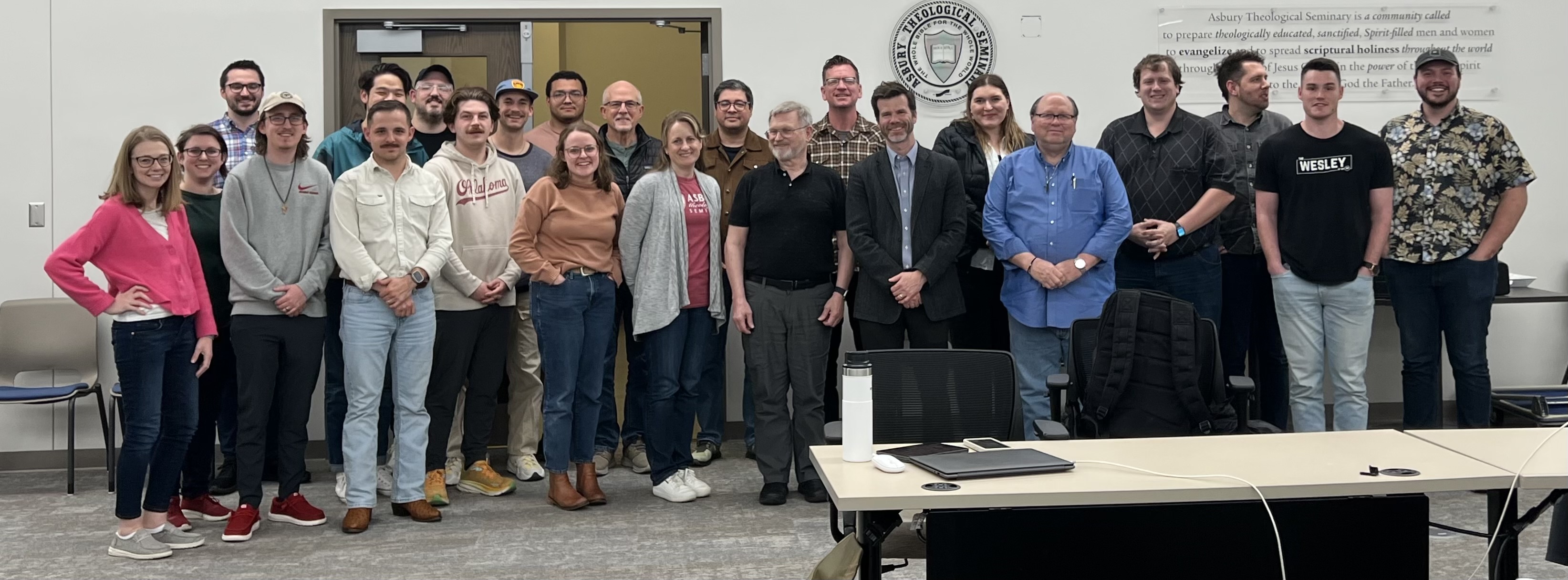
From my perspective, it was a fantastic success. There were 23 people who came to this meeting, which was immediately before a class that had 16 students. I am encouraged both by such a strong turnout and that the Underground Seminary idea is building energy for what is happening at Asbury-Tulsa. It is energizing to me to have people in the building talking to each other about ministry. I am best at inviting people to things I passionately believe in. Asbury Church is one of those things for me.

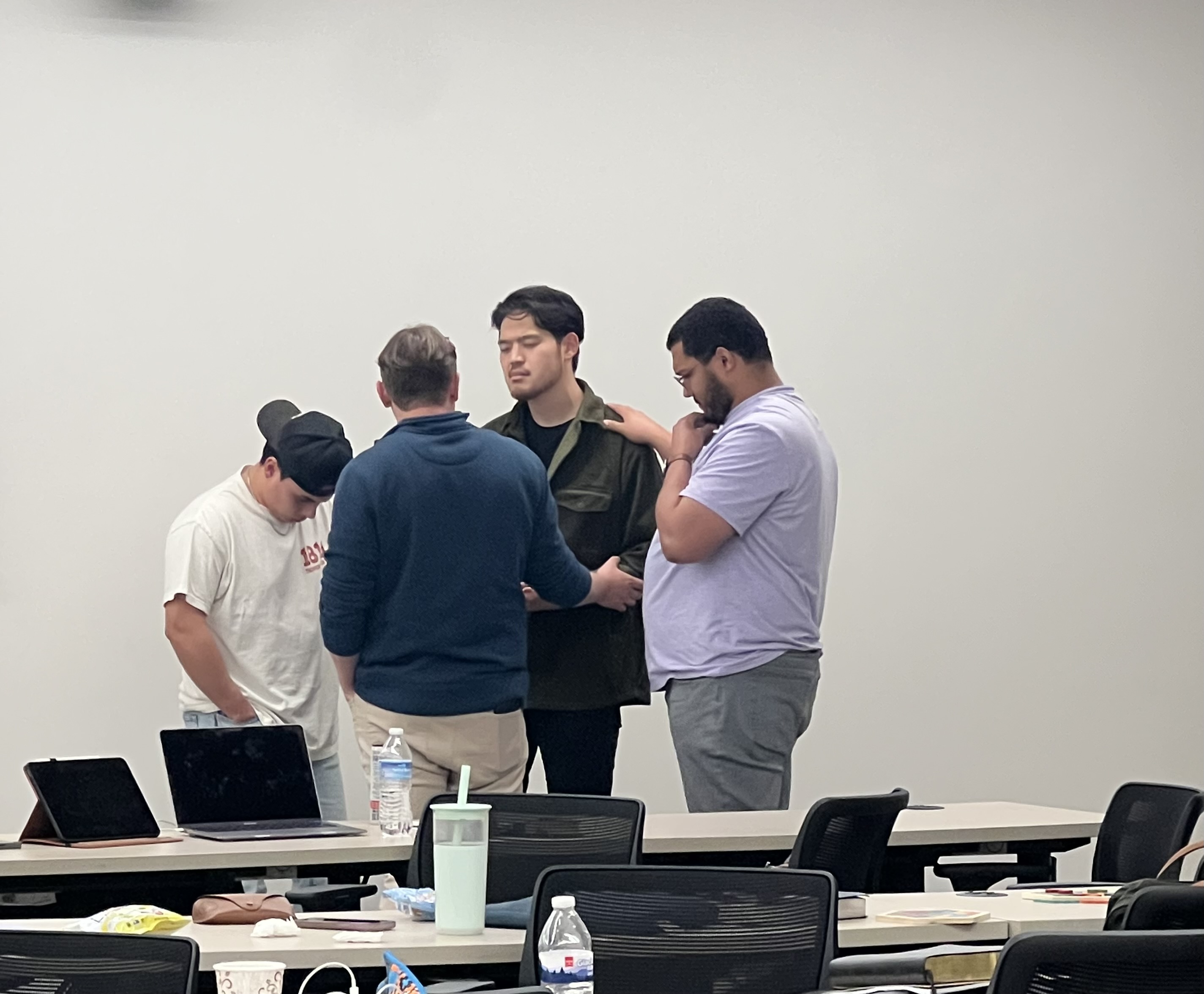
During the class itself, I had a sense that the Lord wanted to minister in some ways to the specific people in the room. I am still learning and growing in how to lead and take risks appropriately in this space. These students were so gracious and hungry for Jesus. It was wonderful. The highlight of the weekend for me was checking in with someone at the end of class that I had particularly felt a burden to pray for and they said, “I feel like myself again for the first time in a year.”

Thank you, Jesus!

Several students stayed with members of Asbury Church. On Sunday morning, one of the students ran into the family that had hosted them, and they were so excited to see each other. The hosts sat with the group of students and my family in worship. I was so blessed by such a tangible connection of my church loving my students well and seeing church and academy connected in such a lovely way.

The next week I had another hybrid. First Methodist Church in Tulsa hosted a Holy Spirit Conference that was amazing. I was invited to lead a breakout on spiritual parenting. This is something I have thought a lot about and am passionate about but had not had a chance to teach on to a group of people. I learned a lot in preparing and was challenged and blessed in thinking it through in order to lead the workshop. I drove straight from First Methodist to Asbury to prepare to teach my second intensive in two weeks, The Theology of John Wesley (with 23 students).

I love getting to teach this material. It has been a blessing to systematically read through Wesley’s sermon corpus in a short window of time. (I highly recommend this if you are a leader in a Wesleyan context and have not done this.) The biggest gift for me personally was rereading two great books by one of the academics I most respect, Dr. Kenneth J. Collins. The two books are core texts for The Theology of John Wesley (which is a required class for every major at Asbury Theological Seminary) and I highly recommend them both. Read Collins’s John Wesley: A Theological Journey first to get a sense of Wesley’s life. It is a great book because it unpacks Wesley’s own life and legacy, but from a rich theological lens. 

After you read this, you should read The Theology of John Wesley: Holy Love and the Shape of Grace. In my opinion, this is Collins’s masterpiece. Reading this book in preparation to teach helped me teach with greater clarity than the last time I taught this material. Collins does a masterful job explaining core concepts like justification, the new birth, and entire sanctification. He is fearless in his fidelity to the witness of Scripture and Wesley’s understanding of it.

In addition to this class just being a delight, there were some powerful moments where the Spirit met us. Rev. Graeme Collett, one of the associate pastors at Asbury Church, preached for the Asbury Seminary chapel service on Friday. Graeme has become a good friend and one of the best surprises in our move here to Tulsa. And unlike any sermon I’ve experienced here yet, the Lord gave Graeme a clear word for this specific class at this specific time. (And this is saying something, because we’ve had an embarrassment of riches in terms of the quality of preaching we’ve had in our chapels here!) The highlight was Graeme’s burden to anoint students to remind them of their callings and to seal the work of the Holy Spirit in them. I believe every single person in the room came forward for prayer at some point. Lots of beautiful Holy Spirit tears and ugly crying. It was one of those times you are just aware the Lord is doing deep work in people right before your eyes. I am so thankful for Pastor Graeme’s leadership and for the Spirit’s presence with us in chapel.

We lost track of time and went more than thirty minutes over, but that is one of the special things about these intensives. It didn’t matter! Sometimes people will say in ministry that “the trains have to run on time.” The great thing about the intensives I teach is that there is one train and we’re all on it! So, we got where we were supposed to go when we were supposed to get there.

The second highlight of the Theology of John Wesley hybrid was a word I felt like I got from the Lord on Saturday morning, before the last day of the intensive. As I was praying that morning, I had the impression that the Lord wanted me to start the day by inviting people to share testimonies to what they had seen the Lord do so far in our time together.

I need to admit that this is often hard for me. Sometimes I’m afraid nobody is going to say anything, and it will bomb. I’ve gotten more comfortable holding space as time has gone on, but it is still an area I’m growing in. And I felt that Saturday morning. 

Goodness was I wrong to be concerned. There were so many wonderful testimonies people were ready to share about how the Lord had met them. God is so good!

That part went so well, the Lord nudged me to notice the second thing I had written down as I had been praying that morning: 

“Deliverance?”

In part, I think this came from witnessing a powerful deliverance at the Holy Spirit Conference the Wednesday night before my class started. I also think it came from reflecting on how important deliverance ministry was in John Wesley’s own ministry. (For more on this, see Dr. Peter J. Bellini, Thunderstruck! The Deliverance Ministry of John Wesley Today )

I gave what felt like a pretty timid invitation to receive prayer for deliverance if someone felt like they needed it. I am not going to go into details here for a variety of reasons, except just to say that the Father, again, showed me His desire to communicate with His children. I also experienced the power and authority of Jesus Christ in a deeper way that I don’t think I can adequately express. It was just a blessing.

I have so much to learn. One thing that I have found really helpful is thinking about my classes as laboratories. Here is what that image means to me: in a lab, you do something real but you also reflect on it and can interrogate the experiment itself. So we can meet in a small group in my Wesleyan discipleship class and talk authentically about the state of our souls. And we can also then ask how the conversation felt, what could we do differently? Was there something that felt unhelpful or could have been more helpful? Lowering the stakes and explicitly thinking of the time together in class as a learning environment gives permission to make mistakes and raises the expectation for pursuing excellence. I love that combination.

I’ve seen this with prayer for healing in my classes. I’ve seen this with seeking to hear the Lord’s voice and be guided by the Holy Spirit. And I’ve seen it in lively classroom conversations about deep matters of theology. It is challenging. And it is fun.

I can’t wait to see what the Holy Spirit does next!

P.S. Did you know that I am launching a Fellowship Program at Asbury Church? We are hiring two Fellows that will be paid full-time positions, with benefits. Starting this August. More details about the Fellowship Program and how to apply here.

Announcing Asbury Church’s Fellowship Program: Raising Up the Next Generation of Leaders

15 Tuesday Apr 2025

Posted by Kevin M. Watson in Ministry

≈ 2 Comments

Tags

Asbury Church, church leadership, Fellowship Program, Tulsa

I have been waiting to share this with you. I am so pumped! 

With the blessing of the leadership at Asbury Church, I am starting a Fellowship Program. We will hire two Fellows, which will be full-time paid positions, with benefits, starting this August. 

For years, I have had a growing burden to build something that will help raise up the next generation of leaders for the church. I want to build what I would have wanted when I was just getting started in ministry. I was so hungry for mentors and had the hardest time finding them when I was starting out in ministry. 

The Asbury Fellowship Program will be a blessing to the Fellows. The purpose of the Fellowship Program is not to bring people to Asbury Church to serve us. Rather, the purpose is to bring Fellows to Asbury Church so we can serve them.

That does not mean the Fellowship Program will be easy. Growth and development can, at least at times, be painful. The Fellowship Program will be an intentional season of accelerated growth, where Fellows are pushed to grow as followers of Jesus Christ.

I am also excited about this because my time in Tulsa, Oklahoma has been such a blessing to me. I love having a foot in Asbury Theological Seminary’s Tulsa Extension Site and one on the Asbury Church pastoral team. I love being at Asbury Church. My faith has grown here. I have been strengthened and sharpened here. I am grateful for the leadership of Rev. Andrew Forrest, Asbury Church’s Senior Pastor, and Rodney Adams, the Executive Director.

I am best at inviting people to things I enthusiastically believe in and I enthusiastically believe in what Jesus is doing at Asbury Church!

I believe the Fellowship Program is a crucial strategy in a time of uncertainty and significant change in American Christianity. The Fellowship Program is an intentional investment in in-person formation. I am certain the problems facing the church in our day will not be solved by applying more technology. On the contrary! We need to invest more fully in relationships in enfleshed spaces. The people I have seen really grow and thrive in their lives in Christ all have one thing in common: They are anchored within a family of faith that provides care, nurture, and discipline. And so, Asbury Fellows will move to Tulsa to be fully present here for two years.

Ok, that is why I’m so excited. Here are more details to help you decide if this is right for you:

Who is Asbury Church?

Asbury Church is a conservative evangelical church from the Wesleyan theological heritage in Tulsa, Oklahoma. Asbury has more than 2,500 people in-person in worship on average each week. We are passionate about figuring out how to do discipleship and evangelism with excellence in Negative World.[1] (The “Negative World” framework is integral to the Fellowship Program, so you will want to familiarize yourself with it if you don’t know about it and are trying to discern whether this is right for you.) 

Asbury Church has the kinds of ministry opportunities you would expect of a church of this size: a pre-school, weekly small groups, kids and youth ministry, recovery ministry, and more. We lean into big events like Christmas Eve and Easter, as well as our own made-up holiday – Celebration Sunday! We are a Bible reading church, which is expressed through Bible reading guides and all church Bible Studies (which are roughly once a month during the school year). We also host a seminary extension site (Asbury Theological Seminary, a separate institution) on our property, which reflects our commitment to theological education and raising up the next generation of leaders for the church. Our commitment to education and formation is further seen in our launch of a Classical Christian School (Asbury Classical School) that is in its first year. And we are known in our community for our commitment to missions in and beyond our community.

What is the Asbury Fellows Program?

The Asbury’s Fellows program is a two-year fellowship that will raise up the next generation of leaders in the church and empower gifted young people who sense a calling to the work of the church. Fellows will explore their calling and be strengthened and equipped to lead in Negative World. 

Fellows will also be pressed to grow through mentoring and discipleship. (I am personally most excited about this aspect, which is where I will spend most of my time with the Fellows.) As the Director of the Fellowship Program, I will meet with Fellows weekly for a Wesleyan class meeting experience, one-on-one check-ins, and a monthly book discussion. I love reading and engaging ideas and I want to introduce Fellows to the best books I’ve read on the Christian life, discipleship, the person and work of the Holy Spirit, big ideas about current issues, personal productivity, leadership, and more. The purpose of all of this will be to grow in Christ, ability to lead and disciple others, and be equipped to lead and minister in our changing cultural moment.

Fellows will have a mentor on the Asbury Church staff. They will also receive exposure to every major ministry area at Asbury Church, including Pastoral Ministry, Kids/Students, College/Young Adult, Business Administration, Outreach/Evangelism, Experience, Worship Arts, Communications, and Asbury Classical School. Based on the gifts of the Fellows and the needs of Asbury Church, Fellows will be given ministry assignments and responsibilities.

Asbury Fellows will be present at all worship services (including Wednesday morning communion and Thursday evening), staff chapel, and Wednesday evening discipleship activities, with a “see a need, meet a need” attitude. 

Fellows will also observe leadership meetings, attend the monthly pastor’s Bible Study, assist with pastoral care and visitations, and other experiences that serve the Fellow’s growth and development as a ministry leader.

Who is the Asbury Fellowship Program for?

The Asbury Fellowship Program is ideal for people who have at least one year of full-time seminary experience to recent seminary graduates, who intend to go into local church ministry as their first career. The Fellowship Program is for people who are hungry for more of Jesus, want to grow, desire a deeper understanding and experience of the person and work of the Holy Spirit, and sense a calling to the work of the church. 

Asbury Fellows will be people who love being around Jesus’s church, are excited by the prospect of being immersed in the life of a church for a season, and are eager to serve and participate in the full worshipping life of Asbury Church. Fellows will not only be hungry for more of God, but they will come humble, ready to grow and learn, and be led for a season. 

The Asbury Fellowship Program will be a season of accelerated growth for Fellows in their preparation for leadership and administration of the local church. This Fellowship is for people who know they are called to the local church in some sense but may not be sure which part of the church they are called to. This is for people who know they don’t know everything and want to learn from a large and growing church that believes God has more for everyone and is passionate about pursuing joy individually and corporately. 

Finally, the inaugural class of Asbury Fellows, in particular, will proactively set the culture for the Asbury Fellowship Program by creating a culture of excellence that will benefit all who come after them.

When will it start?

The Asbury Fellows Program will launch in August 2025. To apply email hr@asburytulsa.org by May 14th. Include with your application a resume and statement of interest that explains why you want to be an Asbury Fellow based on our description of who we are, who this program is for, and what you would most hope to receive from this experience.


[1] We believe Aaron Renn’s diagnosis is accurate. The church in the United States is not in Positive World or Neutral World anymore. The dominant culture and elite taste makers overwhelmingly view the teachings of Scripture and those who unapologetically hold to them negatively. For more, see Aaron Renn, Life in the Negative World (Zondervan, 2024) https://amzn.to/4i1PSST (Affiliate link) For the article that led to the book, see Aaron Renn, “The Three Worlds of Evangelicalism” in First Things https://firstthings.com/the-three-worlds-of-evangelicalism/

New Review of My Book Doctrine, Spirit, and Discipline!

25 Tuesday Mar 2025

Posted by Kevin M. Watson in Book Review

≈ 1 Comment

Tags

Book Review, Chris Ritter, Doctrine Spirit Discipline, Kevin Watson, Methodism, Wesley

Chris Ritter published a great review of my book Doctrine, Spirit, and Discipline: A History of the Wesleyan Tradition in the United States (Zondervan) on his blog last week.

Ritter writes:

Given Watson’s clear passion for Methodist recovery, it should come as no surprise he shapes this latest work around a clear thesis: Methodism thrives when it stays close to its original fire and suffers when it strays. Watson’s account will undoubtedly become the standard telling of Methodist history for Global Methodists.

More from Ritter’s review:

The focus on Wesleyan doctrine sets Doctrine, Spirit, and Discipline apart from 20th Century histories of Methodism. My frustration with earlier histories is that they describe organizational developments without accounting for the move of the Holy Spirit behind it all. As a pastor, I welcome this one-volume history as an accessible reference to share with those interested in learning more about Wesleyan DNA.

Chris puts his finger on two pieces of the book that were especially important to me and where I worked really hard in the research and writing of the book. First:

Wesleyans are Holy Spirit people. Doctrine, Spirit, and Discipline describes the rich connection between Wesleyan and Pentecostal/Charismatic spirituality and (rightly) groups Methodists with the fastest growing stream of Christianity on the planet. I also appreciate Watson’s unflinching treatment of slavery, injustice, and the struggle of female preachers to be recognized for their gifts.

I wanted this book to a Pan-Wesleyan history of the Wesleyan theological tradition in the United States that told the whole family story, and not only noted when people left or were expelled from the mainline Methodist part of the family.

Second:

United Methodists will notice that Watson presents the UMC as a failed experiment in theological pluralism. His final chapter, “A Tradition in Search for Its Identity” is worth the price of the entire book. As far as I know, it is the first published history of the break-up of the UMC, at least in book form. This story deserves a full volume and perhaps Watson is the one to tackle this project. I would love to see a video series based on Doctrine, Spirit, and Discipline for use in the local church. 

At one level, from my time as a PhD student beginning in 2008 until I left the United Methodist Church, I was working to understand and explain what was happening in United Methodism. It was a confusing and dysfunctional mess in a variety of ways, a tangled knot that was hard to untie to analyze and understand. I’m sure many will disagree with my analysis, though I did the best I could to describe historical events as they happened. For my part, I am proud of the work that went into writing that chapter. I think it is true. Writing that chapter also helped me find peace regarding my time as a United Methodist and move forward with hope and optimism for the future.

Last part from the review:

I recommend Doctrine, Spirit and Discipline as a foundational resource for Methodists to understand our story and (as Billy Abraham put it) awaken from doctrinal amnesia. Although clearly not a theological textbook, Watson’s latest book should foster a renewed Pan-Wesleyan dialog among Wesleyan tribes interested in the project of doctrinal recovery and Spirit-driven renewal. Awareness of where we have been goes a long way in determining a faithful path forward.

Read the entire review here.

I am really grateful for Chris’s review. Due to denominational division and a variety of other things, the market for this book changed significantly from when I first committed to write this book 7 years ago.

I have tried to get this book into the hands of as many laity as I can because I believe much of what went sideways in the UMC was because laity were walled off from, or inattentive to, the ways the highest levels of leadership in the denomination were moving away from the teachings and practices of the institution they were entrusted with leading. This has left me with an increased burden to raise the bar for normal Christians. I want to press them to have more skin in the game. I want them to keep going, to take ground.

Even more, I am praying for a revival of scriptural holiness in our day. And so, while I’ve been encouraged by the success of the book and the positive feedback from folks across the Wesleyan family broadly, I am more encouraged by what I see the Holy Spirit doing in the church. I am so thankful for what is happening at Asbury Church here in Tulsa, Oklahoma! I received a testimony to a healing here today.

As we like to say around here, God has more for everyone.

God is good!

P.S. If you haven’t followed Chris Ritter’s work, you should! He has long been one of the most trusted voices in conservative Methodism. I don’t know how he keeps his ear to the ground like he does, but somehow, he does it. You should become a subscriber and support him financially. (Go to the previous link and click “Join Team Caffeine.”) I’m increasingly convinced that this kind of direct support from core constituencies is essential in our day.

Life Update and Upcoming Opportunities with Me in Tulsa

20 Thursday Mar 2025

Posted by Kevin M. Watson in Life, Ministry, Sermons, Teaching, Underground Seminary

≈ 1 Comment

Tags

Andrew Forrest, Fellowship Program, John 7, preaching, sermon, Underground Seminary

I had the privilege of preaching here at Asbury Church last week. At Asbury, we like to say that we are a Bible reading church. And that literally means we are committed to reading Scripture together. We are currently reading through the Gospel of John. Our senior pastor, Rev. Andrew Forrest, writes a daily Bible reading guide that helps us work through the selected book of the Bible we are reading. You can check it out here. (You should also visit his website. You can subscribe there to get the daily readings sent to your inbox.)

When Andrew asked me to preach on John 7, I was immediately grabbed by verses 16-17:

So Jesus answered them, “My teaching is not mine, but his who sent me. If anyone’s will is to do God’s will, he will know whether the teaching is from God or whether I am speaking on my own authority.” (ESV)

The first time I read it, I just thought: Jesus is saying that if you want to know if his teaching is true, you have to follow it to find out. I sat with that text for weeks (a luxury those of you who preach weekly don’t have). I had a lot of fun with this sermon, particularly with the main illustration, which I think connected better than any illustration I’ve ever used.

You can check it out here.


The next two weeks are my favorite time of the semester. I will have students in Tulsa for my Basic Christian Doctrine hybrid and my Theology of John Wesley hybrid. I get so excited having students come in for these classes. They are like retreats where we get to go deep in the content for the course. More importantly, we get to be present to the Holy Spirit and allow him to lead, direct, connect, and build community in our midst. It is so fun!

If you’re interested in seminary, you should check out Asbury Theological Seminary. You should also move to Tulsa and take classes here.


P.S. Speaking of moving to Tulsa: Asbury Church is launching a Fellowship Program. If you are interested in moving to Tulsa to learn, grow, and be equipped to lead in the church at a conservative, evangelical church from the Wesleyan theological tradition, get ready to apply. (For context: Asbury Church is averaging 2,500+ in in-person [not online] weekly worship attendance.) More details soon!


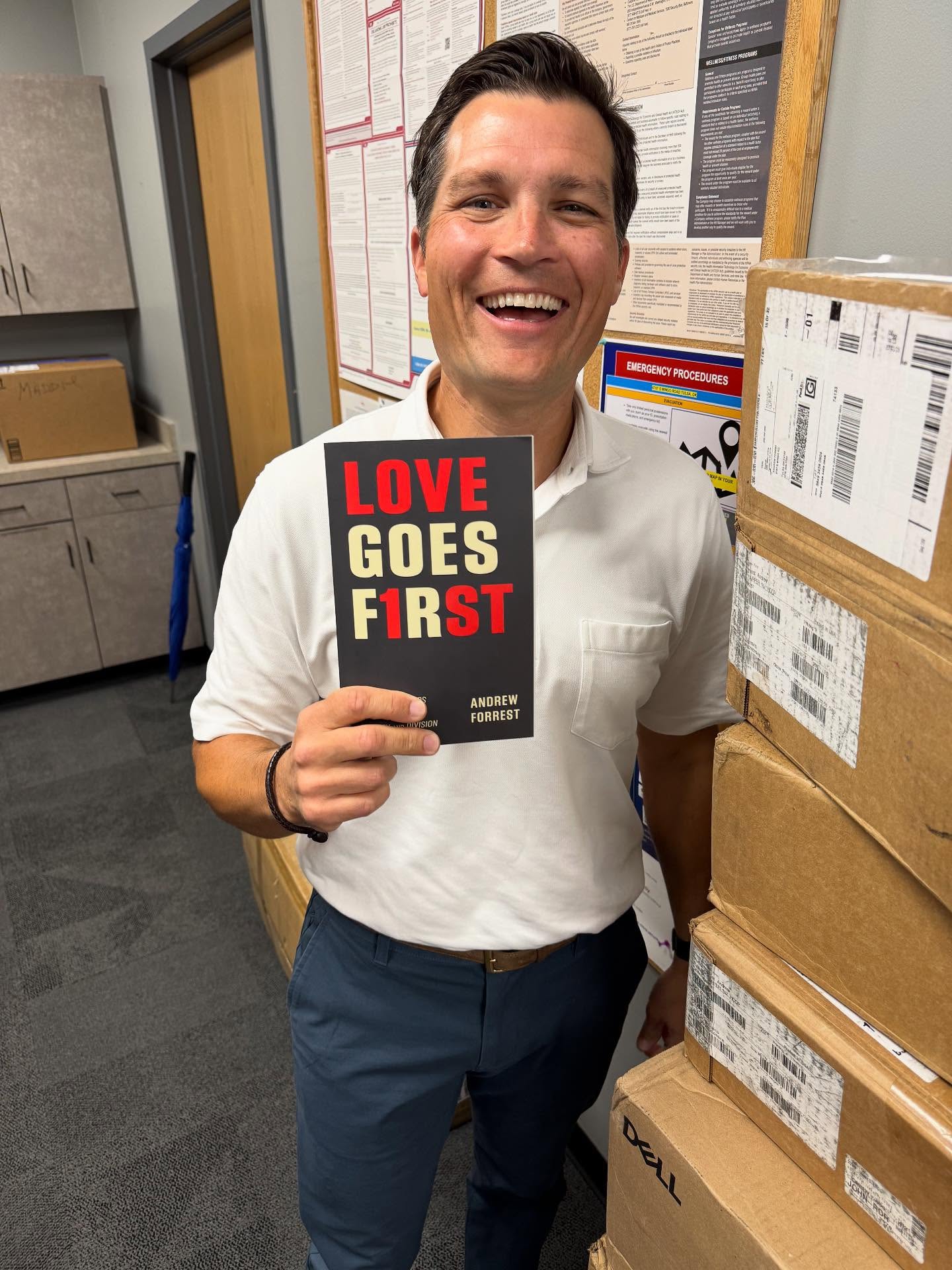
P.P.S. Rev. Andrew Forrest, Asbury Church’s senior pastor, is leading the next Underground Seminary event. It will be Sunday April 6th after worship from 12:30-3:00pm. The church will provide lunch we would love to have you experience worship with us at 11am. It is also fine if you come from worship at your own church, if you’re in the area. Andrew is going to talk about “The Most Important Distinction in the American Church Today.” I’ve talked with him quite a bit about this material and it is essential for church leaders to be wrestling with. If you misdiagnose the moment we are in, your strategy for evangelism and discipleship will not work. RSVP to Laura.Wilkie@asburyseminary.edu by March 27th. More information on this event in last week’s post.


Kevin M. Watson is Director of Academic Growth and Formation at Asbury Theological Seminary’s Tulsa, OK Extension Site. He is also Scholar in Residence at Asbury Church. His most recent book, Doctrine, Spirit, and Discipline describes the purpose of the Wesleyan tradition and the struggle to maintain its identity in the United States. Affiliate links, which help support my work, used in this post.

The Most Important Distinction in the American Church Today: The Next Underground Seminary

12 Wednesday Mar 2025

Posted by Kevin M. Watson in Christian Living, Ministry, Teaching, Underground Seminary

≈ 2 Comments

Tags

Aaron Renn, Andrew Forrest, Asbury Church, Asbury Theological Seminary, Christian formation, culture, discipleship, Evangelism, Negative World, Underground Seminary

We are going to have back-to-back Underground Seminary meetings here in Tulsa (March 27 and April 6) and I am pumped!

What is Underground Seminary?

There are some things that don’t fit in courses I teach, or perhaps even in the seminary curriculum at all, that people preparing to lead in the local church need to wrestle with, think about, or just have someone tell them. There are also conversations that I want to have with people who are preparing to in the church that I think will be helpful to them and I don’t know where they would fit in specific classes.

In my role for Asbury Church, I’m still interested in shaping pastors. So, I have been working on optional, not-for-credit, opportunities that typically come alongside classes I am teaching for Asbury Theological Seminary. I’m calling these special events “Underground Seminary.”

Underground Seminary is for people preparing to lead in the church who are hungry to learn and grow. They want to gain as much wisdom and experience as they can from as many different places as possible as they are prepared and equipped to lead.

I’m most excited to work with people who know God has more for them and they are going after it. Underground Seminary is for these people.

Our next Underground Seminary meeting:

Rev. Andrew Forrest, Asbury Church’s senior pastor, will lead our next Underground Seminary. It will be focused on the ways dramatic changes in the broader culture have impacted the church and radically changed the context in which we seek to share the gospel. Andrew will share a diagnosis of the problem facing the church and point to solutions for a way forward.

I’ll let Andrew share more about what he wants to do in this workshop in his own words:

The most important thing for church leaders to know in 2025 is that we are living in what Aaron Renn has called “the negative world.”

Things are different these days. Over the last decade, American culture has changed in ways that have become more hostile to the church and the claims of Christ, the result of which is that a majority of those who hold the keys to power in American society—those in politics, media, and education—have a negative view of Christianity. In light of these changes, I believe that the most important distinction in the American church today is not in the ways we normally categorize the church. The most important distinction in the American church today is between those who recognize we live in “the negative world” and those who have not yet accepted this fact.

This distinction matters because it directly affects our strategies for carrying out the Great Commission. Our mission from Jesus has not changed, and our responsibility to evangelize cannot be avoided. But the strategies we employ to complete that mission need to be constantly shifting, depending on the cultural context. The problem we face today is that many of our strategies for evangelism were developed in and for a previous cultural context, one that was largely positive about Christianity and that saw the Christian faith either something good or at best neutral. But that culture is gone, and it’s time for new strategies. If we keep running our plays out of the old playbook, we are going to lose the game.

I want to talk frankly about how we can lead the church to not only survive in negative world but thrive.  I’m interested in talking to people who are hungry to make a difference and who are not satisfied to keep running plays out of an outmoded playbook.

Andrew is a brilliant strategic thinker about the local church and its role in the world. He has boldness and courage that I admire. He is willing to do the deep work it takes to get to clarity about hard things and big ideas. This is going to be a challenging and convicting conversation. And I think it is going to be a lot of fun. (If you want to know more about “Negative World” check out Aaron Renn’s book. The link is an Amazon affiliate link, which helps support my work.)

How to join us:

This Underground Seminary will be Sunday April 6th following worship Sunday morning. Lunch will be provided, and we will conclude by 3pm. In order to ensure that there is food and space for everyone, you need to RSVP if you would like to attend. We will send the location for the meeting to you after you RSVP by emailing Laura.Wilkie@asburyseminary.edu. Deadline to RSVP is March 28th. 

P.S. It is not too late to register for the March 27th Underground Seminary with Rodney Adams, which I’m playfully calling “What They Don’t Teach You in Seminary.” Details here.


Kevin M. Watson is Director of Academic Growth and Formation at Asbury Theological Seminary’s Tulsa, OK Extension Site. He is also Scholar in Residence at Asbury Church. His most recent book, Doctrine, Spirit, and Discipline describes the purpose of the Wesleyan tradition and the struggle to maintain its identity in the United States.

Ending Well

10 Monday Mar 2025

Posted by Kevin M. Watson in Life, Ministry

≈ Leave a comment

Tags

endings, Lamont, Life, Ministry, transitions

I do not often struggle to keep my composure, but this Sunday March 2 was very emotional for me. 

I was blessed to return to Lamont, OK, for the first time in almost 17. I served as the pastor of the Methodist Church in Lamont from 2005-2008.

In conversations with folks there, we realized that it was very close to exactly 20 years ago that I was seated for my first official appointment as a pastor. I was in my final year of seminary. I got married the summer before and we both knew we wanted to return to Oklahoma to serve. 

I flew to Tulsa, borrowed a car from my parents, and drove two hours to Lamont, OK. I served for three years in Lamont before I started working on my PhD.

I learned so much during those three years. And I made a ton of mistakes! Here are a few of them for your reading pleasure:

  • I accidentally set the church yard on fire when the basket holding a Tiki Torch burned through and fell onto the ground in the hottest part of summer. Praise God, someone noticed, acted quickly and got it put out. But, to my embarrassment, there was a very visible black burned area in the grass everyone had to walk by on their way into VBS the rest of the week.
  • I also preached a six-week sermon series I very creatively titled “Family Matters,” with weeks focusing on things I knew absolutely nothing about from first-hand experience like being a parent or grandparent. Of course, I shared wisdom about marriage from the literally months of experience I had as a husband! (Now, to be fair: I was trying to share wisdom from the Scriptures, not from my own experience. And I believe that preaching from your experience and not Scripture is one of the major mistakes a preacher can make. Nevertheless, that sermon series was probably a bit comical at best, and presumptuous or completely lacking in self-awareness at worst.)
  • And to take the cake, I didn’t see Ash Wednesday coming (I know… not that hard to figure out) and realized too late we didn’t have ashes. So, I attempted to make some by using ashes from someone’s fireplace that I mixed with water. (No idea why I didn’t google this.) It turns out that doing that can cause a chemical burn. Immediately after the service, people were talking about how it kind of burned and their foreheads were hot. Someone said, “I must be particularly sinful, because I feel like my head is on fire.” Eventually, it was clear that everyone needed to wipe the ashes off right away. One poor woman still had a red cross on her forehead on Easter Sunday.

Despite these embarrassing mistakes (and many others I won’t share for time and to protect the identities of the innocent), the people at Lamont Methodist loved me so well.

A current student of mine at the Asbury Theological Seminary Tulsa Extension Site is now the pastor of First Church of Lamont (now a Global Methodist Church). When he invited me to come back to preach, I joyfully accepted.

You don’t often have the opportunity to return to a place 17 years later and feel like you are stepping back into time with so much being as it was when you left. There were people missing, which was sad. I knew they wouldn’t be there, but I felt their absence. There were also new people. Boys and girls when I pastored in Lamont had become men and women. Many of them had married and had children.

The parsonage next door looked the same. The sanctuary, the fellowship hall, and the parlor all looked the same – in the best way. And there were so many people I immediately recognized. Seeing many of them brought tears of joy to me eyes.

When worship started, I was just overwhelmed with the kindness of the Lord and the generosity of these people to me. We sang songs I’ve sung in places where the Lord has blessed me since I left Lamont.

I felt so thankful for the church. Thankful that these people have been doing their part to hold ground through a difficult season. Thankful that they made hard and faithful choices. Thankful that they are still moving forward, aware that God is not done with them yet.

I think the main reason I struggled to keep my composure in worship was that the Lord showed me that we ended well in Lamont. I was able to grieve an ending in a way that felt healthy looking back. And the church blessed us and released us as we left. They gave us a lovely clock that we have hung on the wall in every place we’ve lived since. I was able to appreciate the gift the people of Lamont gave us with such a gracious end more now than I could understand then.

To be honest, I’m not sure I said much that was helpful to the folks in worship on Sunday. I hope they saw my emotions as a sign of my love and gratitude for them. And even more, I hope they were able to see that as a tiny reflection of the Father’s perfect love for them. 

‘For I know the plans I have for you,’ declares the Lord, ‘plans to prosper you and not to harm you, plans to give you hope and a future.’ – Jeremiah 29:11

What They Don’t Teach You in Seminary: An Invitation to Underground Seminary

06 Thursday Mar 2025

Posted by Kevin M. Watson in Ministry, Teaching

≈ 3 Comments

Tags

Asbury Church, Asbury Theological Seminary, church leadership, culture, operations, Rodney Adams, strategy

I have really enjoyed having my feet in both the church and the academy in my roles here in Tulsa. I am the Director of Academic Growth and Formation at Asbury Theology Seminary, anchored at our Tulsa, OK Extension Site. I am also the Scholar in Residence at Asbury Church. Though they share a connection to the legacy of Francis Asbury, the father of American Methodism, they are separate institutions.

I believe theological education is ultimately for the local church. A seminary should be evaluated based on its graduate’s ability to lead well in the local church. Other outcomes may be appropriate and valuable, but I cannot imagine anything being more central to the legacy of a seminary than the effectiveness of its alumni within the church.

There are some things that don’t fit in courses I teach, or perhaps even in the seminary curriculum at all, that people preparing to lead in the local church need to wrestle with, think about, or just have someone tell them. There are also conversations that I want to have with people who are preparing to be pastors that I think will be helpful to them and I don’t know where they would fit in specific classes.

In my role for Asbury Church, I’m still interested in shaping pastors. So, I have been working on optional, not-for-credit, opportunities for Asbury Theological Seminary students and others that I’m calling “Underground Seminary.”

Underground Seminary is for people preparing to lead in the church who are hungry to learn and grow. They want to gain everything they can from their seminary experience. Some students want to do the least they can to get the most credit possible. And that’s fine. There are seasons where that is appropriate. 

I’m most excited to work with people who know God has more for them and they are going after it. Underground Seminary is for these people.

Our next Underground Seminary meeting is focused on practical details of running a church that they don’t teach you in seminary. It is March 27th from 12-3pm at Asbury Church in Tulsa, OK. 

Pastors often joke about the things they didn’t teach you in seminary. These are often very practical hands-on aspects of running the life of a church. And that is what this Underground Seminary will focus on: what they don’t teach you in seminary.

Rodney Adams, the Executive Director of Asbury Church, will lead this. And it will focus on strategy, culture, and operations in the day to day running of a church. I have had several conversations about this workshop with Rodney and I believe every church leader would benefit from what Rodney has to share.

In case you don’t already know Rodney, here is why you should want to learn from him:

  • Rodney is a former United States Marine Corps officer. 
  • He worked for a season at a top global investment bank.
  • He has owned and operated his own business.
  • And, most importantly for this discussion, he is currently the Executive Director of Asbury Church.

Asbury is a large church that has 2,500 people in person in weekly worship. In his role, Rodney oversees:

  • 80 full time staff and 60+ part time staff
  • $12.5 million annual budget
  • $12 million foundation
  • 300,000 square foot facilities

Put simply: Rodney know how to run a large church with excellence.

At a personal level, I have never been around an organizational thinker and leader like Rodney. Working with him is fun because I get to see how ideas are actually brought to life. I have an easier time thinking of a thing that would be fun to do in theory. Rodney has great ideas. And he is the person who can take a dream and figure out the steps to make it reality. And, just as important, he can help you realize that an idea won’t work and save time, energy, and frustration.

The goal of Underground Seminary is to bring people hungry for excellence together for content that will equip and prepare them to lead in the church.

This one is going to be fun! 

How to join us:

Lunch will be provided at the beginning of our time together. In order to ensure that there is food and space for everyone, you need to RSVP if you would like to attend. We will send the location for the meeting to you after you RSVP by emailing Laura.Wilkie@asburyseminary.edu. Deadline to RSVP is March 20th. 


Kevin M. Watson is Director of Academic Growth and Formation at Asbury Theological Seminary’s Tulsa, OK Extension Site. He is also Scholar in Residence at Asbury Church. His most recent book, Doctrine, Spirit, and Discipline describes the purpose of the Wesleyan tradition and the struggle to maintain its identity in the United States.

Raising Up Next-Gen Church Leaders

21 Friday Feb 2025

Posted by Kevin M. Watson in Christian Living, Ministry, Teaching

≈ 1 Comment

Tags

apprentice, Bible, Christianity, church, discipleship, faith, Leadership, local church, mentoring, Ministry, Next-Gen, pastoring, Seminary

I’m trying to think more clearly about how to raise up the next generation of leaders for the church. It seems clear to me that things are shifting and changing, sometimes dramatically. Institutions are changing and sometimes failing. Key leaders are leaving the scene, sometimes because they have retired or died, and other times because a moral failing has been exposed.

I don’t have it figured out yet. But I want to start talking about it more.


My writing often comes from a burden to figure out what I think about something and then try to communicate it as clearly as I can. I think some of my best writing comes when there are two things working in me:

First, I notice that I am working over a problem in my mind and am working hard to get clear about what I think is at stake (something that seems important and complicated or confusing).

Second, I notice a sense of pressure to not talk about it. This is usually unspoken and intuitive on my part. This means I could be wrong, or I could be seeing things. The pressure to not talk about it can either be because it seems like everyone views something as settled, while I have questions or concerns. Or, silence could come from the sense that speaking out could be problematic in terms of upsetting people in power.

Here are two examples of writing that has come from this:

1. I urged churches to start reopening five months into the Covid-19 pandemic. 

2. I expressed my concerns with the proposal of United Methodist bishops to make affirmation or prohibition of same sex marriage dependent on the surrounding dominant culture. 

Neither of those posts are perfect. In rereading them today, I would say things differently in both. But they both helped me think more clearly about matters that were very important to me (and to the church I was part of) when I wrote them. I am proud of them because I believe the Lord used them to help people think more clearly and make hard decisions during very challenging circumstances.

If you aren’t familiar with my writing, these will give you a sense of it. I hope they show my commitment to telling the truth. Of course, I also make mistakes. One of things I think I have often done well is move a conversation forward and bring clarity where it has gotten bogged down or stuck.


So, I’ve been thinking about raising up the next generation of leaders for Jesus’s church.  I’ve been thinking about this longer than I usually think about the kinds of things I write about here. And to my own frustration, I don’t feel like I’ve made as much progress as I usually would have by this point.

I want to articulate why I think this it is hard. It is important to work to understand the moment in which we find ourselves. And I want to begin by naming two models that have been used to raise up the next generation of leaders for the church. I want to suggest that people in my networks have almost completely missed the importance of the second model. But first, why is this so hard to think through?


The church in the United States is experiencing major challenges due to massive shifts in the culture, academy, and the church herself.

Aaron Renn does a great job talking about the changes in the dominant culture and how it impacts the church. Check out his book Life in the Negative World [Affiliate link]. I also follow his work at aaronrenn.com.

The academy is also undergoing massive change, which includes theological education (the seminaries where pastors are trained). This would be another post, so I won’t unpack this further right now.

And finally, the church herself is undergoing dramatic change. I think most of the changes in the church come from the influence of the first two. Many large non-denominational and congregational churches have also been impacted by the fall from grace of senior leaders of these churches. This has happened enough over the past few years, many feel uneasy in these kinds of churches, even if their own local church has not been directly impacted.

Here is an image I have used to describe what I think is happening:

Tectonic plates are shifting in the culture. When tectonic plates shift, there are earthquakes. There is rumbling. There is shaking. Often major edifices are damaged or even collapse when tectonic plates shift.

I think we are seeing this kind of major disruption and change in the church today.


There have been (at least) two major models for raising up leaders for the church.

I’m sure much more nuance could be added here, so feel free to fill this out in your own thinking or experience. The point here is to get some things in place in order to move forward.

My own experience was largely with the first model. I will call it the ecclesial bureaucracy model. I’ll use my experience to explain it:

I received a calling to ordained ministry through a short-term mission trip to Mexico when I was a junior in college. One short week changed my life in so many ways. By the end of the week, I had a deep sense that there was nothing more fulfilling I could do than give my life in service to the church, by the grace of God. I remember time and time again being stunned by how joyful it was to serve the Lord through the church.

I knew nothing. I had no clue what I was getting myself into. And I made a lot of mistakes along the way.

But there were also a lot of things that were clear and decisions I didn’t really have to make. I was a United Methodist and didn’t question whether I should pursue ordination in the UMC or not.

The blessing of this was that the path forward was clear. The obvious next step was to attend seminary after I graduated from college. I began having conversations with the senior pastor of the church I was attending, who was generous with his time and wisdom. I formally applied to become a “certified candidate” during my first year of seminary.

I did not have a long-term relationship with the same local church throughout my time in the ordination process. I moved quite a bit from my freshman year of high school through seminary.

So to summarize: Once I felt a calling to ministry, I basically got on a moving walkway where the next step was fairly clear. And if I was approved for ordination by denominational authorities, I would also be appointed to pastor in a local church. If approved for ordination, I would, literally, be guaranteed an appointment (a pastoral position in a local church).

I think there are strengths and weaknesses of this model. And they could be done better or worse than it was done in the UMC when I went through the process. When I was teaching United Methodist polity, I used to tell students that the number one value of the UMC ordination process appeared to me to be persistence. If you kept going, you would almost certainly be ordained. 

(This was most evident to me when someone in the conference I was ordained in clearly revealed that they did not believe in the bodily resurrection of Jesus. They were not discontinued or removed from the process at that point. They were deferred and had to rewrite and repeat the interview process the next year. They were then approved and ordained. Is it more likely this person’s views on the bodily resurrection of Jesus changed, or that they found a more acceptable way to present (or cover up) their heretical views?)

The second model I’ll call the apprenticeship model. It was not my experience, so I can’t give as much detail. I think this approach is most common in non-denominational and congregational church polities. For this reason, I also suspect it is less uniform and more organic and relational.

This one is pretty self-explanatory. A person is raised up for leadership in the church by someone who is recognized as an excellent leader in the church. Preparation for ministry comes by being invited to get closer to the senior leader with behind-the-scenes access. Over time, they are given opportunities to lead with the senior leader’s oversight and feedback. And eventually, they are released to lead on their own, though likely with continued oversight or spiritual covering.

Sometimes a person in this system will replace the senior leader when they step down. Depending on the system, they might move to a different context taking on significant leadership responsibilities.

This model is highly relational. The person who is being raised up for leadership in the church spends significant time with the person who is discipling, mentoring, or apprenticing them. It is inefficient in the sense that it requires proximity and a lot of time together. It is also driven by the needs of the person being raised up and so is very contextual and responsive to where they are and how they need to grow. It is also inefficient because one person cannot have this kind of relationship with an unlimited number of people.

Another way to think of this model is to think of Robert Coleman’s Master Plan of Evangelism and other relational discipleship making tools. These are usually focused on discipleship as the goal for all who come to faith in Jesus Christ. It is not surprising that those who are raised up to lead in these kinds of contexts continue to be raised up to lead in this way.

I suspect that very often a sense of calling to lead in the church comes within the context of these discipling relationships.

During the season when I first began to feel a tug to rethink some of my assumptions about how to best raise up leaders for the church, I started getting to know a non-denominational church near where I lived. The folks in this church were very gracious to me and the senior pastor met with me. I wanted to ask him two questions in particular:

How did you get to be in your position? I remember the answer, though it was more fleshed out than just this, because I had heard it from others in the same church family: I lived in Buddy’s basement. 

In other words, the founding pastor invited him to come closer, literally into his home, for a season. And he poured into him and raised him up.

The second question was: Is there anything that I do that can help you and those you are raising up? We developed a degree at Asbury Theological Seminary that came directly out of my conversations with this pastor and the pastor of another large non-denominational church at another place I taught. (Send me an email [scroll down] if you want to know more about it.)


I think both models would be improved by the other.

Non-denominational and congregational churches that don’t require any formal education outside of themselves make themselves vulnerable.

Large denominations that have heavily bureaucratic ordination processes have greater risk in my view.

My working hypothesis is that the most effective pastors in the United States at present came up through more of the apprenticeship model than the ecclesial bureaucracy model. My experience is that almost all of them end up pursuing a seminary education, but it usually comes after they have been leading in meaningful ways in the local church.


So, Now What?

For most established leaders reading this, the action step is most likely to look for people to bring in closer to walk with you and build them up. One of the problems with bureaucratic approaches to ordination is that they are so depersonalized. People don’t grow in self-awareness because the kind of one-on-one conversations that happen in an apprenticeship don’t happen nearly as often.

Here is what I am seeing: I believe the church, particularly healthy large congregations with stable leadership and deep roots, is only going to be more important going forward for the work of raising up leaders for the church. All churches are important in this work. The local church is the ordinary context for hearing a calling to ministry. I think larger churches just have the capacity and the resources to invest in the next generation for their own sake.

I think large churches will develop coaching trees like Nick Saban did at Alabama. People will serve for a season in these churches and experience accelerated growth in a host of ways in these contexts. Some, who can joyfully stay long-term in an associate type of role, will stay for decades. But most will serve for a season, be built up, equipped, and sent out to lead with excellence.

And I have a feeling this will be less dependent on denominational affiliation than it has ever been in the history of Christianity in the United States.

This vision excites me because Asbury Church (where I am) is the kind of church that can do an excellent job of apprenticing people to be excellent leaders.

Asbury is a conservative evangelical church from the Wesleyan theological heritage that averages about 2,500 in person in weekly worship at one campus. At Asbury, intentional and strategic attention is given to the culture of the church. Asbury not only has a great culture, but the senior leaders can tell you why they are doing what they are doing and how to work to set, shift, or move culture. This is so important! And there is a clear emphasis on discipleship. As with our work to build and maintain a great culture, the church can articulate a coherent vision for how we make disciples.

And one of the most unique things about Asbury Church, within the context of this post, is that Asbury has a passion for education. Asbury hosts the Asbury Theological Seminary Tulsa Extension Site on its campus. So, a person preparing to become a pastor could come to Asbury Church and be in seminary here at the same time.

Asbury Church’s commitment to education is also evident in its decision to launch Asbury Classical School this year.

One of the saddest things to me about my time in theological education has been seeing the negative impact a seminary tends to have on local churches in the immediate geographical area of the seminary. At a previous institution, someone commented on the “dead zone” that surrounded the seminary. 

What a gift that I get to teach at a seminary whose mission and values I agree with at a church I am proud to be part of and that I am confident will bless my students.

If you, or someone you know, is wrestling with a calling to ministry, I would love to connect with you. Maybe you should move to Tulsa and see for yourself. I am learning more and more that proximity and time within a relational atmosphere are crucial to raising up the next generation of leaders for the church.

I can’t wait to see what happens next!

Kevin M. Watson is Director of Academic Growth and Formation at Asbury Theological Seminary’s Tulsa, OK Extension Site. He is also Scholar in Residence at Asbury Church. His most recent book, Doctrine, Spirit, and Discipline describes the purpose of the Wesleyan tradition and the struggle to maintain its identity in the United States.

Why Class Culture Trumps Content

31 Friday Jan 2025

Posted by Kevin M. Watson in Life, Teaching

≈ 4 Comments

Tags

Asbury Church, Asbury Theological Seminary, Life, Teaching

It took me fourteen years to really understand this.

Check out these unsolicited comments I received after the most recent class I taught at Asbury Theological Seminary’s Tulsa, OK Extension Site. (The class was Wesleyan Discipleship and it was awesome! I asked and received permission from each student to share their encouraging words here.) Notice the emphasis on the atmosphere and what the culture of the class meant to the student.

Rev. Andrew Forrest discussing Asbury Church's (Tulsa, OK) approach to discipleship with my Wesleyan Discipleship class.

Here is the first one:

I found my time at Asbury Seminary to be incredibly valuable and not just for the content of the class (which was excellent). There was, for lack of a better word, an anointing on the campus and on the course which caused me to be more focused, settled, and hungry for more of God. I sensed it impacting my life when I was there, and it (or at least a piece of it) has followed me home. I am working hard to cultivate it and give it space. Thank you for allowing me to audit your course.

It still amazes me that students are so hungry that they would travel from out of state, many taking time off of work, to audit this course.

Here is the second one:

I just wanted to say thank you for teaching the class on Wesleyan Discipleship! When you sent out the email prior to our time in Tulsa saying you hoped it would be like a retreat, I was skeptical. But I was happily surprised that it was like a retreat. I came back feeling refreshed and regenerated! Thank you for teaching this class and showing how much you care about the subject and about your students and their well-being. I am grateful and honored that I was able to take a class from you! 

Here is the third one:

I just wanted to thank you for the way you ran the hybrid this weekend.  I know you said you wanted it to feel more like a retreat and I think you accomplished just that.  I don’t know if you got the response you were looking for, but I can tell you some things were revealed to me during your prayer Saturday morning that have brought some clarity to some problems I was having with my ministry.  I don’t think the Holy Spirit would have given me that had I not been in the atmosphere you created.  I am glad I was in the second group because I could not have shared that Friday.  I will be a better pastor to my congregation moving forward for having been there.  I don’t know that you could have taught the way you did on any of the other campuses.  There are good things going on there in Tulsa.  Y’all have quite the team and a very supportive host church as well.

And one more:

I wanted to personally write an email thanking you for all your hard work! It has been a pleasure getting to know you these semesters! … I also admire your sheer honesty and vulnerability with the class! It truly set the mood for everyone else! This last week was such a powerful week and I truly left feeling so filled and inspired to one day put into practice these discipleship techniques! I’ve started implementing them in a youth discipleship group I run and I even reached out to a few friends to start a band meeting style group! Thank you so much! You have truly blessed my seminary experience in many ways!

I deeply appreciate the kindness of each of these students who shared these comments. The unsolicited feedback I received from this course was unprecedented. (I received more than twice as many comments as I’ve shared here.)

I think there was so much of it because I am slow. And the Lord wanted to be sure he got my attention.

Do you see it?!

Let me give some brief context, in case some of the details of the students’ comments are confusing. 

At Asbury Theological Seminary’s Extension Sites, we offer online classes and hybrid classes. Hybrids are my favorite. And they are a hybrid of online and in-person classes. The in-person portion of the class is a three-day intensive that happens once per class. In Tulsa, they are from Thursday evening through Saturday late afternoon. We spend 20 hours in two and a half days together. 

It is intense. 

And it is awesome! 

If I had not figured out what really mattered to me, I think the hybrids would probably have gotten no unsolicited encouragement from my students.

One of the great things about teaching is that once you are the instructor of record for a class, you are in charge. You may not have authority anywhere else within the institution, but you do have authority in the classroom.

Until recently, I put most of my focus on what I would guess you would assume to be most important: the content of the actual course.

In other words, I got to choose the required readings. I was responsible for determining the means of evaluating students. And I was the one who would do the actual evaluation and assign grades. 

It was up to me to decide what to teach and how to assess whether students had learned what I wanted them to learn.

Most of my energy went into preparing detailed lectures that accurately transferred the most important information.

But when I taught a class that felt like magic, where there was an internal sense of “Yes! This is what I hoped teaching would be like,” and where students seemed to “get it” – it wasn’t because I felt like I’d perfectly delivered the content.

It was something else. Something that was harder for me to articulate.

Looking back, the first time I got a glimpse of this was the Fall 2016 semester when I was teaching at Candler School of Theology at Emory University.

I learned that if I wanted to be able to lead my students, they needed to know that I cared about them.

I remember a specific class in the Fall of 2016 when something was definitely in the air in the room one particular day. And I consciously decided to allow that to take over the agenda for the day. Something shifted that day. The class went to a deeper level than merely handing on information about a particular subject.

This was a key step for me. I was intuitively starting to figure something out. But I still had a lot to learn.

Since moving to teach at Asbury Theological Seminary’s Tulsa Extension Site, I started noticing that what I was hoping to see happen in my classes was happening with a higher percentage of students than I’d ever experienced.

Here is what I finally figured out that I can now name:

Atmosphere is more important than content.

I am now more concerned with the atmosphere in the classroom than I am with the content that will be shared in the classroom.

By atmosphere, I am not really talking about sights, sounds, and smells. Though, these matter. 

This is what I mean: culture is more important than content.

My greatest desire for every class I teach, regardless of the subject of the class, is for students to encounter the Lord and continue growing in their faith as they prepare for leadership Jesus’s church. 

I want them to grow in understanding. And you can see that some of the comments speak to that. But I am convinced that more growth in understanding happens when you set the right culture.

So, now I work really hard to think through how to create the right atmosphere, the right culture within the class.

This is hard work. 

Every class is different. 

There is a culture established within Asbury Theological Seminary. And, as two of the comments noted, I think the Lord has given a special anointing to our Tulsa Extension Site that sets a particular kind of culture.

But I must be attentive to the atmosphere for each class and work to set the culture.

How I Work to Create a Great Atmosphere for My Classes

Here are a handful of things I intentionally do to create the right atmosphere for my classes.

First, I accept that it is my responsibility to take responsibility for doing this work. It does not happen spontaneously or by magic.

And so, in each class at Asbury, before the students come to Tulsa, I send an email to set our expectations for the three days we have together. You may have noticed the word “retreat” in several of the student comments above. That is because in this email, I tell students I want the weekend to be a retreat. Some students are skeptical that 20 hours in a classroom in 2.5 days could be anything like a retreat.

The email I send names the values I have for our time together that are discussed in what follows. This sets the expectations for the class and intentionally names what I value most.

Second, I am certain that all of this is dependent on the Lord. If the Lord withdraws his presence, nothing good can happen. (This is really first. But it made sense to me for this article to include it here.)

I am not being sentimental here or using pious language to impress you. I literally mean that I am consciously aware that Kevin cannot create what students need.

One way I express dependence on the Lord and a desperation for him to move is by fasting and inviting my students to fast with me for the 24 hours prior to our in-person intensive. This is not required, it is an invitation. I think fasting is one of the most important and underused basic spiritual practices. And I think corporate fasting is particularly spiritually potent.

One thing I love about the unity God has given us here is that my colleague in Tulsa, Penny Hammond (Tulsa’s Senior Enrollment Advisor), joins us in fasting in preparation for the course.

Third, the class starts by breaking our fast together with a meal that Asbury Theological Seminary provides. This facilities informal conversation and begins creating the kind of community we’re hoping to see.

Fourth, after dinner, we go to worship at Asbury Church (not related to Asbury Theological Seminary). 

Rev. Andrew Forrest preaching Thursday night at Asbury Church in Tulsa, OK.

My calling is to raise up the next generation of leaders for the church. And so, I unapologetically see worshipping the Lord corporately as part of my work as a teacher. We do that in my classes by attending the Thursday evening worship service at Asbury Church.

In my mind, this is not an extra-curricular optional part of theological education. Worship should be thought of as a central piece of the formation and education of the next generation of leaders. And if you know next gen leaders, you know that they already know this!

I particularly love doing this in my context because Asbury Church (Tulsa, OK) is a fantastic church! I cannot imagine having a better partner for the work we are doing in Tulsa. (I love that one of my students noticed this and named it.) Worshipping on Thursday night also means that my students get to experience the preaching of Rev. Andrew Forrest, who is one of the best preachers of our day. At my Wesleyan Discipleship intensive, Andrew preached on the reality of death. It was a perfect way to begin the class. Begin with the end in view: You are going to die. Are you ready? What a great way to begin thinking more intentionally about discipleship!

Check out Andrew’s sermon.

Asbury Church and Asbury Seminary together gave every student a gift bag with Asbury Church and Asbury Seminary swag. At another hybrid, the church blessed students with gift cards to fast food restaurants near the church so some of the cost of attending a hybrid could be offset. I really appreciate that the church is committed to providing exceptional hospitality for our students in Tulsa.

I believe it is essential for the church and academy to be connected. Seminaries should literally exist to serve the local church. I could not envision a better partnership than Asbury Church’s support of Asbury Seminary’s Tulsa Extension Site.

Fifth, we walk back to the classroom after worship and I begin by sharing more vulnerably and honestly about my own story and my family than I do in public setting, particularly online. I show pictures of my family and talk about what I love about my children. I share about my sense of calling to Tulsa, OK and the at times bumpy road to get here. 

I do this because it is who I am. I desire authenticity and vulnerability from others. I value candor and being candid with students is a sign of my respect.

I also do this because small group dynamics show that the level at which the leader shares is the level at which the rest of the group will share. If I want the atmosphere in my class to be a place where students can grieve, ask for prayer around something vulnerable, and seek the Lord together as we are prepared for the next step in our callings, I must be willing to go first. 

Because this last class was about Wesleyan Discipleship, I made this explicit and talked about doing it myself and how the same dynamic would be in play when they broke out into the small group exercises we had as a class. And even though I know it is true intellectually, it still stunned me to see in the two groups I observed how the entire group mirrored the vulnerability and honesty of the first person who shared.

Sixth, I then give the students an opportunity to break the ice and ask them to share a bit about themselves.This is fast paced due to the size of our classes. But it gives them a chance to begin to bring their stories into the classroom itself.

Seventh, I work really hard to use students’ names throughout the intensive. This is not a natural strength of mine. I have to work really hard. And in large classes, I sometimes have to humble myself and admit I have forgotten a name, apologize, and ask for help. I’ve noticed that when I do this, the students seem to work more at learning each other’s names as well. This is huge for me, because the goal is not for me to have a relationship with each student only. The goal is for a real community to be established within the class. I want the students to feel connected to each other!

Eighth, I intentionally center Scripture and prayer at the beginning of each part of the class. There is a huge difference between doing this to check a box and doing this in hopes of welcoming the Lord and being led by the Holy Spirit. I will often explicitly give time to listen in silence to the Lord. Sometimes I feel led to offer a particular prompt for how we should listen. If we are resting in silence, I tell the students how long it will be and that I will keep track of the time. This can be such a blessing, because it allows them to relax into the stillness and trust me to keep time.

Ninth, I have a plan for the entire hybrid when it starts. I really do. But I commit to hold it loosely. This may be a place where experience matters. It is not hard for me to lecture for 20 hours on a topic like Wesleyan Discipleship. So, I am not anxious about having enough to say. And I also have greater confidence in my ability to triage what is most important for them to hear from me in person versus what they can glean from assignments. I have a plan, but I mostly use it to check in at breaks to see how the pace is going and to decide if I need to cut things I was planning to do in order to give more time to something that has come up.

My primary concern throughout the intensive is to be present to the Lord and to my students and adjust according to what is happening.

Tenth, finally, and most importantly, I intentionally give time for the Lord to move. And this has never stopped feeling hard for me. It is vulnerable. At the end of in-person semester long classes, I used to always ask: How have you seen God at work in your life throughout this semester?

And every single time, I was afraid it would just be awkward silence. Crickets. No one would say anything. But that never happened! Not even close. There were always students who shared in deeply vulnerable ways of the Lord’s work in their lives that blessed the class.

I have come to see holding space for the Lord to lead and for students to respond as the most important thing I do. It is certainly not all I do. But if I don’t do it, it will not happen. It one of the things that only the person who has authority can do.

I primarily do this by working to listen for God’s guidance. And often, I simply test the room based on a sense I have of the Lord’s leading.

This is more art than science. When I lean into this space, it is often the moment students remember about the class. It is what marks them. And it often brings the content of the course to life.

Two cautions: First, openness to the presence of the Lord with you in class is not in lieu of actually preparing to teach (the same is true for preaching). Second, don’t force anything. Don’t try to make something happen in your flesh. Consciously and explicitly give the Holy Spirit permission to move. And then wait on him and be obedient to his leading.

Ok, this is not an exhaustive list. But this is already too long!

The atmosphere you create is more important than the content you deliver. Great content with inattentiveness to the atmosphere will almost certainly be forgotten.

What kind of atmosphere are you creating in the places you have authority to lead? If you haven’t been giving attention to this, I would encourage you to spend some time reflecting on what it is like to come to the spaces and places where you are leading. How do you think people feel? Perhaps ask a person or two that you believe will tell you the truth. 

Atmosphere is where the magic happens.

Kevin M. Watson is Director of Academic Growth and Formation at Asbury Theological Seminary’s Tulsa, OK Extension Site. He is also Scholar in Residence at Asbury Church. His most recent book, Doctrine, Spirit, and Discipline describes the purpose of the Wesleyan tradition and the struggle to maintain its identity in the United States.

Affiliate links, which support the author’s work, used in this post.

Top 5 Must-Read New Releases of 2024

22 Wednesday Jan 2025

Posted by Kevin M. Watson in Book Review, Uncategorized

≈ Leave a comment

Tags

Book Review, book-reviews, books, culture, reading

I like to read.

For several years now, I have tried to read 100 books a year. I have not hit the target more than I have. 


A quick random aside: How are your New Year’s Resolutions going? Did you make any? I realized this year with a simple clarity that I unapologetically love New Year’s Resolutions! It does not bother me at all if they are not your thing. My clarity came from a thought I randomly had in mid-Fall last year:

New Year’s Resolutions work for you if you are still thinking about them in October. 

This totally happened for me last year. In October, I realized I was way behind the pace (so far, I could not realistically catch up). But it motivated me to start reading again. I’m just better when I’m reading. 


Last year I ended up reading 88 books. This year, I am off to a good start and ahead of the pace. But there is a long way to go. We’ll see how it goes!


I not only enjoy reading, I enjoy a good book recommendation. I hope you do too! I read a lot of books I really enjoyed last year. Maybe the highlight for me was finishing reading the Chronicles of Narnia series out lout to my kids. (You should absolutely read them in the original publication order and not the chronological order imposed on them by later publishers.) My kids are all avid readers and do not need me to read out loud to them. But I wanted them to hear one of my favorite stories in their father’s voice. And there are just so many characters in those books that are so fun to read out loud. (Puddleglum!)

I decided I wanted to write a top five post to celebrate and share my favorite books from the year. I had a hard time getting my list pared down to a manageable size. For whatever reason, I noticed a handful of books I really liked that were also new releases last year. So, I decided to limit this to a top five of new release from the past year. Hope you like it! 


I am listing my top five new releases of 2024 in reverse order for one reason: It seemed more fun to me.

#5 Democracy and Solidarity: On the Cultural Roots of America’s Political Crisis, James Davison Hunter

Of the five books I list here, this is the most demanding read. (Not coincidentally, it is the only one published by a University Press.) I do not mean this as an insult. I am only naming it to set expectations. You should read this book. But it will require a lot of you. And that’s ok, because, as I tell my kids: You are capable of great struggle!

James Davison Hunter, who previously wrote another very influential book – To Change the World – argues in Democracy and Solidarity that the roots of solidarity in the United States are breaking down and dissolving. There must be some degree of unity within any political organization for it to work. Hunter offers a detailed and sophisticated description of how this has worked in the history of the United States. He then makes the case that we are at a breaking point in terms of the solidarity required to persist as a stable political order. This is not a hysterical reactionary clickbait piece. It is a thoughtful, measured, and carefully argued book that people across the spectrum will find things with which they agree and disagree.

When I recently saw a clip of politicians refusing to shake hands during a ceremony related to the peaceful transfer of power, it bothered me in a way it would not have had I not read this book. Democracy and Solidarity is a sobering but deeply relevant book. 

#4 Life in the  Negative World: Confronting Challenges in an Anti-Christian Culture, Aaron Renn

I was already familiar with Renn’s Three Worlds of Evangelicalism framework and find it to be a helpful way of thinking about where we’ve been and how the church ought to respond in the present. I think Renn’s book is the first book I pre-ordered because I intentionally wanted to help the author have the best possible chance of a successful book launch that increased the book’s visibility. I am thankful for Aaron Renn because he has started many important conversations that people in more obvious positions should have started but were unable or unwilling to do so because of a lack of imagination, willingness to do the work to think deeply about hard things, or simple cowardice. I am thankful his ideas are gaining influence and being taken seriously.

Part I, where he explains and makes the case that we are in Negative World, is the best part of the book. I have come to think of the rest of the book as helpful suggestions or first drafts of what it looks like to live faithful as a follower of Jesus Christ (both personally and corporately) in Negative World. My guess is it will be practitioners who figure out how to most effectively do much of this work (and I’m pretty sure Renn himself would agree with this from his other work I’ve followed). In other words, Renn serves as a very helpful prod to recognize that the times have changed, and we need Negative World strategies to win in Negative World. 

#3 Living in Wonder: Finding Mystery and Meaning in a Secular Age, Rod Dreher

If I’m following correctly, I think Rod Dreher believes in aliens (see chapter 6). Ok, now that I have your attention, here is what really fascinated me and encouraged me about this book. Dreher lets the reader in to his very personal story with the supernatural. He has experiences which are not explainable in purely rational terms or through the laws of nature and what we know about how the world works.

I have walked a similar journey in the sense that I have had immediate and supernatural encounters with the Lord that defy academic explanation. That felt like a problem because, well, I am an academic. (I care more about being an effective pastor than being an effective academic, but I am trained as one and am a seminary professor.) In his previous book The Benedict Option, Dreher put his finger on the need for communities of belonging, deep formation, and strengthening in an increasingly anti-Christian context. In a way I did not expect when I began reading this book, I think Dreher may have named the reality that we are all charismatics now. By this, I do not mean that everyone is literally a charismatic in terms of some precise definition. What I mean is that the church, across the entire Body of Christ, is rediscovering the presence and power of the Holy Spirit. There is an openness to the work of the Holy Spirit in a way that I did not experience when I was in seminary. Dreher wrote in a way that seemed to me to come from a place of vulnerable sharing. I sensed it felt risky to him to share the parts of his story he shared. And something about this book made me think we have crossed a line where testimony to the “weird” stuff won’t seem weird or abnormal much longer. And that is a good thing! Again, I am thankful for Dreher’s courage in writing and releasing this book to the world.

#2 Bad Therapy: Why the Kids Aren’t Growing Up, Abigail Shrier

Abigail Shrier has written two major books, and they are both amazing. Her first book, Irreversible Damage: The Transgender Craze Seducing Our Daughters, courageously shone a light on the impact of transgender ideology on young women and the excesses of the hasty embrace of the movement by many in the cultural mainstream. In 2024, she wrote Bad Therapy: Why the Kids Aren’t Growing Up. Shrier helped me think through two things that were concerns in the back of my mind but that I could not articulate. 

First, therapy does not seem to wrestle with iatrogenic injury. An iatrogenic injury is an injury that is caused by the intervention of a care giver. This is uncontroversial in medicine. The possibility of iatrogenic injury needs to be discussed more with therapy. Second, and related to the first, Shrier discusses the lack of an end goal in some approaches to therapy. Sometimes people come to a place where they feel they cannot cope in life in general without their counselor or therapists’ constant engagement and guidance of their lives. This seems unhealthy and the opposite of what you would expect at the outset when choosing to engage the services of a counselor or therapist.

I am tempted to qualify this in many ways because I know this is a tender area for many. I will just say here that if my summary does not sit with you, feel free to skip this book. Or, it might be that it would be especially worthwhile for you to read and consider Shrier’s analysis.

#1 The Anxious Generation: How the Great Rewiring of Childhood Is Causing an Epidemic of Mental Illness, Jonathan Haidt

At some level, I think everyone knows that the rise of smartphones and social media has not been good for us. In The Anxious Generation, Haidt pulls the fire alarm and demonstrates just how detrimental the “phone-based childhood” is for kids. For parents who have already given their children smartphones and access to social media, there will be much temptation to defensiveness or feeling like the die has been cast and nothing can be done. I think this is a hopeful book, because it is always better to live in reality than deny it. We have reached a turning point where we collectively now know that smartphones and social media have a net negative impact on children and adolescents and it is not even close.

This book is the best new book I read last year because it is a piercing diagnosis of the problem. And it also offers hopeful and helpful practical suggestions for a way forward.

Bonus: Or, a Humble Brag

Ok, let’s be real. If you’ve follow me at all you know that none of these books are really my favorite new release in 2024. I had a new book come out in 2024. And it is my favorite. Doctrine, Spirit, and Discipline: A History of the Wesleyan Tradition in the United States is both a history of where the Wesleyan/Methodist tradition has been as it continues to fracture and divide. I also hope the book is a sign pointing to a hopeful and faithful future for those who carry the mantle of the Wesleyan theological heritage. If you haven’t read it yet, the price is the lowest right now on Amazon that I’ve seen. I hope you will check it out!

Links in this post are affiliate links and help support my work.

← Older posts
Newer posts →

Blog at WordPress.com.

  • Subscribe Subscribed
    • Kevin M. Watson
    • Join 369 other subscribers
    • Already have a WordPress.com account? Log in now.
    • Kevin M. Watson
    • Subscribe Subscribed
    • Sign up
    • Log in
    • Report this content
    • View site in Reader
    • Manage subscriptions
    • Collapse this bar
 

Loading Comments...