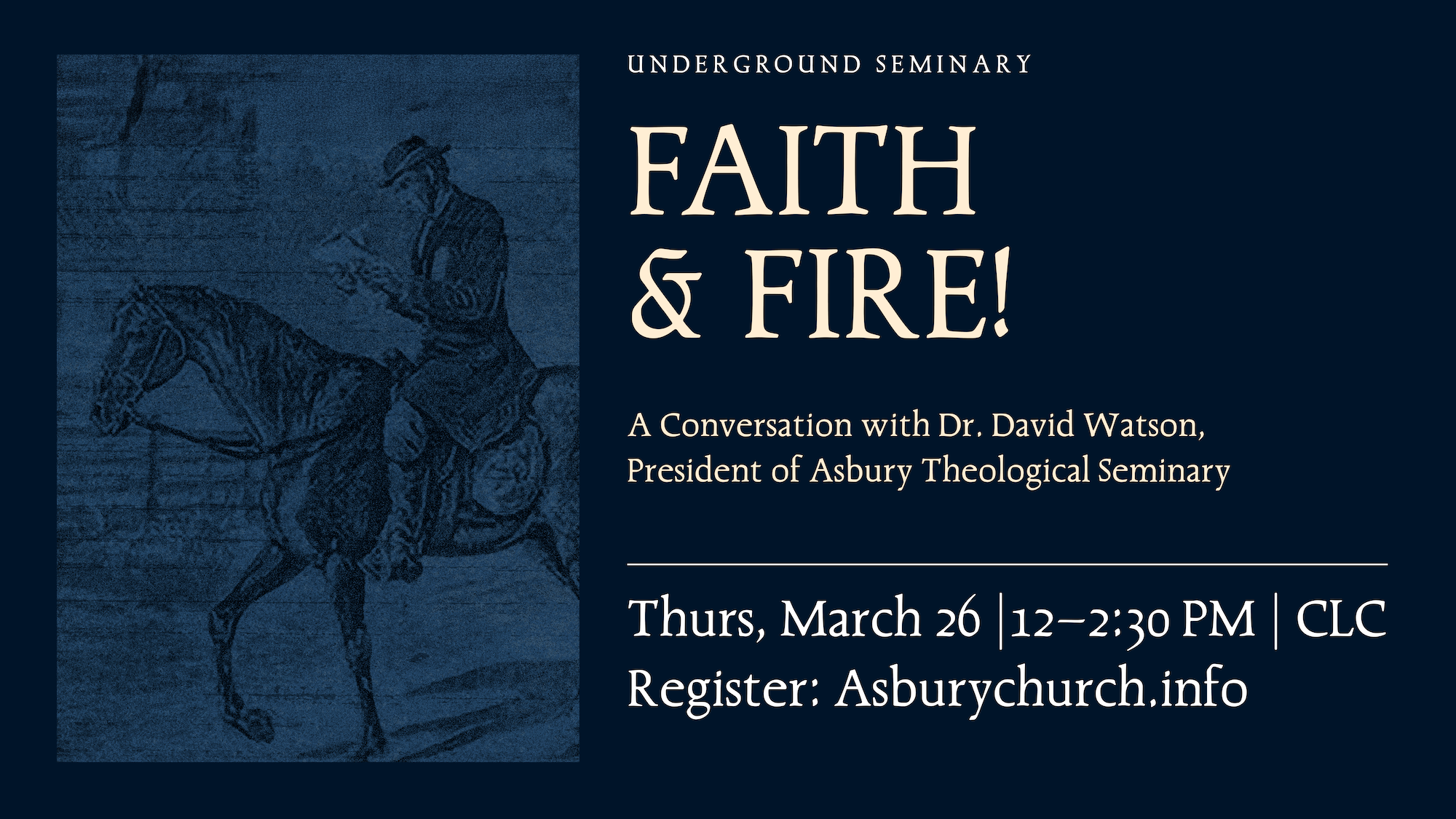
Asbury’s President, Dr. David Watson, is coming to Tulsa to lead an Underground Seminary at Asbury Church. This is going to be a lot of fun. Dr. Watson will talk about what is needed to thrive in ministry. And this is also a kind of book launch for a book we wrote together, Faith & Fire: Methodism as a Move of God. You can still register for this event, here. A copy of the book is included with registration.
He is also preaching in a seminary chapel service this Friday at 11am in Mason Chapel at Asbury Church. Dr. Watson will preach on Romans 8:12-17, “A Case of Mistaken Identity.” I am excited to hear him preach this great passage. No need to register for chapel, just show up! Lunch will follow and is provided by Asbury Church.
Oh, and Dr. Watson will also preach at Asbury Church on Palm Sunday at 9 & 11 am. Join us!
This is all exciting for me because it is connected to the in-person intensive for the Wesleyan Discipleship hybrid class I am teaching. This is my favorite class that I have ever taught. It is an introduction to the history and theology of discipleship in the Wesleyan tradition, with particular focus on the Wesleyan class and band meeting and their practical implementation.
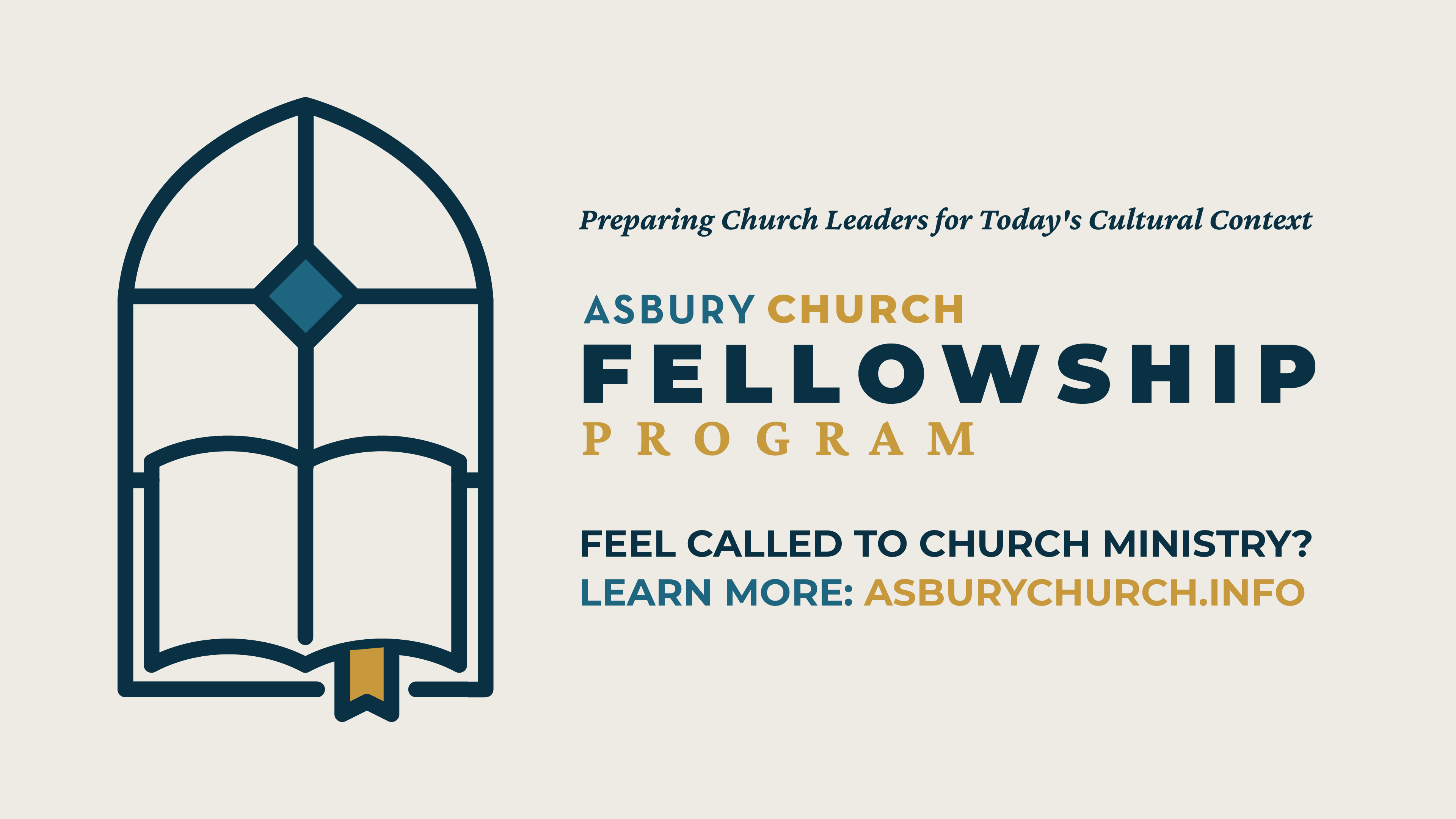
One more thing: We have started receiving applications for the second year of Asbury Church’s Fellowship Program, which I lead. The first year has been great and I am really excited to welcome the next group of Fellows to Asbury. Apply by April 17, 2026. Details here.
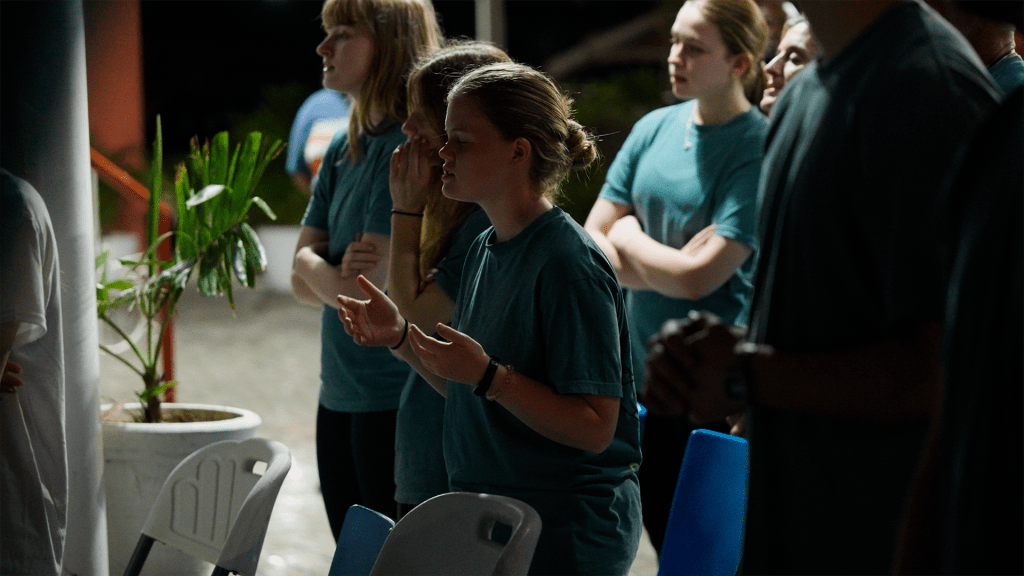
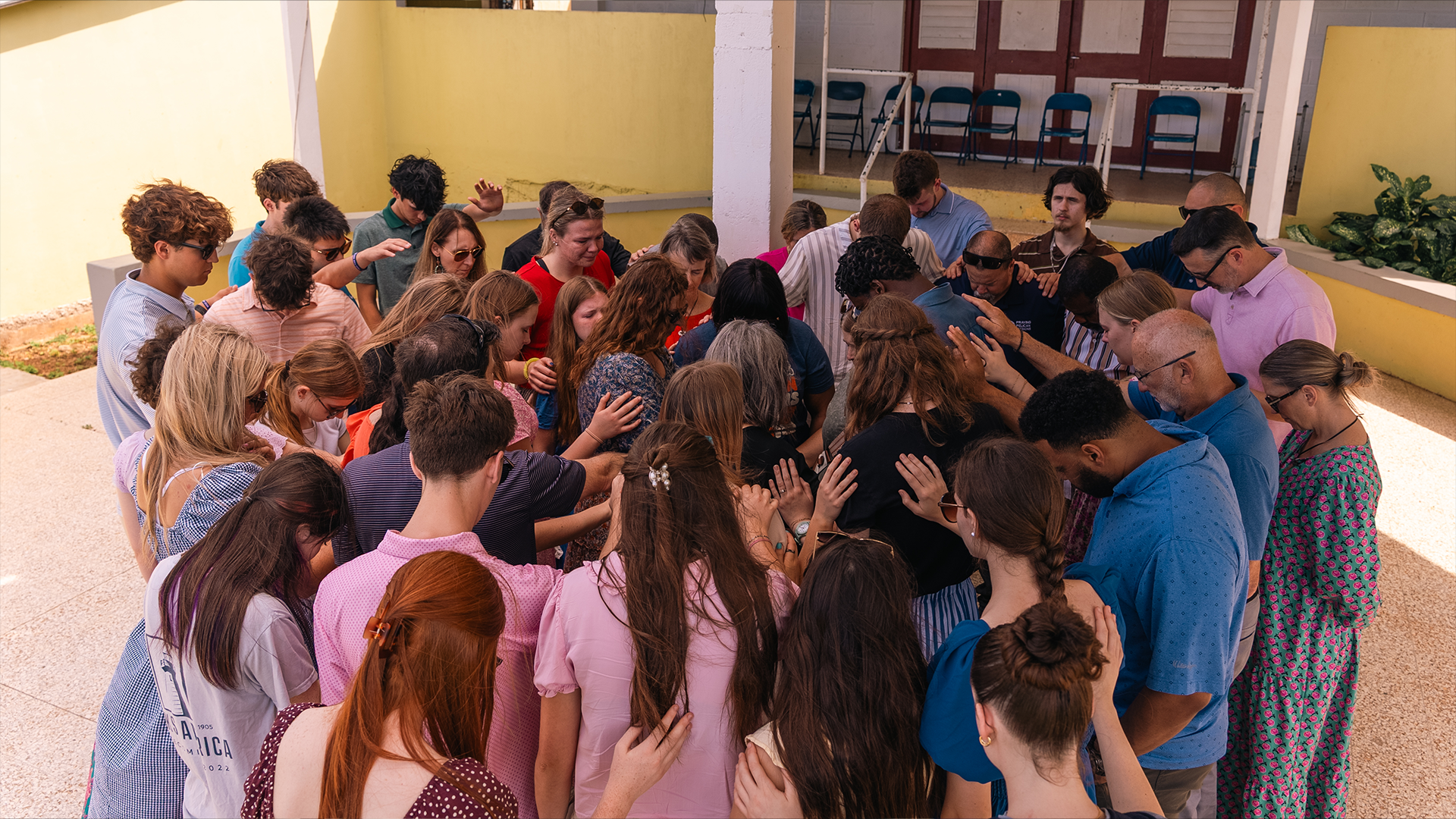
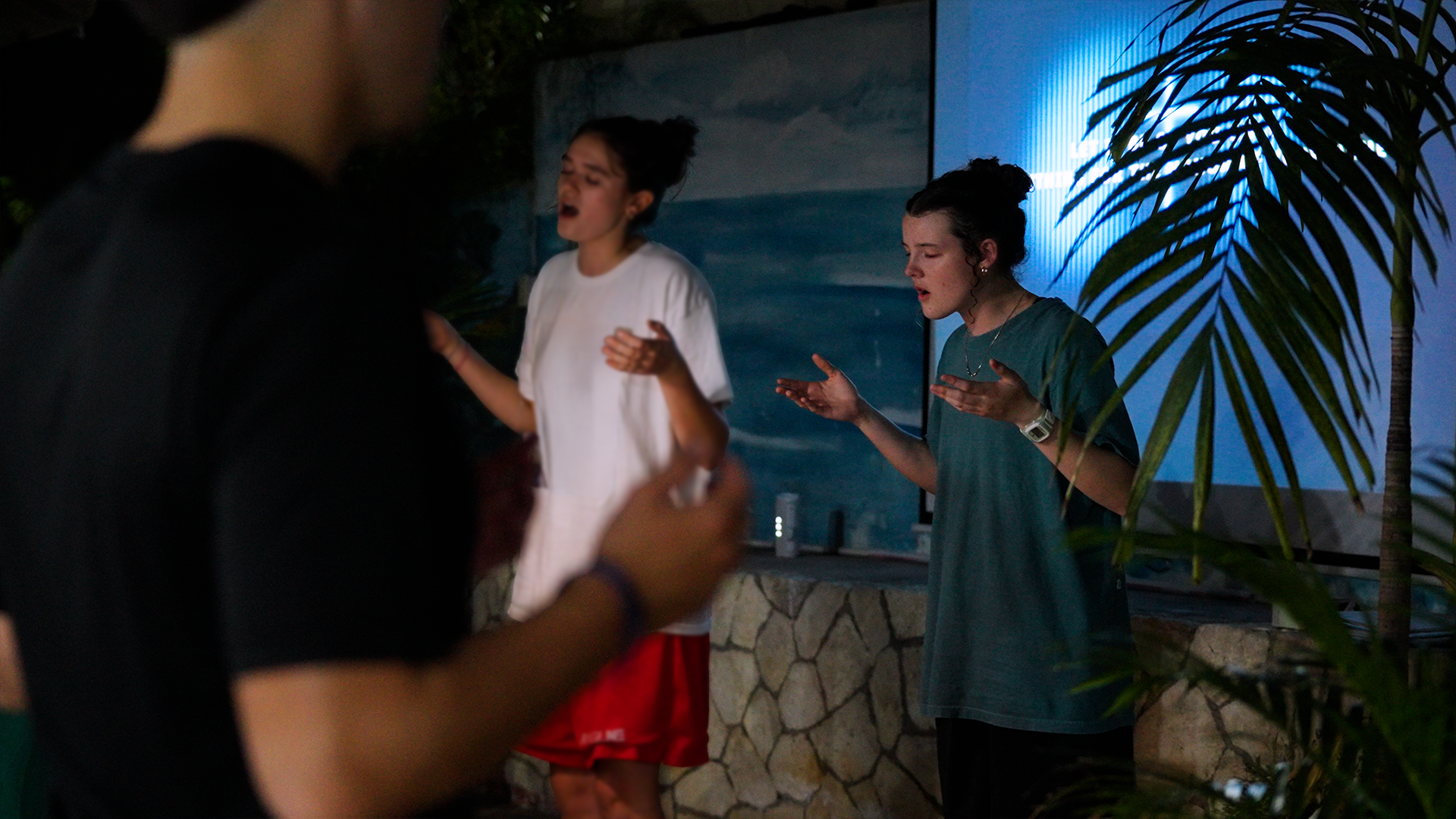
P.S. Last week, I went with a group of high school juniors and seniors from Asbury Church’s student ministry to Jamaica for a Spring Break mission trip. I enjoyed every part of the trip (except for the very beginning when the power was out at the Southwest ticket counter).
I had not been on a mission trip in 20 years, though they have been impactful in my life. I expected my favorite part to be the mission work itself and the time with the folks in Jamaica. Don’t get me wrong, that was all awesome!
But my favorite part, by far, was getting to know the students from our church better. It was a reminder of something I already knew but was blessed to see again. They love worshipping the Lord. I saw passion and hunger for connecting with the Lord. And the Holy Spirit is so quick to come and meet them in their hunger. It was so so fun! Jesus is so kind to us.
Kevin M. Watson is a Pastor and the Senior Director of Christian Formation at Asbury Church in Tulsa, OK. He is also on the faculty at Asbury Theological Seminary, anchoring the Seminary’s Tulsa, OK Extension Site. His most recent book, Doctrine, Spirit, and Discipline describes the purpose of the Wesleyan tradition and the struggle to maintain its identity in the United States. Affiliate links, which help support my work, used in this post.
We are committed to raising up the next generation of leaders for the church at Asbury. We believe doing this well requires a significant investment of time and resources. One of the ways we have begun this work was by launching a Fellowship Program at Asbury Church last year.
Asbury Church Fellowships are two-year full-time paid positions, with benefits.
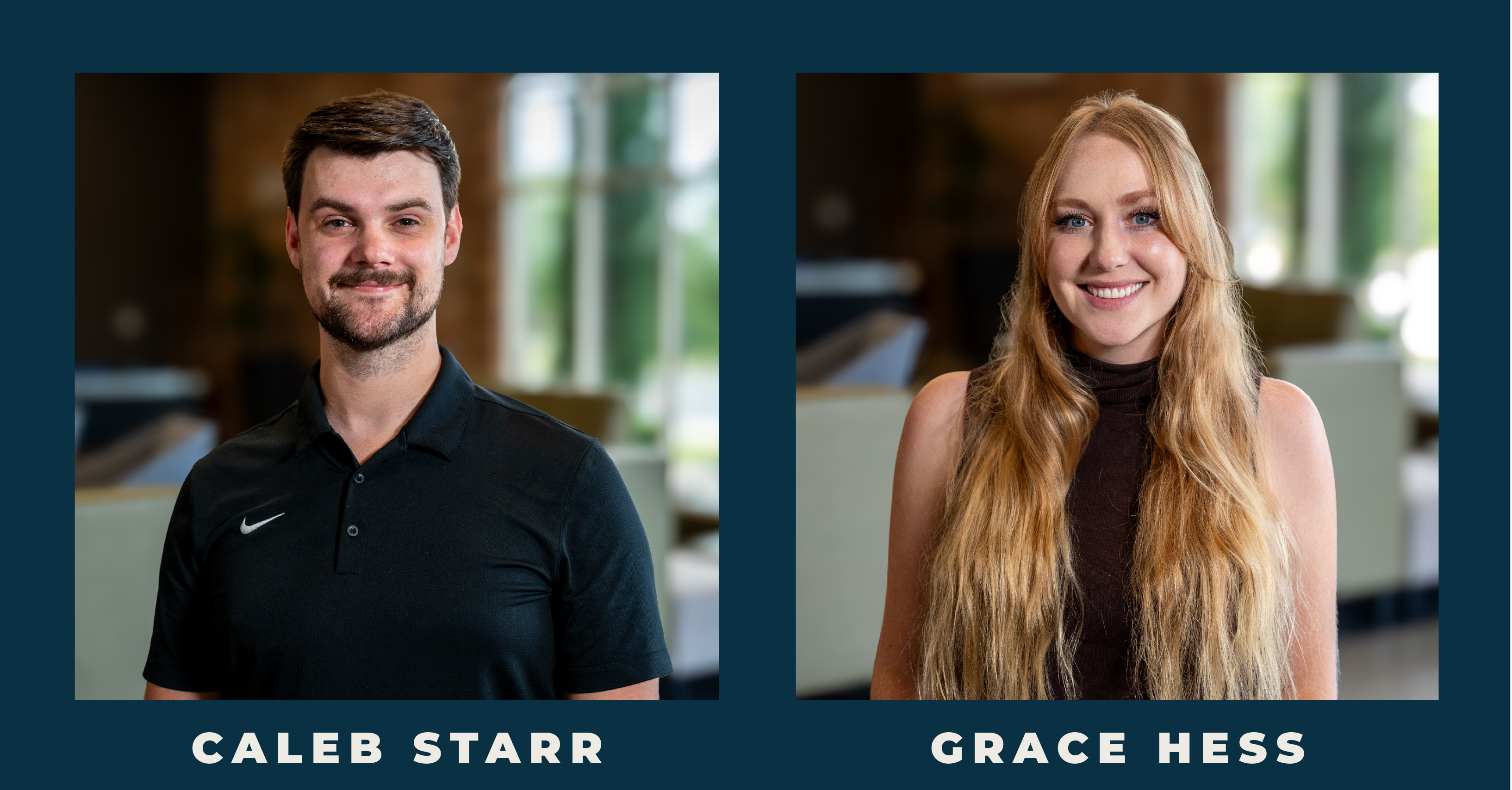
We are six months into the launch of the Fellowship Program and so far it has been a spectacular success! We hired Grace Hess and Caleb Starr as our inaugural Asbury Fellows and they’ve been great! We want to build on that success, so we are starting our search for the next round of Asbury Fellows. Please help us spread the word!
What is the Asbury Church Fellowship Program?
The Asbury Church Fellowship Program is a two-year fellowship in Tulsa, Oklahoma, designed to prepare future church leaders for today’s cultural context.
Fellows gain hands-on experience through rotational roles in:
Pastoral Ministry
Students/College/Young Adults
Business Administration
Outreach/Evangelism
Experience/Hospitality
Worship Arts
Communications
Asbury Classical School
Fellows will grow through mentoring and discipleship. (This is where I get to spend most of my time with the Fellows.) I meet with Fellows weekly for a Wesleyan class meeting experience, one-on-one check-ins, and a monthly book discussion. I love reading and engaging ideas and I want to introduce Fellows to the best books I’ve read on the Christian life, discipleship, the person and work of the Holy Spirit, big ideas about current issues, personal productivity, leadership, and more. The purpose of all of this will be to grow in Christ, ability to lead and disciple others, and be equipped to lead and minister in our changing cultural moment. (Some of the books we have read so far are: Dallas Willard’s The Divine Conspiracy, Aaron Renn’s Life in the Negative World, and Edwin Friedman’s A Failure of Nerve.)
Asbury Fellows will be present at all worship services (including Wednesday morning communion and Thursday evening), staff chapel, and Wednesday evening discipleship activities, with a “see a need, meet a need” attitude.
Fellows will also observe leadership meetings, attend the monthly pastor’s Bible Study, assist with pastoral care and visitations, and other experiences that serve the Fellow’s growth and development as a ministry leader.
The program is ideal for ministry-minded individuals seeking accelerated spiritual and leadership growth within a growing, evangelical congregation with Wesleyan theological roots. Fellows will be in seminary or recent seminary graduates.
Why I Am So Excited about the Asbury Church Fellowship Program
I am best at inviting people to things I enthusiastically believe in and I enthusiastically believe in what Jesus is doing at Asbury Church! Asbury Church has remarkable leadership. And really fun things are happening here.
I believe the Fellowship Program is a crucial strategy in a time of uncertainty and significant change in American Christianity. The Fellowship Program is an intentional investment in in-person formation. The problems facing the church in our day will not be solved by applying more technology. We need to invest more fully in relationships in enfleshed spaces. The people I have seen really grow and thrive in their lives in Christ all have one thing in common: They are anchored within a family of faith that provides care, nurture, and discipline. And so, Asbury Fellows will move to Tulsa to be fully present here for two years.
This is a major investment in in-person formation in order to raise up the next generation of leaders for the church. I expect this program to grow over the coming years. And I am excited to see Fellows go from Asbury Church to lead in other churches and themselves raise up leaders for the church.
We are in a time of major change in the broader culture, the church, and the academy. One of the things this means is that approaches to raising up leaders for the church are changing in real time. Some of the things that were taken for granted for the past 50 years are no longer bearing fruit.
The Asbury Church Fellowship Program is our first step to proactively addressing the need for new leaders to be formed, strengthened, and released to lead in the church. I have become more convinced over the past decade that raising up leaders best happens within the church and not outside of it.
Who is Asbury Church?
Asbury Church is a conservative evangelical church from the Wesleyan theological heritage in Tulsa, Oklahoma. In 2026, Asbury has averaged nearly 2,900 people in-person in worship on average each week. (That is 13% growth compared to just last year!) We are passionate about figuring out how to do discipleship and evangelism with excellence in Negative World.[1]
(The “Negative World” framework is integral to the Fellowship Program, so you will want to familiarize yourself with it if you don’t know about it and are trying to discern whether this is right for you.)
Asbury Church has the kinds of ministry opportunities you would expect of a church of this size: a pre-school, weekly small groups, kids and youth ministry, recovery ministry, and more. We lean into big events like Christmas Eve and Easter, as well as our own made-up holiday – Celebration Sunday! We are a Bible reading church, which is expressed through Bible reading guides and all church Bible Studies (which are roughly once a month during the school year). We also host a seminary extension site (Asbury Theological Seminary, a separate institution) on our property, which reflects our commitment to theological education and raising up the next generation of leaders for the church. Our commitment to education and formation is further seen in our launch of a Classical Christian School (Asbury Classical School) that is in its second year. And we are known in our community for our commitment to missions in and beyond our community.
Who is the Asbury Fellowship Program for?
The Asbury Fellowship Program is ideal for people who have at least one year of full-time seminary experience to recent seminary graduates, who intend to go into local church ministry as their first career. The Fellowship Program is for people who are hungry for more of Jesus, want to grow, desire a deeper understanding and experience of the person and work of the Holy Spirit, and sense a calling to the work of the church.
Asbury Fellows will be people who love being around Jesus’s church, are excited by the prospect of being immersed in the life of a church for a season and are eager to serve and participate in the full worshipping life of Asbury Church. Fellows will not only be hungry for more of God, but they will come humble, ready to grow and learn, and be led for a season.
The Asbury Fellowship Program will be a season of accelerated growth for Fellows in their preparation for leadership and administration of the local church. This Fellowship is for people who know they are called to the local church in some sense but may not be sure which part of the church they are called to. This is for people who know they don’t know everything and want to learn from a large and growing church that believes God has more for everyone and is passionate about pursuing joy individually and corporately.
When will it start?
Applications are due by April 17, 2026, for a program start in August/September 2026.
Click here for full job listing and program details.
P.S. Don’t miss Underground Seminary with Asbury Theological Seminary’s President Dr. David Watson. He will discuss the book he and I wrote together that is hot off the press: Faith & Fire: Methodism as a Move of God. Click here for more details.
[1] We believe Aaron Renn’s diagnosis is accurate. The church in the United States is not in Positive World or Neutral World anymore. The dominant culture and elite taste makers overwhelmingly view the teachings of Scripture and those who unapologetically hold to them negatively. For more, see Aaron Renn, Life in the Negative World (Zondervan, 2024). For the article that led to the book, see Aaron Renn, “The Three Worlds of Evangelicalism” in First Thingshttps://firstthings.com/the-three-worlds-of-evangelicalism/
Kevin M. Watson is a Pastor and the Senior Director of Christian Formation at Asbury Church in Tulsa, OK. He is also on the faculty at Asbury Theological Seminary, anchoring the Seminary’s Tulsa, OK Extension Site. His most recent book, Doctrine, Spirit, and Discipline describes the purpose of the Wesleyan tradition and the struggle to maintain its identity in the United States. Affiliate links, which help support my work, used in this post.
Our next Underground Seminary is going to be our biggest yet! This is the first time that we will have a guest who travels in from out of state to be with us. And I am so pumped to introduce him to you.
This Underground Seminary is called Faith & Fire.
And it will feature Dr. David Watson, the President of Asbury Theological Seminary.
Asbury Theological Seminary is one of the largest seminaries in the world and is the largest Wesleyan evangelical seminary in the United States. Asbury Seminary’s headquarters are in Wilmore, KY which is where the outpouring of the Holy Spirit happened on campus in February 2023. I love getting to be on the faculty and teach at Asbury!
Who this is for:
Underground Seminary is for people who are in ministry, interested in ministry, or considering ministry. It is for people who are hungry for more of God. It is for people who want to learn how to be more effective in work in the church. It is for people who want to grow in faith and holiness.
Underground Seminary is a place for candid and off the record discussion of ideas that matter, particularly for the church in the 21st century and might not fit in a typical seminary curriculum. Underground Seminary is non-academic, not for credit, and only in person.
And my favorite part: Underground Seminary gives people considering or getting started in ministry access to great leaders. This is one of my favorite parts of doing this. I have two decades of ministry experience in the church and academy, and I know firsthand that great leaders are also in demand and have full schedules. It excites me to be able to give people access to my favorite leaders.
Underground Seminary is serious and fun.
It is inspiring and practical.
What this Underground Seminary is about:
Faith & Fire
You will get to have a conversation with Dr. David Watson, President of Asbury Theological Seminary. He and I have written a book together called Faith & Fire: Methodism as a Move of God. This will be the first time I get to talk about this book. And it is going to be so much fun!
I am going to invite Dr. Watson to start by sharing what people in ministry need to not just survive, but to thrive in their work. How should people prepare for ministry and what maintenance should they do to continue to grow in their work? What do you need to do to bring faith & fire to your seminary education, maintain it throughout seminary and your entire ministry?
Then, Dr. Watson and I will talk about our new book. For more than a century, from John Wesley’s “heart warming experience” at Aldersgate Street through the dramatic growth of the Methodist Episcopal Church through the 1850s, Methodism was a powerful move of God. In our book, David and I share the keys for a Spirit-filled movement of God in our day. David will unpack this in ways that will be relevant and insightful for your ministry.
When is this?
March 26, 2026 from 12:00-2:30 pm.
Where is this?
This Underground Seminary will meet at Asbury Church in the CLC. Asbury Church is located at 6767 S. Mingo Road, Tulsa, OK 74133. The CLC is just to left when you come in the West Foyer. We will have hosts ready to greet you and point you in the right direction from any of the main entrances.
The cost for this Underground Seminary is $10. You will receive a copy of Faith & Fire and lunch is included. In case it isn’t obvious: We are not making any money here. The church will cover the additional cost for every person who attends. (If you have dietary restrictions, please email amiller@asburytulsa.org after you register.)
You need Faith & Fire!
So does the church.
Are you ready for more? Come join us!
Kevin M. Watson is a Pastor and the Senior Director of Christian Formation at Asbury Church in Tulsa, OK. He is also on the faculty at Asbury Theological Seminary, anchoring the Seminary’s Tulsa, OK Extension Site. His most recent book, Doctrine, Spirit, and Discipline describes the purpose of the Wesleyan tradition and the struggle to maintain its identity in the United States. Affiliate links, which help support my work, used in this post.
This is a question that is good and healthy for people and institutions to ask periodically.
This question became acute for churches that left their denominations of many years, often due to the presenting issue of same sex marriage. This has happened across mainline denominations. Perhaps the most public recent separation was within the UMC.
I am now on staff at Asbury Church in Tulsa, OK. Asbury was for years the largest United Methodist Church in its Annual Conference.
Since leaving the UMC, Asbury has been in a season of discernment about the future after leaving the United Methodist Church.
Where do we go from here?
The presenting issue for the era of disaffiliation from the UMC was the decades long denominational infighting over sexual ethics, particularly same sex marriage. The breaking point, however, was when it became clear that the bureaucracy of the UMC was willing to nullify the decisions of General Conference when it disagreed with them by simply ignoring them or refusing to enforce them. The decision of bishops and other UMC leaders to impose their judgment over that of General Conference shattered the polity of the UMC, which was the very mechanism that was designed to protect unity in the midst of deep disagreement.
Some orthodox United Methodists could live with the official teaching of the church being one thing on paper and another thing “in real life” happening with no consequence.
I was not one of them.
On the other side of disaffiliation, United Methodism swiftly changed its position on sexual ethics so that its actions are now consistent with its practice. This brought the advantage of consistency and coherence. But it came at the expense of faithfulness to the clear teaching of Scripture at the main pressure point of the present cultural moment.
Some orthodox United Methodist could live with this. I don’t understand how.
If you believe that same sex marriage is not a thing that the Triune God can bless, then I do not understand how you can be “in connection” with a denomination where clergy say that God does bless them and where they regularly occur. The idea that one can be United Methodist and unimpacted by this because it does not happen in your church is either foolish or intellectually dishonest. It is at best incoherent with the basic meaning and purpose of a denomination.
Where do we go from here?
I want to talk about a recent post from Ryan Burge that brings urgency to this question. In fact, it suggests that we don’t have much time left to decide where we are going. And though I will highlight data that relates to the United Methodist Church, the UMC is not the point of this post. I would guess that the Global Methodist Church, the denomination born out of the disaffiliations from the UMC earlier this decade, is probably in a similar position as the UMC is. (Burge does not include date for the GMC in his piece.)
Most importantly, for my focus, Burge’s data is relevant to my own church. We generally fit the picture he shows.
If you are not already familiar with Ryan Burge’s work, you should be. Burge is professor of practice at the Danforth Center on Religion and Politics at Washington University.
He is one of the very few positive examples I can think of where a person has gained a significant platform on social media by delivering consistently thoughtful and nuanced content, particularly regarding the contemporary church. Burge’s work is focused on demographic data, analyzing trends, and pointing to implications for the church.
Are we presuming we have a future, despite all evidence to the contrary?
The heart of Burge’s post is showing how top heavy in terms of age most Protestant denominations are.
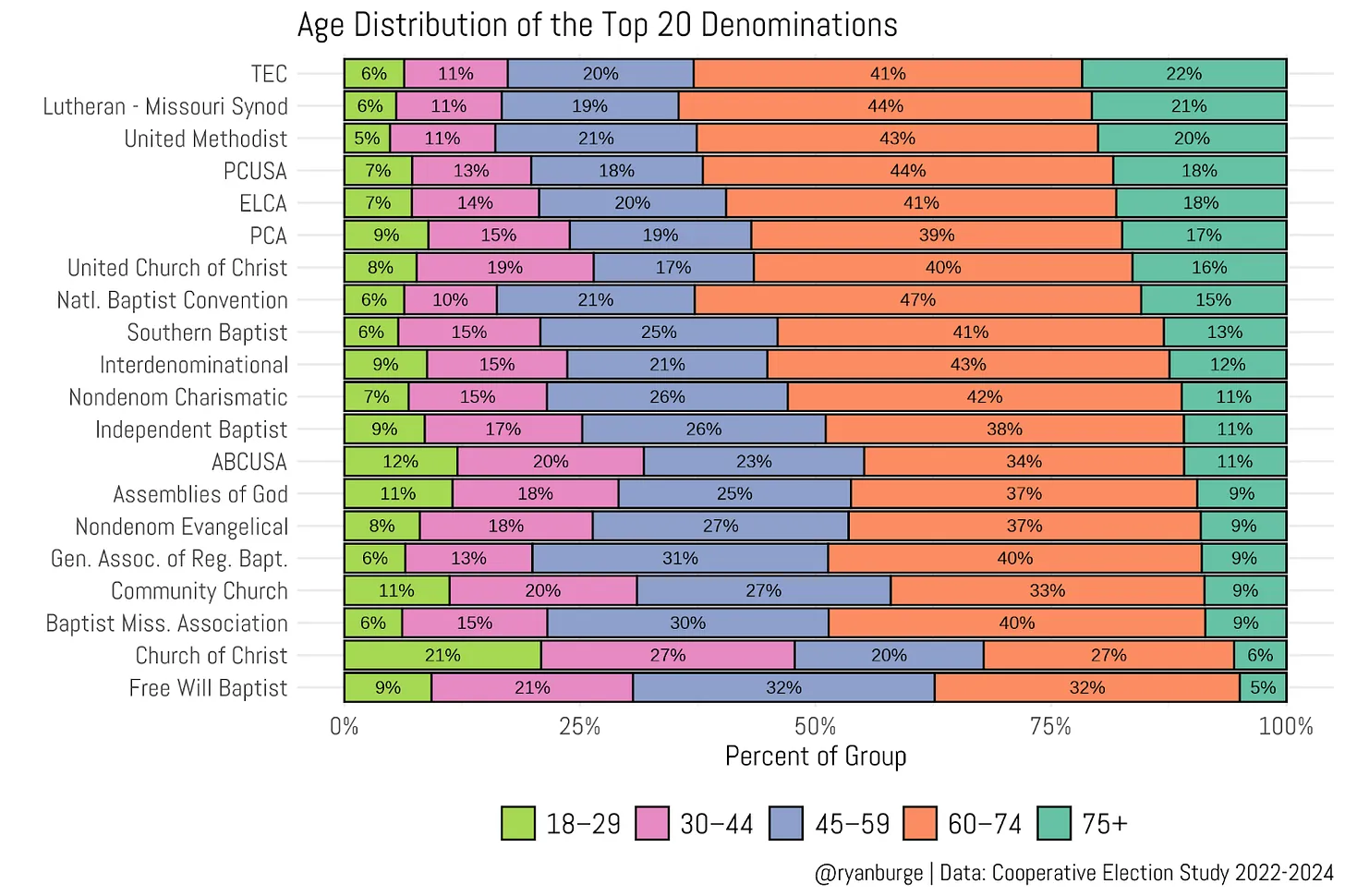
I’ll use the UMC to illustrate, but you can see the details of other denominations in the two images I’ve included.
Look how few members in any of these denominations are young. Not one of the 20 denominations listed has more than 50% of its members under 44 years old. In the UMC, only 16% are 18-44.
Burge emphasizes this age range in his article because this is the age range of fertility, broadly speaking. That is, the rest of the folks in the group are not going to be adding to membership by giving birth to children.
He does not unpack this in his post, but another angle of this is the theology, views and values around life itself, and starting families (how soon and how big). The more progressive the denomination, the more likely it is that the fertility rate will be lower even within the age range of fertility.
21% of the membership of the UMC is between 45-59, which is more than 18-44 combined. And, at 43%, there are more than double the number of people who are 60-74 than 45-59. (And there are 8x as many 60-74 year olds as 18-29 year olds.) 63% of the UMC is 60 years and up.
This represents a demographic crisis.
I want to pause here. I doubt very many United Methodists read my work anymore. I suspect there are a lot of people who read this who are not fond of the UMC. And I think this kind of data brings a tremendous temptation to self-congratulation.
“See, this is why we left?”
And I suspect for most people reading this, you would be completely missing the point.
Is your tribe different?
Self-congratulations, posturing, or denial won’t accomplish anything positive.
I am thinking about this because this has been a topic of conversation among the staff at Asbury Church, where I serve.
So, to be as clear as I can be about the point of this post: This is not a post to celebrate the seeming demise of others.
The point is to be in touch with reality so we can ask the question I started with:
Where do we go from here?
Let’s start by stating the obvious:
If the denominations Burge lists do not figure out how to grow younger, they don’t have a future.
That is a descriptive statement, not a moral argument.
We are all mortal. I will die someday. And if no one comes behind me, the thing that I am part of will not exist anymore.
I am worried that older people will be offended by what I write. Please understand me. Age is not a moral issue. It is not immoral to grow old. It is just what happens.
But if an institution consists of primarily senior citizens and is no longer able to reach young people, then it is dying.
This is all the more difficult to talk about in a healthy way because our culture idolizes youth in ways that are damaging to young people and can invalidate the worth and value of older people. The older we are, the more likely we are to experience acutely the limitations of our bodies.
As we age, moving our bodies becomes more painful.
To young people who do not experience significant pain:
Take time to notice the literal physical pain some of the older members at your church endure to simply come to church. There are people who show heroic courage, strength, and grit by showing up. This will humble you and help you not take your own body for granted. Perhaps it will even encourage you to not take gathering with the faithful for worship for granted.
To older people:
I say to you with love, I know that talking about this can be uncomfortable. It is not at all my intent to signal that you are unimportant or lacking in value. Not at all! You are the reason we are here! My hope for you is that if you turn your hearts towards reaching the next generation (and many of you already have!), you will gain peace and joy knowing that reinforcements are coming and the mission you have given your life to will continue after your death.
This applies to me.
We are all moving towards the grave. We all ought to humble ourselves and learn from those who have gone before us. And we should all do all that we can to build up, strengthen, encourage, and bless those who are coming after us.
One of the reasons work like what Ryan Burge is doing is helpful and interesting is because it provides a more neutral way to talk about the future. It is hard to ignore or deny that a problem is coming when you look at the second image from Burge’s article.
There is, however, at least one obvious sign of hope for the future. Did you notice that there is one major exception? Look at the Church of Christ.
21% of the Church is 18-29. 27% are 30-44. This means that 48% of the Church of Christ is in the peak fertility range! It also means that the largest percentage in any one of the five age ranges is a tie for 30-44 and 60-74. So, there is a significant generational balance. It gets better. The third largest group is the youngest. Look at the Church of Christ in the second graph. You don’t want a long thin tail, as so many of the denominations included have.
You want, at a minimum, the people coming behind to be able to replace the people and resources of those who are ahead.
It took a lot of spadework to get to this point. Now, I want to share a few thoughts about this information. Fair warning, it may feel more discouraging before there is hope. But I am writing this post because I do feel hope for the future. I believe the Lord has already given us the way forward, if we would have the courage to take it.
My first thought comes from reading Aaron Renn’s Life in the Negative World and Christian Smith’s Why Religion Went Obsolete. These books are both crucial for thinking about evangelism and discipleship in the contemporary church.
I’ve mentioned Renn’s work here before. Renn argues that we live in “Negative World,” where elite culture is opposed to the core claims and commitments of the gospel. I think he is right. (I wrote a review of Life in the Negative World here.)
Rev. Andrew Forrest, the Senior Pastor at Asbury Church where I work, has written a book that show how to avoid being passive and victims in Negative World and move forward. Hint: Forrest gives away the core concept in his book’s brilliant title: Love Goes First. (I wrote a review of Love Goes First here.)
You should read all three of these books. The church desperately needs leaders who are doing the deep work to think about the times in which we live and who refuse to settle for running plays that worked in the 1950s but simply do not work today.
Here is how reading and thinking about these things came through in reading Ryan Burge’s post:
The work before the church is going to be extremely, nearly impossibly, difficult.
There is so much that could be said here. I’ll say three quick things to illustrate how hard this is going to be.
First, the Baby Boomer Generation is literally a one-of-a-kind event. The really wide parts of the second image represent this generation. There are just less people at each age behind the Baby Boomers. So that is the first demographic reality that makes this extremely difficult.
Second, over the past thirty years the dominant culture has shifted dramatically. In the years immediately following World War II, there was cultural pressure to be a member of a Christian church in the United States. Sometime in the 1990s that shifted to neutral, neither positive nor negative. And in the mid-2010s that shifted further to negative cultural pressure. So, when the Baby Boomer Generation was around my age, there were cultural incentives, or social pressures on people to go to church. Today, with this major loss of members coming in the next 10-15 years, there are negative incentives, negative social pressure on people becoming followers of Jesus.
Put simply: It is harder to “make” a convert today than it was fifty years ago.
Third, the institutions that represent these groups are sick and dying. In other words, they are not in a place to lead a resurgence or a renewal. They might have been able to do that back when I was in seminary when professors at the mainline liberal seminary I attended talked about the coming “death tsunami” that was headed for the UMC.
One of the things we talk about all the time at Asbury Church is how hard it is going to be going forward. We are looking for others who share a sense of urgency about figuring out how to lead and move forward “for such a time as this.” Figuring out how to reach people my age and younger is urgent and has to be the top priority for every church or they will not have a future.
As I was looking at Burge’s charts in a staff meeting at Asbury, someone brought the focus back to the Church of Christ: “Why are they different?”
I don’t know much about the Church of Christ. But I do know that sociologists have found that there is something of a law of church growth in the United States. I first came across this in the fantastic book The Churching of America, 1776-2005by Roger Finke and Rodney Stark.
Here is the law of church growth in the United States:
High expectation, high demand churches grow. Low expectation, low demand churches decline.
I am sure that the Church of Christ, especially compared to the other denominations Burge includes, is a high expectation and high demand church.
I spent a decade trying to get United Methodists to move away from sloppy nonsense like “open hearts, open minds, open doors.”
Methodism has grown when it has had clear expectations of its members and enforced them. It has declined when it has not.
The Methodist Episcopal Church grew from the smallest Protestant denomination in the U.S. to the largest by far from 1776 to 1850. (See The Churching of America for details.) And during this time, you were required to attend a weekly small group meeting to remain a member. If you missed more than three times in a quarter, you were removed from membership. There was a document that outlined the lifestyle expectations for members in terms of sins to be avoided, concrete actions that expressed love of neighbor, and insisted on a disciplined practice of the means of grace (practices like Bible reading, prayer, worship, holy communion, and fasting).
Today, in many churches you can join a church by standing up for a few moments during a worship service and making a few vows. And you won’t be removed from membership even if you don’t keep any of the vows you made.
As I’ve thought about where we are and where we are going, it is just so obvious: This is going to be really difficult.
In Negative World, there are no longer any incentives for people to come to a church that is more a social club than a place that is focused on Jesus Christ and helping people meet him and give their lives to him as not only savior, but Lord of their lives.
There are a variety of ways you can miss the mark in terms of high expectation and high demand. Cults, for example, are high expectation and high demand. They provide a clear sense of belonging and identity. But they do not make disciples of Jesus Christ.
You can also miss the mark by jettisoning any attempt to be Christian and simply be an activist organization. Many college students and young adults are finding meaning and identity in protest and advocacy that is cult-like in terms of the demands it makes and the all-encompassing sense of belonging and identity it gives (or demands).
When Methodism was at its best, it was a high expectation and high demand church. It was focused on the gospel and was built to ensure that no one lost sight of growing in concrete practical discipleship to Jesus Christ.
You did not have to be a member of Methodism.
But you could not be a member of Methodism in name only.
John Wesley and those who carried on his work from one generation to the next into at least the mid-nineteenth century were marked by a commitment to basic doctrine, spirit, and discipline.
Here is how John Wesley put it in the last years of his life:
I am not afraid that the people called Methodists should ever cease to exist either in Europe or America. But I am afraid lest they should only exist as a dead sect, having the form of religion without the power. And this undoubtedly will be the case unless they hold fast both the doctrine, spirit, and discipline with which they first set out. (J. Wesley, “Thoughts Upon Methodism”)
I wrote a 400-page book about what this meant and how true it has been in the history of the Wesleyan tradition in the United States.
And I have never been more convinced that this is true than I am today.
One of the things that consistently amazes me about people at my church is their desire to grow. They want to be faithful. And they are eager to be led. It is so encouraging.
In Negative World, this will only become truer.
People who come to our churches will want to know if Jesus is real and if he can make a difference in their lives. When they come to faith, they will want to learn how to follow Jesus. Nominal Christianity doesn’t make sense anymore, especially to younger people.
So, where do we go from here?
We must become churches that are serious about discipleship and formation.
The bad news is: This will not be easy. In part because the truth is that many of our churches have not been most concerned about discipleship and formation. This means that in addition to the work of building, we also have work to reform, redirect, and change.
The good news is Jesus is real. Everyone knows the Great Commission from Matthew 28. We may need to especially remember the very last sentence of Matthew’s Gospel: “And behold, I am with you always, to the end of the age.”
We are not alone. We have never been alone.
Church leaders, we’ve got our work cut out for us.
(Though this post is focused on something that is largely tangential to this book, I want to say that this is a really good book. I recommend it for thinking about death, funerals, and memorial services.)
I chuckled when I read this sentence:
“If that is what he meant, his words have the disadvantage of not being true.”
Here is the broader context for this quote:
The pastor’s affirmation that the deceased would “never be forgotten,” though commonly said at funerals, is also ambiguous. Probably he meant to offer comfort by implying that, even though the deceased is now dead and gone, not all is lost, because the memory of his life and good works will live among us always. If that is what he meant, his words have the disadvantage of not being true. Cemeteries are full of the graves of people no one remembers any longer. If the deceased are of value only if we the living can keep their memory alive, then we are to be pitied. As the psalmist truly says, “As for mortals, their days are like grass; they flourish like a flower of the field; for the wind passes over it, and it is gone, and its place knows it no more” (Ps. 103:15-16). [p. 97]
Long points out the way in which the sentence is not true either practically or theologically.
You don’t have to think very hard about the idea that someone who has just died will “never be forgotten” to realize it is untrue. People say it because they believe it will be comforting. But it isn’t true. And that is actually a big deal.
We should not try to comfort people by telling them things that are not true.
Though doubtless well-intentioned, the statement is also theologically problematic. Long continues:
“The gospel does not place the burden on the living to keep alive the spiritual flame of memory. Rather, it affirms that the deceased is now raised to new life and sings in the great choir of the communion of saints standing in the presence of God. Only in this way, only in the life of God, is the deceased “never forgotten.” [p. 98]
One of the most important roles of a pastor is a persistent determination to tell the truth and point people away from confusion, deception, and outright lies.
This is easy when we catch someone telling a lie to hide the truth in an intentional way. Most people still know that is wrong.
The more pressing challenge is to think more carefully about what we are saying about reality and ask if it is really true.
Too often, the things that are said by Christian leaders sound nice and there is a syrupy and superficial promise of bringing comfort.
But they have the disadvantage of not being true.
Pastors should be more like medical doctors in this regard.
If your doctor discovers that you have a serious illness, they will tell you even though they know it will make you feel bad. They don’t do this because they like it. They do it because it is their job to tell you the truth about the reality of your health.
Too often, especially in mainline Protestant contexts, pastors have acted as if their highest calling was to make people feel better.
But, again, this has the disadvantage of not being true.
Kevin M. Watson is a Pastor and the Senior Director of Christian Formation at Asbury Church in Tulsa, OK. He is also on the faculty at Asbury Theological Seminary, anchoring the Seminary’s Tulsa, OK Extension Site. His most recent book, Doctrine, Spirit, and Discipline describes the purpose of the Wesleyan tradition and the struggle to maintain its identity in the United States.Affiliate links, which help support my work, used in this post.
When people come to my office, they often comment on the number of books I have.
I think the most common question I am asked is:
Have you actually read all of these?
The answer is a definite no.
As many times as I’ve been asked that question, there is a question a pastor asked me once that I remember vividly, I think because the question was so wise:
Of all of these books, if you could only recommend I read one, which one would it be?
What a great question! It was simple and profound.
I also had a bit of a “All of my children are my favorite moment” before realizing that books are not at all children.
I was surprised at how hard this question was for me to answer. I probably sat and thought about it for a full minute (which is really a long time when someone is standing in front of you waiting on your answer).
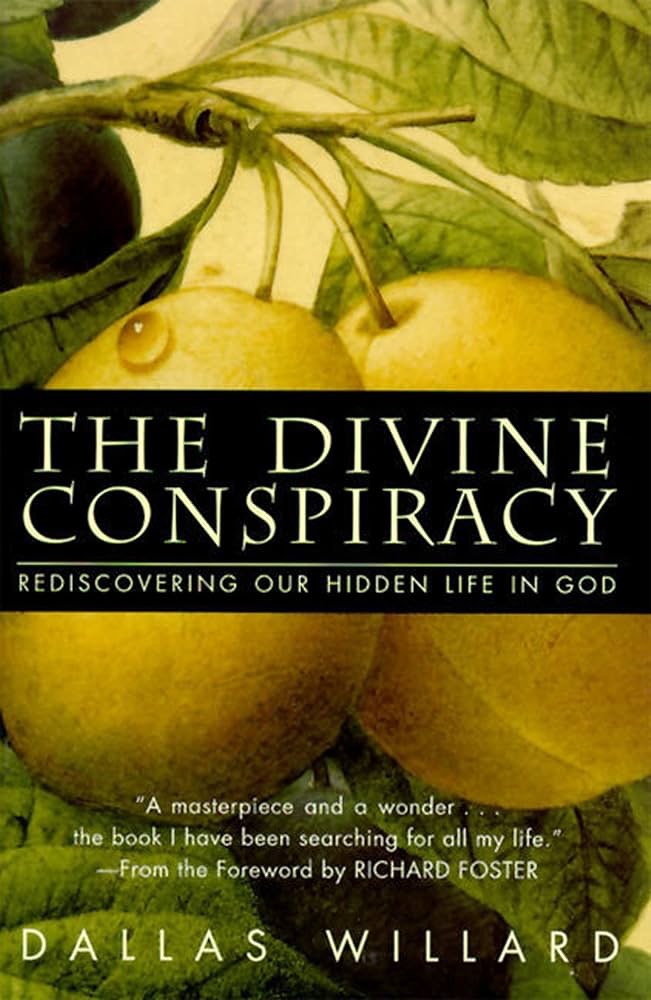
My final answer was Dallas Willard’s The Divine Conspiracy: Rediscovering Our Hidden Life in God. That question was asked and answered about five years ago.
As part of the Asbury Fellows Program, I lead a discussion of a book with the Fellows each month. And this week we discussed Dallas Willard’s The Divine Conspiracy, which gave me the chance to reread it for the first time in many years.
I am so thankful that this book, which I first read when I was in college, did not let me down when I returned to it nearly thirty years after it was first published.
Willard diagnosed some basic places where the American church had lost its way and worked to bring her back to health and wholeness.
I would say that The Divine Conspiracy is the best, and most demanding, book on discipleship to Jesus Christ I have ever read.
If you have not read this book, you should stop what you are doing and order it right now.
I may return to this book here over the coming weeks because there is so much here worthy of emphasis and reflection.
For now, I want to share one key piece that has stood out to me since reading it.
In the last third of the book, Willard describes something that really gets at the foundation of our faith. We really can’t move on, at least not in a productive and healthy way, until we really get this. Or, perhaps, we literally will not move forward until we do.
This a long quote, but it is so good:
There are many people who would like to be the constant student and co-laborer with Jesus in all the details of their lives. Many of these are professing Christians; some are not. But in either case, living as an apprentice with Jesus in The Kingdom Among Us is usually not something that seems accessible to them. No wonder, then, that practical, experimental steps seem to be lacking. They do not really understand what discipleship to him is, and it therefore remains only a distant, if beautiful, ideal.
It is now generally acknowledged, as we have noted, that one can be a professing Christian and a church member in good standing without being a disciple. There is, apparently, no real connection between being a Christian and being a disciple of Jesus. And this is bound to be rather confusing to a person who would like to be a disciple. For what exactly would one do who didn’t intend to go into “full-time Christian service” but still wanted to be a disciple in something like the sense just outlined?
I believe we can identify definite steps that will prove effective. But before discussing them we need to be quite clear about our preliminary objective. Because, as we have seen, a disciple of Jesus is one who is with Jesus, learning to be like him, what, we must ask, is the state of soul that would bring us to choose that condition? What would be the thinking, the convictions about reality, that would lead someone to choose discipleship to him?
Obviously one would feel great admiration and love, would really believe that Jesus is the most magnificent person who has ever lived. One would be quite sure that to belong to him, to be taken into what he is doing throughout this world so that what he is doing becomes your life, is the greatest opportunity one will ever have. (291-2)
In the next section, Willard points to two of Jesus’s parables that “illustrate the condition of soul that leads to becoming a disciple.” These are the parable of the treasure hidden in the field and the pearl of great price. They are found in Matthew 13:44 -46. Here they are:
The kingdom of heaven is like treasure hidden in a field, which a man found and covered up. Then in his joy he goes and sells all that he has and buys that field.
Again, the kingdom of heaven is like a merchant in search of fine pearls, who, on finding one pearl of great value, went and sold all that he had and bought it.
These two very short parables contain a foundational truth about Christian discipleship. If you miss it and move forward, you will most likely build a form of Pharisaic works-righteousness rather than the kind of relationship with Jesus that he himself desires.
And this is where Willard is just stunningly excellent. Read this slowly:
These little stories perfectly express the condition of soul in one who chooses life in the kingdom with Jesus. The sense of the goodness to be achieved by that choice, of the opportunity that may be missed, the love for the value discovered, the excitement and joy over it all, is exactly the same as it was for those who were drawn to Jesus in those long-ago days when he first walked among us. It is also the condition of soul from which discipleship can be effectively chosen today. (292)
Like the parables of the treasure in the field and the pearl of great price, the “deal” is so good you don’t even think about whether you want to take it. You immediately gather up everything you need to be sure you get the bargain.
It is that stunningly good.
It is entirely to your benefit.
It is a blessing.
It is a joy to receive.
It is like the most ridiculously good Christmas a child could ever imagine.
And the offer of life with Jesus is real!
And it is, indeed, entirely to our benefit.
If it seems otherwise, we have not yet fully understood, much less received, the full gospel. Jesus is not trying to pull one over on us. He is not trying to take good things from us that we must grit our teeth and give him anyway, because eternity is at stake.
Jesus offer us life and life abundant.
He is exceedingly good.
He is unimaginably generous.
This is wonderful news. But there is a tinge of sadness as I think about this. And that is because the good news of Jesus is so much better than many of his own followers have realized.
Kevin M. Watson is a Pastor and the Senior Director of Christian Formation at Asbury Church in Tulsa, OK. He is also on the faculty at Asbury Theological Seminary, anchoring the Seminary’s Tulsa, OK Extension Site. His most recent book, Doctrine, Spirit, and Discipline describes the purpose of the Wesleyan tradition and the struggle to maintain its identity in the United States.Affiliate links, which help support my work, used in this post.
My senior pastor, Andrew Forrest, likes to say that you cannot be ungrateful and experience joy. If you are grateful, you will experience joy.
I think there is a lot of truth in this. And since hearing Andrew say this, I’ve noticed a number of places where it makes sense of my own experience.
Something I experienced last week made this stand out in a way I didn’t expect. The details may seem trivial to you. Stick with me. I think there is an important principle here.
For the story to make sense, I need to give you some brief context for why this matters to me:
I am an alum of the University of Oklahoma. Football is a big deal at OU. The Sooners won their last national championship in football when I was a student. I attended every home game and the OU-Texas game (63-14!) that year. Aside from OU’s complete domination of Texas that year, the Nebraska game was the next most memorable game I experienced. OU was losing 14-0 after Nebraska’s first two possessions. And then held Nebraska scoreless the rest of the game and won 31-14. It was awesome!
A fun aside: I barely remember the national championship game because my girlfriend came over – now my wife! When I think back to that game, I remember being excited Melissa was there more than I remember the game itself.
Ok, so I am an OU football fan. It is fine if you aren’t. You do you.
Much more depressing, I became a Dallas Cowboys fan during my time as a PhD student at Southern Methodist University. I remember actually saying to my wife, “I think I’m becoming a Dallas Cowboys fan, and I don’t like it.”
Something happened last week that brought these two things together in a way that brought back memories of a few times I actually enjoyed being a Dallas Cowboys fan. (It has been so long, I forgot what it felt like.)
Here is what happened:
The University of Oklahoma hired Dallas Cowboys legend Jason Witten to coach tight ends.
I can’t really explain it. This was one of those very trivial things that basically has no real impact on my life, but did impact me. When I heard the news, I felt excited and hopeful about the future for OU football. I’m sure there are lots of mundane reasons for this. They don’t matter that much here. I’m trying to use a mundane story to illustrate a deeper truth.
Soon after I heard the news of Witten’s hire, it occurred to me that Jason Witten playing for the Cowboys the last time I remember enjoying being a Cowboys fan in any way. He was easy to root for. I’ll never forget the play where his helmet popped off, and he still shrugged off the tackle and ran for 30 more yards. (If you don’t know what I’m talking about, look it up!)
It was both terrifying and electrifying.
So, an NFL legend tight end, who will almost certainly soon be inducted into the Hall of Fame is coming to coach the tight ends for my favorite team.
Awesome!
Exciting!
So Cool!
But then do you know what I noticed?
Some people weren’t excited.
A brief side note on social media and algorithms.
The algorithms for the internet are largely responsible for us seeing things like the most ridiculous and negative reactions to Jason Witten’s hire. Social media algorithms are finely tuned to incentivize things like sarcasm, disdain, contempt, disgust, anger, and rage. The uglier and more likely to spike your adrenaline reading it, the more likely it is to be pushed by the algorithm. The algorithm wants to keep your attention, period. And that is because your attention is what is being sold. At this point in the development of social media, we are naive and foolish if we expect to see the best and most thoughtful responses to anything on social media. Rather, we should expect to see the angriest and most irrational people around (and some bot accounts that don’t represent real people at all). Anger, fear, these will keep your eyeballs glued to your glowing screen for longer.
Wait? Why would anyone not be excited that Jason Witten is a new coach at OU, especially in the exact area where he was one of the best of all time?!
Here is a generic complaint that I think fairly summarizes them all:
“Just because he was a great tight end does not mean he will be a great coach.”
Wow. Ok, Debbie Downer.
Something about this has kind of stuck with me. Gnawed at me. I realized what it was on Friday night when I was watching the Indiana Hoosiers absolutely dismantle the Oregon Ducks.
Indiana completely dominated Oregon.
The insight came when someone commented on how the crowd, which was in Atlanta, GA, was 95/5 in favor of Indiana.
And it just seemed like a party.
When the game became a clear blowout; it just hit me. I was saddened by the pessimism and negativity of some of the responses to Witten’s hire that seemed to come from entitlement and ingratitude.
In case you know nothing about college football, here is the short version:
The Indiana Hoosiers are known for being really good at basketball. That’s because there was a time they were really good at basketball. And also because they’ve never been good at football.
Until last year in head coach Curt Cignetti’s first season.
This year, Indiana is the last undefeated team. And on January 19th, they will play for the national championship. Their quarterback, Fernando Mendoza, has already won the Heisman Trophy. And they have completely dominated the teams they’ve played so far in the playoffs.
It is a great story, maybe the most unexpected story in American sports of my lifetime, especially if they win it all.
Ok, so now I can tie it all together.
Some Oklahoma fans seem entitled, ungrateful, and just pessimistic in general. OU had a great year this year. They went 10-2 in their second year in the SEC with a very difficult schedule. (By the way, this was a massive improvement from last year’s 6-7 record.) Sure they lost their last game. So does every team but one every year.
You can see negativity has become a cancer when your school unexpectedly hires an NFL legend to coach the literal position they were so good. And this is also the same position your team has been the worst at over the past few seasons. And you are still negative.
Indiana fans seem joyful and grateful for this season. Three years ago, nobody thought Indiana would be playing for a national championship.
Perhaps their lack of expectation has made it easy for them to be grateful.
Maybe Oklahoma fans are too used to success and have lost the ability to delight in it. Entitlement makes it harder (impossible?) to be grateful. To experience joy.
Now, I have no idea how Indiana fans will react if they don’t finish this remarkable run and win the entire thing. And I have no idea what Jason Witten’s legacy as a college coach will be.
Ultimately, this post isn’t about sports. I don’t know what is going to happen next or how people will react. Here is what I do know:
My pastor is right. You cannot experience joy and be ungrateful.
If you look for reasons to worry or be pessimistic you will find them. That is easy. I think it is also lazy. Oh, I guarantee you it is a path to misery.
I want to be like the long-suffering fans of the Indiana Hoosiers and just receive the unexpected gifts that come my way. I want to savor good things. I want to keep doing the next right thing on the unremarkable days and the hard days.
I want to become a person characterized by gratitude. And, therefore, can joyfully receive the good gifts God gives me.
Lord, help us have eyes to see your blessings and receive them well.
This Spring is going to be awesome here in Tulsa at Asbury.
At Asbury Church we have just started our Year Through the Bible, using The One Year Bible. And we are off to a great start! Throughout Advent, we gave away 11,500 Bibles and completely ran out. We ordered 4,000 more in mid-December and they just arrived yesterday.
Among other things, we have created a website to help specifically to help people read through the Bible in 2026. I am consistently impressed with the great work Asbury’s staff is able to do on these kinds of things! Check out yearthroughthebible.com.
Today is January 9th. You can still join us! In fact, even if you aren’t in Tulsa, you can download the Life Bible App and set the start date to January 1, 2026, and read along with us for free. (Click the Life Bible App button at yearthroughthebible.com and there is a video that shows you how to sync the app up with the beginning of the year so you are on the correct reading for January 9th. Unfortunately, you cannot do this on YouVersion.)
We had more than 8,000 people attend Christmas Eve services in person at Asbury this year. It was so fun to see so many people in worship, especially extended families.
After Covid and 2020, I will never take for granted worshipping in person with people again.
This past Sunday, we had 3,074 people in person for worship at Asbury, more than we’ve had in worship the first Sunday of the year since 2014. (Though we live stream our worship service and publish sermons online, we do not count online views in our worship attendance numbers. We literally count noses in the sanctuary or chapel.)
My favorite part of life at Asbury has been getting to know individual people and seeing them take steps forward in their faith. I am in a small group with 8 people, and we are linking arms and committing to read through the entire Bible together in 2026. We met for the first time last night and I feel so excited and hopeful for what the Lord is going to do this year.
If you live in the Tulsa area, you should come and be a part of what God is doing at Asbury.
If you don’t live in the Tulsa area, I want to invite you to be part of some things that are worth coming to Tulsa for at the Asbury Theological Seminary Tulsa Extension Site.
I know this can be confusing to folks, so let me clarify that there are two Asburys. (Asburies?) Asbury Church and Asbury Theological Seminary. I get to work at both. The Church is in Tulsa, OK. Asbury Theological Seminary is in Wilmore, KY, with several extension campuses including one in Tulsa. Asbury Church hosts the Asbury Theological Seminary Tulsa, OK Extension Site.
Despite the potential for confusion, I like that the church and seminary I’m at both share the same theological heritage and intentionally express that by being named after Francis Asbury, the Father of American Methodism.
Now, back to exciting upcoming events in Tulsa at the Asbury Seminary Tulsa Site:
I am teaching two hybrid classes this Spring semester. A hybrid class is part online and part in person. This means you can complete the entire class online with a 3 day in-person intensive in Tulsa. (To state the obvious, this means you do not have to live in Tulsa to be able to take a class with me.)
These intensives are SO FUN!
I am teaching TH501: Basic Christian Doctrine. The in-person intensive is March 5-7, 2026
I am teaching TH650/SF650: Wesleyan Discipleship. The in-person intensive is March 26-28, 2026.
You should take both classes, of course.
But, if you can only take one, I am especially excited about Wesleyan Discipleship. This is my favorite class to teach. It is an historical introduction to the basics of discipleship in the Wesleyan tradition that also offers very practical guidance on how to implement the essentials of following Jesus with a Wesleyan accent. Students will learn about the theology and practice of the Wesleyan class meeting and band meeting and receive hands-on training in implementing these groups.
This will be my fourth time teaching this class. I’ve received amazing feedback from students each time about how it has changed their own faith and equipped them to lead in their own churches.
I cannot wait to teach this class!
I am also excited about this version of this particular class because Asbury Theological Seminary’s President, Dr. David Watson, is coming to Tulsa! (People always want to know if we are related. We are not.)
I was thrilled to learn of Dr. Watson’s appointment to serve as President of Asbury Seminary and am looking forward to having him be with us here in Tulsa. This is a big deal.
President Watson is going to do 3 things I want to invite you to attend:
1. He will lead our next Underground Seminary, where he will discuss the brand-new book we wrote together: Faith and Fire: Methodism as a Move of God. (More on this book in a future post.) This event will be here in Tulsa on March 26, 2026, from 12:00-2:30pm. More on this Underground Seminary here soon.
2. Dr. Watson will preach at Asbury Seminary’s chapel service for my hybrid class. That chapel service will be on Friday March 27, 2026, at 11 am in the Asbury Church Development Center chapel. This service is for the Asbury Theological Seminary community. If you are considering seminary, this would be an ideal time to come check us out. You can sit in on my class before chapel, then hear from the President of Asbury Seminary, and stick around for lunch with current students. If you’re interested reach out to penny.hammond@asburyseminary.edu.
3. Dr. Watson will be preaching at our Sunday morning worship services at Asbury Church on Palm Sunday (March 29th). Sundays at Asbury are so fun. I always encourage students to stick around for worship on Sunday if they are able. Sundays are really fun and it is a great chance for students to get a sense of how things work at a different church than their own.
It is not too late to enroll for class at Asbury Seminary this Spring! I know of a student who started the admissions process on a Sunday and received word that he was admitted by Thursday. But time is running out. You should start the application process today and then enroll in my class!
Like I said, this Spring is going to be awesome here in Tulsa at Asbury.
Kevin M. Watson is a Pastor and the Senior Director of Christian Formation at Asbury Church in Tulsa, OK. He is also on the faculty at Asbury Theological Seminary, anchoring the Seminary’s Tulsa, OK Extension Site. His most recent book, Doctrine, Spirit, and Discipline describes the purpose of the Wesleyan tradition and the struggle to maintain its identity in the United States.Affiliate links, which help support my work, used in this post.
Last week, I shared my thoughts on developing a habit, specifically the habit of daily Bible reading. Knowing how to do it is not hard.
Doing it is the hard part.
In this post, I want to talk about the difference between a habit and a goal.
My daughter received a bike for Christmas last year. And we decided to set a goal to ride our bikes 1,000 miles in 2025.
At the point that we decided to do this, neither of us were really riding bikes much at all. So, for us, this was a pretty bold goal.
I gave serious thought to this particular goal before suggesting it to my daughter. I wanted it to be hard. I wanted it to be something that would require us to put in consistent work and effort over the course of the entire year. I also wanted it to be realistic.
I knew there would be times we would ride more and times when we would ride less (like when it seemed to rain every day for two weeks, or when I was out of town). It wouldn’t be a very satisfying goal to accomplish if we hit the target in mid-March of 2025. And we would almost certainly quit if it required extreme commitment and near perfection every single day for 365 days.
1,000 miles in 365 is about 2.74 miles per day. That means we could do a short ride every day, or longer rides several days a week.
At one level, we have worked to develop a habit of riding bikes together. But it was not exactly a daily bike riding habit. We don’t really care if we ride every day. We care that we accomplish the goal of riding 1,000 miles. We win when we color in the last box on our chart.
With three weeks left in 2025, we have riden 960.73 miles. We are on track and the finish line is coming into view.
When we color in the last box, my daughter will feel a tremendous sense of accomplishment that comes from not only doing something difficult, but doing something difficult that requires consistent effort over a long period of time.
Riding bikes in 2025 with my daughter while preparing for the Year Through the Bible has made me think about the difference between a daily habit and a big picture goal. We are actually after both with our One Year Bibles.
The first priority is developing and strengthening a robust daily Bible reading habit. I wrote about this in depth here.
But a very close secondary priority for everyone who starts with us in January is reading the entire Bible in one year.
By way of reminder, here is a short summary of how to develop a habit of reading the Bible every day:
1. Decide what to eliminate so you have margin to do something new.
2. Decide when you are going to do it.
3. Decide where you are going to do it.
4. Decide where the things you need to do it will be.
5. Do it with other people.
Some quick thoughts on habits vs goals
I think one of the challenges of leading a church through reading the Bible in a year is that you are combining two things.
First, you are using a year as a long ramp to help people really build a habit of daily Bible reading. A habit is something that becomes an action that you do regularly and consistently over a period of time. Developing a habit of daily Bible reading is a top priority for anyone who wants to be a disciple of Jesus Christ. It will literally change your life.
Second, reading through the Bible in a year is not only working towards building a habit, it is a goal. Goals are concrete and measurable. They start and they end. Reading through the Bible in a year, then, is also a goal that is finite and has a completion date.
One of the reasons the daily Bible reading habit is the first priority is because many people will join Asbury mid-year and we will encourage them to begin where we are, which means they will not read the entire Scripture in that calendar year, but they will establish a habit of daily Bible reading. Regardless of when you join in with us, you can work on developing a robust daily Bible reading habit. And that is a foundational habit in the life of everyone who is a disciple of Jesus Christ.
That is the win!
I also get really excited by the idea of thousands of Christians reading the entire Bible cover-to-cover over the course of a year. Maybe it is just because I personally love these kinds of goals.
I want to share a few thoughts about the goal of reading the entire Bible in one year.
This is so obvious, but the first thing is to follow the steps above for building a daily Bible reading habit.
The obvious question, however, if you want to read the entire Bible in one year using the One Year Bible is: What do I do if I miss a day?
If you don’t read the Bible one day and the goal is building a habit, the most important thing is to literally do whatever it takes to read the Bible the next day. (This is why it matters that you pre-decide when and where to do it. If you miss a day, just follow the plan the next day.) The problem with building a habit is not missing one day. The problem is that one day tends to become two days, which tends to become three, and then three weeks.
So, if you are working on building a habit and you miss a day there is only one thing that matters – Do it the next day!
And if you have a goal to read the entire Bible in a year, it turns out that the solution is the exact same if you miss a day: Do it the next day!
But here is one important difference between a goal and a habit:
You cannot make up ground on a habit. You either read the Bible yesterday or you didn’t. And that either helped you have a habit of daily Bible reading or it helped you have a habit of not reading the Bible daily. There is no way to make up for missed days in building a habit.
You can make up ground on some goals. If the goal is to read the entire Bible in one year, I can still do that if I didn’t read the Bible yesterday. But it means I must read more on at least one other day than normal.
Here is another important difference between a habit and a goal:
The idea of a habit is that it does not have an expiration date. Habits are not designed to end. Think about the habit of exercise or of going to bed on time. There are seasons and stages of life and reasons you start new habits. But the idea of a good habit is a thing that you are trying to install in your life that becomes automatic and continual.
Goals do have an end that you are working towards the entire time. I often set a goal to read 100 books in a year. When the calendar turns over to a new year, I have either done it or I haven’t. And there is a sense of accomplishment and completion that comes with accomplishing goals.
I think every disciple of Jesus Christ needs to both develop a habit of reading the Bible daily and they need to read through the entire Bible.
I think habits and goals actually reinforce each other. You are more likely to develop a daily Bible reading habit if you have a goal in mind you are working towards that is specific and measurable. And this is exactly why it is common for churches to lead a congregation wide effort to read through the entire Bible in one year.
Ok, so for both building a habit and pursuing a goal, here is what you should do if you miss a day:
Do it the next day!
Keep going!
That will both help you move forward again on your habit. And it will help you make progress on your goal.
Here is one practical step that applies only to the goal of reading the entire Bible in a year even if you are not perfect in your daily habit:
Add a time block once a week that is for catching up.
This is not the same time as your daily Bible reading habit. It needs to be a different time. To establish the habit of daily Bible reading, you need a plan to do the same thing every day.
I would suggest planning for one-hour. Remember step one for building a habit. This will require eliminating another hour of something else you do.
I would recommend scheduling this one-hour block during a time that usually feels more relaxed in your week so you are more likely to use it when needed.
If you build an additional hour into your week to read the Bible, you will be able to make up significant ground if you fall behind. And if you schedule that into your weekly calendar, you also get a reward for being on pace – a free hour to do whatever you like!
If you follow these steps, I am sure you will both develop a daily habit of reading the Bible. And you will read the entire Bible cover to cover in one year.
This is essential for Christian discipleship. If you don’t yet have a habit of daily Bible reading, you can! Why not start now? You can work through these steps right now.
P.S. I have not been perfect in reading the Bible daily. But I can say it has become a habit in my life. And not once have I regretted spending time reading the Bible. You won’t either.
P.P.S. You should join us in reading through the Bible in 2026. We are reading The One Year Bible (ESV). You can grab a physical copy here. Or, you can read along in YouVersion by downloading the app and searching “The One Year Bible” in plans. (Be sure to include “The” and it will be the first search result. It is the one with a green leaf at the bottom left of the cover.) If you start the YouVersion plan on January 1, you’ll be on pace with us all year.
Kevin M. Watson is a Pastor and the Senior Director of Christian Formation at Asbury Church in Tulsa, OK. He is also on the faculty at Asbury Theological Seminary, anchoring the Seminary’s Tulsa, OK Extension Site. His most recent book, Doctrine, Spirit, and Discipline describes the purpose of the Wesleyan tradition and the struggle to maintain its identity in the United States.Affiliate links, which help support my work, used in this post.
How do you start a habit? Or, better, how do you become disciplined in doing something specific over and over again so that doing it becomes second nature?
Starting a habit is easy. Or, maybe better, starting a habit is not a habit.
Developing and sustaining a habit is difficult and requires discipline over weeks, months, and years.
Everyone knows that good habits (like daily exercise) are important and will make your life better. And everyone knows that bad habits (like eating a gallon of ice cream before bed every night) need to be avoided, or they will make your life worse.
But how do you actually do this?
I want to share my thoughts on building a habit in one specific area I’m working on for my work at Asbury Church. (The graphic below is for a workshop I’m doing this month.) The ideas here can be used more broadly to develop and sustain a habit in any area of your life.
Asbury Church is a Bible reading church. We say this all the time at Asbury!
And we mean exactly what the words say. We literally read the Bible at Asbury.
It can be easy to give lip service to the idea of reading the Bible but not actually do it. We read the Bible in our worship services. We read the Bible in our Monday morning staff chapel. We read the Bible in our midweek communion service. You get the idea.
And we work hard to lead our people to read the Bible in private daily.
We have often done this by preaching through one book of the Bible at a time. Our senior pastor, Andrew Forrest, creates Bible reading guides that we give out that have the entire text of the book we are reading through divided up into short daily readings. Andrew will offer a short commentary to help people better understand what they are reading. Andrew frequently says, “The commentary is not the point. The Bible is the point.”
You can see the Bible reading guides Andrew has written here.
In 2026, we are leaning into reading the Bible even more. We are asking our people to read the Bible in a more disciplined way.
2026 is Year Through the Bible at Asbury Church.
We are going to read through the entire Scripture over the course of the year. It is going to be hard. And it is going to change the lives of everyone who joins us!
Our number one discipleship priority for Year Through the Bible is simple: We want to see people develop a robust daily habit of reading the Bible. People who do not have a habit of daily Bible reading will develop one. And people who already have a daily Bible reading habit will strengthen it.
Given this, the most basic question in my work is this:
How can I help people actually develop the habit of daily Bible reading?
I am sure that anyone who does what I am suggesting here will develop a habit of daily Bible reading.
This will work if you do it.
The hard part, as we all know, is doing, not knowing what to do.
Here is how to install the habit of daily Bible reading into your life.
1. Decide what you are going to eliminate.
I assume your life is already full. Few people have tons of margin they are just waiting to fill with good habits. The challenge is you already feel like you have 30 hours of stuff to do in 24.
Therefore, the first thing you need to do is eliminate something you do every day that tends to be about 30 minutes. If I had to guess, I would bet that for at least 90% of people, this would be mindlessly watching television or doom scrolling social media before bed.
Is the content you are consuming making you more hopeful? Is it energizing? Is it helping you become the kind of person you want to be?
Probably not.
Reading the Bible will.
If you are serious about building a habit of reading the Bible every day, you will make the hard choice to eliminate something so you will have margin to add a new habit.
2. Decide when you are going to read the Bible every day. (This is where most people start talking about habits, but I think the previous step is important.)
I know you already know this. Again, it is the doing that is hard, not the knowing.
The first thing you need to do to “win” in developing a daily Bible reading habit is to decide when you are going to do it. You need to literally develop a concrete specific plan.
When are you going to read the Bible?
If you do not pre-decide this, you won’t do it. It is that simple.
Short cut: For almost everyone, the short cut to developing a daily Bible reading habit will be to do it first. Get up, grab your coffee, and spend the first 30 minutes of your day reading Scripture and talking with the Lord.
Let me ask you right now: Can you tell me when you read the Bible every day? If you can, congratulations! You have a daily Bible reading habit. If you cannot, you almost definitely do not read the Bible every day.
Advanced Tactic: Try to think about the difference between your consistent routines and times when the routine is disrupted. Is there a way you can frame when you read the Bible that accounts for those differences? As I mentioned in the short cut, first is what works best for me. I plan to read the Bible first thing in the morning and so I get up in time to do that first before I do anything else. And when I fail to read the Bible on a given day, it is almost always because I did not have a plan to read the Bible first.
3. Decide where you are going to read the Bible every day.
It is important that this be consistent. Is the place you read the Bible on weekday mornings overrun with children watching cartoons on Saturday morning? Then, you need somewhere else to read the Bible. Think about your environment in as much detail as you can. Where can you consistently read the Bible at the time you are planning to read it without be interrupted or distracted?
4. Decide where your Bible and anything else you need will be. Keep your Bible in the same place. You will not develop a habit of reading the Bible daily if you can’t find it! Ideally, your Bible will be where you are planning to read the Bible. If you are going to sit in the same chair every morning, then leave the Bible on the table next to the chair. This may have the bonus of being a topic of conversation with family or friends who see it in a conspicuous place. And, if you slip up and forget early on in implementing this habit, you will have a visible reminder which will give you a chance to pick it back up.
5. Do it with other people.
Join a small group to hold each other accountable and to discuss what you are learning and places you have questions.
Community is helpful in forming any habit. This is a basic part of the success of Weight Watchers (dieting) and CrossFit (exercise) to name just two examples.
At Asbury Church, we are launching new small groups that will form for the purpose of helping people read through the Bible together in 2026.
If you do these five things, you will develop a habit of reading the Bible daily. And you can apply this to any habit you want to build.
1. Decide what to eliminate so you have margin to do it.
2. Decide when you are going to do it.
3. Decide where you are going to do it.
4. Decide where the things you need to do it will be.
5. Do it with other people.
P.S. You should join us in reading through the Bible in 2026. We are reading The One Year Bible (ESV). You can grab a physical copy here. Or, you can read along in YouVersion by downloading the app and searching “The One Year Bible” in plans. (Be sure to include “The” and it will be the first search result. It is the one with a green leaf at the bottom left of the cover.) If you start the YouVersion plan on January 1, you’ll be on pace with us all year.
Kevin M. Watson is a Pastor and the Senior Director of Christian Formation at Asbury Church in Tulsa, OK. He is also on the faculty at Asbury Theological Seminary, anchoring the Seminary’s Tulsa, OK Extension Site. His most recent book, Doctrine, Spirit, and Discipline describes the purpose of the Wesleyan tradition and the struggle to maintain its identity in the United States.Affiliate links, which help support my work, used in this post.






 Kevin M. Watson