
Tags
Bible, Christianity, faith, God, Jesus
Matt Judkins wrote a post a few weeks ago on the doctrine of entire sanctification. He makes a really good point: The doctrine of entire sanctification is often scrutinized in a way that few other things are. Matt presses back in order to refocus ordinary Christians on the “incredible optimism regarding what grace is able to do.”
You should go read the article in its entirety.
Among other things, an emphasis on entire sanctification is an antidote to a misunderstanding or distortion of the gospel that too much of the American church has believed for too long.
The misunderstanding goes like this:
Being a Christian is just inviting Jesus to be your lord and savior, being saved from your sins, and going to heaven when you die.
It’s kind of like fire insurance. You don’t have to do anything differently now. But you get a payoff when things go sideways.
Oh, except, you are also clearly supposed to know that there is a right and wrong. So, you will feel guilty, more guilty in fact than before you became a Christian, every time you do something that you know is wrong and violates God’s will.
Sin. Feel bad. Don’t change.
That does not sound like good news.
One reason this thin articulation of the gospel became so widespread in the American church was from the well-intentioned desire to protect against works righteousness.
To be fair, I don’t think there are many passionate and thoughtful advocates leading in the church today who would advocate explicitly for this distortion.
But I do think this view has deeply influenced the American church.
And far too many American Christians believe this thin emaciated “gospel.”
Jesus will forgive you but doesn’t really change you.
This is not merely a misunderstanding of the gospel. It is missing the power of the gospel.
So, what actually is the gospel?
The goal of the Christian life is becoming a disciple of Jesus.
What does that really mean? It means learning how to live your life so that what you think, feel, say, and do is what Jesus would do if he were in your shoes.
And the gospel is what it means, good news, because we can really become faithful followers of Jesus in this life.
Moreover, the misunderstanding of the gospel is not the message of Jesus. Matthew 7:13-27, which is the conclusion of the Sermon on the Mount, is one example:
13 “Enter by the narrow gate. For the gate is wide and the way is easy that leads to destruction, and those who enter by it are many. 14 For the gate is narrow and the way is hard that leads to life, and those who find it are few.
15 “Beware of false prophets, who come to you in sheep’s clothing but inwardly are ravenous wolves. 16 You will recognize them by their fruits. Are grapes gathered from thornbushes, or figs from thistles? 17 So, every healthy tree bears good fruit, but the diseased tree bears bad fruit. 18 A healthy tree cannot bear bad fruit, nor can a diseased tree bear good fruit. 19 Every tree that does not bear good fruit is cut down and thrown into the fire. 20 Thus you will recognize them by their fruits.
21 “Not everyone who says to me, ‘Lord, Lord,’ will enter the kingdom of heaven, but the one who does the will of my Father who is in heaven. 22 On that day many will say to me, ‘Lord, Lord, did we not prophesy in your name, and cast out demons in your name, and do many mighty works in your name?’ 23 And then will I declare to them, ‘I never knew you; depart from me, you workers of lawlessness.’
24 “Everyone then who hears these words of mine and does them will be like a wise man who built his house on the rock. 25 And the rain fell, and the floods came, and the winds blew and beat on that house, but it did not fall, because it had been founded on the rock. 26 And everyone who hears these words of mine and does not do them will be like a foolish man who built his house on the sand. 27 And the rain fell, and the floods came, and the winds blew and beat against that house, and it fell, and great was the fall of it.”
One of the greatest challenges, and opportunities, facing the American church is helping people who profess faith in Jesus to learn how to follow his teaching and become like him.
It is possible. Jesus has made the way. It is not about our ability to do the work. It is about the promises of the New Testament and what Jesus has already done on our behalf.
In his sermon “On Working Out Our Own Salvation,” John Wesley addressed the connection between the work God does and the work we do, and the concern for works righteousness:
“We shall then see there is no opposition between these, “God works; therefore, do we work;” but, on the contrary, the closest connexion; and that in two respects. For, First, God works; therefore you can work. Secondly, God works, therefore you must work.”
If not for Jesus, salvation would be impossible. Because of the work Jesus has done, we can be justified and sanctified. We can be forgiven and made like Christ.
It is time for the church to wake up from its slumber and get back to its mission: Making disciples of Jesus Christ.
Disciple means follower or apprentice. It does not mean a passive recipient of forgiveness who continues to be a willful sinner.
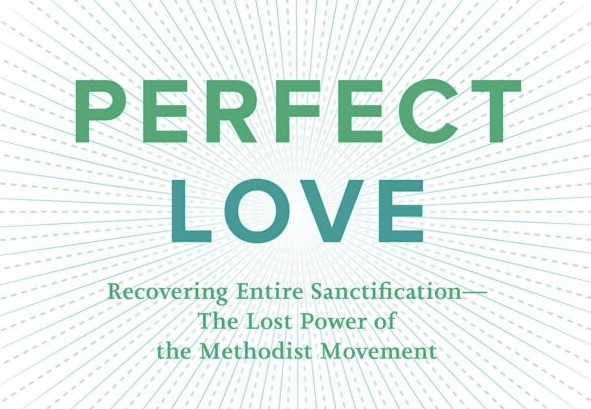
P.S. If you do click through, you’ll see that Matt cites a piece I wrote, “What Is Entire Sanctification,” that was published by Seedbed. The piece is actually an excerpt Seedbed published from my book Perfect Love. If you want to know more about the doctrine of entire sanctification, you should buy my book. It is an accessible and easy to read introduction to the most distinctive belief of Wesleyan Christians.
Kevin M. Watson is a Pastor and the Senior Director of Christian Formation at Asbury Church in Tulsa, OK. He is also on the faculty at Asbury Theological Seminary, anchoring the Seminary’s Tulsa, OK Extension Site. His most recent book, Doctrine, Spirit, and Discipline describes the purpose of the Wesleyan tradition and the struggle to maintain its identity in the United States. Affiliate links, which help support my work, used in this post.

