• About Me

Kevin M. Watson

Kevin M. Watson

Tag Archives: Jesus

John Wesley’s Theology: A Great Question (and Better Answer) about Band Meetings

13 Tuesday May 2025

Posted by Kevin M. Watson in Accountability, Christian Living, Holiness, Methodist History, Teaching, Wesley

≈ Leave a comment

Tags

Band meeting, Bible, Christianity, faith, God, Jesus, John Wesley, Methodism, Methodist, New birth, sin, small groups, Wesley

I want to share one of my favorite memories from teaching this semester.

I had the privilege of teaching The Theology of John Wesley, which is one of the core classes at Asbury Theological Seminary this spring. Every student, regardless of degree, must take The Theology of John Wesley to graduate with a Master’s Degree. This is one of the ways Asbury anchors its identity and resists institutional drift. And I love it!
The class also gave me the opportunity to re-read core texts on John Wesley’s theology. First, we read sixty (yes, 60, not 6) of John Wesley’s sermons, including all of the original Standard Sermons. (Whether you want 44 or 52 in the list, they are all in the Collins and Vickers edited volume of Wesley’s sermons!) And we read my colleague Professor Kenneth J. Collins’s John Wesley: A Theological Journey and The Theology of John Wesley: Holy Love and the Shape of Grace. These are both masterful!

The class is a deep dive into Wesley’s theology. It is thorough and has been expertly crafted through decades of experience. I taught the class exactly the way it has been taught by those who have gone before me this semester. I had a blast because I was able to teach in an area I really enjoy teaching. And I was able to continue learning and growing as a follower of Jesus Christ and as a teacher.

Ok, so here is the memory I wanted to share:

One of the places there is always lively discussion, if students are tracking and understanding the material, is around John Wesley’s conviction that one who has experienced justification and the new birth does not commit outward sin. This is based on John Wesley’s reading of the canon of Scripture, particularly passages like 1 John 3:7-10:

Little children, let no one deceive you. Whoever practices righteousness is righteous, as he is righteous. Whoever makes a practice of sinning is of the devil, for the devil has been sinning from the beginning. The reason the Son of God appeared was to destroy the works of the devil. No one born of God makes a practice of sinning, for God’s seed abides in him; and he cannot keep on sinning, because he has been born of God. By this it is evident who are the children of God, and who are the children of the devil: whoever does not practice righteousness is not of God, nor is the one who does not love his brother. (ESV)

Collins brilliantly summarizes this in John Wesley: A Theological Journey:

Justification delivers from the guilt of sin, regeneration from its power or dominion, and entire sanctification from its being. Unfortunately, these distinctions are often neglected in contemporary Methodism where a decided “shift” has taken place; that is, freedom from the power of committing sin is attributed not to the new birth, as it should be, but to Christian Perfection, with the result that freedom from the being of sin is then relegated to the afterlife and glory. (190)

The conversation in class around freedom from the power of sin in regeneration led to a great question. I reached out to Professor Collins to get his perspective and his response was so good I asked for his permission to share it with my students and then to share it with all of you here. Here is how I framed the question:

How do I best talk to students about the correct definition and understanding of the new birth in connection with the band meeting, which both has a prerequisite of the new birth (and more), and weekly questions connected to sin.

I.e., if a students says, If someone does not commit outward sin after they receive justification and the new birth, why are the band meeting questions focused around sin? (I.e., “What known sins have you committed since we last met?”)

Here is Dr. Collins’s reply:

First of  all,  given the small numbers of people in the band meetings there may not be many responses to the weekly, sin-probing questions among the children of God, but there will likely be at least some responses over time.  Real Christians do at times break faith and commit sin of the high hand, so to speak.  The way forward then would be and must be one of repentance, of doing the first works afresh.  So then, when Wesley affirmed that a born again believer is free from the power and dominion of sin (“The Marks of the New Birth,” “The Great Privilege of Those that are Born of God”) he  was not teaching that real Christians would never sin again (a common misunderstanding among my students) but that Christian believers would have grace sufficient to remain faithful and to walk in a trusting and accountable way in the graces of regeneration.   How do we bring all of this together?  How can we summarize this basic and precious gospel truth which Jesus Christ, himself, affirmed (John 8:34-36)  and which John Wesley repeatedly taught?  I offer the following summary of the several elements here, though this language is not Wesley’s but my own.   However, I do believe that such language captures Wesley’s basic meaning.  And so here goes:    “Willful, intentional sin,  breaking faith with Christ,  should be the grave exception in the Christian life and not the rule.”  Our problem today, however, in American Christianity in general, and even at times in Methodism in particular,  is  that we have made sin the rule and grace the exception.  We need to turn this upside down.   Jesus Christ died for far more than to leave people in the bondages of which they are ashamed. 

Second, I think the very great value of  such questions for the saints that played out in the band meetings during Wesley’s lifetime is that they are a wonderful means of grace that ensure that responsibility and accountability will remain in place.   Think of  band members, for example, who are sorely tempted during the week but who in the midst of  that temptation are reminded by the Holy Spirit, the Spirit of Truth,  that they will have to confess such a sin (if it is committed) before several trusted and beloved others in just a few days.   At that  point the power of the temptation is broken (1 Cor. 10:13) by the light of the prospect of upcoming fellowship,  accountability and love.   That’s precisely the point!   In other words, the questions of the band meetings are themselves a wonderful means of grace, used by the Holy Spirit,  as a means by which faithful Christian discipleship is strengthened and lived out to the glory of God.  Put another way, evil and sin love the darkness; however, Wesley made sure that the infrastructure of Methodism in general, and the band meetings in particular would be flooded by an abundance of light in the form of relationship, accountability and the richest love.   In short, those questions are both precious and necessary  for serious Christian discipleship. 

So good!

Want to know more about the band meeting? Scott Kisker and I wrote a book that is designed to reclaim this practice. Check it out here.
Reflections on Teaching and Learning at Asbury

24 Thursday Apr 2025

Posted by Kevin M. Watson in Life, Methodist History, Ministry, Teaching, Underground Seminary

≈ 2 Comments

Tags

Asbury, Bible, Christian formation, Christianity, class meeting, deliverance, faith, God, Jesus, John Wesley, Methodism, prayer, Seminary, small groups, Teaching, Wesley

I have previously shared here about my conviction that the culture or atmosphere of the classes I teach is more important than being sure I say all the words I want to say or get all the content in before the class ends. 

I am not sure I always get this right. Actually, I’m sure I don’t always get this right. 

However, I am increasingly confident that students are most impacted by the things that happen in my classes because I intentionally create an atmosphere that is open to the Holy Spirit than they are by the lectures that I give. And maybe even more than that, I find that students are more willing to listen to what I have to say when they are convinced that I care about them. So, I think that prioritizing the culture or atmosphere of classes I teach enhances student learning and engagement with the content of the course.

And I don’t think this goes the other direction.

This week, I’ve found myself reminiscing on the things I saw the Lord do over the past month. I wanted to share a few highlights here.

I taught back-to-back intensives a few weeks ago. And they were such a blessing!

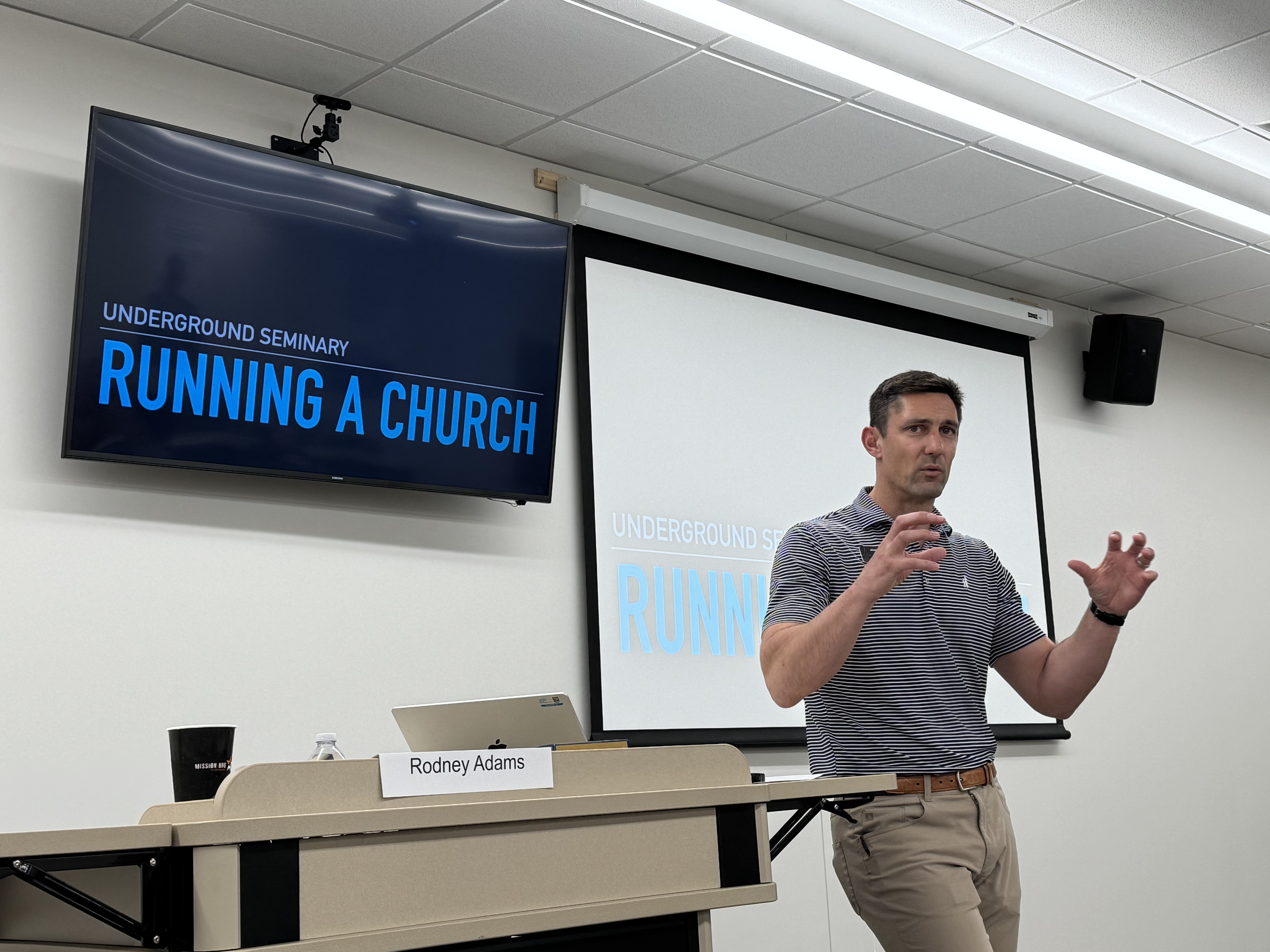
Before my Basic Christian Doctrine class, I put together the second Underground Seminary event. We called it “What They Don’t Teach You in Seminary.” It was led by Rodney Adams, the Executive Director of Asbury Church. Rodney gave a detailed behind the scenes look at how a large church like Asbury is run, the strategic decisions he makes as Executive Director, and the challenges of leading that are particular to a church. (You can read about the original announcement here.)

From my perspective, it was a fantastic success. There were 23 people who came to this meeting, which was immediately before a class that had 16 students. I am encouraged both by such a strong turnout and that the Underground Seminary idea is building energy for what is happening at Asbury-Tulsa. It is energizing to me to have people in the building talking to each other about ministry. I am best at inviting people to things I passionately believe in. Asbury Church is one of those things for me.

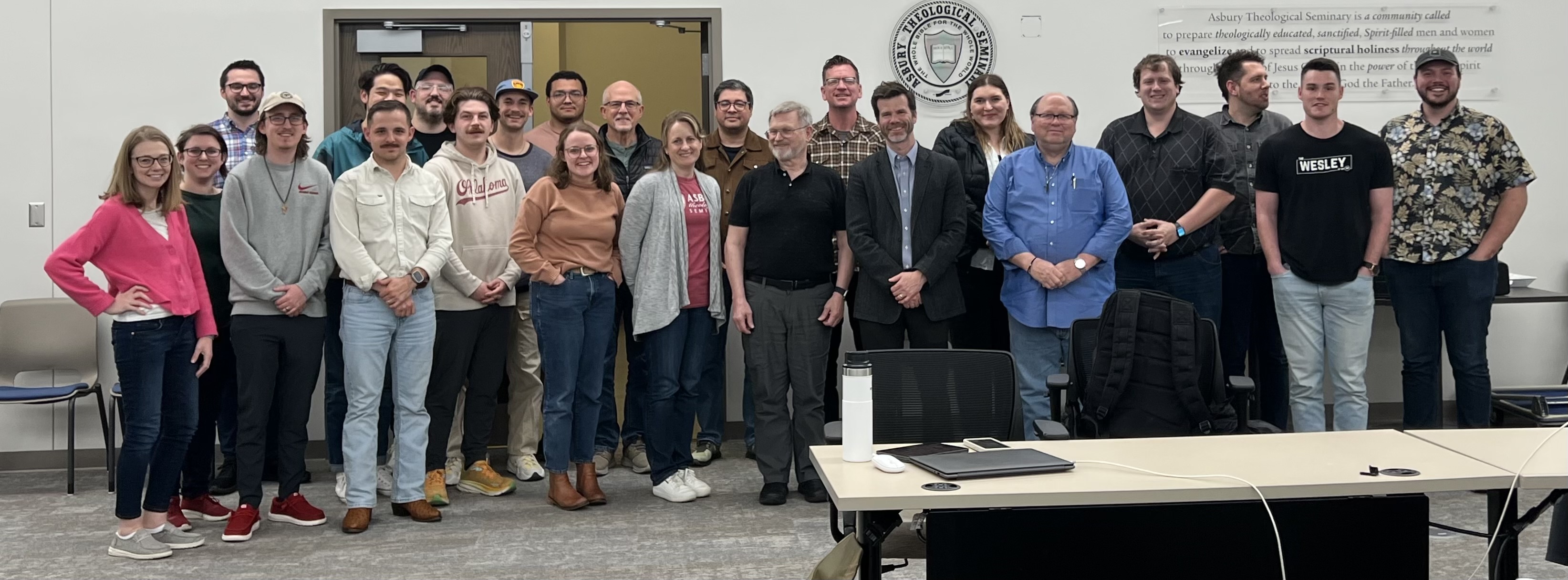
During the class itself, I had a sense that the Lord wanted to minister in some ways to the specific people in the room. I am still learning and growing in how to lead and take risks appropriately in this space. These students were so gracious and hungry for Jesus. It was wonderful. The highlight of the weekend for me was checking in with someone at the end of class that I had particularly felt a burden to pray for and they said, “I feel like myself again for the first time in a year.”

Thank you, Jesus!

Several students stayed with members of Asbury Church. On Sunday morning, one of the students ran into the family that had hosted them, and they were so excited to see each other. The hosts sat with the group of students and my family in worship. I was so blessed by such a tangible connection of my church loving my students well and seeing church and academy connected in such a lovely way.

The next week I had another hybrid. First Methodist Church in Tulsa hosted a Holy Spirit Conference that was amazing. I was invited to lead a breakout on spiritual parenting. This is something I have thought a lot about and am passionate about but had not had a chance to teach on to a group of people. I learned a lot in preparing and was challenged and blessed in thinking it through in order to lead the workshop. I drove straight from First Methodist to Asbury to prepare to teach my second intensive in two weeks, The Theology of John Wesley (with 23 students).

I love getting to teach this material. It has been a blessing to systematically read through Wesley’s sermon corpus in a short window of time. (I highly recommend this if you are a leader in a Wesleyan context and have not done this.) The biggest gift for me personally was rereading two great books by one of the academics I most respect, Dr. Kenneth J. Collins. The two books are core texts for The Theology of John Wesley (which is a required class for every major at Asbury Theological Seminary) and I highly recommend them both. Read Collins’s John Wesley: A Theological Journey first to get a sense of Wesley’s life. It is a great book because it unpacks Wesley’s own life and legacy, but from a rich theological lens. 

After you read this, you should read The Theology of John Wesley: Holy Love and the Shape of Grace. In my opinion, this is Collins’s masterpiece. Reading this book in preparation to teach helped me teach with greater clarity than the last time I taught this material. Collins does a masterful job explaining core concepts like justification, the new birth, and entire sanctification. He is fearless in his fidelity to the witness of Scripture and Wesley’s understanding of it.

In addition to this class just being a delight, there were some powerful moments where the Spirit met us. Rev. Graeme Collett, one of the associate pastors at Asbury Church, preached for the Asbury Seminary chapel service on Friday. Graeme has become a good friend and one of the best surprises in our move here to Tulsa. And unlike any sermon I’ve experienced here yet, the Lord gave Graeme a clear word for this specific class at this specific time. (And this is saying something, because we’ve had an embarrassment of riches in terms of the quality of preaching we’ve had in our chapels here!) The highlight was Graeme’s burden to anoint students to remind them of their callings and to seal the work of the Holy Spirit in them. I believe every single person in the room came forward for prayer at some point. Lots of beautiful Holy Spirit tears and ugly crying. It was one of those times you are just aware the Lord is doing deep work in people right before your eyes. I am so thankful for Pastor Graeme’s leadership and for the Spirit’s presence with us in chapel.

We lost track of time and went more than thirty minutes over, but that is one of the special things about these intensives. It didn’t matter! Sometimes people will say in ministry that “the trains have to run on time.” The great thing about the intensives I teach is that there is one train and we’re all on it! So, we got where we were supposed to go when we were supposed to get there.

The second highlight of the Theology of John Wesley hybrid was a word I felt like I got from the Lord on Saturday morning, before the last day of the intensive. As I was praying that morning, I had the impression that the Lord wanted me to start the day by inviting people to share testimonies to what they had seen the Lord do so far in our time together.

I need to admit that this is often hard for me. Sometimes I’m afraid nobody is going to say anything, and it will bomb. I’ve gotten more comfortable holding space as time has gone on, but it is still an area I’m growing in. And I felt that Saturday morning. 

Goodness was I wrong to be concerned. There were so many wonderful testimonies people were ready to share about how the Lord had met them. God is so good!

That part went so well, the Lord nudged me to notice the second thing I had written down as I had been praying that morning: 

“Deliverance?”

In part, I think this came from witnessing a powerful deliverance at the Holy Spirit Conference the Wednesday night before my class started. I also think it came from reflecting on how important deliverance ministry was in John Wesley’s own ministry. (For more on this, see Dr. Peter J. Bellini, Thunderstruck! The Deliverance Ministry of John Wesley Today )

I gave what felt like a pretty timid invitation to receive prayer for deliverance if someone felt like they needed it. I am not going to go into details here for a variety of reasons, except just to say that the Father, again, showed me His desire to communicate with His children. I also experienced the power and authority of Jesus Christ in a deeper way that I don’t think I can adequately express. It was just a blessing.

I have so much to learn. One thing that I have found really helpful is thinking about my classes as laboratories. Here is what that image means to me: in a lab, you do something real but you also reflect on it and can interrogate the experiment itself. So we can meet in a small group in my Wesleyan discipleship class and talk authentically about the state of our souls. And we can also then ask how the conversation felt, what could we do differently? Was there something that felt unhelpful or could have been more helpful? Lowering the stakes and explicitly thinking of the time together in class as a learning environment gives permission to make mistakes and raises the expectation for pursuing excellence. I love that combination.

I’ve seen this with prayer for healing in my classes. I’ve seen this with seeking to hear the Lord’s voice and be guided by the Holy Spirit. And I’ve seen it in lively classroom conversations about deep matters of theology. It is challenging. And it is fun.

I can’t wait to see what the Holy Spirit does next!

P.S. Did you know that I am launching a Fellowship Program at Asbury Church? We are hiring two Fellows that will be paid full-time positions, with benefits. Starting this August. More details about the Fellowship Program and how to apply here.

Don’t Forget to Give to Jesus!

20 Thursday Dec 2007

Posted by Kevin M. Watson in Ministry

≈ Leave a comment

Tags

Christmas, giving, Jesus

It was my responsibility to give the Children’s Sermon last Sunday in worship. I wrestled with what to talk to them about. I always find Christmas to be a bit of an awkward time to talk to the children, because I have such great memories of Christmas, but my memories are mostly based on the gospel of consumerism, not the gospel of Christ. So, I sometimes struggle with finding helpful ways to talk to young people about the “true meaning of Christmas.”

Last week I decided to read a passage of Scripture to them and share a story. The Scripture passage I read was Matthew 2:1-2, 9-12 which is about the magi visiting Jesus and bringing him gifts of gold, frankincense and myrrh. I asked them what happened in the story. (I was very impressed with how much they got out of the story, they recounted almost every detail.) I asked questions trying to get them to come to a realization that I had during the week that was the motivation for this Children’s Sermon: the magi gave gifts to Jesus, not to each other.

It is interested that the secular meaning of Christmas has become a time to give gifts to other people (and of course receive gifts too!) It seems to me that gifts play two roles in Scripture. First, Jesus is God’s gift to the world. We have all received the gift of the incarnate God sent to save us. Second, the people who recognized this gift for what it was brought gifts to Jesus in worship and thanksgiving.

So, I am coming to a deeper appreciation of the Little Drummer Boy’s struggle: what gift can I bring to Jesus? I have spent more time worrying about and thinking about how what gifts to give to my family and friends. But, in working on a children’s sermon I was reminded that I need to first make sure to receive the gift anew that has been given to me, the gift of God’s loving presence. And then it may be that I need to put more thought into how I will respond to that gift than to any other gift that I give.

I hope and pray that my very life is becoming the gift that I am offering to Jesus in worship and thanksgiving. What gift are you giving to Jesus this Christmas?

Newer posts →

Blog at WordPress.com.

  • Subscribe Subscribed
    Kevin M. Watson
    Join 395 other subscribers

    Have a WordPress.com account? Log in now.

  • Kevin M. Watson
    View site in Reader
    Manage subscriptionsSign upLog in
    Report this content
    Collapse this bar
Loading Comments...