• About Me

Kevin M. Watson

Kevin M. Watson

Tag Archives: Christian formation

Join My Seminary Course in Wesleyan Discipleship in Tulsa [January 2025]

24 Thursday Oct 2024

Posted by Kevin M. Watson in Accountability, Class Meetings, Holiness, Methodist History, Ministry

≈ Leave a comment

Tags

Band meeting, Christian formation, class meeting, discipleship, John Wesley, Methodism, Methodist, small groups, Wesley

I am teaching a course on Wesleyan Discipleship in Tulsa as a January-Term course at Asbury Theological Seminary this coming January (2025). You should join me! 

What is the course about?

Here is my description of the course:

Wesleyan Discipleship explores the history, theology, and practice of discipleship through a Wesleyan lens. Particular attention is given to the role of communal formation in eighteenth-century Methodism. John Wesley’s theology of discipleship is explored, along with a variety of aspects of Christian formation in community in early Methodism. Particular attention is given to the way Wesley’s theology of social holiness was expressed in early Methodist small groups, especially the class meeting and the band meeting. Students will apply the historical and theological understanding of Wesleyan discipleship to contemporary ministry contexts.

Why I am FIRED UP about this class:

This class will have an intensive on site here in Tulsa from the evening of January 16th through January 18th, 2025. I LOVE the time together with students at intensives! This class beautifully lends itself to teaching in this format. 

Hybrid classes have 20 hours of in-person instruction over 2.5 days. (The rest of the course requirements are met through online engagement and completion of online modules.) It is intense! But I have also found, perhaps surprisingly, that it is also an opportunity for a spiritual retreat for students. 

The in-person experience gives us the opportunity to worship together. We will start the class by attending worship at the Thursday evening service at Asbury Church, where Rev. Andrew Forrest will be preaching. Andrew is an exceptionally gifted preacher of the Scriptures and a brilliant communicator. I love being able to start class off by tangibly connecting the church and academy by walking across the parking lot to go to worship.

We will also have an Asbury Theological Seminary – Tulsa chapel service for the class and students in the area on Friday January 17.

I will get to spend hours talking about my scholarly passion – the importance of community and connection for the Christian life. I love getting to teach students and engage their questions around these topics!

And most important, we will spend time talking about and practicing ways to reintroduce these tried and tested methods that gave Methodism its name.

At the end of the course, students will have the kind of knowledge gain you would expect from a typical seminary course. But they will also have experience participating in class meetings, experiencing small group dynamics, and reflecting on various challenges and opportunities of leading small groups like class and band meetings.

I think of this course as like a laboratory. We will learn a lot about the concepts, but we will also engage them in a hands-on way. In a laboratory you can not only experience a class meeting, but you can also talk about your experience of a class meeting. In my view, this is essential for becoming an expert practitioner. You need not only a theoretical framework and some practical experience, but you also need a place to talk about your experience so you can acknowledge, address, and overcome obstacles and challenges.

I am more confident than I have ever been that groups like the Wesleyan class meeting and band meeting will be at the center of Christian discipleship in these new and strange times we are entering.

These intensives are aptly named. They are not easy. J-term is not a short cut. In fact, it is a three-week academic sprint. My goal is to maximize the 20 hours we get to spend together to suck the marrow out of the class and be as fully equipped to make disciples of Jesus Christ in the contemporary church as possible. 

I want students who come hungry and ready to learn and grow. And that is what we are seeing here in Tulsa. It is SO FUN!

How is the course being taught?

I am teaching this course as a hybrid course at Asbury Theological Seminary at our Tulsa, OK Extension Site (housed at Asbury Church).

What is a January-Term, or J-Term, course?

A J-Term course is a full three credit course that is offered entirely within the month of January. This coming J-Term will start on January 2, 2025 and conclude on January 24, 2025.

What is a hybrid course?

A hybrid course is a course that has parts that are online and parts that are in person. This specific course will have four online modules based on four main sets of reading, students will write a reflection paper that summarizes the content of the reading, critically engages it, and applies it to their own ministry context.

The in-person part is January 16-18, 2025 at Asbury Church’s Development Center in Tulsa, OK. The in-person meeting will be from 6:00pm-9:00pm January 16, 8:30am-5:30pm January 17, and 8:30-5:30pm January 18. The in-person meeting is required for completion of the course. It is also the highlight of the entire course!

Does this course meet the Wesleyan Discipleship and Spiritual Formation requirement for ordination in the Global Methodist Church?

The Convening General Conference of the Global Methodist Church, which met a few weeks back, updated the educational requirements for ordination. And one of the changes that was made was the addition of a course called “Wesleyan Discipleship and Spiritual Formation.” I don’t mean to brag, but I believe this course hits the bullseye for what the GMC is looking for here! So, yes, if you are seeking ordination in the GMC, this course meets the Wesleyan Discipleship and Spiritual Formation course requirement. You can take this course and meet all GMC ordination requirements with either an Asbury Theological Seminary M.Div. or our 60 credit (exactly 20 courses) Master’s in Christian Ministry (MACM).

Should I take this course if I am not in the Global Methodist Church?

Yes! 

If you want to help your church more effectively make discipleship of Jesus Christ, this course is for you. 

I am passionate about Wesleyan Discipleship, not because I am most passionate about John Wesley, but because I believe the Wesleyan theological tradition has a proven track record of excellence in intentional and effective disciple making. We do well to learn from experts who have gone before us. This course is not specifically for students from any one denominational tradition. I mentioned the GMC above only because there is obvious relevance for the GMC because they just made this exact course a required course to be ordained an elder in the GMC. (Your church or denomination should too. This topic really is that essential for succeeding in the 21st century church.)

Can I take this course if I am not an Asbury Theological Seminary student?

Yes! The easiest way to do this would be to apply now to become an Asbury Theological Seminary student. We have a variety of degree programs, and I would be thrilled to talk to you about any of them! There is time to apply now and start this January.

If you are interested in applying to Asbury Theological Seminary or for this course in particular, reach out to me here (scroll down to the bottom of the page) and I will get back to you soon. Be sure to include your email so I know how to reach you. 

Not ready to apply to one of our Master’s degree programs? You may be able to apply to take the course as a non-degree seeking student. You also may be able to audit the course. Both require an application and auditing requires permission from the instructor. For either of these, reach out to me at the link immediately above.

I am open to considering some auditors. Auditors do not receive any academic credit for the course and do not turn in any assignments. They are given permission to sit in on the in-person part of the class and participate in class discussions and activities. However, I will only open the class up to auditors if there are open seats after the registration period closes. (I would assume auditing the course would not satisfy denominational ordination requirements, but you should check with your own denominational leaders.)

What is the official title of the course?

The course is cross listed as a Spiritual Formation course and a Theology course. So you can sign up for either TH650 Wesleyan Discipleship or SF650 Wesleyan Discipleship.

What are the assigned readings in the course?

Students will read a few short essays from John Wesley. And they will read these three books (affiliate links):

The Class Meeting: Reclaiming a Forgotten (and Essential) Small Group Experience, Kevin M. Watson

The Band Meeting: Rediscovering Relational Discipleship in Transformational Community, Kevin M. Watson and Scott T. Kisker

Real-Life Discipleship: Building Churches that Make Disciples, Jim Putman

I cannot wait for this class! I hope to see you here in Tulsa January 16-18, 2025.
Powerful Moments at West Plains Annual Conference: A Reflection

21 Friday Jun 2024

Posted by Kevin M. Watson in Christian Living, Class Meetings, Life, Ministry

≈ Leave a comment

Tags

book announcement, Christian formation, class meeting, Methodism, small groups, speaking

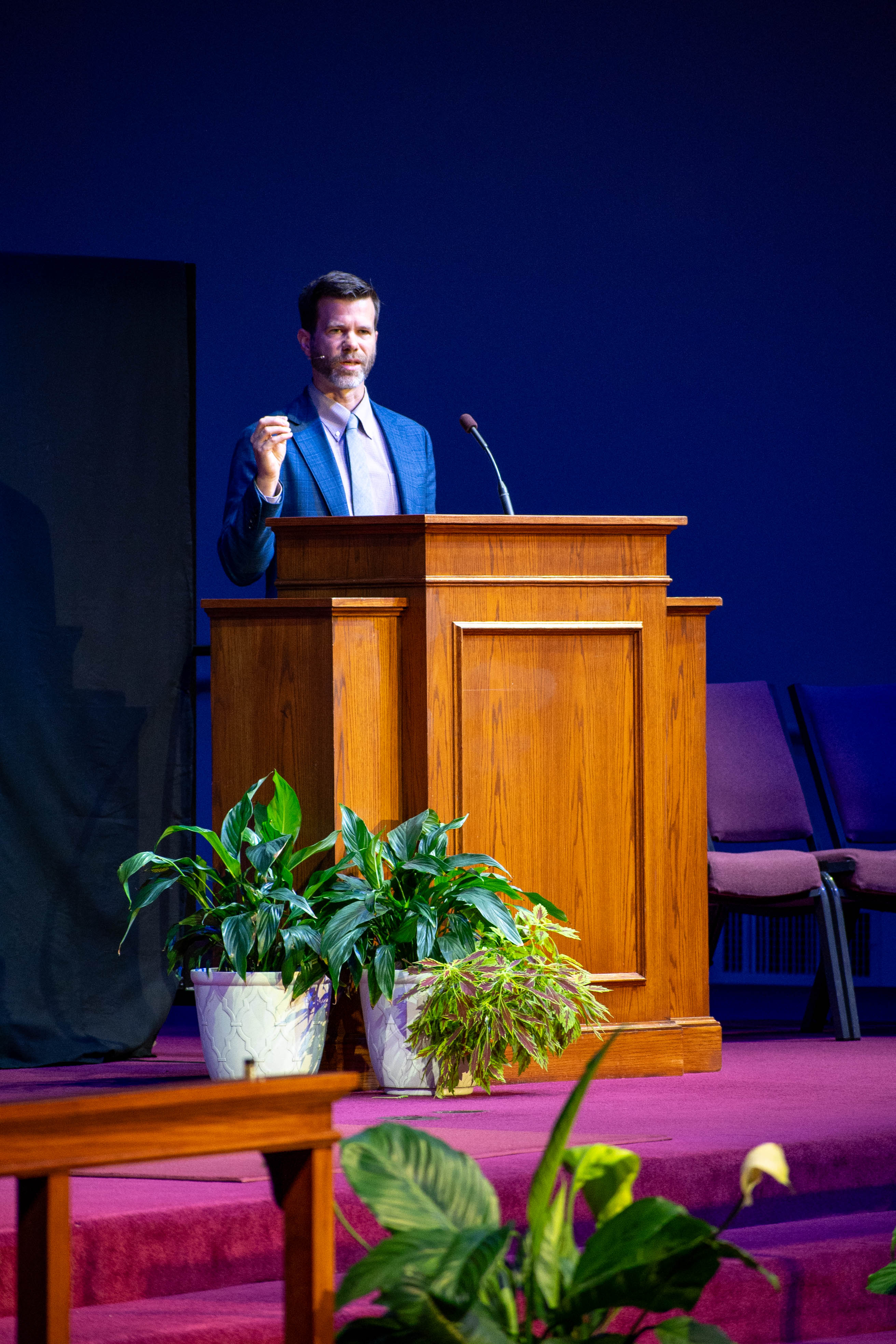
When Rev. Mike Schafer, President pro tem, of the West Plains GMC Annual Conference reached out to me last fall and asked me to preach and teach at the upcoming conference, I was thrilled! And the West Plains Annual Conference exceeded my expectations.

One of my favorite moments of the conference was when Mike described something he had never had happen in his entire ministry: an Annual Conference attendee asked if they could bring a friend! That gives an idea of the atmosphere and spiritual environment in West Plains.

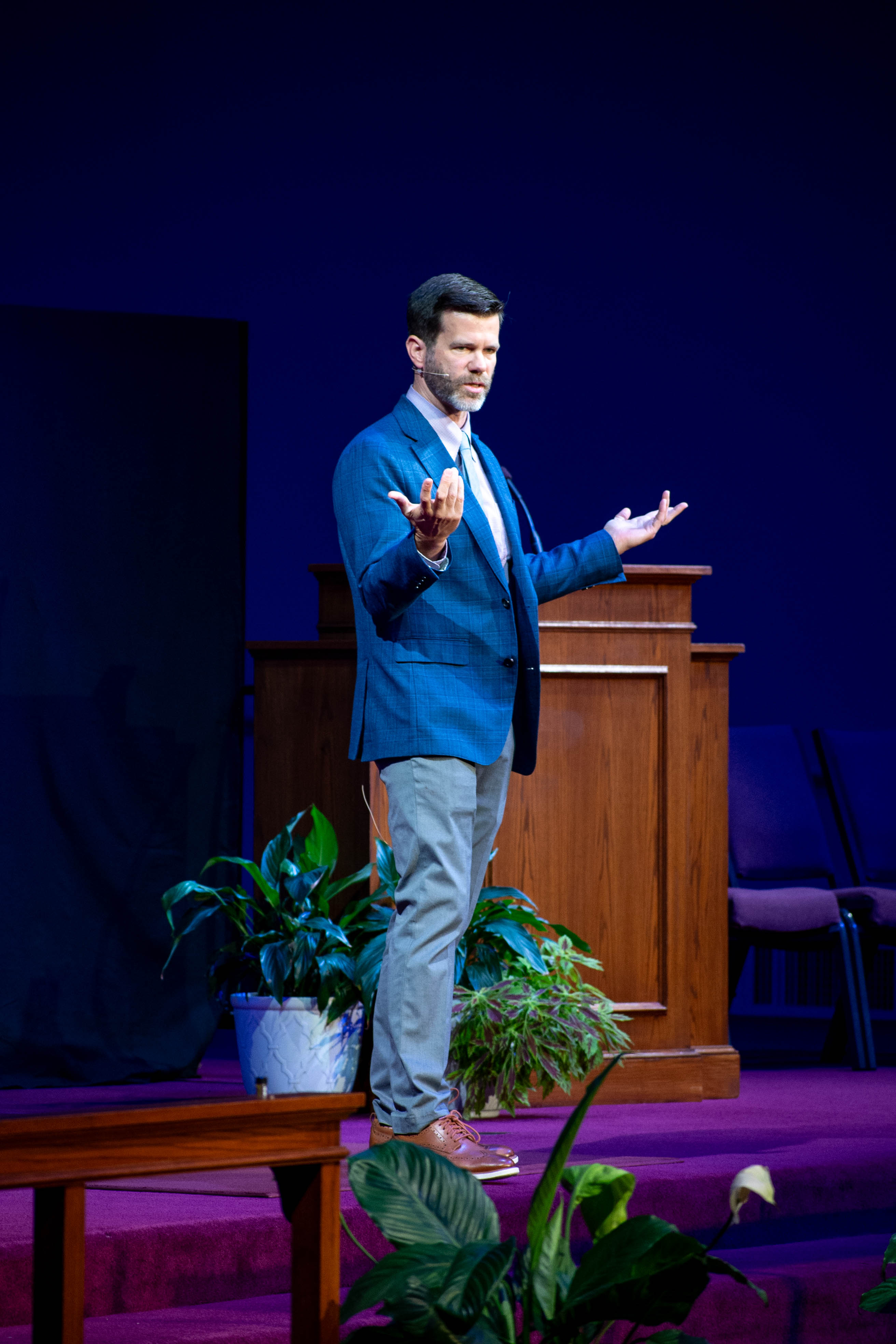
I showed up planning to preach one message, and instead spoke on Matthew 13:44:

The kingdom of heaven is like treasure hidden in a field, which someone found and hid; then in his joy he goes and sees all that he has and buys that field. [NRSV]

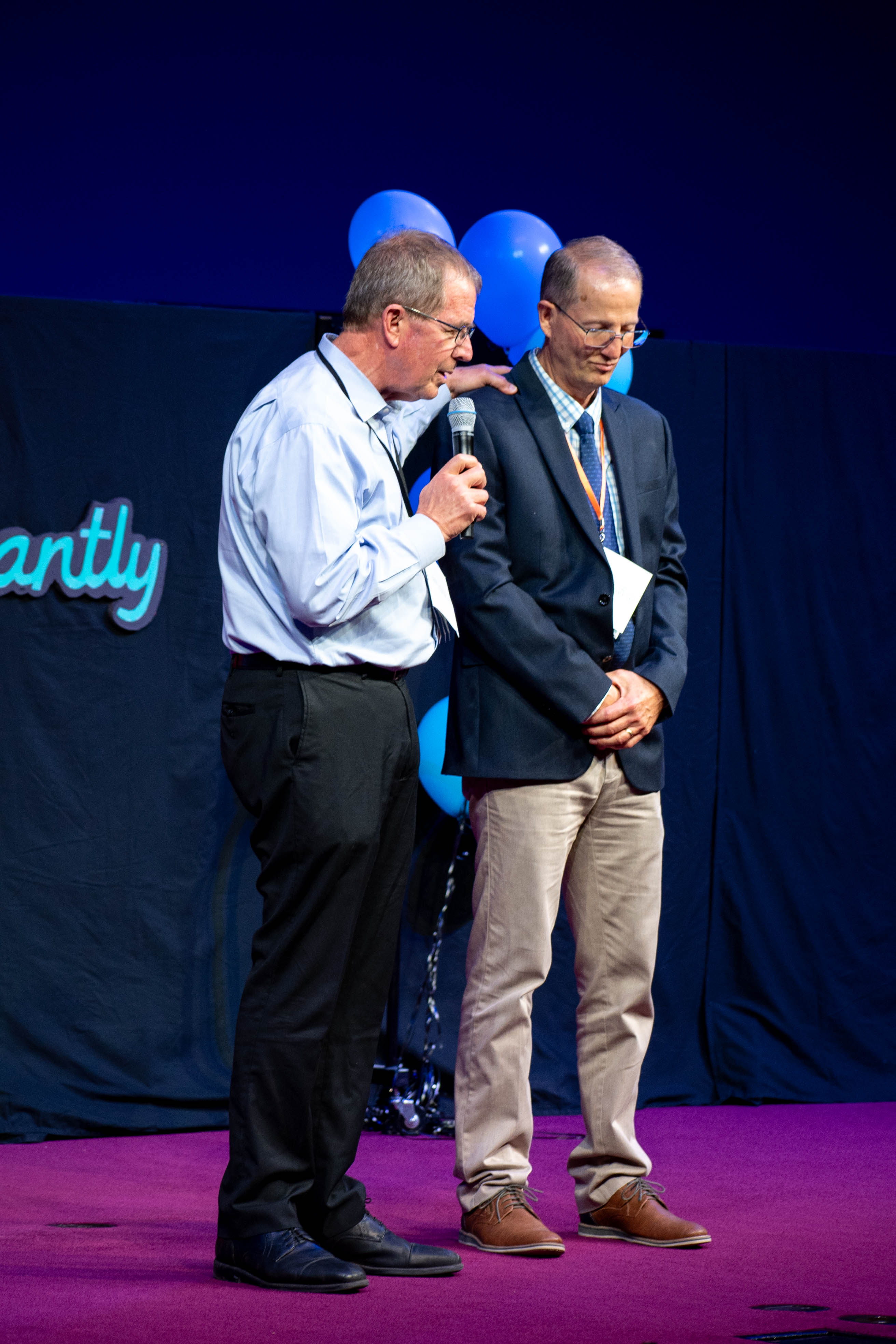
I shifted because the Spirit did something when Mike prayed for me right before my sermon. I don’t remember exactly what he prayed, but it had something to do with the Spirit opening me up to receive what he wanted to say, even if it was different than what I’d planned. I had been wrestling with a sense that what I had prepared was not quite right and Mike’s prayer brought clarity that I was supposed to change courses and trust the Lord.

The truth is that I don’t really remember most of what I said because it was so unscripted. That is not a comfortable place for me. And I didn’t think I did a great job. When Mike gave an altar call after my sermon, I went to the altar and repented and apologized to the Lord because I just felt like I missed it with my message.

I am grateful for the exceptionally gracious feedback I received from many people in West Plains about how the Lord had used the sermon for them.

God is good!

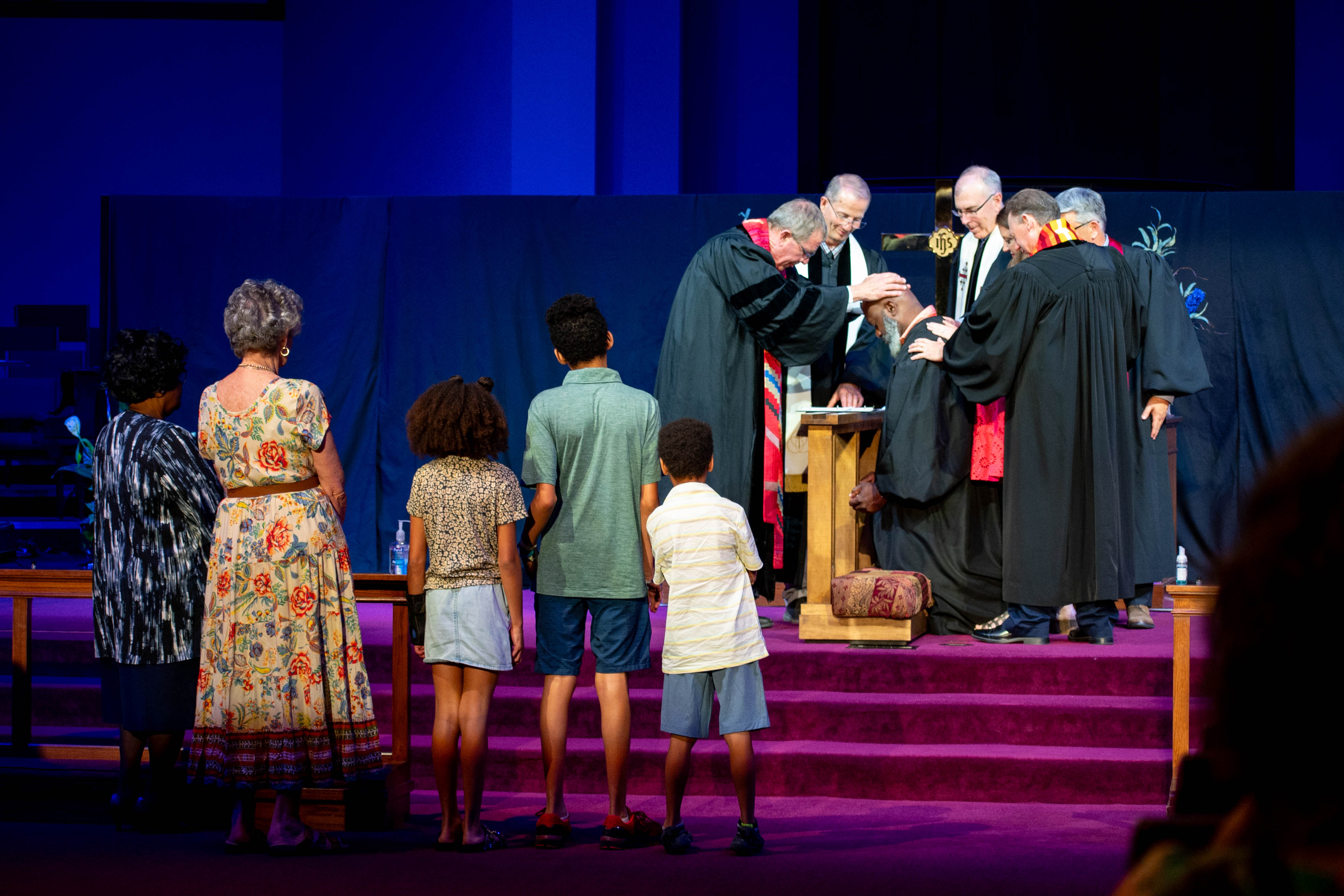
The ordination service was powerful as well. A few things really stood out to me. First, the unity in the room, not only among the ordinands, but also among the clergy and laity in attendance was palpable and a joy. When Bishop Jones went through the Historic Questions, it was the first time in my ministry I wasn’t wondering if people meant “No” even though they were saying “Yes.”


Bishop Jones led in a way that kept the focus on the main thing and the seriousness of what was happening. That was a gift to experience. 

Two other things happened in the ordination service that were beautiful. First, immediately after ordination, Bishop Jones celebrated Communion and the newly ordained served the rest of the congregation. It was so well done! Second, after Communion, Bishop Jones gave an invitation to receive a call to ministry during the final song. I saw at least three people from the congregation respond to that invitation! I don’t think I’ve ever witnessed that before. It was so hopeful and encouraging to just have a strong focus on the significance of ordination and even more so on the Triune God who speaks and calls us to serve.

Rev. Schafer asked me to speak on Wesleyan discipleship, focusing on class and band meetings on Saturday morning. If you know me, it is pretty easy to convince me to do that! I have been thinking quite a bit about the old(er) Barna survey that is outlined in the book Maximum Faith (you can find a summary of the ten stops of the Christian life here). I summarized those findings and the way they point to the need for relational connection and deeper discipleship across the church in the United States. This, in my view, only increases the importance of returning to our Wesleyan heritage of intentional discipleship through small groups.

I had a blast teaching that material!

Finally, I got to experience two of the three TED-style talks given by folks in West Plains. Wow! The first talk was about a fire ministry after the massive fires in Texas last year. Even more than that, it was a powerful testimony about God’s work in one woman’s life. The second talk was by a rancher and a lawyer who felt called to co-pastor the GMC church in their town. The commitment to the local church and the authority of Scripture was powerful! I wish I’d been able to stay for the final one and the rest of the afternoon!

Preaching and teaching at a place like the West Plains Conference is an enormous privilege. It still surprises me to be asked to speak in places like this. I love doing it and it is a blessing to me. Every time, I think, I can’t believe I get to do this! God has been so kind to me and I am thankful.

One final thing about my time at this conference. Mike Schafer will become the first Connectional Operations Officer for the Global Methodist Church, starting August 15, 2024. Leadership in West Plains recognized Mike for his service as the first President of the West Plains Conference and gave thanks for this new role. One of the people who praised Schafer’s leadership in West Plains commented that he was exactly the right person to serve in this new key leadership role in the GMC because he had not spent his entire career trying to receive this kind of position. I loved the way that was put! And it rings true of my experience with Mike. His selection for this role is encouraging to me and a hopeful sign of things to come for the Global Methodist Church. (You can read more about Rev. Schafer and his new role here.)

Thank you, West Plains, for having me! And special thanks to Emma Stonum for sharing the photos I’ve used in this post.

Reminder: My new book releases next Tuesday, June 25th

My new book Doctrine, Spirit, and Discipline: A History of the Wesleyan Tradition in the United States releases on Tuesday, June 25th. I wrote a post about the book here. Please check it out. This is the first book I’ve directly asked folks to pre-order. Doing so helps the long-term success of the book in a variety of ways. It would really help me out if you would take a moment to head to Amazon (affiliate link) or Zondervan and order the book now. I am really encouraged by the early interest in this book! Thank you so much to all of you who have already pre-ordered it.

In this time of rapid change and chaos, it is imperative that we reground ourselves in our identity. This book explains the core identity of the Wesleyan theological tradition and points to lessons from the past that will help us be more faithful in the present and future.

Thank you!

Rod Dreher’s Live Not by Lies and the Call to Suffer for Truth

08 Thursday Oct 2020

Posted by Kevin M. Watson in Uncategorized

≈ Leave a comment

Tags

Book Review, Christian formation, Live Not by Lies, Rod Dreher

Have you ever been afraid to say something that you believed was true?

I recently finished reading Rod Dreher’s Live Not by Lies: A Manual for Christian Dissidents and that question was my litmus test about whether his book is exaggerating the challenge that Christians are facing in our current cultural moment. 

Dreher argues that we are making a turn towards soft totalitarianism (in contrast to hard totalitarianism) and that the church is wholly unprepared for what is coming. Drawing on Hannah Arendt’s work, Dreher describes a totalitarian society as “one in which an ideology seeks to displace all prior traditions and institutions, with the goal of bringing all aspects of society under control of that ideology” (7).

Survivors of Soviet totalitarianism speak to similarities that they see from their time behind the Iron Curtain and swift changes in the United States today: 

“What unnerves those who lived under Soviet communism is this similarity: Elites and elite institutions are abandoning old-fashioned liberalism, based in defending the rights of the individual, and replacing it with a progressive creed that regards justice in terms of groups. It encourages people to identify with groups – ethnic, sexual, and otherwise – and to think of Good and Evil as a matter of power dynamics amongs these groups. A utopian vision drives these progressives, one that compels them to seek to rewrite history and reinvent language to reflect their ideals of social justice.” (xi)

One of Dreher’s main concerns is a change from old school liberals who could disagree agreeably and contemporary progressive social justice warriors who seek to silence dissent. In his own words:

“The contemporary cult of social justice identifies members of certain social groups as victimizers, as scapegoats, and calls for their suppression as a matter of righteousness. In this way, the so-called social justice warriors… who started out as liberals animated by an urgent compassion, end by abandoning authentic liberalism and embracing an aggressive and punitive politics that resembles Bolshevism.” (10)

There may be better ways to engage Dreher’s argument and test the truth of its diagnosis and its prescription. But this was the question that kept coming to the forefront of my mind as I read: Why has it often been so difficult for me to say what I believed in the various places I have been since I started seminary in 2002?

I don’t mean difficult in the way that I assume it is always hard to have difficult and tender conversations. I mean difficult in that there was a social pressure that was so strongly opposed to certain ideas that it felt like to speak them was to take a very real risk of being rejected by the entire community forever for having uttered them.

For some of you reading this, I will seem to you to be exaggerating. Maybe it will help if I offer three of my most vivid memories of my time as a seminary student. 

Before I go any farther, my intention here is not to take a cheap shot at my seminary. I’m not sure my seminary intended to make it hard for me or any other student to speak our convictions. But the truth is I experienced seminary as a place where it was almost impossible to say certain things out loud.

Memory #1:

I am sitting at a round table in the refectory at dinner with a group of peers, all about the same age as me. As I was eating, the conversation turned, again, to topics like politics and social issues, where there was assumed agreement. I don’t remember what exactly was being talked about but all of the sudden it just hit me: These people hate my family and friends I love back home. I’ve been eating with them for months and no one here really knows me. And based on their words, they despise me.

Memory #2:

There was a campus wide protest on behalf of LGBTQ people. The protest was enacted in the form of a day of silence in order to protest the ways that LGBTQ people are silenced every day. You participated in the protest by taping your mouth shut and wearing a sticker that said that you were not going to be speaking at all that day to protest and express solidarity with LGBTQ people. 

Nothing in my previous experience had prepared me for this. I remember thinking that I understood why people who were passionately in favor of the church embracing gay marriage and the ordination of sexually active gays and lesbians would work to see change. I actually wanted to listen to arguments for and against the church’s position. 

What jarred me was the feeling that this protest seemed to have been conceived in a way that put the maximum amount of shame on those who were not with them. Simply to speak that day was to reveal oneself as an oppressor, a bigot, a homophobe. From my perspective, the protest was a clear litmus test: you are for us or you are against us and we are going to force you to take sides right now one way or another. 

In my naivete, I remember being confused that the faculty and administration of the school seemed to entirely support the protest even though it undermined the ability to have class discussions in every class taught that day. And it seemed odd to me that in an academic environment you would protest not through careful conversation, logic, and ideas, but by refusing to participate in any discourse at all.

I never felt the same way about seminary after that day.

Memory #3:

I took a course that was a practicum in preaching in my final semester of seminary. At some point during the semester, every student preached a sermon to the rest of the class. I only remember one sermon that was preached that semester. The sermon was memorable for two reasons. First, it was the only time a student in any class I ever took in seminary talked about homosexuality in a way that did not affirm gay marriage or the ordination of sexually active gays and lesbians. It was the first and only public argument I heard during my three year seminary experience. That made it memorable.

(If this does not seem odd to you, it might help you to know that this was the issue, by far, that was the most controversial and threatening to divide the church when I was in seminary. It is also the reason the church was poised to split this year if the General Conference had not been postponed due to Covid-19. It might also help to know that the official position of the UMC was and still is what can loosely be defined as affirming traditional sexual ethics. So this student was the only person I ever heard who actually spoke publicly in favor of what the church taught, in a place where many students were preparing for ordination in this same church.)

The second reason I remember the sermon is because it was so bad. It was painful to listen to. I remember initially being hopeful that someone had the courage to speak to the plain and consistent prohibition of same sex sexual activity in Scripture. That hope quickly turned to cringing because the preacher failed to show love towards people who struggled with same sex attraction. I don’t remember hearing a word of hope. I don’t remember hearing the gospel. 

This last memory has haunted me the most because it illustrates what happens when dissent and differing viewpoints are stifled in an educational environment. Resentment and anger increase because people who dissent see exactly what is happening and many of them simply go underground. And everyone misses the opportunity to think better and to pursue the truth. This is a problem in general. But it is a crisis in an academic environment. 

Have you ever been afraid to say something that you believed was true?

I’m guessing you have. My experience is that fewer and fewer people are willing to risk anything to stand for the truth. 

Dreher is pessimistic, some might say characteristically pessimistic, here:

“Christian resistance on a large scale to the anti-culture has been fruitless, and is likely to be for the foreseeable future. Why? Because the spirit of the therapeutic has conquered the churches as well – even those populated by Christians who identify as conservative. Relatively few contemporary Christians are prepared to suffer for the faith, because the therapeutic society that has formed them denies the purpose of suffering in the first place, and the idea of bearing pain for the sake of truth seems ridiculous.” (13)

Is there any hope here?

Yes. But Dreher does not offer superficial comfort. 

“The task of the Christian dissident today is to personally commit herself to live not by lies. How can she do that alone? She needs to draw close to authentic spiritual leadership – clerical, lay, or both – and form small cells of fellow believers with whom she can pray, sing, study Scripture, and read other books important to their mission. With her cell, the dissident discusses the issues and challenges facing them as Christians, especially challenges to their liberties. They…. Identify the challenge, discern together its meaning, then act on their conclusions.” (18-19)

Let me offer one final memory from my time in seminary. It is equally vivid. And, from my perspective, it is entirely hopeful.

Memory #4:

I walked into a classroom with a handful of other people. My heart was racing. I felt scared. I didn’t know if I would be able to talk. I sat down with my lunch. I knew everyone there. But I was as nervous as I have ever been in my entire life. 

I had been invited to join a Wesleyan band meeting, an accountability group where you confess sin in order to experience forgiveness and pray for each other’s healing, and this was my first time to attend.

The person to my left opened us with prayer and went first. After he confessed, someone else reminded him of the promise of Scripture, “If we confess our sins, he is faithful and just and will forgive us our sins, and purify us from all unrighteousness. (1 John 1:9) In the name of Jesus Christ, you are forgiven.”

And then the person on his left went and so on until I was the last one.

I still remember the gift that they had given to me in each trusting me enough to show such vulnerability and honesty before they knew how I would receive it or respond. Their courage enabled me to tell the truth that day. And their love, support, encouragement, and willingness to press in and hold me accountable changed seminary. It changed my life.

Through this group, God began to heal these other memories. 

This group was in many ways like the cell groups that Dreher describes. And it was through the relationships developed in this group that I had conversations about deeply contested ideas and beliefs that I was unable to have in my classes. (Although the first time I reached out to someone to talk about human sexuality, I asked to meet off campus.)

I am not sure if I think Dreher is right in everything that he says in this book. Since much of what he is doing is predicting what is coming, only time will really tell. 

We should all hope that he is wrong.

But as I read the book, I kept remembering all of the times it has felt close to impossible to say something I believed was true or say that something that was being affirmed is not true.

Certainty that one is on the side of justice seems to be replacing careful thinking, nuanced argument, and even the space to ask questions and explore ideas.

Throughout my time in theological education, I have often sought advice from those who have gone before me. Particularly before my tenure review, I was discouraged by how often I was encouraged to keep my head down and not make waves so that I wouldn’t jeopardize tenure. This seems to me to be the kind of practical atheism that far too many American Christians have embraced:

Profess faith in God. But make decisions as if God doesn’t exist and is powerless.

I encourage you to read Live Not by Lies, if nothing else, because it is a bold challenge to such malnourished formation of Christians. He reminds us of a Christian imagination where actual human beings created in the image of God have refused to bow the knee to worship idols. And they have suffered for their faith in very real ways. But above all, their testimony is that they have counted the cost and joyfully taken up their cross and determined to follow Jesus Christ, their Lord and only salvation.

We are desperate for real Christianity, not the cheap imitation we have tolerated for far too long and tried to pervert to our own worldly advantage.

I conclude with a reminder from Jesus himself:

From that time on Jesus began to explain to his disciples that he must go to Jerusalem and suffer many things at the hands of the elders, the chief priests and the teachers of the law, and that he must be killed and on the third day be raised to life.

Peter took him aside and began to rebuke him. ‘Never Lord!’ he said. ‘This shall never happen to you!’

Jesus turned and said to Peter, ‘Get behind me, Satan! You are a stumbling block to me; you do not have in mind the concerns of God, but merely human concerns.’

Then Jesus said to his disciples, ‘Whoever wants to be my disciple must deny themselves and take up their cross and follow me. For whoever wants to save their life will lose it, but whoever loses their life for me will find it. What good will it be for someone to gain the whole world, yet forfeit their soul? Or what can anyone give in exchange for their soul? For the Son of Man is going to come in his Father’s glory with his angels, and then he will reward each person according to what they have done.

– Matthew 16: 21-27


Kevin M. Watson is a professor at Candler School of Theology, Emory University. He teaches, writes, and preaches to empower community, discipleship, and stewardship of our heritage. Click here to get future posts emailed to you. Affiliate links used in this post.

Coming Soon: Reclaiming the Class Meeting

18 Thursday Apr 2013

Posted by Kevin M. Watson in Accountability, Christian Living, Class Meetings, Methodist History, Ministry, Wesley

≈ 5 Comments

Tags

catechesis, Christian formation, Class Meetings, life in god, methodist class, relationship with god

photo (8)If I had to pick one thing that I believe would be most likely to be used by the Holy Spirit to bring renewal to the church, it would be a return to the early Methodist class meeting.

And that is why I have finally gotten around to writing a book that is designed to introduce people to what a class meeting is and to help create and sustain these groups. I have just submitted my manuscript and am excited to see this book in print.

Class meetings were groups of seven to twelve people who gathered together to discuss the state of their relationship with God. The question used in the eighteenth-century was, “How does your soul prosper?” Today it might be translated, “How is your life in God?” Regardless of how the question is phrased, the most important thing is that the group is focused on each person’s relationship with God.

In my experience, when people want to grow in their faith, they typically assume that they need to know more. The problem of a lack of formation is often perceived to be a lack of information. I agree that all of us could stand to learn more about our faith and there is a key role for catechesis.

However, following Jesus is ultimately a way of life, not a body of knowledge about him. Too often, Christians do not practice what they do know.

The key contribution that the early Methodist class meeting would make for contemporary Christianity is that it would help people learn to look for encounters with God in every part of their life. They have the potential to help Christians learn to interpret every part of their lives through the lens of the gospel.

Above all else, contemporary Christianity needs Christians who are Christian not in name only, but women and men who are passionate and confident in their faith in Christ and who can speak to the ways that they have seen and experienced God’s work in their lives and in the lives of others.

I believe that the Holy Spirit wants to use this form of communal Christian formation once again to help people have an active faith in Christ, not merely a passive intellectual faith. And I believe that if this practice were to be reclaimed, it would be used by the Spirit to bring renewal.

If you are interested in reclaiming the class meeting in your faith community, stay tuned! I will update the progress and availability of the book here and on twitter (@kevinwatson).

If you’d like to read more about the class meeting, check out the series of posts I wrote here.

Hearing from a 21st Century Class Leader (Part 4)

24 Thursday Feb 2011

Posted by Kevin M. Watson in Accountability, Christian Living, Ministry, Wesley

≈ 7 Comments

Tags

21st Century Class Meeting, Christian formation, class meeting, Nick Weatherford, small groups

This post is the fourth and final post in a series within a series. Broadly, it is a continuation of my series of posts on the Methodist class meeting for the twenty-first century. (Click here for a link to the last general post in this series, which also contains a link to an outline of the rest of the series.) More specifically, this is the fourth post in a series written by Nick Weatherford, who is a member of Munger Place Church and a leader of a Kitchen Group, which is a 21st century class meeting. This series will allow you to hear directly from a lay person who is currently leading a class meeting. In the first post, Nick shared his story with you and talked about the role that being in a class meeting played in his recommitting to a life of Christian discipleship. In the second post, Nick talked about the impact that leading a Kitchen Group has had on his faith. The third post discussed the impact that Nick believes that these groups are having on Munger Place. In this post, Nick talks about the impact that he thinks reclaiming the class meeting for the 21st century would have on contemporary United Methodism. I deeply appreciate the time that Nick has taken in writing this series of posts, which will appear throughout the course of this week. He has agreed to follow the discussion and interact with any comments or questions that you may have, so I hope you will take advantage of the opportunity to interact with Nick.

What impact do you think reclaiming these kinds of groups could have on the larger UMC?

I personally believe that the UMC should focus on the roots of the Wesleyan tradition. When I was considering a church, denomination was not particularly important although I certainly had some preconceptions of the Methodist church. I think in many congregations they are probably quite true. However, through getting to know Kevin and Andrew, I have been exposed to John Wesley and the early foundations of Methodism. Munger has made a very conscious effort to embrace that heritage primarily through Kitchen Groups (or as I have learned, what Wesley called “class meetings”). For Wesley, being in these class meetings wasn’t just encouraged, it was required. In fact, for a time it served as your ticket to worship on Sunday. I picked up a book on Wesley and developed a crude understanding of Wesley’s theology and the formation of the early Methodist church. I learned that for a time in American history, the Methodist church grew from being quite small in number to becoming the fastest growing and largest denomination in the country. And, there weren’t even enough preachers to go around!

Wesley understood that assembling people into these class meetings was essential for their spiritual maturity. This was a place where they could watch over one another in love, to encourage each other, to encounter God’s grace and to keep people committed to the task at hand. Wesley understood that group participation and interaction would lead to active membership. The groups would create a system where people heard and shared the gospel each week, and groups would allow the church to grow in number through members being actively engaged in ministry with each other. These early groups were able to raise large sums of money to support charity. The members were active in attending to the needs of the least, last and lost in their communities.

I understand that the UMC overall is declining in numbers, and that most congregations have far more members than folks who attend church any given week. I think many people are unsure of what the Methodist tradition is about, even within its churches. Based on what I have learned from reading up on Wesley and through launching Munger, I believe the heart of the Methodist tradition is an active commitment to the church and to Christ’s ministry of reconciliation. It’s about getting your hands dirty, and committing to give financially and to serve in the community. It’s also about grace. It’s about committing to a group knowing that we are going to struggle but that this participation will ultimately keep us engaged in our relationship with God.

It’s also about seeing salvation as the starting line for your relationship with God. Wesley believed that grace allowed us to respond to God’s call in our hearts, but that we were to engage ourselves daily (methodically!) in reconciling ourselves to who God is calling us to be. I don’t find that people are afraid of expectations. People want to be involved in something that matters and they want know what the principals and theology of their church are. Embracing this is resulting in an active community of believers at Munger, many of whom did not come from the Methodist tradition.

Ultimately though, these groups don’t measure us or grade us. They are certainly not there to pressure us or make us feel guilty. They are there to encourage us and challenge us. They remind us each week that our God is a God of second chances and they help us begin looking at our lives as if our faith and relationship with God was the only thing that matters.

– Nick Weatherford

Hearing from a 21st Century Class Leader (Part 3)

23 Wednesday Feb 2011

Posted by Kevin M. Watson in Accountability, Christian Living, Ministry, Wesley

≈ 3 Comments

Tags

21st Century Class Meeting, Christian formation, class meeting, Nick Weatherford, small groups

This post is the third post in a series within a series. Broadly, it is a continuation of my series of posts on the Methodist class meeting for the twenty-first century. (Click here for a link to the last general post in this series, which also contains a link to an outline of the rest of the series.) More specifically, this is the third post in a series written by Nick Weatherford, who is a member of Munger Place Church and a leader of a Kitchen Group, which is a 21st century class meeting. This series will allow you to hear directly from a lay person who is currently leading a class meeting. In the first post, Nick shared his story with you and talked about the role that being in a class meeting played in his recommitting to a life of Christian discipleship. In the second post, Nick talked about the impact that leading a Kitchen Group has had on his faith. This post discusses the impact that Nick believes that these groups are having on Munger Place. In the final post, Nick talks about the impact that he thinks reclaiming the class meeting for the 21st century would have on contemporary United Methodism. I deeply appreciate the time that Nick has taken in writing this series of posts, which will appear throughout the course of this week. He has agreed to follow the discussion and interact with any comments or questions that you may have, so I hope you will take advantage of the opportunity to interact with Nick.

What impact do I think these groups are having on Munger?

The groups are certainly becoming part of Mungers DNA. I hope that we are creating a culture where you will feel like you are missing out if you are not actively in a group. Not because anyone is trying to stand up each week and “sell” you on it, but because someone you know at church tells you what they are experiencing in a group, or even better, because you recognize something different about the Kitchen Group members.

One of the things often repeated about Munger is that it feels like home. I believe group participation really fosters this sense. I have never felt more comfortable walking into a church before and I know that part of that is due to the fact that I am going to see someone from my group across the room or chat with them after the service. Having little communities within our church really makes folks feel welcome and even excited to walk through the doors on Sunday. I can’t speak for everyone, but I have heard folks mention that for that Sunday is now their favorite day of the weekend. I imagine there are several reasons for that at Munger, but I believe that part of it is that the group experience prepares you for worship. On Sunday, we celebrate, but during our meetings we do a lot of the heavy lifting, focusing on our personal ups and downs in our faith journeys with a group of fellow believers. We encounter the grace of the Holy Spirit there. We are more aware of where we stand with God, and more eager and ready to experience His loving presence on Sunday.

From a very practical standpoint, I think the groups are accomplishing a lot of work for the church. Whenever we have a service day, an outreach event or need volunteers, the majority of the folks you will see are in one of our groups. Whatever the Lord is accomplishing in our groups is translating into service amongst the members. Part of this is bound to be the comfort zone of knowing folks at these activities and getting to hang out with your Kitchen Group friends, but I think there is also more to it than that.

– Nick Weatherford

Hearing from a 21st Century Class Leader (Part 2)

22 Tuesday Feb 2011

Posted by Kevin M. Watson in Accountability, Christian Living, Ministry, Wesley

≈ 5 Comments

Tags

21st Century Class Meeting, Christian formation, class meeting, Nick Weatherford, small groups

This post is the second post in a series within a series. Broadly, it is a continuation of my series of posts on the Methodist class meeting for the twenty-first century. (Click here for a link to the last general post in this series, which also contains a link to an outline of the rest of the series.) More specifically, this is the second post in a series written by Nick Weatherford, who is a member of Munger Place Church and a leader of a Kitchen Group, which is a 21st century class meeting. This series will allow you to hear directly from a lay person who is currently leading a class meeting. In the first post, Nick shared his story with you and talked about the role that being in a class meeting played in his recommitting to a life of Christian discipleship. In this post, Nick talks about the impact that leading a Kitchen Group has had on his faith. The third post discusses the impact that Nick believes that these groups are having on Munger Place. In the final post, Nick talks about the impact that he thinks reclaiming the class meeting for the 21st century would have on contemporary United Methodism. I deeply appreciate the time that Nick has taken in writing this series of posts, which will appear throughout the course of this week. He has agreed to follow the discussion and interact with any comments or questions that you may have, so I hope you will take advantage of the opportunity to interact with Nick.

What impact has leading a group had on me and my Christian faith?

Leading a kitchen group has helped me to recognize that the Holy Spirit is active and is always amazing. Only a portion of our meetings revolve around Bible study. I have honestly struggled with that part of our meetings. I was so nervous the first couple of weeks. My voice shook as I stumbled through our lesson. I wanted them to be blessed by this experience the same way that I have been blessed. Christ’s story isn’t contained by whatever text we are studying though. He is present in the lives of our group members today and we need to hear that story as well. Each believer, strong or struggling, new to the faith or old, brings something to the group each week that someone needs to hear.

We pray each week that the Lord will be amongst us and I have come to realize that God is present, and that no matter how much I try to run a good meeting, no matter how eloquent my prayer might be, etc., the success of our groups has nothing to do with the leader at all. The Holy Spirit is truly active in our group, wanting to bless us with his presence. You cannot convince me otherwise. Don’t get me wrong, I’m not talking miracles and conversions here. Sometimes it’s the small steps or just the love of someone reaching out and offering some encouragement from shared experience. But I can see it. I see it in the relationships that are being formed, the changes occurring in people’s hearts and the resolve of the group to stick it out this time. I have also learned that people long for honest interactions about their faith, doubts, struggles and triumphs. It is difficult to share stories of our faith in work and often with our friends and families.

– Nick Weatherford

Hearing from a 21st Century Class Leader (Part 1)

21 Monday Feb 2011

Posted by Kevin M. Watson in Accountability, Christian Living, Ministry, Wesley

≈ 9 Comments

Tags

21st Century Class Meeting, Christian formation, class meeting, Nick Weatherford, small groups

This post begins a series within a series. Broadly, it is a continuation of my series of posts on the Methodist class meeting for the twenty-first century. (Click here for a link to the previous post which also contains a link to an outline of the rest of the series.) More specifically, this series of posts is written by Nick Weatherford, who is a member of Munger Place Church and a leader of a Kitchen Group, which is a 21st century class meeting. The rest of this post and the next three posts will allow you to hear directly from a lay person who is currently leading a class meeting. In this first (and longest) post, Nick shares his story with you and talks about the role that being in a class meeting has played in his recommitting to a life of Christian discipleship. In the second post, Nick talks about the impact that leading a Kitchen Group has had on his faith. The third post discusses the impact that Nick believes that these groups are having on Munger Place. In the final post, Nick talks about the impact that he thinks reclaiming the class meeting for the 21st century would have on contemporary United Methodism. I deeply appreciate the time that Nick has taken in writing this series of posts, which will appear throughout the course of this week. He has agreed to follow the discussion and interact with any comments or questions that you may have, so I hope you will take advantage of the opportunity to interact with Nick.

A couple of weeks ago my friend Kevin Watson asked me to contribute a guest post about my experiences in Munger Place small groups to his blog. I must confess that I have been finding excuses not to get started. I have not written about my faith in quite some time and I want to do his great blog justice. Lately, I could talk to you about these things for hours, but putting them down on paper is something entirely different.

First, I thought a little background might be relevant here. I grew up in the church, particularly in the Baptist tradition here in Dallas, TX. I also attended a Christian school here. Therefore, faith was also part of the social structure of my life. It affected my standing at school and I felt like I was always under a microscope. There was pressure to talk the talk. My senior year of high school, I was not required to go to church any longer. Perhaps my mother had hoped that I would desire to go by my own will, but it didn’t happen. I figured I had had enough church: I got it. I didn’t discount it completely but my new found independence did not include anything to do with regular attendance at church. Still, I went off to college counting myself among the faithful. I can’t tell you at what point I started treating Jesus like that friend from childhood that you just didn’t want hanging around anymore, but it happened almost unconsciously for a variety of reasons I’m not exploring here. Anyway, I figured I had it down. I must not need my faith because everything is going great. Besides, I don’t really want to let people in on my little faith secret anyway. I’m having too much fun wrapped up in college and fraternity life. So began my journey through the wilderness of self reliance and self deception. I’ve got the job, the right friends, the house and the car. Weekends are booked. All is well. I was content with those things for awhile. Life was exactly as it was supposed to be. Then, the emptiness started to set in. My answers and my “things” left me feeling spiritually bankrupt. I was empty and aching.

I confess my first attempts to get back into a church were met with the same reluctance that I have felt about starting this blog post. I didn’t really know where to begin again. I dared to pray about it. My brother and his fiancé had been going to the Cornerstone service at Highland Park United Methodist Church. I figured I could tag along safely with them. Well, soon after that I heard about the Munger Place campus that was being started in East Dallas. Then I met the campus pastor Andrew Forrest at the open house. Next thing you know I’m nervously waiting in the car before going up to knock on the door at my first small group meeting (at Munger we call them “Kitchen Groups”).

What has being involved in a small group done for my own Christian faith?

I have come to realize the importance of being called into community with one another and of God’s unrelenting grace. We are not asked to, or intended to do this alone. I would argue from personal experience that our faith will wither away over time if we are not proactively involving ourselves in community with other believers.

I didn’t know what to expect when I arrived for my first meeting. We began with a Psalm, a prayer and then a short Bible study. Next, the question was posed, “How is your life in God?” I had never been asked that question before! What was everyone going to say? I was relieved I didn’t have to answer first. After hearing everyone’s responses I was at ease. This was a group of folks, from different backgrounds and experiences, who were not only willing to, but seemed to look forward to sharing the details of their relationship with Christ. There were other ways given to respond to this same question: “Are you further or closer to where you want to be spiritually?” “When did you feel closest and furthest from God this week?” “When did you most feel love this week?”

I don’t remember what I shared that night. I do remember that everyone listened, was honest and real. There was no pressure for me to pretend I had it together or that everything was perfect. The only expectation was that I show up, and that I share if I was willing. I did not have to measure up to anyone’s standard, this group accepted me as I was, where I was, and were genuinely interested in my personal relationship with the Lord.

Perhaps because of my background, I thought being really actively involved in church was something you did when you were on God’s “good side”, when you were in some sort of right relationship with him and following some set of rules. I have learned that all of us, even our pastors and leaders have rough weeks or periods where they question what God’s will is and whether or not they are brave enough to pursue it. Being honest with others about our faith helps us to be open books before God. Experiencing a little bit of grace each week by being accepted by those in our group with all of our messiness and brokenness has been a gift. I often find I hear just the thing I needed to hear whether it is in the form of encouragement, or if I am being pushed a little bit.

I think we are our own worst enemies and toughest critics. If we are not forgiving ourselves and accepting grace from each other, how can we accept the gift that Jesus has freely given us? The Kitchen Group helps me to do that. And, by more deeply understanding His grace I am more eager to dare to be like Him. So, realizing that we all have the same struggles no matter how long we’ve been at this and that faith does not always come easily for all of us has made participation in our church seem more genuine and authentic to me.

Kitchen Groups foster a community of honesty and personal accountability. The accountability comes not in any prescribed set of rules or confessions (this is not group therapy or a 12 step program) but in learning to understand and respond to all of our experiences, good and bad, through the perspective our relationship with God. I think more about my faith than I ever have in my life, asking myself more and more often “how is my life in God”, even outside of the group setting.

Finally, I think the small group experience provides a sort of spiritual checks and balances. Weeks where I have dragged myself to a meeting because I didn’t like anything that I might have to say for myself, I have gained from the group the strength I need to keep trying. Weeks where I can really feel God’s presence, I am sobered by the struggles of my brothers and sisters and I get to do some encouraging.

I think this helps us learn to approach God even in our weakness, to understand our brokenness. I was reminded just last Sunday that we so often resort to our default answers when we interact with people. Even at Church on Sunday. We smile and say we are doing well when we are asked, sweeping whatever might really be going on under the rug. I am guilty of pretending that I have it together even when I am a mess. At small group I am honest. I am forced to reconcile myself to how I am REALLY doing. I read that it saddens God when we don’t believe that we are totally forgiven and are uncomfortable approaching him. I find that in my life, I sometimes have the hardest time forgiving myself. The group experience helps me do more of that each week.

In contemporary churches, there seem to be ample opportunities for Bible studies and programs, but Kitchen Groups don’t follow any particular curriculum. We just ask you to analyze your own experiences through the lens of faith. What has God revealed to you this week? What do you need to work on? What is holding you back? It doesn’t ask you to measure up to any particular standard other than a genuine desire to be more of who you are being called to be as a follower of Jesus.

– Nick Weatherford

Almost Christian

12 Friday Nov 2010

Posted by Kevin M. Watson in Book Review, Christian Living, Ministry

≈ Leave a comment

Tags

Almost Christian, Christian formation, Kenda Dean, Youth ministry

I recently finished reading Kenda Dean’s new book, Almost Christian: What the Faith of Our Teenagers is Telling the American Church. As I said in a previous post that recommended several books I have recently read, I would recommend this book to anyone who is interested in youth ministry, young people, or the state of the American Church.

To put it differently, if the beginning of Dean’s book doesn’t make you want to read more, then you may not want to read it:

Let me save you some trouble. Here is the gist of what you are about to read: American young people are, theoretically, fine with religious faith – but it does not concern them very much, and it is not durable enough to survive long after they graduate from high school.
One more thing: we’re responsible.
If the American church responds, quickly and decisively, to issues raised by studies like the National Study of Youth and Religion… then tending the faith of young people may just be the ticket to reclaiming our own. As the following pages attest, the religiosity of American teenagers must be read primarily as a reflection of their parents’ religious devotion (or lack thereof) and, by extension, that of their congregations. (3-4)

As Dean says a few paragraphs later, “lackadaisical faith is not young people’s issue, but ours.” (4)

In other words, this book is as much about the current state of the American church as it is about the state of youth ministry or the faith of youth themselves. Dean sees the faith of teenagers as a mirror that shows the American church the faith that it is teaching to them. Part of Dean’s argument is that the church is doing a decent job of forming young people in the faith that they are practicing. The problem is that this faith is “an imposter faith that poses as Christianity, but that in fact lacks the holy desire and missional clarity necessary for Christian discipleship” (6)

Here is the question that should cause American Christians to do some serious soul-searching: “What if the church models a way of life that asks, not passionate surrender but ho-hum assent? What if we are preaching moral affirmation, a feel-better faith, and a hands-off God instead of the decisively involved, impossibly loving, radically sending God of Abraham and Mary, who desired us enough to enter creation in Jesus Christ and whose Spirit is active in the church and in the world today?” (12)

Dean’s work moves beyond Christian Smith and Melinda Denton in Soul Searching: The Religious and Spiritual Lives of American Teenages and the National Study of Youth and Religion (NYSR), which was the research that informed the book. Here is the central question that Dean explores in Almost Christian: “How can the twenty-first-century church better prepare young people steeped in Moralistic Therapeutic Deism for the trust-walk of Christian faith?” (22)

The argument of the book, then, contains a detailed description of the problem of the “parasite” of Moralistic Therapeutic Deism, several positive examples of what it looks like to “claim a peculiar God-story,” and several descriptive chapters that outline suggestions for “cultivating consequential faith.”

Almost Christian has gained attention in many venues. An article about the book on CNN.com even stirred up some controversy. As of this writing, there are more than 5,000 comments to the article. This is an important book that raises some serious questions, not just about ministry to youth and young adults, but about the contemporary state of Christianity in America.

After reading the book, the question I am left with is: What tools or insights does an intentionally Wesleyan approach to Christian formation offer? Admittedly, this is a question beyond the scope of Dean’s book, but I believe the Wesleyan tradition has a rich contribution to make to attempts to “cultivate consequential faith” in Christians both young and old(er)!

Is the Class Meeting Judgmental and Exclusive?

11 Wednesday Aug 2010

Posted by Kevin M. Watson in Accountability, Christian Living, Methodist History, Ministry, Wesley

≈ 9 Comments

Tags

Accountability, Christian formation, Christian living, class meeting, exclusive, judgmental, Methodism, small groups

This is the fifth post in a series on the contemporary relevance and practical application of the Methodist class meeting. In the first post, I gave a brief history of the origin and development of the class meeting in early Methodism. In the second post I discussed the potential contributions I believe the class meeting can make for 21st century Methodism and compared and contrasted the class meeting to Sunday school classes, small groups and accountability groups. In the third post I discussed the target audience for the 21st century class meeting. In the fourth post I revealed (with tongue somewhat in cheek) ten ways to guarantee that your class meeting will fail. In this post I will discuss one of the main concerns that people have with any form of accountable discipleship – the fear that they will be judged.

One of the main fears or concerns that keeps people from joining a group like a class meeting is that they are afraid they will be judged. Part of the fear is that if I knew who you really were, I would never be able to accept you or continue to love you. And if I don’t meet your expectations, will you exclude me? Will I be told I am not good enough?

Judged. Excluded. Nobody likes to feel either judged or excluded. Most people will actively avoid placing themselves in situations where they know in advance they will feel judged or excluded. And The United Methodist Church has spent millions of dollars on an add campaign that, among other things, tries show that the UMC is neither judgmental nor exclusive.

So, how does this relate to the class meeting?

If we are honest, the class meeting is unavoidably a place where judgments are made. And it is a place of exclusion. But it makes all the difference in the world what judgments are made and what is excluded.

In contemporary Methodism, one of the quickest ways to dismiss something is to label it as judgmental or exclusive. Could it be that there is a place for both in the Church and in the Christian life?

Again, what we are excluding makes all the difference in the world. The first Methodists were obsessed with trying to figure out how best to exclude sin from peoples’ lives. They were clear that there are things that are not of God, that keep us from growing in our relationship with God. If we are to pursue growth in holiness, these things must be excluded. They are not neutral. It is not a matter of indifference if they are allowed to reign over our lives.

I doubt that many people would argue that Christians should not try to remove sin from their lives. The next part may be more contentious. One way of understanding early Methodism is that it excluded people who were not serious about following Christ. The Methodist movement was not designed to make people comfortable in listless apathetic discipleship. Rather, it was designed to help people experience the fullness of the abundant life that God offers every single person in Christ.

Hear me carefully: I believe that contemporary Methodism should welcome every single person, should reach out to every single person with the good news of what God has done for them in Jesus Christ. The gospel is not only for some, it is for everyone. In that sense the message of contemporary Methodism should be radically inclusive. But I do not believe that contemporary Methodism should pass out cheap grace. I do not believe we should tell people that it is ok if they profess faith in Christ, but do not allow it to impact the way that they live their lives.

I don’t have the implications of this fully worked out. I think that Methodism needs to wrestle a bit with whether excluding people who are not interested in following Christ may be necessary in order to help those who are to grow in their faith. Ultimately, the way I would see this working right now, it would not literally involve excluding people from the UMC, but it would involve intentionally not catering to people who are interested in the church only because it makes them feel comfortable, because it is their country club. The efforts and energies of the church should be fully focused on proclaiming the good news and inviting people into the new way of life that is available in the light of this news. This way of life excludes sin in order to more fully love God and serve others. In American culture today, I believe that something like the class meeting has enormous potential to help people live more fully into this new way of living.

What about judgment?

I want to say two things about judgment, as it relates to the class meeting for the 21st century. First, the fear of being judged, seems to me, to be related to a deeper issue – trust. Imagine having lunch with a perfect stranger, someone you have never met. How would you feel if they began to express concerns about the way that you were living your life? Probably not good.

Now imagine having lunch with the person you trust and respect more than anyone else in the world. How would your reaction be different if they expressed similar concerns? I hope your reaction would be very different. There are a handful of people in my life, who, if they sat me down and expressed concerns about the decisions I was making, I would listen very carefully. There are people whom I trust and respect so much that my instinct would be that they could see things about my life more clearly than I can. I would listen and likely take their advice because I know that they love me. I know that they care about me more than about whatever part of my life we are discussing.

My point is this: I am not sure it is healthy to avoid ever being in situations where you are judged. In my own life, I know that it would make me incredibly vulnerable to self-deception or to rationalization. When it comes to being judged, the identity of the person making the judgments makes all the difference in the world.

Having said that, I don’t think the contemporary class meeting is best conceived as a place where other people make judgments about your life. In the classes I have been a member of, it has been rare for someone to judge me or call me to account for something.

This leads to the second point about judgment, the primary person judging you in a class meeting is yourself. The class meeting is a place where you take a weekly inventory of your own life. You make judgments about how things are going in your life with God. Some weeks you will judge that things are going very well, that you have been particularly aware of God’s grace and have cooperated with this grace. Other weeks, for whatever reason, you will judge that things are not going very well. On other occasions, you may be doing everything right, and yet, God seems strangely distant. The point is that in a class meeting, it is not the group’s job to tell you about your relationship with God, or evaluate it. Rather, you are telling the group about your experience from the past week.

Sometimes judgment and exclusion are the bogey men of the Church. Our fear of them can cause us to forget that they are descriptive terms, that can describe harmful events in some contexts and healthy, even necessary, events in other situations. The class meeting has the potential to be a place that is judgmental and exclusive in a negative sense. However, if this happens it is a malfunction of the class meeting, and not its best use. On the other hand, the class meeting has the potential to create a place where we can gather together to make judgments about our own lives with God, with the goal of removing (or excluding) the things that are hindering our growth in grace and nurturing the things that are an asset to our discipleship.

What do you think?

← Older posts
Newer posts →

Blog at WordPress.com.

  • Subscribe Subscribed
    • Kevin M. Watson
    • Join 368 other subscribers
    • Already have a WordPress.com account? Log in now.
    • Kevin M. Watson
    • Subscribe Subscribed
    • Sign up
    • Log in
    • Report this content
    • View site in Reader
    • Manage subscriptions
    • Collapse this bar
 

Loading Comments...