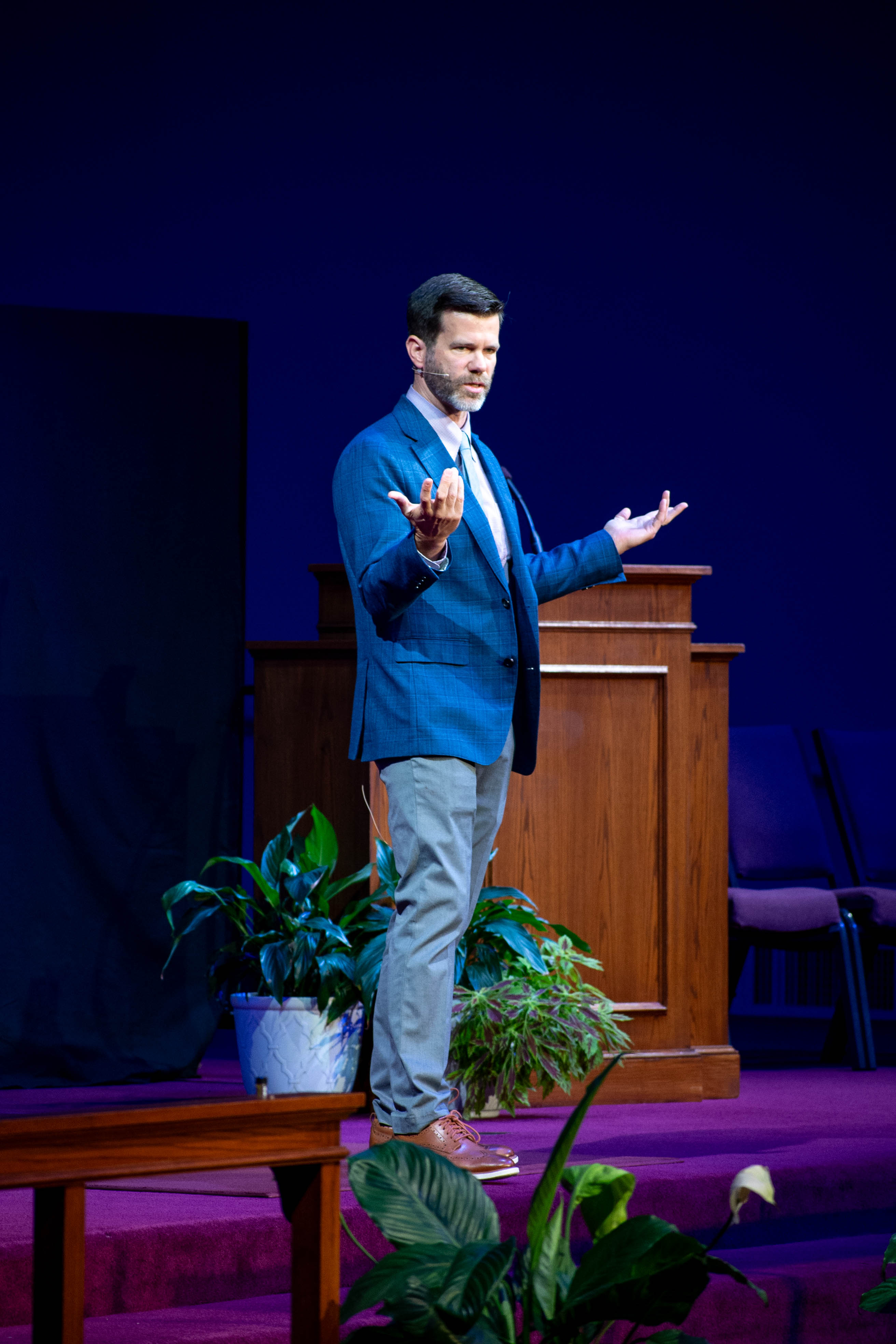
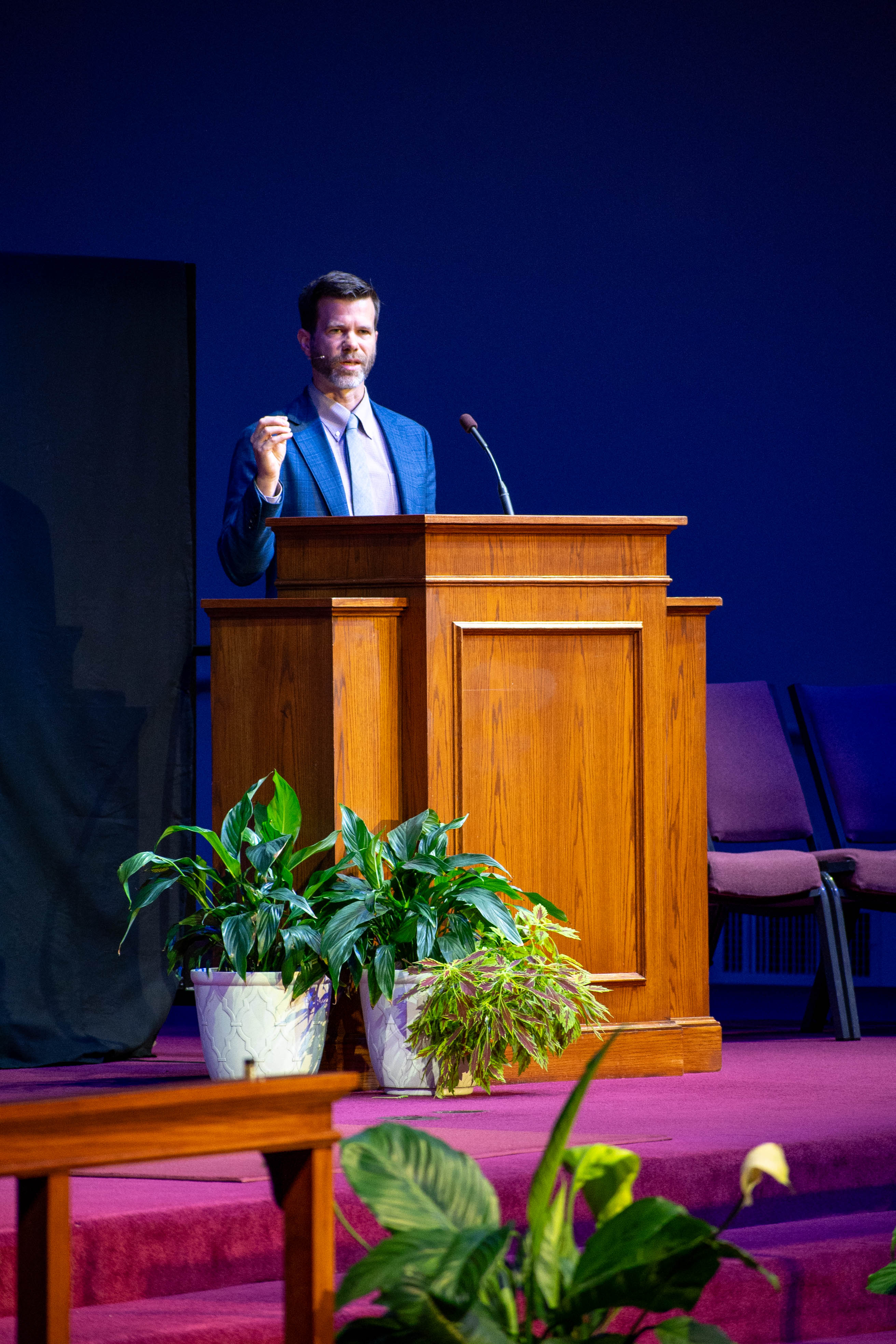
The video above is the sermon I preached at Asbury Church here in Tulsa, OK on July 28th. It was such a special Sunday. I’d like to share a bit of what I experienced with you.
This summer at Asbury Church, we have been working through the book of James. We created a prayer guide to help our congregation read the entire book of James and commit to a daily rhythm of prayer. We called the series “Summer of Prayer.” And it was awesome!
I was given the opportunity to preach the last week in the series. I preached on James 5:13-16, focusing on the instructions related to praying for divine healing. Here is the passage:
Is anyone among you suffering? Let him pray. Is anyone cheerful? Let him sing praise. Is anyone among you sick? Let him call for the elders of the church, and let them pray over him, anointing him with oil in the name of the Lord. And the prayer of faith will save the one who is sick, and the Lord will raise him up. And if he has committed sins, he will be forgiven. Therefore, confess your sins to one another and pray for one another, that you may be healed. The prayer of a righteous person has great power as it is working.
I still don’t feel like I can adequately describe how special the weekend was and what a blessing it was to me.
Caroline Ewy, a college intern at Asbury, shared her testimony and a song she wrote. She did a fantastic job – so cool to see. Caroline’s story was so powerful! Even if you have zero interest in my sermon, you should check out her story and the song she wrote and performed live. You will not regret it!
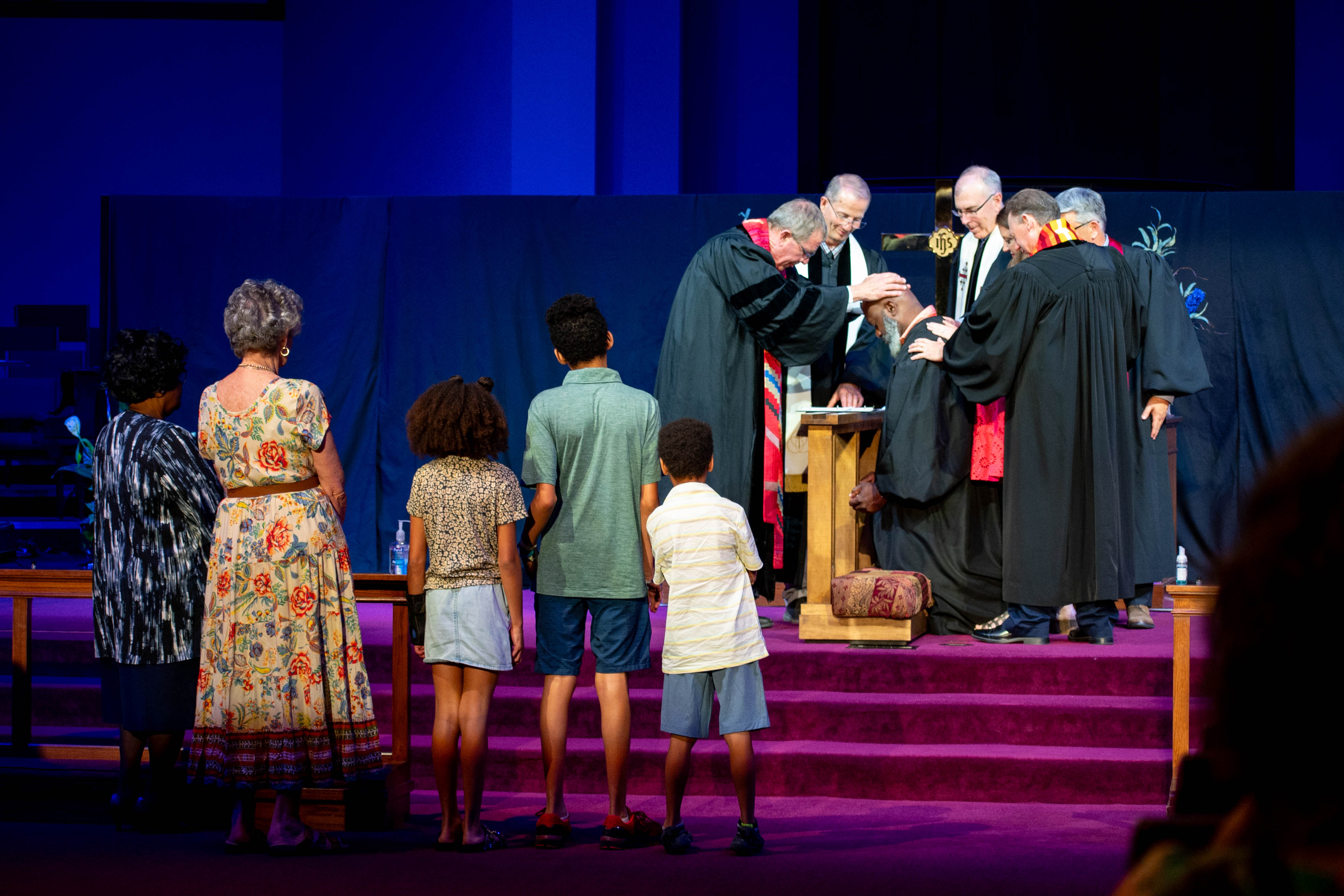
In the weeks before I preached, I had a pretty strong sense that we were supposed to do what James says to do, not just talk about it. Basically, I knew I needed to invite people to come forward, be anointed with oil, and receive prayer for divine healing.
For me, one of the most vulnerable things in ministry is standing in the tension of saying I think God wants to do something. It is vulnerable for me because I am always acutely aware that this requires response by the people you are speaking to. Will anyone respond? And even more than that, I am deeply aware that I am asking them to pray for something that I do not have the power or ability to do myself. God is the one who does the work.
It was a precious gift to me the way Asbury Church leaned in collectively. And even more, though I am often tempted to shrink back, the Lord is faithful!
At our Thursday night service there were 137 people in attendance and 26 came forward to receive prayer. We had more than 2,300 in attendance at our four services last week. And there was a significant response at each service. The 11 AM service went past 12:30 because we were still praying with people! I think it is safe to say 10% of the people who came to worship in person came forward for prayer.
And since then, we’ve had people asking to come by the church to be anointed and prayed for. We have also received some wonderful testimonies to the ways the Lord has answered our prayers.
God is so good!
The Sunday that I preached was also the one year anniversary of our move to Tulsa, OK. I am so thankful for the ways the past year have brought both healing and blessing. The partnership with Asbury Theological Seminary in Tulsa and Asbury Church have been more than I could have dreamed. I am so thankful. And this summer has just been SO FUN!
I may write a bit more about my first year in Tulsa in the coming days. For now, I hope you’ll watch the video above and check out Caroline’s story and song with my sermon following.
When Rev. Mike Schafer, President pro tem, of the West Plains GMC Annual Conference reached out to me last fall and asked me to preach and teach at the upcoming conference, I was thrilled! And the West Plains Annual Conference exceeded my expectations.
One of my favorite moments of the conference was when Mike described something he had never had happen in his entire ministry: an Annual Conference attendee asked if they could bring a friend! That gives an idea of the atmosphere and spiritual environment in West Plains.
I showed up planning to preach one message, and instead spoke on Matthew 13:44:
The kingdom of heaven is like treasure hidden in a field, which someone found and hid; then in his joy he goes and sees all that he has and buys that field. [NRSV]
I shifted because the Spirit did something when Mike prayed for me right before my sermon. I don’t remember exactly what he prayed, but it had something to do with the Spirit opening me up to receive what he wanted to say, even if it was different than what I’d planned. I had been wrestling with a sense that what I had prepared was not quite right and Mike’s prayer brought clarity that I was supposed to change courses and trust the Lord.
The truth is that I don’t really remember most of what I said because it was so unscripted. That is not a comfortable place for me. And I didn’t think I did a great job. When Mike gave an altar call after my sermon, I went to the altar and repented and apologized to the Lord because I just felt like I missed it with my message.
I am grateful for the exceptionally gracious feedback I received from many people in West Plains about how the Lord had used the sermon for them.
God is good!
The ordination service was powerful as well. A few things really stood out to me. First, the unity in the room, not only among the ordinands, but also among the clergy and laity in attendance was palpable and a joy. When Bishop Jones went through the Historic Questions, it was the first time in my ministry I wasn’t wondering if people meant “No” even though they were saying “Yes.”
Bishop Jones led in a way that kept the focus on the main thing and the seriousness of what was happening. That was a gift to experience.
Two other things happened in the ordination service that were beautiful. First, immediately after ordination, Bishop Jones celebrated Communion and the newly ordained served the rest of the congregation. It was so well done! Second, after Communion, Bishop Jones gave an invitation to receive a call to ministry during the final song. I saw at least three people from the congregation respond to that invitation! I don’t think I’ve ever witnessed that before. It was so hopeful and encouraging to just have a strong focus on the significance of ordination and even more so on the Triune God who speaks and calls us to serve.
Rev. Schafer asked me to speak on Wesleyan discipleship, focusing on class and band meetings on Saturday morning. If you know me, it is pretty easy to convince me to do that! I have been thinking quite a bit about the old(er) Barna survey that is outlined in the book Maximum Faith (you can find a summary of the ten stops of the Christian life here). I summarized those findings and the way they point to the need for relational connection and deeper discipleship across the church in the United States. This, in my view, only increases the importance of returning to our Wesleyan heritage of intentional discipleship through small groups.
I had a blast teaching that material!
Finally, I got to experience two of the three TED-style talks given by folks in West Plains. Wow! The first talk was about a fire ministry after the massive fires in Texas last year. Even more than that, it was a powerful testimony about God’s work in one woman’s life. The second talk was by a rancher and a lawyer who felt called to co-pastor the GMC church in their town. The commitment to the local church and the authority of Scripture was powerful! I wish I’d been able to stay for the final one and the rest of the afternoon!
Preaching and teaching at a place like the West Plains Conference is an enormous privilege. It still surprises me to be asked to speak in places like this. I love doing it and it is a blessing to me. Every time, I think, I can’t believe I get to do this! God has been so kind to me and I am thankful.
One final thing about my time at this conference. Mike Schafer will become the first Connectional Operations Officer for the Global Methodist Church, starting August 15, 2024. Leadership in West Plains recognized Mike for his service as the first President of the West Plains Conference and gave thanks for this new role. One of the people who praised Schafer’s leadership in West Plains commented that he was exactly the right person to serve in this new key leadership role in the GMC because he had not spent his entire career trying to receive this kind of position. I loved the way that was put! And it rings true of my experience with Mike. His selection for this role is encouraging to me and a hopeful sign of things to come for the Global Methodist Church. (You can read more about Rev. Schafer and his new role here.)
Thank you, West Plains, for having me! And special thanks to Emma Stonum for sharing the photos I’ve used in this post.
Reminder: My new book releases next Tuesday, June 25th
My new book Doctrine, Spirit, and Discipline: A History of the Wesleyan Tradition in the United States releases on Tuesday, June 25th. I wrote a post about the book here. Please check it out. This is the first book I’ve directly asked folks to pre-order. Doing so helps the long-term success of the book in a variety of ways. It would really help me out if you would take a moment to head to Amazon (affiliate link) or Zondervan and order the book now. I am really encouraged by the early interest in this book! Thank you so much to all of you who have already pre-ordered it.
In this time of rapid change and chaos, it is imperative that we reground ourselves in our identity. This book explains the core identity of the Wesleyan theological tradition and points to lessons from the past that will help us be more faithful in the present and future.
In some ways, I have been working on this book my entire scholarly career. I started this project in earnest seven years ago. This is the most ambitious writing project I’ve undertaken. I believe it is also the most important book I’ve written.
Why?
One of the main problems I have been trying to solve throughout my work in the church and the academy is identifying the core content of the Wesleyan/Methodist theological tradition. What does it mean to be Wesleyan or Methodist?
My sense has been that many different parts of the Wesleyan tradition have been undergoing a crisis of identity for various reasons. Some have pursued cultural respectability at the expense of coherence and clarity. Others have moved away from the riches of their heritage in the Holiness Movement to generic evangelicalism. Much more could be said on this.
In Doctrine, Spirit, and Discipline, I argue that there is an identifiable theological tradition running through the Wesleyan/Methodist theological tradition in the United States. It was clearly articulated by John Wesley in the beginnings of Methodism in Britain. And this theological vision, along with the method that gave it its name, was embraced explicitly by the founders of the first denominations founded in the United States.
My sense is that the Wesleyan theological tradition is in a time of both fragmenting and realigning. I don’t think we can know yet how things are going to sort out. There are even very good reasons to think that denominational identity will not have the purchase in the future that it has had in the past.
With all this change and uncertainty, there is one thing of which I am confident: I am convinced the founding vision of John Wesley and the first Methodists is as relevant for our day as it was for theirs, if not more so.
Before we can do anything else, we need to know who we are. Getting clear of our identity requires knowing our history. We need to know where we’ve come from.
Doctrine, Spirit, and Discipline is my attempt to tell the story of the Wesleyan tradition in the United States in a way that intentionally, though I am sure imperfectly and incompletely, tells the story through a broader lens than it has been typically told.
I also do the best that I can to wrestle with the issues and challenges facing the church today. I do this because I am convinced that our past is an essential guide for a better future.
I have been humbled by the endorsements this book has received. This book has been described as “the definitive history of the Wesleyan movement in the United States.” Here are a few endorsements, you can read more at the landing page Zondervan has created for the book.
“Kevin Watson’s newest book, Doctrine, Spirit, and Discipline, is not just the latest history of Methodism in America. Rather, it’s a tour de force. Previous historical accounts have viewed the institutions that resulted in the United Methodist Church as the truly legitimate Methodist trajectory, while offering just a fleeting look at other Wesleyan denominations. But rather than seeing African American, Holiness, and Pentecostal church bodies as schismatic and somewhat peripheral to the Methodist story, Watson treats them as central. Why? Because these groups, though smaller in size than better-known, larger institutions (Methodist Episcopal/Methodist/United Methodist), often maintained Wesley’s theological foundation more consistently. Watson sees Wesley’s formulation of “doctrine, spirit, and discipline” as the “common foundation for a broad tradition”—not broad theologically, but broad geographically, ethnically, and denominationally. This book, then, is not only necessary reading for all American Wesleyans but also an essential corrective to the overall narrative of the Methodist legacy in the United States.” —DOUGLAS M. STRONG, Paul T. Walls Professor of Wesleyan Studies, professor of the history of Christianity, Seattle Pacific University
“I was captivated on the first page of Doctrine, Spirit, and Discipline. Immediately the reader is taken into the early life of John Wesley with this theme developed through his own personal life and expanded as he leads this great awakening throughout England and then more thoroughly developed in the US. However, Kevin Watson does not shy away from the power struggles, the issues of slavery, and the divisions even to this present day. He gives very generous history of the Black church, the Pentecostal movement, the Holiness movement, and various denominations which comprise what is known as the pan-Wesleyan movement today. In all this it is obvious the themes that continue to hold this diverse group together from the beginnings of John Wesley. It is written in such a way that is inspirational and at the same time with a strong researched theological and historical foundation. This book is a treasure for the classroom, leaders in the pan-Wesleyan movement both lay and clergy, and those outside the movement to discover the strength of the doctrine, spirit, and discipline initiated by John Wesley that has been effective for some 250 years. Yes, a book for now and future generations.” —JO ANNE LYON, general superintendent emerita, the Wesleyan Church
“A faithful witness to the people called Methodists in England and in America, this colossal volume expeditiously moves from Wesley to American Methodism and its extended branches to the current state of Wesleyanism today. Watson masterfully retells a well-chronicled narrative in terse, accessible, lucid prose, covering not just the contours of Wesleyan history with its highs and lows but also its various doctrinal developments and disputes and ecclesial divisions. The moral of the story, as indicated by the quote from which the title is taken, is that Methodism at its best is a blazing, fiery force of renewal and at its worst an inert, acculturated institution. Although coming in at nearly 500 pages, this volume is concise and highly accessible. Well-illustrated, highly detailed, and informative, Doctrine, Spirit, and Discipline is suitable for the classroom and will make a fine addition to any shelf of classic volumes on Methodist history.” —PETER J. BELLINI, professor of church renewal and evangelization in the Heisel Chair, United Theological Seminary
“This book is destined to become the standard reference work for everyone who wants a better understanding of the Wesleyan tradition. More important, however, is that anyone who seeks the blessing of holiness in his or her own life will find inspiration and encouragement on every page. Churches that preach the life-giving message of sanctification, including the Salvation Army, owe a tremendous debt of gratitude to Dr. Watson for this outstanding work.” —KENNETH G. HODDER, USA national commander, the Salvation Army
I need your help.
Please pre-order my book. There is much about the publishing world I don’t understand. One thing I do know is that pre-orders are crucial to a book’s success. You can pre-order the book on Amazon here (affiliate link) or directly through Zondervan here. Amazon has a pre-order price guarantee and books like this are typically discounted as they get closer to the release date. Zondervan is currently offering a 30% sale!
I don’t think I’ve ever made a direct request like this before. It would be a big help to me if you would place a pre-order for this book now. If you do, you can also get immediate access to chapters 1 & 2 by entering your email and book order number at the bottom of the page here: https://zondervanacademic.com/doctrine-spirit-and-discipline
I am so excited to see something I’ve been working on for so long finally be released. Thank you so much for your support!
Kevin M. Watson is Director of Academic Growth and Formation at Asbury Theological Seminary. He is anchored at the Seminary’s Tulsa Extension Site. He is also the Scholar in Residence at Asbury Church in Tulsa, OK.
Last week, I had the privilege of speaking to the Salvation Army Officers of the Arkansas-Oklahoma Division on the theme of “Holiness unto the Lord.”
If you are not familiar with the Salvation Army’s structure, officers in the Army are the equivalent of clergy in most churches. So, this was like a retreat for all of the active clergy in the Salvation Army serving in Arkansas and Oklahoma. I love the schedule at Officer’s Councils (at least at the Divisions in the Southern Territory where I’ve been a guest). There are typically two sessions of worship and teaching in the morning and then the rest of the day is unscheduled.
It is a blessing for pastors to have time away where they have time and space in the schedule to truly rest, relax, and reconnect with each other. This is a rare gift and I’ve not experienced that kind of intentionality given to actual rest, rather than busyness and business at this kind of gathering.
The Salvation Army also does hospitality exceptionally well. My goodness! Unpacking this would be an entire post of its own. I’ll just give one example: one time the Army not only flew my entire family to be with me because it was my daughter’s 10th birthday, they also ordered a special cake and balloons that were waiting for her when we arrived. They have loved us so well!
I want to share a bit about my connection to the Salvation Army and what I have learned, so far. This is a bit vulnerable for me to share. I am not intending to boast in Kevin here. I am intending to give glory to God. I also hope it may help some of you recognize when the Lord provides similar places of blessing in your lives.
The Lord has blessed me with a special connection to the Salvation Army. It started at a moment when I did not expect it all. And it has truly been a sheer gift from the Lord.
The first invitation I received to speak at an Army event was as the Commencement speaker for Evangeline Booth College, in Atlanta, GA at the beginning of the summer in 2021. I went to that event very naïve. I knew a little bit about the Salvation Army. I knew, for example, that they were founded by Generals William and Catherine Booth in England. I also knew that they had strong connections to the Wesleyan-Holiness tradition and that their impressive social work came out of this heritage.
I also knew that Ezekiel Elliott sometimes jumped into a giant red Salvation Army kettle after he scored a touchdown on Thanksgiving back when he played for the Cowboys.
I didn’t know much more than that, however, when I spoke to the Cadets (students) who were graduating from Evangeline Booth College.
This first Salvation Army event came at a strange time in my life. I had just resigned a tenured faculty position at Candler School of Theology at Emory University. After stepping away from this position, I didn’t think I was going to be doing much of this kind of speaking anymore. Something about that moment brought focus, freedom, and courage to speak very candidly about the need for the Army to remember that its identity is first and foremost an army of salvation through Christ. They are also a people committed to holiness and full salvation. I pressed them to remember that they were raised up to be an intentionally strange people and that they should not lay aside the things that set them apart from the world to hope to receive the world’s approval.
For me personally, it felt like one of the most bold and true talks I had ever given. I think a piece of this was that I kind of assumed this was a one-off opportunity just before we moved away from Atlanta.
It can be easier to be bolder with strangers than with friends.
In ways I could not have known, however, the Lord blessed me by giving me favor with the leaders of the Southern Territory who were there that day. I did not have the opportunity to visit with them at length at Commencement. But, that event led to further opportunities to minister within the Salvation Army and get to know its leadership.
Since speaking at Evangeline Booth College, I have spoken at Bible Conference in the summer of 2022, Officer’s Councils in three different divisions (Kentucky-Tennessee, the Carolinas, and Arkansas-Oklahoma) and at a Holiness week at the College for Officer Training in the Eastern Territory in Suffern, NY.
Every single one of these experiences has been a tremendous blessing to me.
Last week brought some things together for me that I want to share:
First, I want to publicly thank the leadership of the Salvation Army for loving me and my family so well during a challenging time for us. Lt. Colonels Tom and Julie Louden, currently serving as Divisional Commanders for Kentucky and Tennessee, first invited me to speak at Evangeline Booth College’s Commencement. They also prayed for us many times throughout this season and even sent a care package to my kids at Christmas in 2022.
Just as encouraging to me, I have been surprised in the best way by the wisdom and moral courage I have found among many of the leaders of the Salvation Army, especially in the Southern Territory, where I have had the most engagement. I have often been looking for wisdom, moral courage, and leaders who provide godly spiritual covering for the people under their car. I have seen that in the leadership of the Southern Territory in ways that have strengthened and encouraged me.
Finally, I want to share what I think could most easily be misunderstood as boastful. But I am going to risk it in hopes of giving glory to Jesus Christ and his work in my life. I also want to share it here in case it helps you recognize the places of abundance in your life.
The Salvation Army has been for me what a dear friend of mine calls a “land of my anointing.” I did not see this coming or expect it at all. But again and again I have come back from Salvation Army events and said to my wife, “I feel like the Lord prepared this particular people for exactly what he has put in me.” I am learning to simply trust and receive this as a gift from the Lord.
When I minister in Salvation Army contexts, I consistently receive feedback that things I’ve sensed or said have landed, often beyond what I could have expected. I think every time I’ve spoken at an Army event I have received testimony that I have spoken prophetically in ways I didn’t anticipate. This has been humbling to me because it has not come from my own wisdom or hard work. It has simply been the Holy Spirit’s work moving to bless his people.
These experiences have helped me learn to pay attention and intentionally listen for the Spirit’s guidance and direction anytime I preach or teach. It has been so much more fun working with the Spirit than trying to do it on my own!
I have seen the Lord move in powerful ways renewing the strength of officers to recommit to the fight for souls, press into deeper relational connectedness particularly through reclaiming Wesleyan class and band meetings, and even blessing officers with the gift of entire sanctification. I’ve also seen God’s heart for officer families.
I have been able to invite people to receive the gift of entire sanctification in multiple contexts. And the Lord has moved in miraculous and transforming ways. At the last Salvation Army event, I heard a powerful testimony to entire sanctification just before I preached on 1 Thessalonians 4:1-6 and 5:23-24. I then invited people to receive the gift of entire sanctification in faith that Jesus has already done everything that is needed to break the power of canceled sin in their lives.
I used a specific image that was given to me by the Spirit in the moment and multiple people testified that the Holy Spirit fell on them in a powerful way through that image. This was especially humbling for me because when the image was brought to mind, I did not like it. It seemed corny to me. But I offered it because I felt the weight of the Spirit on it.
What a great reminder that the Lord knows so much better than I do!
Two people have testified to me that they received entire sanctification through the Spirit’s work at that session.
God is so good!
I am learning to gratefully accept that the Lord in his wisdom has made the Salvation Army a place of particular anointing in this season of my life. It has been fun and a joy.
I don’t know how long this season will last. I am aware that I am not in control of any of it. I just know it has been a blessing to me in a rough stretch. I am thankful for what I have seen the Spirit do over these last few years. I have learned so much and am grateful for all of it.
Is there a place for you that consistently seems to be synced up with the Holy Spirit? Where there always seems to be fruit beyond your expectations in a way that is clearly separated from your performance or achievement? Look for your land of anointing. Is there a place, a people, or a topic, where the Lord consistently brings his blessing to your work?
When you see it, receive it in humble and joyful submission to the Lord.
I know for me it has been a gift to see such a concrete sign of how God has intended to use the things he has put in me for his purposes even before I could have anticipated any of it.
On January 19-20, 2024, a group of more than 70 scholars met in Alexandria, VA to discuss the doctrine of holiness and its ongoing relevance for the contemporary church. The gathering was remarkable to me because of its size, the focus on holiness itself, and the prerequisites for participation in the gathering:
affirm the historic creedal faith of the church
hold to traditional moral standards
embrace a Wesleyan theological vision
The purpose of the Summit was:
To craft a document designed for the faithful by leading scholars that clearly describes a Wesleyan view of holiness of heart and life. The teachings of John and Charles Wesley will provide the foundation for this document and serve as a uniting principle to guide our work. Of course, following the Wesley brothers’ direction, we will always look to scripture and the faithful interpretation of scripture within the Church’s tradition. This uniting principle will enable a large Wesleyan tent to find a common voice. Or to put it differently, the Wesley brothers make it possible for us – in all of our diversity – to write a document that can be endorsed by everyone from a high church Methodist to a Pentecostal and everyone in-between.
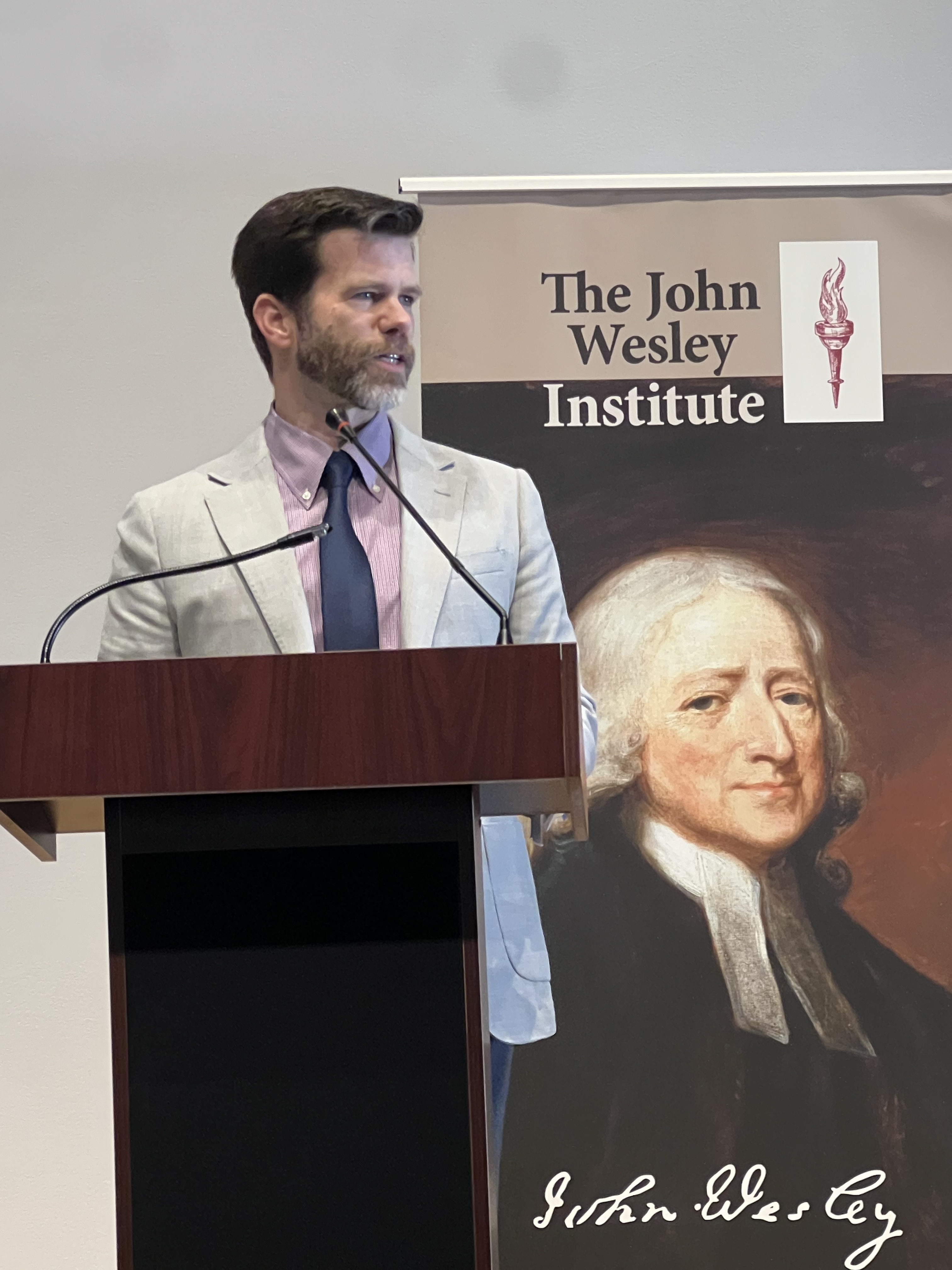
I was asked to give one of two keynote addresses at this gathering, Dr. Warren Smith of Duke Divinity School gave the other.
Here I am, mid-pontification.
Here are a few reflections from my time at this gathering:
First, the Lord has raised up a surprising number of conservative Wesleyan scholars who are willing to publicly be seen as such. This is surprising because most of us have come from institutions that were not trying to produce us. In fact, several come serve in contexts where there is pressure not to be associated with these kinds of gatherings.
I see this as a hopeful sign of God’s provision for the church.
Second, I was reminded of what I already know: Spiritual warfare is real and the Holy Spirit is alive and active. When I was initially asked to give a keynote at this gathering, I was excited and happy to accept. But as the day drew nearer and I began to work on my address, my preparation was difficult and unenjoyable in a way that was abnormal for me. To be candid, I was really dreading speaking at this gathering. This is probably because the last few years in the academy have been particularly challenging for me. More than that, I believe I was experiencing interference from the enemy. Added to that is the feeling that we aren’t supposed to talk about spiritual warfare or anything supernatural in academic contexts.
Let me say that I while I am sure there were those who disagreed with parts of what I said in my presentation, I did not experience any hostility from anyone at the Summit. On the contrary, I received words of affirmation and encouragement that were humbling and beyond anything I deserved. I was blessed to be surrounded by people who love well.
Third, there were a couple of interactions that felt healing and redemptive connected to some of the most painful times of my life in the academy. This was a completely unexpected and surprising gift to receive. I share it here because it reminded me of something I want to offer as an encouragement:
Suffering in the moment often feels even more painful because it seems pointless. There have been times I did the best I could to be faithful that increased suffering. This was the hardest for me to take when it led to suffering not only for me, but for my family. The Lord showed me at this gathering that God has used my witness in the past to strengthen other people. I had no idea. I don’t think we usually get to see these kinds of things, but it is such a blessing when we do! (And, of course, my suffering could also be because of bad decisions or mistakes I have made.)
Fourth, I think part of my dread going into the gathering was that I did not want to go to a dry academic conference where we could not be openly hungry for the presence of the Holy Spirit. The greatest blessing to me of the weekend was getting to see how many colleagues in the academy are hungry for more of the Spirit. On Saturday night, a Church of God in Christ bishop preached, Bishop John Mark Richardson, and he gave an invitation. Then, Dr. Cheryl Bridges-Johns gave a word of knowledge with a specific call to prayer. And in a room full of academics, there was a wonderful response to the move of the Spirit. People came forward to receive prayer. It was awesome!
Finally, this gathering pressed me to think more deeply about the distrust that exists between the church and the academy. I shared my conviction that I think this is understandable and largely rational by the church. During my time as a United Methodist, I think most seminaries did a better job saying that their purpose was to serve the local church for marketing purposes than they actually served the church.
I have a lot of thoughts on this, some of which I am still working through. I may write more on this down the road. For now, I’ll just offer two questions that I think can help church leaders think through these things:
First: Does the institution tend to produce people who are more effective pastors than they were before they attended that institution? I don’t think you can overstate the importance of an established track record here in terms of thinking about what is most likely to lead to the best outcome for the church.
Second, has the institution taken stands that hurt them politically with any constituency that are in alignment with your values and commitments? If they have shown their hand, so to speak, at a cost to themselves, you can trust that this represents their true commitments, values, and priorities.
I am encouraged by the number of individuals the Lord has raised up who affirm basic Christian orthodoxy, are Wesleyan, and affirm traditional moral standards. I hope these men and women will guide the institutions where they serve to more faithfully serve the local church. Raising up the next generation of leaders for Christ’s church is the key reason seminaries exist. If they lose this first love, the church is right to cease supporting them.
My mom died one year ago today. I have spent part of the day reflecting on my favorite memories with her. My immediate family was also able to have dinner tonight with my dad and share stories as a family about my mom.
I shared this story about my mom’s memorial service. It is the best example I have come up with of my mother’s unconditional and self-sacrificial love for me.
It is important that you know that I did not and could not have fully appreciated at the time, how hard this was for my mom. This was largely because she did not show me that my decision was hurting her because of her love for me.
High school was a tough time for me. I went to three high schools in three years. I kind of ran out of steam in the third high school and just didn’t have the energy after a few false starts to keep trying to find my people.
I remember driving to school on the first day of my junior year of high school, which was also the first day I ever drove myself to school, aware that nobody knew or cared that this was my first day to drive to school.
It was a hard year.
I remember going to lunch with my parents one day at the end of a long and discouraging week and one of my parents, I can’t remember who, suggested the possibility of applying to college as a junior. I had no idea that was a possibility, but fairly immediately became interested in it.
I applied to a small liberal arts school in the Midwest, Knox College (most famous for being the site of one of the Lincoln Douglas Debates).
With my parents blessing, I traveled to Knox College to visit the school and see what I thought. Having been to college, my parents knew better than I did that I would love it.
And I did.
A mother sacrificially loving her son, who has no idea his mom’s sacrifice.
So, I went to college after my junior year of high school. The truth is that the details of this story don’t really matter, except one thing:
I had no idea what my mom was giving up in order to support me going to college after my junior year of high school. It not only meant that I would be leaving the nest a year early. It also meant that both of my mom’s children would be leaving the same year.
My mom thought she had a year to recover from one son going off to college before both were gone. Instead, because of my decision, she became an empty nester overnight. She lost a year of parenting and a year she’d expected to have with just me living at home.
I had no idea at the time how selfless and generous it was for my mom to do that. And I had no idea how hard that must have been. The truth is I don’t think I thought about it at all.
And I want you to see what a blessing it was for me that I didn’t know. My mom could easily have let me know how much this was all hurting her. She could have let is passive aggressively slip how painful this was for her, or would be if I chose to do it.
But there was never any guilt trip at all. She had tremendous self-control. And a fierce determination to support my well-being as best she could.
I got a small glimpse of how hard this decision was for my mom a few years later when I heard the story of what happened when my mom took me back to the airport after Winter Break my freshman year.
My grandmother had to accompany my mom because she didn’t know if she’d be able to hold it together. She later told me she just fell to pieces once I was out of sight and gone again. I think that was the moment when she most felt the grief of losing that whole year with me.
From my mom’s perspective, my leaving a year early for college hurt. It was gut-wrenching.
It was bad for her.
But she saw the spark had come back into my eyes.
She saw the excitement of a new challenge and the joy that brought me.
She was not going to deny me any of that. She willingly and whole-heartedly supported me in doing something that was good for me that would cause her true grief. She sacrificed what was best for her because it was good for me.
That’s what my mom did.
Now that I have a kid in high school I have some idea of how hard this was for my mom.
I am forever marked by her love. I am so grateful.
Over the last few months, many of you have asked for updates on the progress of my book, The Class Meeting: Reclaiming a Forgotten (and Essential) Small Group Experience. The book is an introduction to the central role that the Wesleyan class meeting played in early Methodism, as well as a guide to reclaiming this kind of small group today.
I wrote this book because I have personally experienced the blessing of being in a class meeting and I believe that the Holy Spirit will continue to use this small group practice to help women and men grow in faith in Christ if we would only return to it. I believe the Wesleyan approach to small groups is one of great gifts that God has given to the “people called Methodists.” In many ways, writing this book is an attempt to test whether I am correct in my discernment that God wants to bring renewal to the Methodist/Wesleyan family through a return to this practice.
Here are a few practical details about the release of the book: The Class Meeting has gone to the printer and will be released on November 15 of this year. The list price for the book is $16.95. There is a 20% discount for all preorders of the book before November 15.
Seedbed has created a page that has quite a bit more information about the book, classmeeting.seedbed.com. If you want to read the first chapter of the book now, they will send you the first chapter if you enter your email address. If you are considering using the book in a group (which is my hope for the book), you can find out information about discounts on bulk orders here as well.
I am grateful for the support the book has received from people I admire and respect. Here are some of the things people have said about the book:
Kevin Watson has given us a wonderful gift. He has resurrected an historic Wesleyan practice—the class meeting—and given it fresh meaning, showing its relevance for the church today. Kevin shows us how the class meeting may be a perfect means for church renewal, a gift of God, through the Wesleyan movement, for such a time as this. Will Willimon, Bishop UMC (retired)
Professor of the Practice of Christian Ministry
Duke Divinity School
Kevin Watson has written a fresh new guide to the theory and practice of the Wesley Class meeting, an essential element of truly Wesleyan spirituality. As an experienced participant and initiator of class meetings in academic and congregational settings, Watson is a faithful guide. I highly recommend this book to clergy and congregations who are looking for ways to develop deeper discipleship and reconnect with our own, rich Wesleyan heritage. Elaine A. Heath, Ph.D.
Southern Methodist University
Co-Founder, The Missional Wisdom Foundation
Director, The Academy for Missional Wisdom
Kevin Watson’s new book is a clarion call to recover the Methodist class meeting as a vital means of grace with an eye on the renewal of the church in the twenty-first century. Rightly balancing the
historical and the practical, Watson invites readers to embrace not only the generous value of the class meeting in the past but also to participate in what promise it holds for the present and beyond in raising up disciples of Jesus Christ. Dr. Kenneth J. Collins
Professor of Historical Theology and Wesley Studies
Asbury Theological Seminary
As the United Methodist Church struggles to redefine itself and its mission for the next generation of disciples, Kevin Watson has managed to reconnect us to a timeless practice that has the potential of “revitalizing” our denomination—the Class Meeting!
With so much emphasis on declining membership and loss of relevancy, we are invited to rediscover what made Methodism and the Wesleyan movement so vibrant for over a century. Could it be that we’ve been looking in all the wrong places for the right answers? Watson reminds us that the class meeting is not an end in itself, but it has the ability to bring together and transform core groups of people who “are willing to invest in each other’s lives and who are desperate to grow in their relationship with Jesus.”
What I treasure most about this book is the way Watson traces the history of the class meeting, shares the basics of what should/should not take place within the group, and defines for us the role and qualities of the class leader. In other words, this is not a history book that simply tells us what happen then. Instead, it is a modern day road map that points us in the direction of what can happen now! If you are one of those Christians seeking to experience the height, depth, length, width and breath of God’s purpose and meaning for your life, you need to know you can discover it in a
place we’ve yet to look—the class meeting! Robert Hayes, Bishop UMC
Like other key aspects of Christian living, the Wesleyan class meeting is often talked about today but seldom really practiced. For Wesley the class meeting included, but was much more than,
“small-group fellowship.”
Kevin Watson understands this, and he writes out of both research and personal experience. The strength of authentic Wesleyanism is that it denies the sharp distinction between head knowledge and heart experience. Rather, it unites them. We find that strength here in this practical book.
To be effective today, the class meeting must be re-contextualized (that is, made workable) without losing its essential dynamic as gospel-based accountable community. I commend this book as a useful tool that, if put into practice, can achieve that goal. Howard A. Snyder, Ph.D.
Author, The Radical Wesley and Patterns for Church Renewal
We want to know and be known. We need to hear each other’s stories. Watson’s compelling case for reinventing the Methodist class meeting recognizes that holy living must be rooted in confession, accountable community, testimony, and gentle shepherding. Stan Ingersol
Denominational Archivist, Church of the Nazarene
Dr Kevin Watson has given every church and pastor a gift! The gift is the reclaiming of the Wesley Class Meeting as the primary disciple growing tool. Any church willing to use this book as a guide will experience what I experienced at Christ Church United Methodist in Ft Lauderdale, Fl. I was there when
Wesley Fellowship Groups began and I had the honor to watch an outpouring of the Holy Spirit. If this is a hunger in your heart, then this book by Dr. Watson will be a “must read” for you. Richard J. Wills, Jr., Bishop UMC (retired)
Dr. Kevin Watson’s emphasis upon renewing the Methodist movement takes a pragmatic approach. The intent of this book is to be practiced, not merely read. Tom Harrison, Senior Pastor
Asbury United Methodist Church
Tulsa, Oklahoma
This powerful practice must be reclaimed, but not just for adults, for all ages. Do your youth pastor a favor and give him/her a copy of this deeply-rooted and thoroughly-practical book! Jeremy W. Steele, Next Generation Minister
Christ United Methodist Church
Mobile, Alabama
A major tornado hit Moore Oklahoma, a suburb of Oklahoma City yesterday. As of this writing, 24 people have died, including 9 children. I cannot image the pain that the family and friends of those who have died are experiencing. And yet, looking at pictures of the area – particularly the two elementary schools that were destroyed – I can’t help but think that the loss of life could have been much worse.
Yesterday’s events have hit me particularly hard because these are my people. Most of my family and many friends live in Oklahoma. My parents, my wife’s parents, and my brother all live in Oklahoma. And many of them live quite close to the damage. I am also a clergy member of the Oklahoma Annual Conference. My home church is in the community next to Moore. I talked to several people yesterday about what was happening. It was a blessing to feel connected to colleagues in ministry in Oklahoma. But it was also really hard. I am serving in extension ministry as a professor at Seattle Pacific Seminary. It is hard to be so far away and feel helpless. My heart is breaking for Oklahoma.
You may be like me, feeling compassion and connection to this community through the news coverage, but also detached by your physical distance from Moore Oklahoma. I would like to ask you to consider joining me in doing two concrete things that will make a difference. First, pray. Pray a lot. Pray for the specific things that come to mind as you think about what this community is going through. Pray for families who have lost loved ones. Pray for families who are searching and hoping. Pray for the injured. Pray for rescue workers, for those who have lost their homes. Please pray. Second, give money. People who work for disaster relief agencies seem to be united that money is the best thing to give in the immediate aftermath of a natural disaster like this. I will be giving to The United Methodist Committee on Relief (UMCOR), because of their track record with disaster relief and because all of the overhead for UMCOR is covered through other giving. This means that 100% of what you give will be directed to helping the people who most need help right now. UMCOR has already set up a specific page for giving for the Oklahoma tornadoes. Click here to donate to tornado recover efforts through UMCOR.
On Tuesday we welcomed Eden Hope into our family. Eden was born weight 8 lbs and measuring 19 3/4 inches long. Both mom and baby are doing great. My wife is an amazing women! And Eden is truly a gift from God!
Our kids both seem to be excited to have a baby sister.
On February 18, 1750 John Wesley wrote in his Journal:
“Today, likewise, wherever we assembled together, God caused his power to be known, but particularly at the love-feast. The honest simplicity with which several spoke, in declaring the manner of God’s dealings with them, set the hearts of others on fire, and the flame spread more and more, till, having stayed near an hour longer than usual, we were constrained to part.” (Works 20:321)
Recently, I have been experiencing the way that God does seem to cause his power to be known when people speak with “honest simplicity” about the ways they have experienced God’s work in their lives. Yesterday, I was able to be a part of a love feast with Seattle Pacific Seminary students. We took an hour and a half in the middle of finals to share some light food and talk about how we have experienced God over the past few months.
The best part was that Wesley’s testimony to the power of the love feast in the above account came to life for me in a new way. As we shared with each other, I gained an experiential understanding of what the early Methodists experienced at this love feast when the Holy Spirit “set the hearts of others on fire, and the flame spread more and more.” And I think all of us left feeling like we had been renewed by our encounter with the living God.
In fact, I have been experiencing God’s presence in my life in new ways over the last month or so. I have been blessed several times in the last month with a tangible experience of God’s presence as I have been a part of conversations where people spoke with honesty and simplicity about “the manner of God’s dealings with them.” I have left each of these conversations with a deeper awareness of God’s goodness and his steadfast love for me.
Through these conversations I have experienced my own brokenness more deeply than ever and my deep need for the healing that only God can bring. In one conversation, a dear friend reminded me of two qualities of God: gentle and jealous. I was reminded that God is gentle, that he is so tender and careful with us. God loves us deeply and perfectly at every single moment of our lives. He has never been disappointed in us.
And yet he is jealous. God wants all of us. He wants us to be wholly given to him and the purposes that he has for our lives.
This is why, as I tweeted a few days ago, I still believe entire sanctification is the grand depositum that God has given to the people called Methodist. The gospel is the good news of what God has done for us in Jesus Christ through the crucifixion and the resurrection. Christianity is the promise of salvation, of healing, of rescue to the broken, the hurting, the perishing. But just like the church cannot get to Easter Sunday without Good Friday, we cannot get to the hope for new life in Jesus Christ without recognizing our own brokenness. We cannot save ourselves, we need a savior. And thanks be to God, we are offered salvation through the person and work of Jesus.
I am convinced that the fullness of the gospel is not only hope for life after death. The fullness of the gospel is not a few strategies for improving your life at work or at home. And though I love The United Methodist Church and desperately want it to have a future that is filled with God’s presence, the fullness of the gospel is not survival.
The fullness of the gospel is that at every point of need in our lives God has already acted to meet the need. The fullness of the gospel is that salvation is freely offered to every single person. The fullness of the gospel is that sin is no longer necessary, because the Great Physician is ready to heal us of all that is not in accordance with his purposes. The fullness of the gospel is that we can experience forgiveness for all that we have done that we should not have done and that we can actually live the kind of life that God created us to live.
When I was in high school I read a quote by Henry David Thoreau that has haunted me every since I first read it, “The mass of men lead lives of quiet desperation.” I think Thoreau is probably right. This would be very bad news, if this were all there news there is. But thanks be to God it isn’t. The good news is that we do not need to live lives of quiet desperation, it is not necessary or inevitable. We can live fully and obediently in God’s presence today!
As Paul says in a moving passage at the end of Romans 8, “I am convinced that neither death nor life, neither angels nor demons, neither the present nor the future, nor any powers, neither height nor depth, nor anything else in all creation, will be able to separate us from the love of God that is in Christ Jesus our Lord.” (Rom 8:38)
Anything contrary to God’s purposes in our lives is no longer necessary. Which is not to say that it no longer has a hold on our lives. We cannot release ourselves. But God can and thanks be to God the Father, God the Son, and God the Holy Spirit that he is both able and willing.
These are some of the ways my heart has been set on fire as I have heard others share God’s “manner of dealing with them.” Thanks be to God for love feasts!





 I wrote this book because I have personally experienced the blessing of being in a class meeting and I believe that the Holy Spirit will continue to use this small group practice to help women and men grow in faith in Christ if we would only return to it. I believe the Wesleyan approach to small groups is one of great gifts that God has given to the “people called Methodists.” In many ways, writing this book is an attempt to test whether I am correct in my discernment that God wants to bring renewal to the Methodist/Wesleyan family through a return to this practice.



 Kevin M. Watson