• About Me

Kevin M. Watson

Kevin M. Watson

Author Archives: Kevin M. Watson

Join My Seminary Course in Wesleyan Discipleship in Tulsa [January 2025]

24 Thursday Oct 2024

Posted by Kevin M. Watson in Accountability, Class Meetings, Holiness, Methodist History, Ministry

≈ Leave a comment

Tags

Band meeting, Christian formation, class meeting, discipleship, John Wesley, Methodism, Methodist, small groups, Wesley

I am teaching a course on Wesleyan Discipleship in Tulsa as a January-Term course at Asbury Theological Seminary this coming January (2025). You should join me! 

What is the course about?

Here is my description of the course:

Wesleyan Discipleship explores the history, theology, and practice of discipleship through a Wesleyan lens. Particular attention is given to the role of communal formation in eighteenth-century Methodism. John Wesley’s theology of discipleship is explored, along with a variety of aspects of Christian formation in community in early Methodism. Particular attention is given to the way Wesley’s theology of social holiness was expressed in early Methodist small groups, especially the class meeting and the band meeting. Students will apply the historical and theological understanding of Wesleyan discipleship to contemporary ministry contexts.

Why I am FIRED UP about this class:

This class will have an intensive on site here in Tulsa from the evening of January 16th through January 18th, 2025. I LOVE the time together with students at intensives! This class beautifully lends itself to teaching in this format. 

Hybrid classes have 20 hours of in-person instruction over 2.5 days. (The rest of the course requirements are met through online engagement and completion of online modules.) It is intense! But I have also found, perhaps surprisingly, that it is also an opportunity for a spiritual retreat for students. 

The in-person experience gives us the opportunity to worship together. We will start the class by attending worship at the Thursday evening service at Asbury Church, where Rev. Andrew Forrest will be preaching. Andrew is an exceptionally gifted preacher of the Scriptures and a brilliant communicator. I love being able to start class off by tangibly connecting the church and academy by walking across the parking lot to go to worship.

We will also have an Asbury Theological Seminary – Tulsa chapel service for the class and students in the area on Friday January 17.

I will get to spend hours talking about my scholarly passion – the importance of community and connection for the Christian life. I love getting to teach students and engage their questions around these topics!

And most important, we will spend time talking about and practicing ways to reintroduce these tried and tested methods that gave Methodism its name.

At the end of the course, students will have the kind of knowledge gain you would expect from a typical seminary course. But they will also have experience participating in class meetings, experiencing small group dynamics, and reflecting on various challenges and opportunities of leading small groups like class and band meetings.

I think of this course as like a laboratory. We will learn a lot about the concepts, but we will also engage them in a hands-on way. In a laboratory you can not only experience a class meeting, but you can also talk about your experience of a class meeting. In my view, this is essential for becoming an expert practitioner. You need not only a theoretical framework and some practical experience, but you also need a place to talk about your experience so you can acknowledge, address, and overcome obstacles and challenges.

I am more confident than I have ever been that groups like the Wesleyan class meeting and band meeting will be at the center of Christian discipleship in these new and strange times we are entering.

These intensives are aptly named. They are not easy. J-term is not a short cut. In fact, it is a three-week academic sprint. My goal is to maximize the 20 hours we get to spend together to suck the marrow out of the class and be as fully equipped to make disciples of Jesus Christ in the contemporary church as possible. 

I want students who come hungry and ready to learn and grow. And that is what we are seeing here in Tulsa. It is SO FUN!

How is the course being taught?

I am teaching this course as a hybrid course at Asbury Theological Seminary at our Tulsa, OK Extension Site (housed at Asbury Church).

What is a January-Term, or J-Term, course?

A J-Term course is a full three credit course that is offered entirely within the month of January. This coming J-Term will start on January 2, 2025 and conclude on January 24, 2025.

What is a hybrid course?

A hybrid course is a course that has parts that are online and parts that are in person. This specific course will have four online modules based on four main sets of reading, students will write a reflection paper that summarizes the content of the reading, critically engages it, and applies it to their own ministry context.

The in-person part is January 16-18, 2025 at Asbury Church’s Development Center in Tulsa, OK. The in-person meeting will be from 6:00pm-9:00pm January 16, 8:30am-5:30pm January 17, and 8:30-5:30pm January 18. The in-person meeting is required for completion of the course. It is also the highlight of the entire course!

Does this course meet the Wesleyan Discipleship and Spiritual Formation requirement for ordination in the Global Methodist Church?

The Convening General Conference of the Global Methodist Church, which met a few weeks back, updated the educational requirements for ordination. And one of the changes that was made was the addition of a course called “Wesleyan Discipleship and Spiritual Formation.” I don’t mean to brag, but I believe this course hits the bullseye for what the GMC is looking for here! So, yes, if you are seeking ordination in the GMC, this course meets the Wesleyan Discipleship and Spiritual Formation course requirement. You can take this course and meet all GMC ordination requirements with either an Asbury Theological Seminary M.Div. or our 60 credit (exactly 20 courses) Master’s in Christian Ministry (MACM).

Should I take this course if I am not in the Global Methodist Church?

Yes! 

If you want to help your church more effectively make discipleship of Jesus Christ, this course is for you. 

I am passionate about Wesleyan Discipleship, not because I am most passionate about John Wesley, but because I believe the Wesleyan theological tradition has a proven track record of excellence in intentional and effective disciple making. We do well to learn from experts who have gone before us. This course is not specifically for students from any one denominational tradition. I mentioned the GMC above only because there is obvious relevance for the GMC because they just made this exact course a required course to be ordained an elder in the GMC. (Your church or denomination should too. This topic really is that essential for succeeding in the 21st century church.)

Can I take this course if I am not an Asbury Theological Seminary student?

Yes! The easiest way to do this would be to apply now to become an Asbury Theological Seminary student. We have a variety of degree programs, and I would be thrilled to talk to you about any of them! There is time to apply now and start this January.

If you are interested in applying to Asbury Theological Seminary or for this course in particular, reach out to me here (scroll down to the bottom of the page) and I will get back to you soon. Be sure to include your email so I know how to reach you. 

Not ready to apply to one of our Master’s degree programs? You may be able to apply to take the course as a non-degree seeking student. You also may be able to audit the course. Both require an application and auditing requires permission from the instructor. For either of these, reach out to me at the link immediately above.

I am open to considering some auditors. Auditors do not receive any academic credit for the course and do not turn in any assignments. They are given permission to sit in on the in-person part of the class and participate in class discussions and activities. However, I will only open the class up to auditors if there are open seats after the registration period closes. (I would assume auditing the course would not satisfy denominational ordination requirements, but you should check with your own denominational leaders.)

What is the official title of the course?

The course is cross listed as a Spiritual Formation course and a Theology course. So you can sign up for either TH650 Wesleyan Discipleship or SF650 Wesleyan Discipleship.

What are the assigned readings in the course?

Students will read a few short essays from John Wesley. And they will read these three books (affiliate links):

The Class Meeting: Reclaiming a Forgotten (and Essential) Small Group Experience, Kevin M. Watson

The Band Meeting: Rediscovering Relational Discipleship in Transformational Community, Kevin M. Watson and Scott T. Kisker

Real-Life Discipleship: Building Churches that Make Disciples, Jim Putman

I cannot wait for this class! I hope to see you here in Tulsa January 16-18, 2025.

5 Things I Learned My First Year at Asbury

03 Tuesday Sep 2024

Posted by Kevin M. Watson in Uncategorized

≈ 2 Comments

1. I love living in Tulsa as much as I thought I would. 

I grew up spending a few weeks with my grandparents every summer. When I graduated from college, my parents moved to Tulsa. So, my entire life, I have had close family that lived in Tulsa. But I had never lived here. And it hadn’t even occurred to me that I could live here. A few years ago, I started sensing a draw to Tulsa. I had never felt a sense of calling to a place. I am so thankful for God’s goodness in bringing us here!

2. I love teaching at Asbury Theological Seminary as much as I thought I would.

My first time on Asbury Theological Seminary’s campus was 2017. That seems impossible to me. I had been curious about Asbury for a long time but had not actually been on campus until I was invited to preach in chapel just before the 2017 meeting of the Wesleyan Theological Society, which was held at ATS that year. (You can watch that sermon here, if you want to take a trip down memory lane!) I remember walking around campus and sensing the Spirit’s presence in an almost overwhelming way.

In my first year, I taught Church History One, Basic Christian Doctrine, and a new course on the history and practice of Wesleyan Discipleship. And the students in every class have been fantastic! It has been such a gift to me to be at a place where my convictions are deeply in sync with the institution where I serve, with my colleagues, and with my students. I am blessed!

3. Hybrid classes are fun!

Every class I have taught to date has been in the hybrid format. This means that the classes have online modules where students complete assigned readings and other assignments. Once during the semester, there is a three-day intensive where everyone gathers together in the same place. (Asbury Theological Seminary offers hybrid classes in Wilmore, KY as well as at each of our Extension Sites: Tulsa, OK; Orlando, FL; Colorado Spring, CO; Memphis, TN; and Tampa, FL.)

As I was praying about my first hybrid last Fall, I felt like the Lord kept giving me the word “retreat.” As in, the hybrid is supposed to be a retreat for students. And to be honest, I thought to myself: there is no way students are going to buy that 20 hours of time in class over three days is going to feel like a retreat!

As the Lord usually does when I argue, I just kept hearing the word “retreat.” Finally, I embraced it and sent an email that felt very naïve to my students. I encouraged them to come expecting the time to be a retreat. I invited them to make a plan to put aside all other distractions and be present to the Lord and each other.

And that first hybrid just might be my favorite teaching experience I’ve ever had. We spent time together in prayer, even praying for one another. We worshipped together. Oh, I also lectured some. Several students confessed that my email about the retreat seemed crazy to them, but that to their surprise the hybrid did indeed feel like a retreat. 

Only God!

I am learning to relax into the time we have together in the intensives and shift from trying to cram 20 hours of lecturing into the class to being present to the Holy Spirit and his agenda for our time together. I still have a lot to learn. But the journey has been so fun. 

I can’t wait to see what God does in my classes this year!

4. Asbury Church is more of a blessing than I could have asked or imagined.

I cannot express what a gift it has been to me personally and to my entire family to be at Asbury Church. Rev. Andrew Forrest is an exceptional preacher. I don’t know how he does it week after week. And he is as good or better of a leader than he is a preacher. Serving on the Asbury pastoral team under his leadership has been a gift. 

A highlight for me at Asbury Church was our Summer of Prayer series for six weeks right in the middle of the summer. We invited the church to press in to prayer in a deeper way. We preached through the book of James. We had a night of Prayer and Worship on a Wednesday during the series. The Holy Spirit was present in a powerful way that I believe broke something new open in the church. I got to preach the last sermon of the series and preached on James 5:13-16 and invited people to respond by coming forward to receive prayer for healing. The interest in healing and testimonies to healing seems to be building from the Summer of Prayer. (You can check that sermon out here, if interested.)

More Lord!

The sermon I preached felt like releasing something that has been in me for a long time. It was really important to me to know that I was operating under the authority of the leadership of the church. And throughout the series I experienced spiritual covering and blessing to be who I am in Christ in a way I have never experienced. I still can’t really describe what a blessing it has been. I am so thankful!

5. Asbury Theological Seminary is trusted by an even broader section of the church than I realized.

I knew that Asbury Theological Seminary was viewed as the premier seminary across the Wesleyan evangelical family throughout the world. I did not realize the degree of interest there is in building relationships with Asbury in many nondenominational and independent churches that have typically done most of their preparation for ministry in house.

I hosted a gathering of pastors from a variety of nondenominational churches here in Tulsa to talk about the work they are doing to raise up the next generation of leaders for the church. I was humbled that they would make time to come to Tulsa and consider a partnership with Asbury. Everything about the time together was fun! Great conversation. Exceptional leaders in parts of the Body of Christ I’m eager to get to know better. Openness to the Holy Spirit. Deeply committed to basic Christian orthodoxy. And aware of what time it is. Check out this description of the gathering. 

The thing I most enjoyed about this meeting was spending time with leaders in the broader church who sharpen me and help me be better at what I do. My calling is to raise up the next generation of leaders for the church. It is all about the church. And so, the more I can be around excellent pastors the better!

Asbury Theological Seminary is known throughout the church. And as people are sensing that some places may be shifting away from their historic commitments, there is growing openness and interest in partnering with Asbury. I am so curious to see what God does!

The first year in Tulsa has been better than I could have hoped. But do you know my favorite thing about where I am at right now? I am even more excited by several things I am working on now than what I have experienced in the past. I have a deep confidence that the best is yet to come.

Stay tuned! 

Understanding the Wesleyan Tradition in the United States: Interview at Asbury Church

16 Friday Aug 2024

Posted by Kevin M. Watson in Christian Living, Life, Methodist History, Sermons, Wesley

≈ 2 Comments

Tags

John Wesley, Methodism, Wesley

The Rev. Andrew Forrest, the senior pastor at Asbury Church in Tulsa, OK, interviewed me about my new book this past weekend in all of our services. It was so fun!

Andrew is not only a gifted communicator, he also has the ability to help other people refine and clarify their own ideas. It was really fun to see his mind work in terms of distilling what was most important from the book for people at Asbury Church.

Here is a screenshot of the interview. Click the link below to view it.

https://asburytulsa.org/sermon/why-and-how-churches-lose-their-way/

Doctrine, Spirit, and Discipline: A History of the Wesleyan Tradition in the United States has already sold out of the first print run! (It continues to be available as an e-book and an audio book.) I am thrilled by the interest the book has received and look forward to seeing it continue to build.

As I’ve talked with people about the book, I’ve only become more convinced of its importance for such a time as this. As we move into new futures, it is essential that we be able to recognize real Methodism from cheap imitations. In order to do so, we have to know where we have come from and be regrounded in our identity. I believe John Wesley was right to lay out the following as the litmus test for Methodist vitality:

“I am not afraid that the people called Methodists should ever cease to exist either in Europe or America. But I am afraid lest they should only exist as a dead sect, having the form of religion without the power. And this undoubtedly will be the case unless they hold fast both the doctrine, spirit, and discipline with which they first set out.” – John Wesley “Thoughts upon Methodism” (1786)

My book describes the doctrine, spirit, and discipline with which Methodists first set out and traces adherence to them across the history of the Wesleyan family in the United States.

Methodists were at the center of the First Great Awakening and the Second Great Awakening. I am convinced that one way or another, the DNA of real Methodism will be at the center of the Third Great Awakening.

May it begin with us!

Powerful Divine Healing Prayers at Asbury Church Tulsa, OK

07 Wednesday Aug 2024

Posted by Kevin M. Watson in Life, Ministry, Sermons

≈ 2 Comments

Tags

divine healing, prayer, sermon

The video above is the sermon I preached at Asbury Church here in Tulsa, OK on July 28th. It was such a special Sunday. I’d like to share a bit of what I experienced with you.

This summer at Asbury Church, we have been working through the book of James. We created a prayer guide to help our congregation read the entire book of James and commit to a daily rhythm of prayer. We called the series “Summer of Prayer.” And it was awesome! 

I was given the opportunity to preach the last week in the series. I preached on James 5:13-16, focusing on the instructions related to praying for divine healing. Here is the passage: 

Is anyone among you suffering? Let him pray. Is anyone cheerful? Let him sing praise. Is anyone among you sick? Let him call for the elders of the church, and let them pray over him, anointing him with oil in the name of the Lord. And the prayer of faith will save the one who is sick, and the Lord will raise him up. And if he has committed sins, he will be forgiven. Therefore, confess your sins to one another and pray for one another, that you may be healed. The prayer of a righteous person has great power as it is working.  

I still don’t feel like I can adequately describe how special the weekend was and what a blessing it was to me.  

Caroline Ewy, a college intern at Asbury, shared her testimony and a song she wrote. She did a fantastic job – so cool to see. Caroline’s story was so powerful! Even if you have zero interest in my sermon, you should check out her story and the song she wrote and performed live. You will not regret it! 

In the weeks before I preached, I had a pretty strong sense that we were supposed to do what James says to do, not just talk about it. Basically, I knew I needed to invite people to come forward, be anointed with oil, and receive prayer for divine healing. 

For me, one of the most vulnerable things in ministry is standing in the tension of saying I think God wants to do something. It is vulnerable for me because I am always acutely aware that this requires response by the people you are speaking to. Will anyone respond? And even more than that, I am deeply aware that I am asking them to pray for something that I do not have the power or ability to do myself. God is the one who does the work. 

It was a precious gift to me the way Asbury Church leaned in collectively. And even more, though I am often tempted to shrink back, the Lord is faithful!

At our Thursday night service there were 137 people in attendance and 26 came forward to receive prayer. We had more than 2,300 in attendance at our four services last week. And there was a significant response at each service. The 11 AM service went past 12:30 because we were still praying with people! I think it is safe to say 10% of the people who came to worship in person came forward for prayer.

And since then, we’ve had people asking to come by the church to be anointed and prayed for. We have also received some wonderful testimonies to the ways the Lord has answered our prayers. 

God is so good!  

The Sunday that I preached was also the one year anniversary of our move to Tulsa, OK. I am so thankful for the ways the past year have brought both healing and blessing. The partnership with Asbury Theological Seminary in Tulsa and Asbury Church have been more than I could have dreamed. I am so thankful. And this summer has just been SO FUN!

I may write a bit more about my first year in Tulsa in the coming days. For now, I hope you’ll watch the video above and check out Caroline’s story and song with my sermon following. 

Kevin M. Watson is Director of Academic Growth and Formation at Asbury Theological Seminary and Scholar in Residence at Asbury Church in Tulsa, OK.

Doctrine, Spirit, and Discipline: A History of the Wesleyan Tradition in the United States – Book Release

25 Tuesday Jun 2024

Posted by Kevin M. Watson in Book Review, Holiness, Methodist History, Wesley

≈ Leave a comment

Tags

Book Review, John Wesley, Methodism, Methodist, Wesley

After working on this book for seven years, my new book Doctrine, Spirit, and Discipline: A History of the Wesleyan Tradition in the United States is officially released.

I am so thankful to the Lord that this day has arrived!

If you haven’t picked up a copy of the book, I hope you will today!

Here is the summary of the book from the dust jacket:

An expansive, substantive history of the Wesleyan tradition in the United States, Doctrine, Spirit, and Discipline offers a broad survey of the Methodist movement as it developed and spread throughout America, from the colonial era to the present day. It also provides a theological appraisal of these developments in light of John Wesley’s foundational vision. Beginning with Wesley himself, Watson describes the distinctiveness of the tradition at the outset. Then, as history unfolds, he identifies the common set of beliefs and practices that have unified a diverse group of people across the centuries, providing them a common identity through a number of divisions and mergers. At a time when sweeping changes continue to transform Methodism and the pan-Wesleyan movement, Watson shows that the heart of the Wesleyan theological tradition is both more expansive and substantive than any singular denominational identity.

For more information check out the post I wrote here.

Zondervan has created a fantastic page for the book here.

Buy the book at Amazon here (affiliate link) or through Zondervan directly here.

I have been interviewed on several podcasts about the book. I will update interviews as they go live.

I was on Art of Holiness with Rev. Dr. Carolyn Moore. Check it out here.

I was on Spirit & Truth with Rev. Dr. Matt Reynolds. Check it out here.

The interest in this book has been so encouraging to me. Thank you so much to each of you who have bought the book. I am grateful! 

Powerful Moments at West Plains Annual Conference: A Reflection

21 Friday Jun 2024

Posted by Kevin M. Watson in Christian Living, Class Meetings, Life, Ministry

≈ Leave a comment

Tags

book announcement, Christian formation, class meeting, Methodism, small groups, speaking

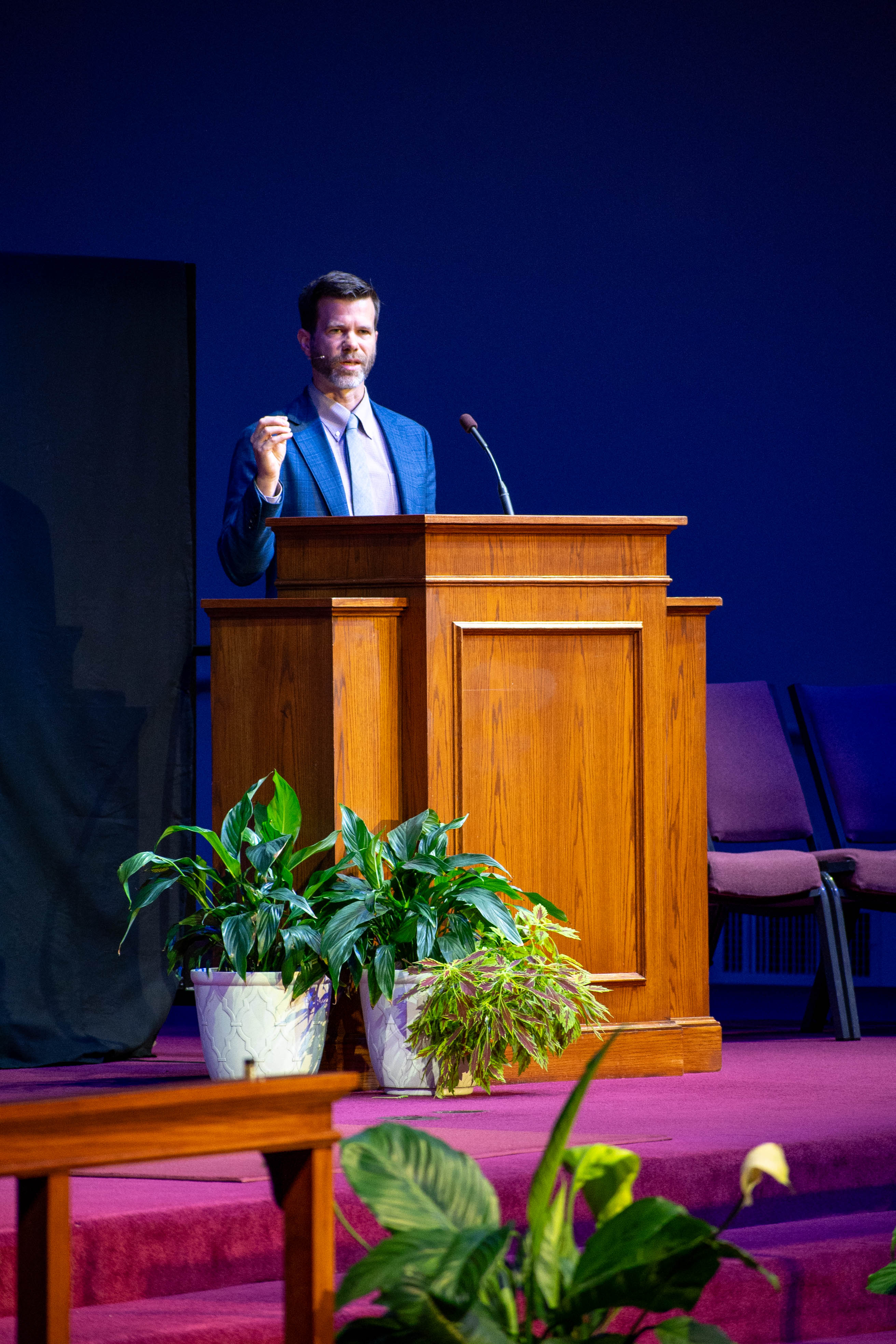
When Rev. Mike Schafer, President pro tem, of the West Plains GMC Annual Conference reached out to me last fall and asked me to preach and teach at the upcoming conference, I was thrilled! And the West Plains Annual Conference exceeded my expectations.

One of my favorite moments of the conference was when Mike described something he had never had happen in his entire ministry: an Annual Conference attendee asked if they could bring a friend! That gives an idea of the atmosphere and spiritual environment in West Plains.

I showed up planning to preach one message, and instead spoke on Matthew 13:44:

The kingdom of heaven is like treasure hidden in a field, which someone found and hid; then in his joy he goes and sees all that he has and buys that field. [NRSV]

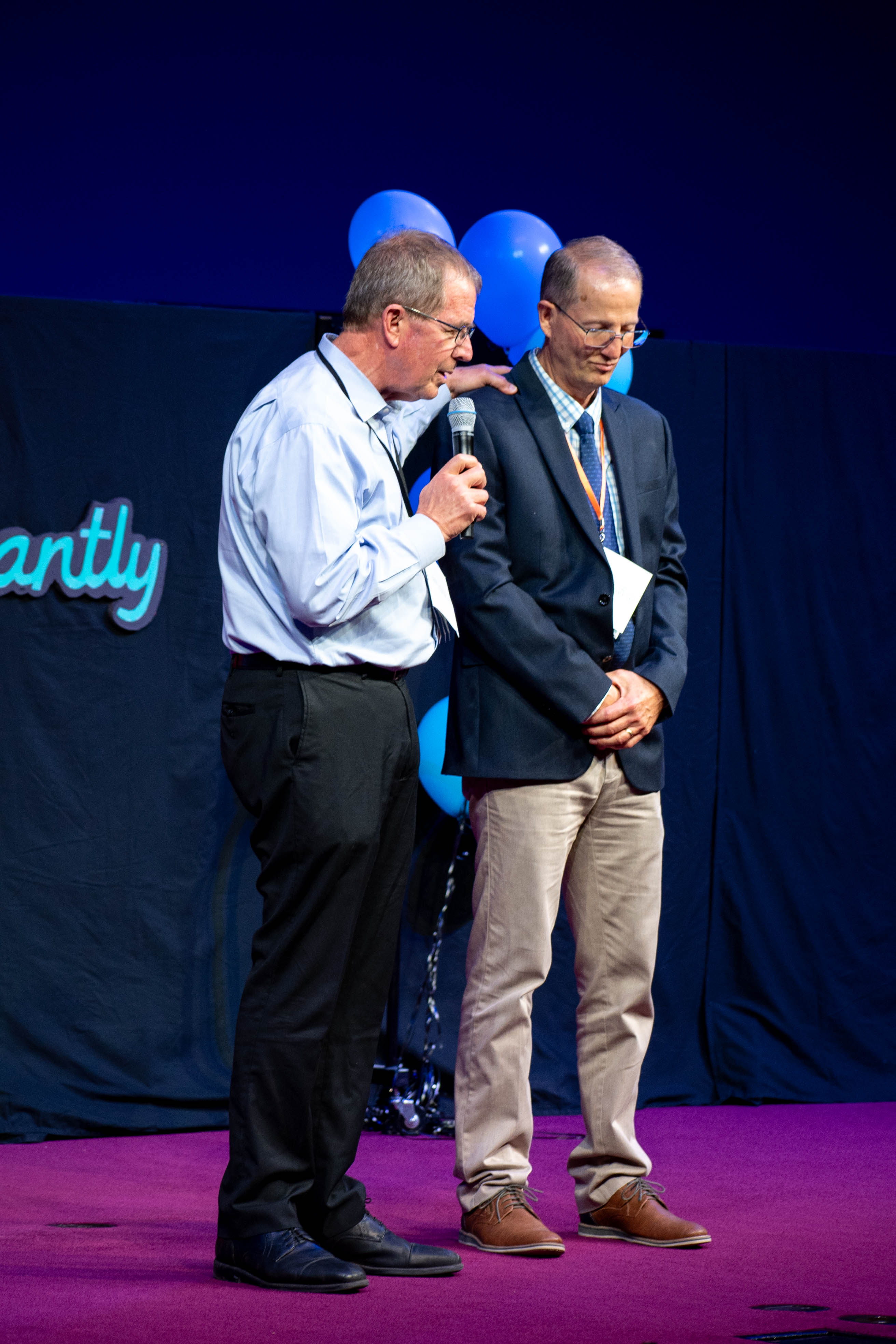
I shifted because the Spirit did something when Mike prayed for me right before my sermon. I don’t remember exactly what he prayed, but it had something to do with the Spirit opening me up to receive what he wanted to say, even if it was different than what I’d planned. I had been wrestling with a sense that what I had prepared was not quite right and Mike’s prayer brought clarity that I was supposed to change courses and trust the Lord.

The truth is that I don’t really remember most of what I said because it was so unscripted. That is not a comfortable place for me. And I didn’t think I did a great job. When Mike gave an altar call after my sermon, I went to the altar and repented and apologized to the Lord because I just felt like I missed it with my message.

I am grateful for the exceptionally gracious feedback I received from many people in West Plains about how the Lord had used the sermon for them.

God is good!

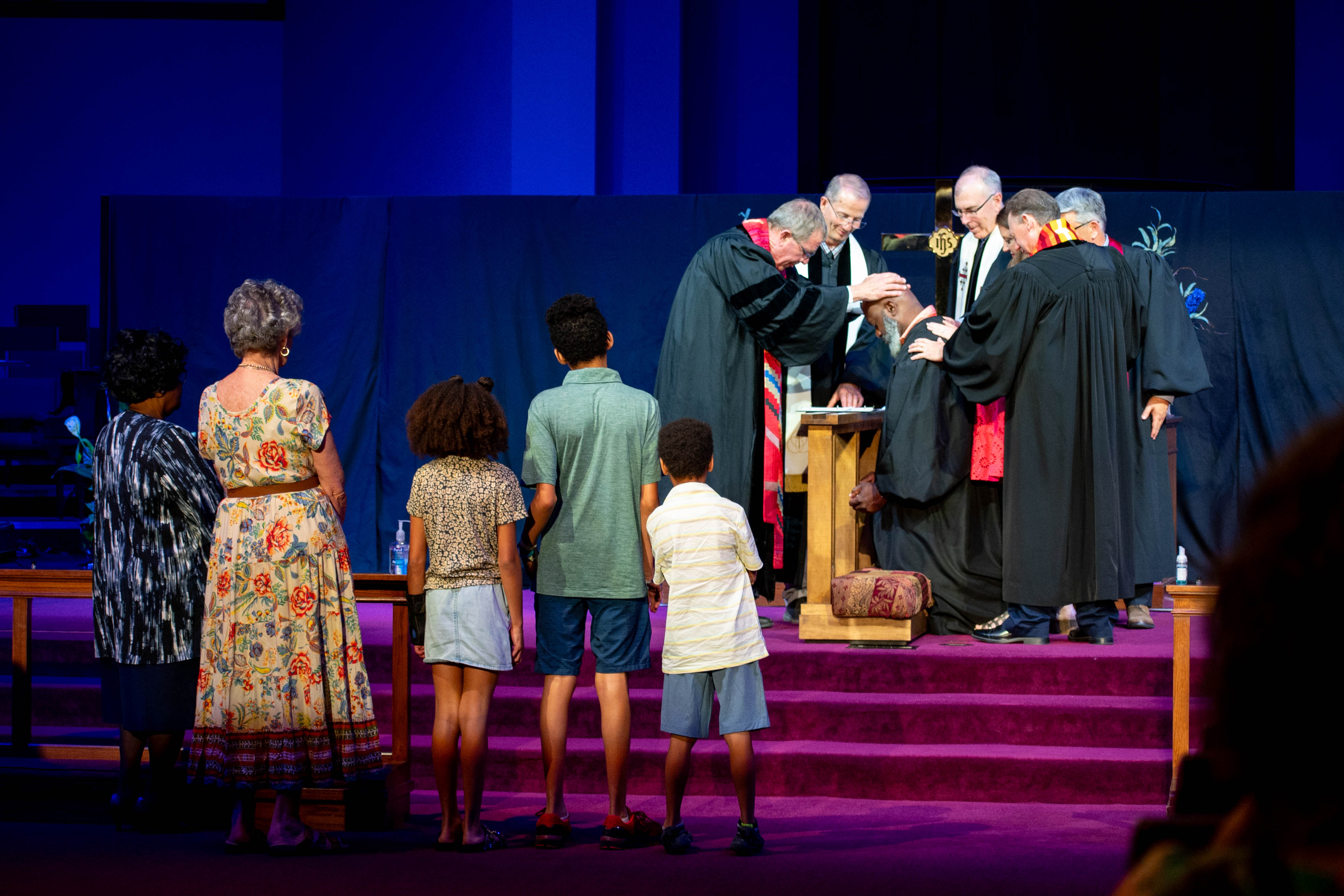
The ordination service was powerful as well. A few things really stood out to me. First, the unity in the room, not only among the ordinands, but also among the clergy and laity in attendance was palpable and a joy. When Bishop Jones went through the Historic Questions, it was the first time in my ministry I wasn’t wondering if people meant “No” even though they were saying “Yes.”


Bishop Jones led in a way that kept the focus on the main thing and the seriousness of what was happening. That was a gift to experience. 

Two other things happened in the ordination service that were beautiful. First, immediately after ordination, Bishop Jones celebrated Communion and the newly ordained served the rest of the congregation. It was so well done! Second, after Communion, Bishop Jones gave an invitation to receive a call to ministry during the final song. I saw at least three people from the congregation respond to that invitation! I don’t think I’ve ever witnessed that before. It was so hopeful and encouraging to just have a strong focus on the significance of ordination and even more so on the Triune God who speaks and calls us to serve.

Rev. Schafer asked me to speak on Wesleyan discipleship, focusing on class and band meetings on Saturday morning. If you know me, it is pretty easy to convince me to do that! I have been thinking quite a bit about the old(er) Barna survey that is outlined in the book Maximum Faith (you can find a summary of the ten stops of the Christian life here). I summarized those findings and the way they point to the need for relational connection and deeper discipleship across the church in the United States. This, in my view, only increases the importance of returning to our Wesleyan heritage of intentional discipleship through small groups.

I had a blast teaching that material!

Finally, I got to experience two of the three TED-style talks given by folks in West Plains. Wow! The first talk was about a fire ministry after the massive fires in Texas last year. Even more than that, it was a powerful testimony about God’s work in one woman’s life. The second talk was by a rancher and a lawyer who felt called to co-pastor the GMC church in their town. The commitment to the local church and the authority of Scripture was powerful! I wish I’d been able to stay for the final one and the rest of the afternoon!

Preaching and teaching at a place like the West Plains Conference is an enormous privilege. It still surprises me to be asked to speak in places like this. I love doing it and it is a blessing to me. Every time, I think, I can’t believe I get to do this! God has been so kind to me and I am thankful.

One final thing about my time at this conference. Mike Schafer will become the first Connectional Operations Officer for the Global Methodist Church, starting August 15, 2024. Leadership in West Plains recognized Mike for his service as the first President of the West Plains Conference and gave thanks for this new role. One of the people who praised Schafer’s leadership in West Plains commented that he was exactly the right person to serve in this new key leadership role in the GMC because he had not spent his entire career trying to receive this kind of position. I loved the way that was put! And it rings true of my experience with Mike. His selection for this role is encouraging to me and a hopeful sign of things to come for the Global Methodist Church. (You can read more about Rev. Schafer and his new role here.)

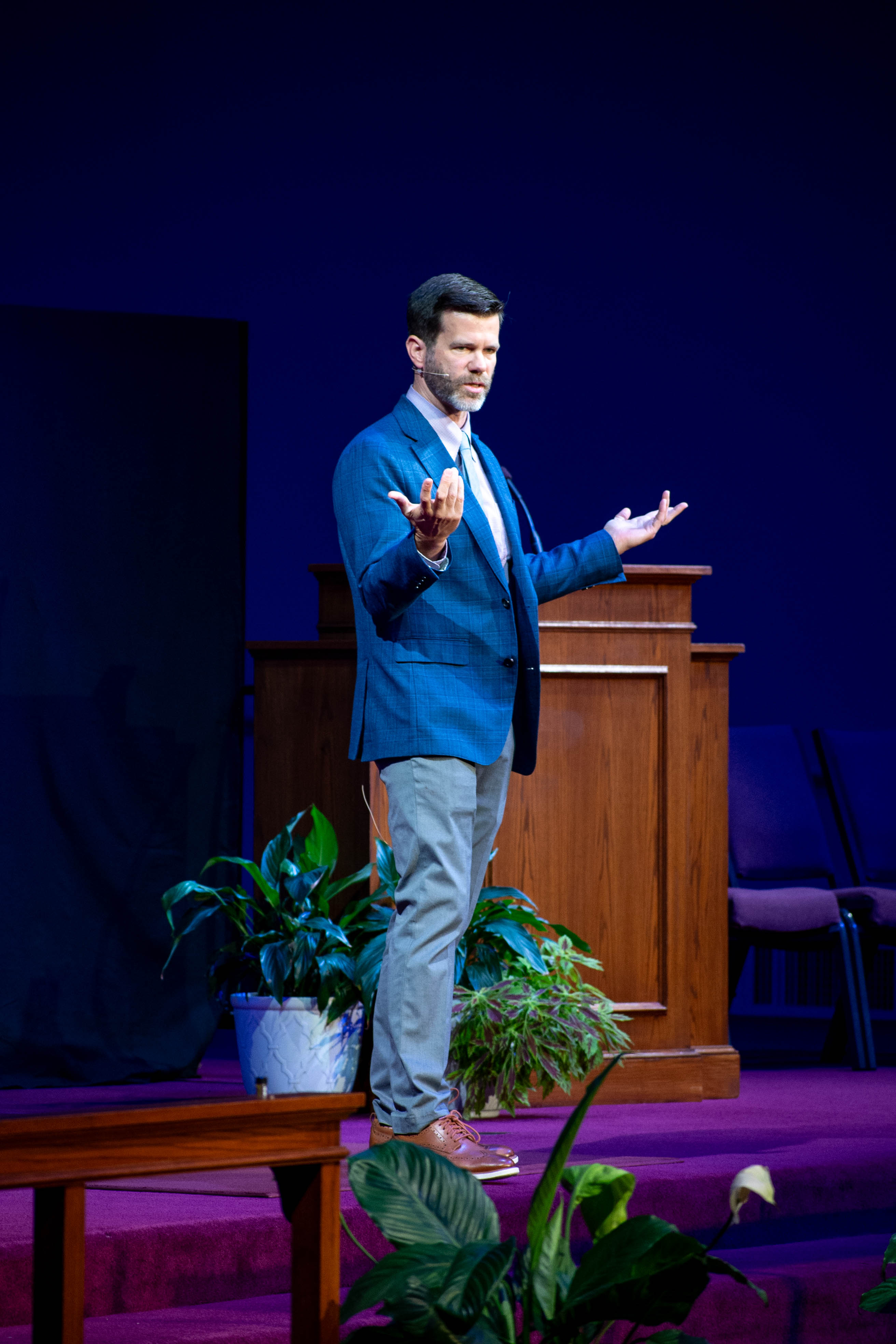
Thank you, West Plains, for having me! And special thanks to Emma Stonum for sharing the photos I’ve used in this post.

Reminder: My new book releases next Tuesday, June 25th

My new book Doctrine, Spirit, and Discipline: A History of the Wesleyan Tradition in the United States releases on Tuesday, June 25th. I wrote a post about the book here. Please check it out. This is the first book I’ve directly asked folks to pre-order. Doing so helps the long-term success of the book in a variety of ways. It would really help me out if you would take a moment to head to Amazon (affiliate link) or Zondervan and order the book now. I am really encouraged by the early interest in this book! Thank you so much to all of you who have already pre-ordered it.

In this time of rapid change and chaos, it is imperative that we reground ourselves in our identity. This book explains the core identity of the Wesleyan theological tradition and points to lessons from the past that will help us be more faithful in the present and future.

Thank you!

New Book Announcement: Doctrine, Spirit, and Discipline

11 Tuesday Jun 2024

Posted by Kevin M. Watson in Book Review, Holiness, Life, Methodist History, Wesley

≈ 2 Comments

Tags

Book Review, John Wesley, Methodism, Wesley

On June 25, 2024 Doctrine, Spirit, and Discipline: A History of the Wesleyan Tradition in the United States will be released. And I need your help!

In some ways, I have been working on this book my entire scholarly career. I started this project in earnest seven years ago. This is the most ambitious writing project I’ve undertaken. I believe it is also the most important book I’ve written.

Why?

One of the main problems I have been trying to solve throughout my work in the church and the academy is identifying the core content of the Wesleyan/Methodist theological tradition. What does it mean to be Wesleyan or Methodist?

My sense has been that many different parts of the Wesleyan tradition have been undergoing a crisis of identity for various reasons. Some have pursued cultural respectability at the expense of coherence and clarity. Others have moved away from the riches of their heritage in the Holiness Movement to generic evangelicalism. Much more could be said on this.

In Doctrine, Spirit, and Discipline, I argue that there is an identifiable theological tradition running through the Wesleyan/Methodist theological tradition in the United States. It was clearly articulated by John Wesley in the beginnings of Methodism in Britain. And this theological vision, along with the method that gave it its name, was embraced explicitly by the founders of the first denominations founded in the United States. 

My sense is that the Wesleyan theological tradition is in a time of both fragmenting and realigning. I don’t think we can know yet how things are going to sort out. There are even very good reasons to think that denominational identity will not have the purchase in the future that it has had in the past.

With all this change and uncertainty, there is one thing of which I am confident: I am convinced the founding vision of John Wesley and the first Methodists is as relevant for our day as it was for theirs, if not more so. 

Before we can do anything else, we need to know who we are. Getting clear of our identity requires knowing our history. We need to know where we’ve come from.

Doctrine, Spirit, and Discipline is my attempt to tell the story of the Wesleyan tradition in the United States in a way that intentionally, though I am sure imperfectly and incompletely, tells the story through a broader lens than it has been typically told.

I also do the best that I can to wrestle with the issues and challenges facing the church today. I do this because I am convinced that our past is an essential guide for a better future.

I have been humbled by the endorsements this book has received. This book has been described as “the definitive history of the Wesleyan movement in the United States.” Here are a few endorsements, you can read more at the landing page Zondervan has created for the book.

“Kevin Watson’s newest book, Doctrine, Spirit, and Discipline, is not just the latest history of Methodism in America. Rather, it’s a tour de force. Previous historical accounts have viewed the institutions that resulted in the United Methodist Church as the truly legitimate Methodist trajectory, while offering just a fleeting look at other Wesleyan denominations. But rather than seeing African American, Holiness, and Pentecostal church bodies as schismatic and somewhat peripheral to the Methodist story, Watson treats them as central. Why? Because these groups, though smaller in size than better-known, larger institutions (Methodist Episcopal/Methodist/United Methodist), often maintained Wesley’s theological foundation more consistently. Watson sees Wesley’s formulation of “doctrine, spirit, and discipline” as the “common foundation for a broad tradition”—not broad theologically, but broad geographically, ethnically, and denominationally. This book, then, is not only necessary reading for all American Wesleyans but also an essential corrective to the overall narrative of the Methodist legacy in the United States.”
—DOUGLAS M. STRONG, Paul T. Walls Professor of Wesleyan Studies, professor of the history of Christianity, Seattle Pacific University

“I was captivated on the first page of Doctrine, Spirit, and Discipline. Immediately the reader is taken into the early life of John Wesley with this theme developed through his own personal life and expanded as he leads this great awakening throughout England and then more thoroughly developed in the US. However, Kevin Watson does not shy away from the power struggles, the issues of slavery, and the divisions even to this present day. He gives very generous history of the Black church, the Pentecostal movement, the Holiness movement, and various denominations which comprise what is known as the pan-Wesleyan movement today. In all this it is obvious the themes that continue to hold this diverse group together from the beginnings of John Wesley. It is written in such a way that is inspirational and at the same time with a strong researched theological and historical foundation. This book is a treasure for the classroom, leaders in the pan-Wesleyan movement both lay and clergy, and those outside the movement to discover the strength of the doctrine, spirit, and discipline initiated by John Wesley that has been effective for some 250 years. Yes, a book for now and future generations.”
—JO ANNE LYON, general superintendent emerita, the Wesleyan Church

“A faithful witness to the people called Methodists in England and in America, this colossal volume expeditiously moves from Wesley to American Methodism and its extended branches to the current state of Wesleyanism today. Watson masterfully retells a well-chronicled narrative in terse, accessible, lucid prose, covering not just the contours of Wesleyan history with its highs and lows but also its various doctrinal developments and disputes and ecclesial divisions. The moral of the story, as indicated by the quote from which the title is taken, is that Methodism at its best is a blazing, fiery force of renewal and at its worst an inert, acculturated institution. Although coming in at nearly 500 pages, this volume is concise and highly accessible. Well-illustrated, highly detailed, and informative, Doctrine, Spirit, and Discipline is suitable for the classroom and will make a fine addition to any shelf of classic volumes on Methodist history.”
—PETER J. BELLINI, professor of church renewal and evangelization in the Heisel Chair, United Theological Seminary

“This book is destined to become the standard reference work for everyone who wants a better understanding of the Wesleyan tradition. More important, however, is that anyone who seeks the blessing of holiness in his or her own life will find inspiration and encouragement on every page. Churches that preach the life-giving message of sanctification, including the Salvation Army, owe a tremendous debt of gratitude to Dr. Watson for this outstanding work.”
—KENNETH G. HODDER, USA national commander, the Salvation Army

I need your help.

Please pre-order my book. There is much about the publishing world I don’t understand. One thing I do know is that pre-orders are crucial to a book’s success. You can pre-order the book on Amazon here (affiliate link) or directly through Zondervan here. Amazon has a pre-order price guarantee and books like this are typically discounted as they get closer to the release date. Zondervan is currently offering a 30% sale!

I don’t think I’ve ever made a direct request like this before. It would be a big help to me if you would place a pre-order for this book now. If you do, you can also get immediate access to chapters 1 & 2 by entering your email and book order number at the bottom of the page here: https://zondervanacademic.com/doctrine-spirit-and-discipline

I am so excited to see something I’ve been working on for so long finally be released. Thank you so much for your support!

Kevin M. Watson is Director of Academic Growth and Formation at Asbury Theological Seminary. He is anchored at the Seminary’s Tulsa Extension Site. He is also the Scholar in Residence at Asbury Church in Tulsa, OK.

Secrets and the Wisdom of the Wesleyan Tradition

08 Wednesday May 2024

Posted by Kevin M. Watson in Book Review, Christian Living, Wesley

≈ Leave a comment

Tags

Band meeting, John Wesley, Methodism, secrets, Wesley

I don’t know about you, but I find it so encouraging when I read something outside of the church that highlights the value of what Christians do.

Here is an example I just came across:

One of the cornerstones of the Wesleyan movement throughout John Wesley’s lifetime was a small group called the band meeting. There were a list of prerequisites for joining a band meeting. But the basic activity of the band was pretty simple – confession of sin for the sake of growth in holiness.

At the weekly meeting, participants each answered five questions:

1. What known sins have you committed since our last meeting?

2. What temptations have you met with?

3. How were you delivered?

4. What have you thought, said, or done, of which you doubt whether it be sin or not?

5. Is there anything you desire to keep secret?

(You can read the entire “Rules of the Band Societies” here.) 

I first joined a band meeting when I was a seminary student. And joining that band meeting was, by far, the most important part of my seminary experience.

Not long after I graduated from seminary, I began to feel a more specific calling to pastor people who were preparing to become pastors. If I was going to pursue that calling, it would mean that I would need to complete a PhD. When I realized that no one had studied the band meeting in depth, I decided to write my PhD dissertation on the band meeting in John Wesley’s thought and in the popular experience of the first Methodists. I revised my dissertation and published it with Oxford University Press as Pursuing Social Holiness: The Band Meeting in Wesley’s Thought and Popular Methodist Experience.

During my work on the band meeting, I noticed that the fifth question was removed at one point by an editor of the original “Rules of the Band Societies” (the document where the five questions was published) sometime around the early nineteenth century.

As best I can remember, the fifth question was not used in the first band meeting I joined.

Is there anything you desire to keep secret?

It isn’t hard to come up with reasons why that question might be disappeared. It is intense! If you have a secret, kind of by definition you don’t want to share it. But the question is a game changer because it brings everything into the light of Christ and his healing grace in the appropriate place.

So back to the beginning of this post.

I just finished reading The Secret Life of Secrets by Michael Slepian. 

The book is an in-depth and interesting study of secrets and the role they play in our lives. 

The big takeaway at the end of the book could not have been much better aligned with the early Methodist band meeting and its simple question: Is there anything you desire to keep secret?

At the end of the book, Slepian shows that while everyone has had or has a secret, it is helpful to be able to share secrets with people you know and can trust.

All the way back in the 18th century, Methodists were creating band meetings in order to not only share secrets, but to seek the wholeness and healing described in James 5:16

Therefore confess your sins to one another, and pray for one antoher, so that you may be healed. The prayer of the righteous is powerful and effective.

Secular scientific study is confirming the instincts Christians have always had. How cool is that?

Want to know more about the band meeting?

For the academic and historic work, see Pursuing Social Holiness.

For an introduction to what a band meeting is and a guide to starting band meetings in our own day, check out the book I wrote with Dr. Scott T. Kisker, The Band Meeting.

Why Are We So Quick to Forget?

20 Wednesday Mar 2024

Posted by Kevin M. Watson in Sermons

≈ Leave a comment

Tags

sermon

Rev. Andrew Forrest invited me to preach at Asbury Church this past week. Every time I have preached at Asbury, I experience deep joy and gratitude. It is such a blessing to get to preach here.

The title of this post was the title of my sermon: “Why Are We So Quick to Forget?”

In Exodus, God acts again and again to defend and deliver the Israelites. He works in ways that are direct and supernatural on their behalf.

And yet, no matter how many times God moves in these ways, the next time the Israelites face opposition or obstacles, they doubt and despair. We see this with astonishing clarity in Exodus 14:1-15.

Why are they so quick to forget all that God has already done for them?

More importantly, why are we so quick to forget what God has done for us?

This sermon is more personal than most for me, as I share God’s answer to one of the most desperate prayers I’ve ever prayed and my own forgetfulness years later.

I believe the key to walking with faith in present trials is actively remembering what God has done for us in the past. 

Check it out: https://asburytulsa.org/sermon/why-are-we-so-quick-to-forget/

My Experience at the Spirit & Truth Conference in Conroe, TX

23 Friday Feb 2024

Posted by Kevin M. Watson in Uncategorized

≈ 1 Comment

Some of my favorite people to do ministry with are the folks at Spirit & Truth. If you have not heard of this ministry, you should check them out right now. For several years now, they have hosted a yearly conference in Dayton, OH at Stillwater Church. This year, they were led to shift to regional gatherings in Alabama, Texas, and Ohio. Maybe even more than these conferences, Spirit & Truth’s sweet spot is going to specific local churches and offering training on evangelism and discipleship empowered by the Holy Spirit.

Spirit & Truth is gifted at introducing people to the presence and power of the Holy Spirit as a person they can partner with to share the gospel. If you invite Spirit & Truth to minister at your church, they will offer excellent teaching on evangelism and discipleship that is practical and immediately applicable. More importantly, they will partner with the Spirit to activate the laity in your church and send them out into your community to talk and pray with real people in your community.


For decades the church in the United States, at least the parts I have been connected to, has been engaged in a sophisticated program of procrastination. We have programmed evangelism, reading books, meeting in classrooms, even forming committees, but we have not engaged with people outside the walls of our church. We have planned and strategized, but not acted. We have talked to each other about these things more than we have spent time with the Lord and sought his direction. We have talked about people who do not know Jesus more than we have talked with them.

Matt, Maggie, and Emma know God the Father intimately. They have been changed by Jesus Christ and the power of the gospel. And they have each been filled with and empowered by the Holy Spirit. They are also exceptionally gifted at helping churches experience the presence of the Holy Spirit in their midst. They are willing to be used by the Lord to break up ground in local churches and make room for real Christianity. They don’t have techniques or gimmicks. But they also don’t flinch or lose their nerve when the Spirit of God comes in power in answer to their prayers.

Ok, so that is my pitch to you to reach out to Spirit & Truth!

I started writing this post to share my experience at the recent Spirit & Truth regional conference in Conroe, TX and First Methodist Conroe, where John Wayne McMann is the lead pastor. (For more on what the Lord did, check out Spirit & Truth’s podcast episode with John Wayne McMann.)

Matt asked me to be part of the gathering in Conroe several months ago, I’m not quite sure how far back. But I had really been looking forward to this conference. Matt and I had touched base a few times about what the direction he was sensing from the Lord for the conference, and I had a pretty good idea of the direction I thought I was supposed to take with my message.

I felt like the Lord was asking me to share more vulnerably than I have in this kind of space about my own experience with the Holy Spirit. I felt like I was supposed to share how I, sometimes by fits and starts, have grown in my ability to hear God’s voice and have grown in a hunger to see God heal people inwardly and physically. I also felt like I was supposed to be more unscripted than normal.

This is vulnerable for me for a variety of reasons. First, I know there have been many excesses throughout the history of the church. (I’ve seen many of them in teaching Church History.) Second, pretty much every part of my own formation in the church (and even more so in the academy) taught me to trust what I could know objectively, particularly facts, dates, and ideas I could read in books and master enough to do well on tests. Third, for much of my life, more than I realized, I really wanted to be in control. (Ok, God is still working here.) There is probably more, but that gives you an idea.

But.

I have seen God do things that are powerful, immediate, and life changing and I don’t want to miss the opportunity to be part of what God is doing now in his church because I am unsure of what will happen next, or I’m worried I’ll fall on my face.

So, I did the best I could to share about my experience with the prophetic and how I’ve seen the Lord heal. I tried to share in humility about the times I’ve missed it, gotten it wrong, or at least not gotten to see the full picture. My sense is that at least some of the excesses in the Pentecostal/charismatic world come from the same need to be in control as are found on the anti-supernatural side of the street.

And so, any time I have an impression or a sense that the Lord is speaking, I try to offer it gently and with open hands. I don’t always get it right. But, again, I’ve seen the Lord open doors to ministry I didn’t even know were there, sometimes simply by being willing to ask a question that was persistent in my head all day and seemed completely random.

I’m sharing this here because I want you to know that the Holy Spirit is alive and active. And he is so good!

I am also sharing this here because I want you to know that if I can grow in my faith, willingness to take risks to see the Lord move, and openness to receiving gifts from the Spirit, so can you!

Finally, I’m sharing this here because I don’t think we were meant to go it alone in any part of the Christian life. We need to learn from those who have gone before us. Spirit & Truth has been a place where the Lord has met me and ministered to me in powerful ways. It has also been a place where I have learned and grown in my confidence to minister in the power and authority of the Holy Spirit.

I preached 1 Corinthians 1:18 – 2:5 at the Spirit & Truth Conference in Conroe. I want this to be true of my life and ministry:

My message and my preaching were not with wise and persuasive words, but with a demonstration of the Spirit’s power, so that your faith might not rest on human wisdom, but on God’s power. 

Come Holy Spirit!

← Older posts
Newer posts →

Blog at WordPress.com.

  • Subscribe Subscribed
    • Kevin M. Watson
    • Join 368 other subscribers
    • Already have a WordPress.com account? Log in now.
    • Kevin M. Watson
    • Subscribe Subscribed
    • Sign up
    • Log in
    • Report this content
    • View site in Reader
    • Manage subscriptions
    • Collapse this bar
 

Loading Comments...