• About Me

Kevin M. Watson

Kevin M. Watson

Category Archives: Uncategorized

Theological Theodicy: A Review

16 Monday Jul 2012

Posted by Kevin M. Watson in Uncategorized

≈ Leave a comment


Why do bad things happen to good people?

This is a question Daniel Castelo, my friend and colleague at Seattle Pacific Seminary, wrestles with in his new book, Theological Theodicy. As is characteristic of Castelo’s writing, this book is well-organized and accessible to the educated reader, without cutting theological corners or providing pat answers.

Castelo begins by outlining intellectual shifts that have changed the tenor of asking the “Why?” question about the existence of evil and suffering in the world. “Theodicy, as it shifted in modernity, became a rationally legitimating warrant for atheism” (9). Castelo then fleshes out the logic of the approach that raises the “Why?” question in order to justify a rejection of the existence of God, challenging many of the assumptions that are often smuggled into this approach. He then brings the first chapter to a close by noting that theodicy often falls short philosophically because “the key terms in question, ‘God’ and ‘evil,’ are often insufficiently developed or nuanced because they are usually devoid of a theologically substantiating context” (19). Castelo, rightly in my view, challenges the idea that Christians can answer questions about why bad things happen in an abstract way, without a careful consideration of who the triune God is.

In the second chapter, Castelo analyzes two different approaches to the “god” of modern theodicy, those of deism and dualism. Both approaches are found to be wanting, and the reader is reminder that neither “god” adequately represents the God of Christian faith. Castelo then moves to several dogmatic proposals for a Christian account of a creator God. After laying out these proposals, he concludes, “creation is good because it comes from a good Creator, and the degree that it can be evaluated as good is based on the measure with which it references its Creator” (54).

Among the topics addressed in the third chapter, I particularly appreciate Castelo’s discussion of death and where it fits into Christian theology. In contrast to those who often attribute positive roles for death in God’s ordering of creation, Castelo argues:

What one can observe is that death is the denial of life, and as such, it has been deemed by the Christian tradition as the primary and most determinate consequence of the fall. Death is not a good thing; although it may be a resting place, the cessation of suffering, and although it may be viewed as a rite of passage into eternal life, death is not something good in and of itself.” (75-76)

Castelo begins the fourth chapter in an arresting way:

Interestingly enough, we are outraged by evil, suffering, death, but we are not similarly outraged or shocked when we are beneficiaries of positive arrangements beyond our control… the American rate of consumption and waste, the use of energy and the like, are all impossibly available to the entire human race. And yet, outrage is normally not directed at these kinds of ‘luxuries’ or discrepancies; rather, Americans often use the language of being blessed, lucky, or deserving of such arrangements because of their work ethic, ingenuity, religious fervor, or some other reason. The hypocrisy here is that we often ask the ‘why’ question when things go horribly wrong; we rarely if at all ask it when things play out exceedingly (and unfairly?) in our favor. (80-81)

Finally, Castelo summarizes what can be said about what God has done (particularly through the way that Jesus takes on suffering in the passion) and is doing (particularly through the mission of Christ’s body, the church) to engage the reality of suffering. Ultimately, Castelo makes the case for a “pragmatic theodicy,” one that focuses on the healing and repairing of creation. He also provides a helpful reminder that in Scripture, “the call of discipleship” is not “associated primarily with answering questions… Rather, the call of discipleship is to reach the lost and needy with the good news of healing and repair that Jesus Christ proclaimed and embodied.” (94) Thus, when Christians are confronted by evil, sin, pain, and even death, the response “is not to explain but to feel for the purpose of being moved to action.” (94)

In this gentle, yet probing summary of the challenges that are posed by the problem of evil, Castelo is at his best when he gives the reader permission (even encourages) to avoid offering definitive explanations for why bad things happen. Rather than explaining, in thoroughly Wesleyan fashion, Castelo suggests that “the Christian life is one of bearing other’s burdens.” (97)

While Castelo is willing to honestly acknowledge and recognize the presence of suffering, because it is a Christian account, he is compelled to make sure that the last word is one of hope. “The creation has a hopeful future because its future is God.” (102)

This book provides excellent pastoral guidance to all who have taken on the name of Christ and seek to bring the riches of their tradition to bear as they seek to stand with others who experience pain and suffering. I heartily recommend it to anyone who has asked “why?” or felt unable to answer this question when it was asked by someone else. Those who have been reluctant to offer simple explanations for deep questions, which are usually asked with deep personal urgency, will find comfort that the Christian’s job is not to answer questions or defend God against every possible accusation. However, readers will also be made uncomfortable as they are reminded that much of the evil that is present in the world is allowed to exist because people choose to ask how a good all-powerful God could allow this to happen, rather than stewarding what God has entrusted them with to make a difference.

Regarding my personal interest in small group formation, I believe this book has a real contribution to make to small groups like the Wesleyan class meeting and band meeting. Small groups are often shallow and group members struggle to enter into one another’s lives in meaningful ways. When groups do enter into the “deep end” of each other’s lives, they often do so with little to no preparation to sit with someone who experience agonizing loss and is grasping for explanations. Castelo’s work can help people to be prepared for just how hard bearing one another’s burdens can be, while providing a reminder of just how desperately important it is.

Vital Piety

13 Tuesday Mar 2012

Posted by Kevin M. Watson in Uncategorized

≈ 4 Comments

After almost five years of blogging under the title “deeply committed” I have decided to move my blog to vitalpiety.com. The main reason is frankly embarrassing. With my first year of teaching full-time at SPU and finishing my dissertation, I neglected my blog for a few months and did not realize that the domain registration was about to expire. I had no idea that there was an industry that tries to pull people’s domains out from under them for a variety of reasons. In any event, when the domain registry expired someone else immediately purchased it. They appear to be using it to try to drive traffic to links on the blog that have nothing to do with Christianity. It is disappointing to me and if you were familiar with my old blog, my preference would be that you not visit the old site. I want to be clear here that I have absolutely nothing to do with it and cannot control what is posted there. Also, all of my previous blog content is now here at vitalpiety.com.

On a completely different note, I must admit I was always a bit uncomfortable with the title deeply committed. After I began blogging, I was often concerned that the title suggested that I was deeply committed to my faith and others were not. I settled on the title because I was pastoring a local church at the time and this was the best way I could concisely state my passion for renewal with United Methodism.

When I lost control of my prior domain, a friend suggested vitalpiety.com. I immediately thought that this name was so perfect for someone interested in the Wesleyan tradition that it had to have been taken already. When I discovered it wasn’t, I just kept thinking about the title until I finally decided to make the switch.

So, why vital piety?

The phrase comes from a hymn that was used when the early Methodists opened a school in Kingswood:

Unite the pair so long disjoined,
Knowledge and vital piety:
Learning and holiness combined,
And truth and love, let all men see
In those whom up to thee we give,
Thine, wholly thine, to die and live.
(Works 7:644)

My passion as an ordained elder in The United Methodist Church and as a professor at Seattle Pacific University is to reunite rigorous academic work in Christian theology with a desperate search for a holy life. Particularly in my work with United Methodist seminary students, my calling is to train them to understand the depths and riches of our heritage as members of the one, holy, catholic, apostolic church and more particularly as people committed to the broader Wesleyan family. I am convinced that this work is integrally connected to “vital piety.” In other words, as we learn more about God, this knowledge should enable us to better love the God we know. And the more we love God the more we will love our neighbors.

The past nine months have seen many changes in my life and so it seems fitting for me to start a new chapter in my adventure in blogging.

Welcome to vital piety! I look forward to the (continued) conversation.

(If you have not previously subscribed to my blog you can automatically receive future posts via email by clicking here, or you can subscribe in a reader by clicking here.)

2012 Oklahoma Conference Delegation

31 Tuesday May 2011

Posted by Kevin M. Watson in Uncategorized

≈ Leave a comment

Tags

General Conference delegation, Oklahoma Annual Conference

Last night elections were held at the Oklahoma Annual Conference for delegates for laity and clergy delegates for the upcoming General and Jurisdictional Conferences. Here are the results of the elections.

The delegation for General Conference (in order that they were elected) is:

Clergy:
1. Linda Harker
2. Robert Long
3. Jessica Moffatt Seay
4. Frankye Johnson
5. Joseph Harris
6. T. Brian Bakeman
7. Tom Harrison
8. Guy Ames
9. Margaret Ball

Laity:
1. Judy Benson
2. Frank Denney
3. Donald Kim
4. Briana Tobey
5. Bill Junk
6. Herschel Beard
7. Aly Shahan
8. Bob Anthony
9. John Hiller

The delegation for Jurisdictional Conference is (all who were elected to General Conference are also part of the Jurisdictional Conference delegation):

Clergy:
1. Samuel Powers
2. Patricia Malloy
3. R. Wade Paschal
4. D. A. Bennett
5. Mouzon Biggs
6. Robert Gorrel
7. Darrell Cates
8. Amy Venable
9. Twila Gibbens

Laity:
1. Barbara Perry
2. Charles Stewart
3. Tom Junk
4. Debra Davis
5. Cara Nicklas
6. Nikola Paschal
7. Ahnawake Dawson
8. Samuel Aguirre
9. Donna Roberts

The alternates are:

Clergy:
1. Carlos Ramirez
2. Mike Chaffin
3. James Kim
4. Jennifer J. Long

Laity:
1. Trey Witzel
2. Sharri Hiller
3. Kathy Caldron
4. Mark Springer

Connecting Points

15 Friday Apr 2011

Posted by Kevin M. Watson in Uncategorized

≈ 7 Comments

I began blogging nearly four years ago. I initially began blogging because I started seeing the word used more and more frequently in various media, and I didn’t know what it was. I decided the best way to learn about blogging was to blog. The experience has been better than I hoped! My favorite part of blogging has been the interaction I have had with you, those who read deeply committed.

Recently, I have been trying to think about the many ways that people find their way to this blog and how I can better connect with all of you. And so, the purpose of this post it to point to some ways that we can further connect.

Here are a few ways that you can connect with me:

    Subscribe to deeply committed by email by clicking here. (The subscription is free! All you have to do is click on the link, enter your email address and then verify the subscription by opening an email that will be sent to your email account. Note: it may be sent to your junk folder if you have a high filter on your account.)

    Subscribe to deeply committed through a reader. I use google reader, which is free and easy to set up. (After you register for google reader, just click on “add subscription” and then type “deeplycommitted” and click subscribe.)

    Follow me on twitter by clicking here.

    You can also email me at deeplycommitted@gmail.com

    Finally, if you like what you have read here and want to read more you can read my published writing. I have written a book on the General Rules and Wesleyan discipleship called A Blueprint for Discipleship. I was one of the co-authors of an introduction to John Wesley’s theology, as seen through his sermons, called Reclaiming the Wesleyan Tradition. I have just had a chapter on small group discipleship published in Generation Rising. All three of these books were written primarily for the church, with the hope that they would be used in small group settings. You can also read an academic piece I wrote, “Forerunner of the Early Methodist Band Meeting”, that was published on-line in Methodist Review.

Most important, please keep reading and commenting! For those of you who know much more about online communication and social media, I am sure I have missed something. What advice would you give me about how I can better connect with you and others?

Thanks for the continued conversation!

Legacy

16 Sunday Jan 2011

Posted by Kevin M. Watson in Uncategorized

≈ 2 Comments

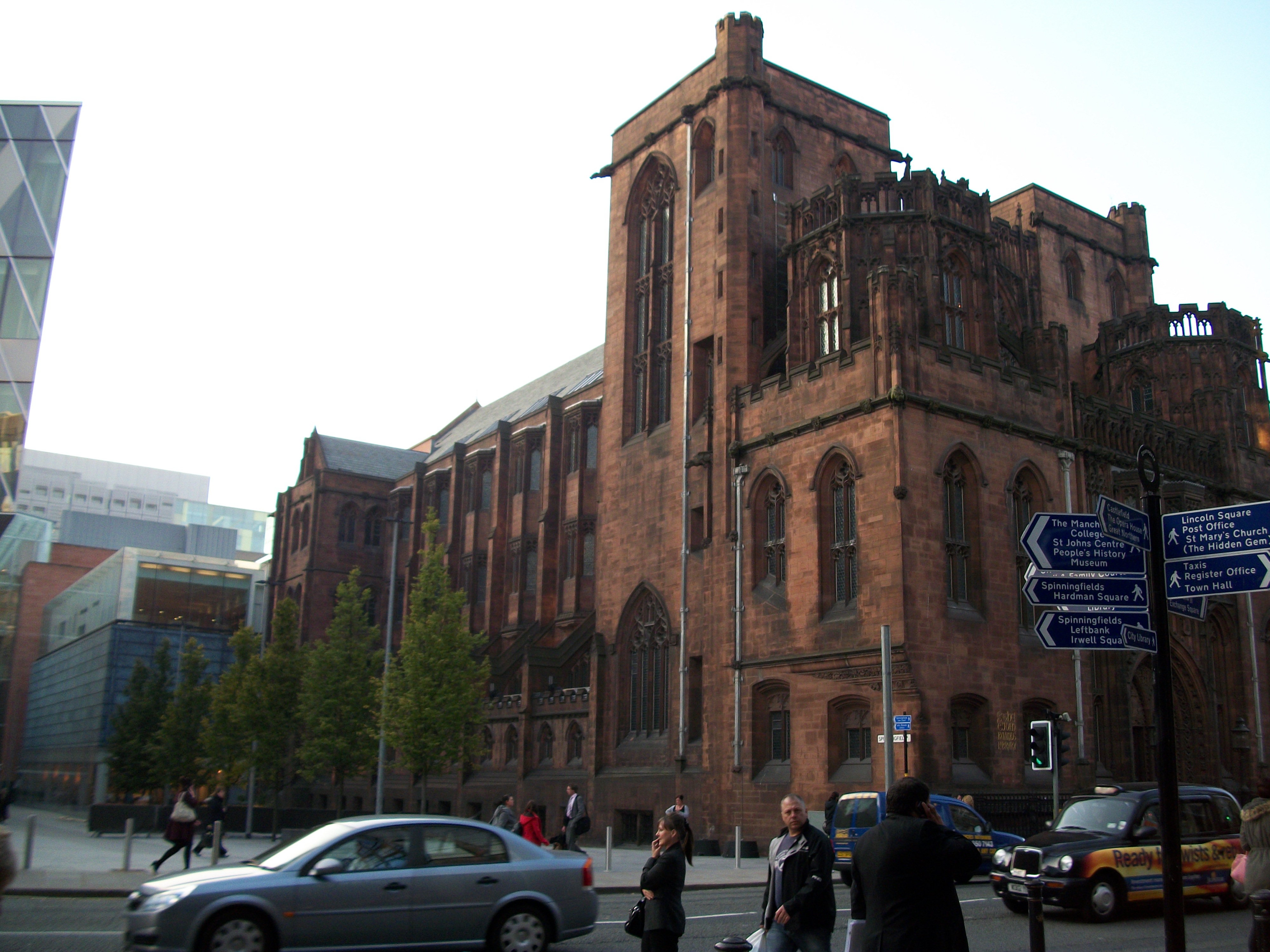
I have previously recommended Gareth Lloyd’s Charles Wesley and the Struggle for Methodist Identity. When I reread the book during my research trip at the special collections of the John Rylands University Library in Manchester, England, I was struck by a couple of references that Lloyd made to the area of Charles Wesley life that he is best known for – his hymns and poems.

Lloyd writes, “The lasting value of Charles’ poetry is well recognized, but it is worth remembering that most people during the early years would have known Charles better as a preacher, pastor, and leader.” (39-40)

Later Lloyd also notes that the Church of England was much slower to accept the use of hymns in worship than was Methodism, not fully embracing hymns until the end of the nineteenth century (see p. 74).

The thought I had as I read these passages was that Charles Wesley may not have realized the extent of the impact that his hymn-writing would have on the Church. Perhaps Wesley wrote each of the thousands of hymns he wrote, not because he knew they would be popular, but because it was one of the ways he praised God. And yet, many of the hymns he wrote have become classics, not just in Methodism, but throughout Protestantism.

Where I’ve Been the Last Four Weeks…

15 Friday Oct 2010

Posted by Kevin M. Watson in Uncategorized

≈ 5 Comments

This is where I spent the majority of the past four weeks. Do you know where or what this is?

I am looking forward to getting back into the rhythm of blogging, more to come.

Can You Help?

13 Tuesday Jul 2010

Posted by Kevin M. Watson in Methodist History, Uncategorized

≈ 2 Comments

Tags

Boston University School of Theology, Civil Rights, Methodist Seminaries, Perkins School of Theology, Wesley Theological Seminary

I am working on a paper I will give at the upcoming meeting of the American Academy of Religion. The title of the paper is, “In the Shadows of Segregation: Methodist Seminaries and the Civil Rights Movement.”

I am generally focusing on Wesley Theological Seminary, Boston University, and Perkins School of Theology. One of the things I am trying to do in this paper is to talk to as many people as possible who were at these three institutions during the Civil Rights era, either as students or faculty/staff.

Here is where you can help: Do you know someone who was at one of these institutions during this period who would be willing to talk with me about their experience? If so, I would be grateful if you would contact me and let me know who the person is I should contact, what institution they were at and how they were involved in issues related to Civil Rights, as well as how I can get in contact with them.

You can email me directly at deeplycommitted at gmail dot com.

The paper is off to a good start. In fact, I had a great conversation with Dr. Phil Wogaman today who was at BU as both a Masters and PhD student in the mid to late 50s and then was subsequently on the faculty at Wesley in the mid 60s, becoming the academic dean in 1972. I am soliciting your help because you may have a connection or know something that I have missed so far. I figure this is just one more way I can cover as many angles as possible.

If You Could Change One Thing…

08 Thursday Apr 2010

Posted by Kevin M. Watson in Uncategorized

≈ 3 Comments

Things are a bit hectic in my life right now, with the end of my last semester of coursework looming, a field exam in mid-May, and the birth of my second child expected in early May. So, my blogging activity will be less frequent from now until the end of May.

In the meantime, I would like to hear from you. There is so much talk about what is wrong with The United Methodist Church. It seems to me that there is less passionate conversation about what positive changes should be made. So, here is the question I would be interested in reading your response to: If you could change one thing about contemporary United Methodism, what would it be? Or what one change do you think would make the most difference in contributing to a brighter future for Methodism?

Resting and Relaxing

30 Wednesday Dec 2009

Posted by Kevin M. Watson in Uncategorized

≈ 3 Comments

The past semester was a whirlwind. It wasn’t until I finished my last exam, turned in my last paper, and graded the papers for the course I taught at Perkins in United Methodist History that I realized how much teaching a three hour course while taking a full Ph.D. course load had taken out of me. Over the past few weeks I have enjoyed time with my family, slept and relaxed.

Due to the end of the semester and catching up with myself afterward, I have taken an unexpected blogging break. I am looking forward to getting back into the regular practice of posting sometime next week.

Meanwhile, I would like to share a link to a story written by a Christian academic about the most difficult part of being a Christian academic. I was certainly convicted by it.

Preaching Again

10 Saturday Oct 2009

Posted by Kevin M. Watson in Uncategorized

≈ 2 Comments

I will be preaching at both services tomorrow morning at McFarlin United Methodist Church in Norman, Oklahoma. In preparing for the services, I realized that I have not preached since my last Sunday as a full time pastor (which makes 68 weeks, for those of you keeping score at home). I am really looking forward to it.

I will be preaching on Mark 10:17-31 and my sermon title is “Our Precious Heritage.” The services are at 8:30 and 10:55 am.

At 7:00 pm I will be giving a lecture that will consider what was distinct about early Methodism. I will then ask if we have maintained those distinctives, and will consider whether anything is at stake in whether we have held to those distinctives or not. I am also looking forward to a lively discussion with those in attendance. The lecture is free and open to the public.

← Older posts
Newer posts →

Blog at WordPress.com.

  • Subscribe Subscribed
    • Kevin M. Watson
    • Join 369 other subscribers
    • Already have a WordPress.com account? Log in now.
    • Kevin M. Watson
    • Subscribe Subscribed
    • Sign up
    • Log in
    • Report this content
    • View site in Reader
    • Manage subscriptions
    • Collapse this bar
 

Loading Comments...