
Chris Ritter published a great review of my book Doctrine, Spirit, and Discipline: A History of the Wesleyan Tradition in the United States (Zondervan) on his blog last week.
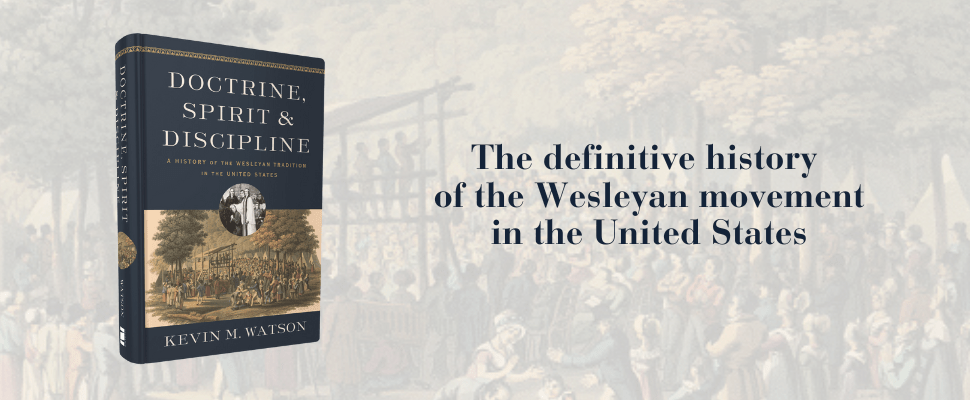
Ritter writes:
Given Watson’s clear passion for Methodist recovery, it should come as no surprise he shapes this latest work around a clear thesis: Methodism thrives when it stays close to its original fire and suffers when it strays. Watson’s account will undoubtedly become the standard telling of Methodist history for Global Methodists.
More from Ritter’s review:
The focus on Wesleyan doctrine sets Doctrine, Spirit, and Discipline apart from 20th Century histories of Methodism. My frustration with earlier histories is that they describe organizational developments without accounting for the move of the Holy Spirit behind it all. As a pastor, I welcome this one-volume history as an accessible reference to share with those interested in learning more about Wesleyan DNA.
Chris puts his finger on two pieces of the book that were especially important to me and where I worked really hard in the research and writing of the book. First:
Wesleyans are Holy Spirit people. Doctrine, Spirit, and Discipline describes the rich connection between Wesleyan and Pentecostal/Charismatic spirituality and (rightly) groups Methodists with the fastest growing stream of Christianity on the planet. I also appreciate Watson’s unflinching treatment of slavery, injustice, and the struggle of female preachers to be recognized for their gifts.
I wanted this book to a Pan-Wesleyan history of the Wesleyan theological tradition in the United States that told the whole family story, and not only noted when people left or were expelled from the mainline Methodist part of the family.
Second:
United Methodists will notice that Watson presents the UMC as a failed experiment in theological pluralism. His final chapter, “A Tradition in Search for Its Identity” is worth the price of the entire book. As far as I know, it is the first published history of the break-up of the UMC, at least in book form. This story deserves a full volume and perhaps Watson is the one to tackle this project. I would love to see a video series based on Doctrine, Spirit, and Discipline for use in the local church.
At one level, from my time as a PhD student beginning in 2008 until I left the United Methodist Church, I was working to understand and explain what was happening in United Methodism. It was a confusing and dysfunctional mess in a variety of ways, a tangled knot that was hard to untie to analyze and understand. I’m sure many will disagree with my analysis, though I did the best I could to describe historical events as they happened. For my part, I am proud of the work that went into writing that chapter. I think it is true. Writing that chapter also helped me find peace regarding my time as a United Methodist and move forward with hope and optimism for the future.
Last part from the review:
I recommend Doctrine, Spirit and Discipline as a foundational resource for Methodists to understand our story and (as Billy Abraham put it) awaken from doctrinal amnesia. Although clearly not a theological textbook, Watson’s latest book should foster a renewed Pan-Wesleyan dialog among Wesleyan tribes interested in the project of doctrinal recovery and Spirit-driven renewal. Awareness of where we have been goes a long way in determining a faithful path forward.
I am really grateful for Chris’s review. Due to denominational division and a variety of other things, the market for this book changed significantly from when I first committed to write this book 7 years ago.
I have tried to get this book into the hands of as many laity as I can because I believe much of what went sideways in the UMC was because laity were walled off from, or inattentive to, the ways the highest levels of leadership in the denomination were moving away from the teachings and practices of the institution they were entrusted with leading. This has left me with an increased burden to raise the bar for normal Christians. I want to press them to have more skin in the game. I want them to keep going, to take ground.
Even more, I am praying for a revival of scriptural holiness in our day. And so, while I’ve been encouraged by the success of the book and the positive feedback from folks across the Wesleyan family broadly, I am more encouraged by what I see the Holy Spirit doing in the church. I am so thankful for what is happening at Asbury Church here in Tulsa, Oklahoma! I received a testimony to a healing here today.
As we like to say around here, God has more for everyone.
God is good!
P.S. If you haven’t followed Chris Ritter’s work, you should! He has long been one of the most trusted voices in conservative Methodism. I don’t know how he keeps his ear to the ground like he does, but somehow, he does it. You should become a subscriber and support him financially. (Go to the previous link and click “Join Team Caffeine.”) I’m increasingly convinced that this kind of direct support from core constituencies is essential in our day.
 Kevin M. Watson
Pingback: GMC Links – People Need Jesus